
Navigation
Install the app
How to install the app on iOS
Follow along with the video below to see how to install our site as a web app on your home screen.
Note: This feature may not be available in some browsers.
More options
You are using an out of date browser. It may not display this or other websites correctly.
You should upgrade or use an alternative browser.
You should upgrade or use an alternative browser.
Why must nudity be justified?
- Thread starter roxics
- Start date

roxics
Veteran
Let me try to clear a few things up and maybe offer a few replies in the process.
1. I'm not talking about pornography here. There is already a whole other category of cinema for that. We're taking about nudity specifically. Although I'm fully aware it often gets connected to sex scenes and that can teeter on pornographic at times.
2. I'm certainly not for anyone in the film industry abusing, threatening, blackmailing or otherwise creeping out actors. And I think it's absolutely terrible when it happens. If you want nudity in your films then be honest and open and up front with people about it. Don't try to guilt or coax someone into doing nudity. There are plenty of people who like to get naked on camera in this world, hire one of them instead.
3. I'm also not advocating for social anarchy where all rules and morals break down. I think connecting nudity to the moral breakdown of society is part of the problem. Too many people do that.
I think all we have to do is look at western Europe and see that they tend to have a more open philosophy regarding nudity, and have for a length of time, and yet society has not broken down there. At least not in a while and not because of that.
One last point to make. Of course males like seeing nude women. That's not the shocking part. The shocking part is that people tend to be surprised by that fact these days. And not just surprised, but appalled by it.
1. I'm not talking about pornography here. There is already a whole other category of cinema for that. We're taking about nudity specifically. Although I'm fully aware it often gets connected to sex scenes and that can teeter on pornographic at times.
2. I'm certainly not for anyone in the film industry abusing, threatening, blackmailing or otherwise creeping out actors. And I think it's absolutely terrible when it happens. If you want nudity in your films then be honest and open and up front with people about it. Don't try to guilt or coax someone into doing nudity. There are plenty of people who like to get naked on camera in this world, hire one of them instead.
3. I'm also not advocating for social anarchy where all rules and morals break down. I think connecting nudity to the moral breakdown of society is part of the problem. Too many people do that.
I think all we have to do is look at western Europe and see that they tend to have a more open philosophy regarding nudity, and have for a length of time, and yet society has not broken down there. At least not in a while and not because of that.
One last point to make. Of course males like seeing nude women. That's not the shocking part. The shocking part is that people tend to be surprised by that fact these days. And not just surprised, but appalled by it.

paulears
Veteran
Ah - I see. Personally, I find it sometimes done well, but frequently on TV it's used for titilation and not dramatic effect. Working on the damn things is also awful - closed sets, minimal crew, awkwardness and for everyone the risk of being tagged by even being there. Nobody is safe from accusations in the future. Nobody wants to be called as a witness to something they weren't even aware of, but the possibility exists. Cast and crew can get linked to future nastiness totally outside of their power. What is the necessity for the nudity. It's a modern thing, and adds very little. You don't need to see breakfast being eaten to explain the empty plates. As porn is so freely available, there seems a view creeping in that nakedness is nothing, but I'm no prude, yet I feel uncomfy watching TV with my 30yr old son in the room and he feels awkward if I walk in when he is watching a play on TV - I hate nudity on TV, maybe going to the cinema is different, but again, I'd not be comfy being seen watching it.
filmguy123
Veteran
There is a semantical issue here - there are many that would consider "unjustified nudity" as pornography.
The censorship rationale isn't social anarchy vs puritanism, that would be a flattened caricature and a false binary. The question is more so: what are the rules, where precisely are the lines, and why? What is the proper balancing point between these two extremes, and why? As soon as one delves into that in any serious or nuanced way, things quickly get more complicated.
Much of this is a teleological question: what sort of society/world do we aspire to, and what must we do to get there? Well, these are the sort of questions social psychology and philosophy has always attempted to answer. The greek philosophers debated this endlessly, and as well, the notion that you could teach a society to recognize both quality and virtue. There were clearly different schools of thoughts (i.e. the epicureans vs the stoics). So if one were to determine a society with a strong family unit produced a strong culture, and if one were to determine that a sacred or reserved view of sex may be correlated to such a culture, you may work backwards to the conclusion that degrading the sanctity of sexuality through unjustified or gratuitous displays of nudity and/or sexual acts would be counter productive to this goal.
Well, to whatever degree this is valid is not the point. These last few posts are my best attempt to articulate an answer to your question.
Another inevitable question down the road would be (will be?), why do we have public nudity laws at all? Why not just walk around naked? I am not being facetious. My first response would be to say "well, because art is 'opt in' and public nudity is forced upon you against your consent" - but then, in Europe as I understand it, public billboards and advertising often contains nudity, don't they? So that is not opt in, it is just a social norm. And in many western countries, there is an increasing movement for freedom to not be repressed in what a person wears (or does not wear) just because it makes someone else uncomfortable. And there are many nations and people groups across the world where woman go topless. It's also worth noting that Europe is relatively early into their experiment with mass media + nudity, 50-60 years isn't very much time to see the impacts over time on a society (that is not a prediction, just an observation).
Well, in some ways this is a distracting tangent from your question, but it does share the same central question from earlier: "what are the rules, where precisely are the lines, and why?" Societal constructs have always censored things under certain beliefs of what would accomplish the teleological goal... we've censored alcohol, drugs, sexuality, clothing, language, etc. and as Mitch said every nation has had varying rules of restraint and permissiveness.
Once again, this is my best attempt at answering the original question: "Why must nudity be justified?"
The censorship rationale isn't social anarchy vs puritanism, that would be a flattened caricature and a false binary. The question is more so: what are the rules, where precisely are the lines, and why? What is the proper balancing point between these two extremes, and why? As soon as one delves into that in any serious or nuanced way, things quickly get more complicated.
Much of this is a teleological question: what sort of society/world do we aspire to, and what must we do to get there? Well, these are the sort of questions social psychology and philosophy has always attempted to answer. The greek philosophers debated this endlessly, and as well, the notion that you could teach a society to recognize both quality and virtue. There were clearly different schools of thoughts (i.e. the epicureans vs the stoics). So if one were to determine a society with a strong family unit produced a strong culture, and if one were to determine that a sacred or reserved view of sex may be correlated to such a culture, you may work backwards to the conclusion that degrading the sanctity of sexuality through unjustified or gratuitous displays of nudity and/or sexual acts would be counter productive to this goal.
Well, to whatever degree this is valid is not the point. These last few posts are my best attempt to articulate an answer to your question.
Another inevitable question down the road would be (will be?), why do we have public nudity laws at all? Why not just walk around naked? I am not being facetious. My first response would be to say "well, because art is 'opt in' and public nudity is forced upon you against your consent" - but then, in Europe as I understand it, public billboards and advertising often contains nudity, don't they? So that is not opt in, it is just a social norm. And in many western countries, there is an increasing movement for freedom to not be repressed in what a person wears (or does not wear) just because it makes someone else uncomfortable. And there are many nations and people groups across the world where woman go topless. It's also worth noting that Europe is relatively early into their experiment with mass media + nudity, 50-60 years isn't very much time to see the impacts over time on a society (that is not a prediction, just an observation).
Well, in some ways this is a distracting tangent from your question, but it does share the same central question from earlier: "what are the rules, where precisely are the lines, and why?" Societal constructs have always censored things under certain beliefs of what would accomplish the teleological goal... we've censored alcohol, drugs, sexuality, clothing, language, etc. and as Mitch said every nation has had varying rules of restraint and permissiveness.
Once again, this is my best attempt at answering the original question: "Why must nudity be justified?"
Obvoiusly depends on the nation. We were in Vienna, in December, 1979 fresh out of the USSR. As we were taking in the sights, I recall seeing a "life size" poster of a nude model on a walking bridge entrance. Full frontal. I think she was wearing a fur coat over the rest. In the Soviet Union, the photo itself would have been a criminal act. In Vienna, no one stopped to take a second look. Well, maybe, if they were interested in her coat.... in Europe as I understand it, public billboards and advertising often contains nudity, don't they? ...
combatentropy
Veteran
filmguy123 basically wrote what I was considering (psychology, sociology) as I mulled whether to weigh in here at all.
I think this is a good question. I agree with you that it doesn't make sense to me. Either nudity is okay all of the time or none of the time. For those who believe there's some harm that follows from nudity, most of them believe it happens in the act itself, of just seeing it. How then could that harm be taken away by narrative context? It's like saying, "It's harmful to do cocaine, unless it's a special occasion, like your birthday."
I am equally against gory violence. So the double standard mentioned earlier (violence okay, nudity not okay) does not apply to me.
I see this question asked all the time, whether or not the nudity is justified by the story. The assumption being that if it's not it shouldn't be there. But why?
I think this is a good question. I agree with you that it doesn't make sense to me. Either nudity is okay all of the time or none of the time. For those who believe there's some harm that follows from nudity, most of them believe it happens in the act itself, of just seeing it. How then could that harm be taken away by narrative context? It's like saying, "It's harmful to do cocaine, unless it's a special occasion, like your birthday."
I am equally against gory violence. So the double standard mentioned earlier (violence okay, nudity not okay) does not apply to me.
paulears
Veteran
Violence and nudity, plus bad or graphic language need to be considered in context. Territory and audience are critical. A realistic war film might be a case for realism, but the late 70’s horror b movies were terrible examples, designed entirely to shock, but with every other aspect appallingly bad!
Tim Sewell
Well-known member
There's nothing wrong with nudity and therefore there's nothing wrong with nudity on screen.
There is something very wrong with brow-beating young actresses to be nude on screen for the titillation of others.
"Of course she's naked, she's in the shower - who takes a shower fully dressed? This is totally justified!"
"Why do these protagonists have to discuss the plot while she's in the shower?"
There is something very wrong with brow-beating young actresses to be nude on screen for the titillation of others.
"Of course she's naked, she's in the shower - who takes a shower fully dressed? This is totally justified!"
"Why do these protagonists have to discuss the plot while she's in the shower?"
paulears
Veteran
Indeed! It's just a bit crass and clearly there for the wrong reasons. As my old film tutor used to say a VERY long time ago, If you tell a story properly, there are infinite ways to reveal somebody got shot, without actually seeing it. Thinking about things I've seen, I've seen the one where you see the person about to shoot, the weapon up high, then a cut to a phone ringing and the face tells all. You see the same shot with a cutaway, or the shadow of a figure falling - so many ways. The tackiest way is often to spend time showing it will gore set to 100%

JAMedia
Well-known member
Indeed! It's just a bit crass and clearly there for the wrong reasons. As my old film tutor used to say a VERY long time ago, If you tell a story properly, there are infinite ways to reveal somebody got shot, without actually seeing it. Thinking about things I've seen, I've seen the one where you see the person about to shoot, the weapon up high, then a cut to a phone ringing and the face tells all. You see the same shot with a cutaway, or the shadow of a figure falling - so many ways. The tackiest way is often to spend time showing it will gore set to 100%
I agree. Most of the violence is better imagined than graphic. It has more of an impact. However it does require better story telling that lots of SFX.
On the definition "material likely to corrupt or deprave" most of the graphic violence and gore in films is pornography. It also desensitises in the same way as watching sex porn videos does. So any claim that pornography is bad will apply equally to violence and gore.
There is an interesting discussion here https://www.britannica.com/topic/pornography that is worth reading as it puts in a lot of cultural contexts over the last 2,000 years.
However nudity does not equal sex. Some parts of the world are more relaxed about that than others.
filmguy123
Veteran
Either nudity is okay all of the time or none of the time. For those who believe there's some harm that follows from nudity, most of them believe it happens in the act itself, of just seeing it. How then could that harm be taken away by narrative context? It's like saying, "It's harmful to do cocaine, unless it's a special occasion, like your birthday."
I am equally against gory violence. So the double standard mentioned earlier (violence okay, nudity not okay) does not apply to me.
I think there are two things here: (1) the societal level point of compromise (2) the individual contextual argument
1. On a societal level, one could say making justified (i.e. "artistically meaningful") nudity permissible is a midway compromise point between (a) complete nudity censorship and (b) no censorship at all (where films or content becomes rated and flagged to indicate the presence of such). So, it could be fair to say that such a stance isn't necessarily cognitive dissonance within any single given individual, but rather a sort of societal dissonance where we find a medium neutral ground to appease both perspectives. There are numerous instances where an artist could make a valid case that nudity changes the meaning and feeling of art. Say, for one example, the use of nudity in a film on holocaust camps to show how weak, frail, and dehumanized people had become. Outside of film, nudity has been depicted in a non-sexual way to communicate religious ideas going back thousands of years.
2. On an individual rationale level, context is everything, because context defines meaning. Take the violence in Saw III/Boondock Saints/The bus scene in Nobody as compared to the violence in Hacksaw Ridge/Saving Private Ryan. Both display graphic violence, but the context is very different. The same holds true for both nudity and for sexuality (two distinct ideas that often intersect and overlap). The spirit behind the use defines it: there is clearly a different spirit behind an equal display of violence and gore in Hacksaw Ridge as a man works to save his fallen brothers vs the violence and gore in the bus scene Nobody. Whether or not any individual minds either instances isn't the point, it's only to say they are contextually distinct.
Violence and nudity, plus bad or graphic language need to be considered in context.
This. Obviously, this quickly becomes a gray and murky area, but it remains an important distinction.
There's nothing wrong with nudity and therefore there's nothing wrong with nudity on screen.
One may have zero problem with nudity on screen, but not for that reason, because it ignores and truncates the significance of context. That logic is akin to saying "there is nothing wrong with nudity, which is why I pick up my children from their elementary school in the buff", or "there is nothing wrong with sex, therefore there is nothing wrong with a married man freely having sex with other married woman behind their partners backs", or "there is nothing wrong with alcohol, therefore there is nothing wrong with getting blackout drunk at work."
While there are valid logical arguments to be made for nudity on screen, they can't ignore the contextual difference.
most of the graphic violence and gore in films is pornography. It also desensitises in the same way as watching sex porn videos does. So any claim that pornography is bad will apply equally to violence and gore.
I agree that whatever concept the idea of pornography encompasses also applies to wanton violence and gore. While I am not sure they are completely equitable (there is a psychological/sociological argument that the impacts are different), there is definitely a correlation here. The contextual spirit behind something really does matter, whether it's violence, nudity, sexuality, language, etc.
Well, and that's ultimately what it comes down to, right? "Justified nudity" is essentially the caveat that says "look, we value some safeguards on wanton displays of nudity and/or sexuality. So yes, in the USA, you can put naked people or sex acts into films if it has "necessary artistic meaning to the film", which is a pretty murky/gray area to define.... But at the end of the day, the idea is simply that we do have some lines in which such a thing becomes considered pornographic (that is unnecessary, unjustified, gratutious, wanton, indulgent, etc. - existing to satisfy sexual impulse rather than meaningfully contribute to storytelling)... and hey you can even do that too, but then we are classifying it either as porn or NC-17".
JAMedia
Well-known member
Well, and that's ultimately what it comes down to, right? "Justified nudity" is essentially the caveat that says "look, we value some safeguards on wanton displays of nudity and/or sexuality. So yes, in the USA, you can put naked people or sex acts into films if it has "necessary artistic meaning to the film", which is a pretty murky/gray area to define....
Not just the USA but it is a different shade of grey in most other countries. When it comes to nudity the shade of grey in the USA will be different to the (very dark) shade of Grey in China compared to the (very pale) shade of grey in France compared to the ... You could say that nudity in films is 50 shades of grey....

It comes down to the culture in each country and even then it is a fuzzy shade of grey. Also within each country there will be a range of views.
FWIW, one can probably look up a European film actor or actress and find sample of their nudity online. One can not do the same with pretty much any American/Hollywood actor or actress.
Side note, over the last few years, I've become acquainted with a number of artists/painters, sculptors and musicians from the "old country". The artists and sculptors had nude models in their art school/university classes going back to the 1970's. Obviously, classic paintings, gong back to the Renaissance, have featured nudity, especially in the Bible inspired works. They have also featured acts of gory violence.
Side note, over the last few years, I've become acquainted with a number of artists/painters, sculptors and musicians from the "old country". The artists and sculptors had nude models in their art school/university classes going back to the 1970's. Obviously, classic paintings, gong back to the Renaissance, have featured nudity, especially in the Bible inspired works. They have also featured acts of gory violence.

Gord.T
Still "Senior Member"
FWIW, one can probably look up a European film actor or actress and find sample of their nudity online. One can not do the same with pretty much any American/Hollywood actor or actress.
Side note, over the last few years, I've become acquainted with a number of artists/painters, sculptors and musicians from the "old country". The artists and sculptors had nude models in their art school/university classes going back to the 1970's. Obviously, classic paintings, gong back to the Renaissance, have featured nudity, especially in the Bible inspired works. They have also featured acts of gory violence.
Yeah it's not that complicated in real life. People just make it an issue. Get over it ->public.
Last edited:

Run&Gun
Veteran
‘Basic Instinct’ star Sharon Stone says she can’t stop ‘director’s XXX cut’ of movie from being released
https://www.foxnews.com/entertainment/sharon-stone-directors-xxx-cut-basic-instinct
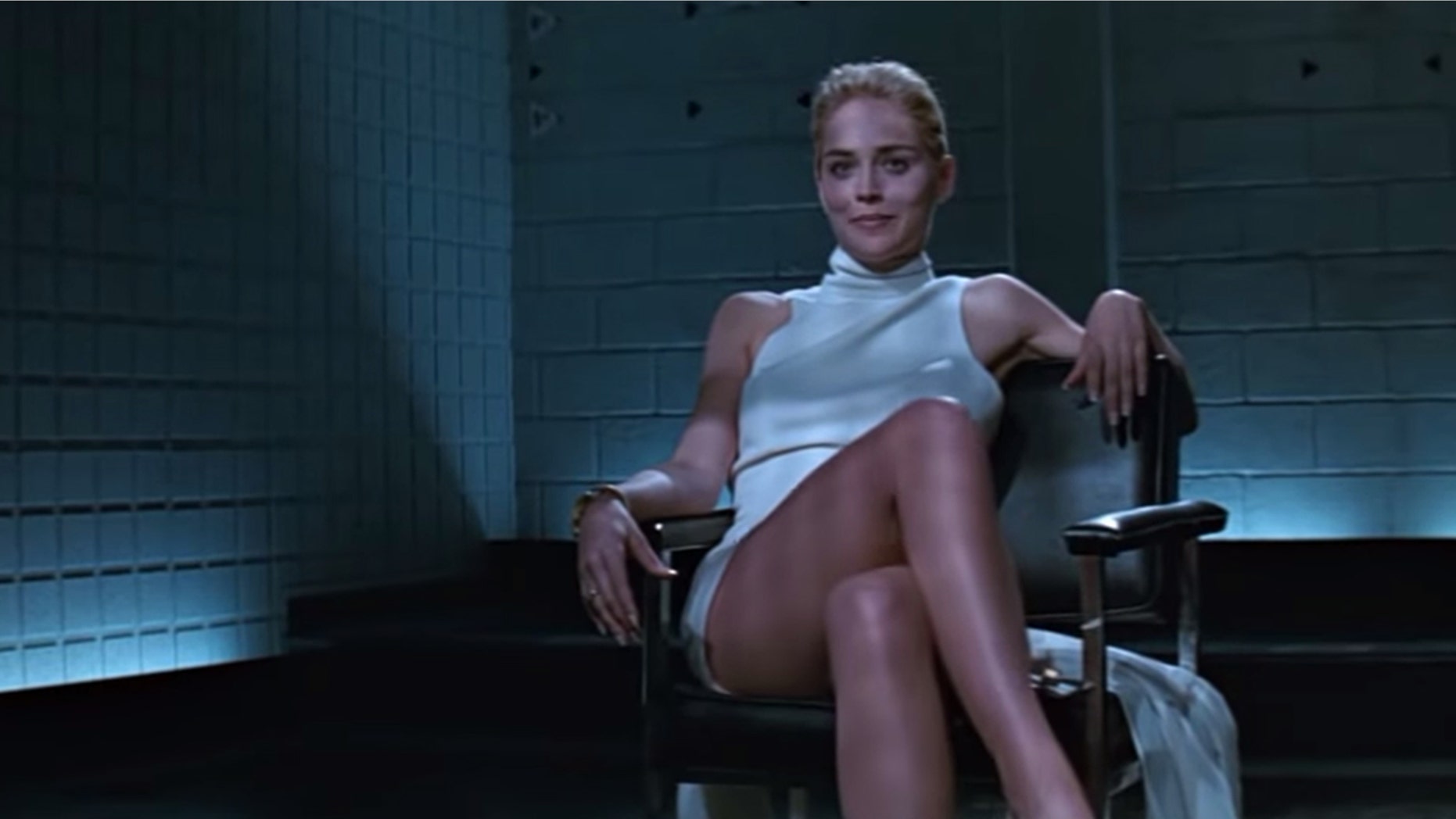
That shot made her tens of millions of dollars. I recall how, way back then, Kirstey Alley was making fun of Stone "not realizing" what they were doing on Letterman. Alley said something along the lines of, "There's an AC with a tape measure touching your private parts and you wonder what exactly he was measuring?"
BTW, the film itself was awful.
BTW, the film itself was awful.
JAMedia
Well-known member
There are two separate discussions with Basic Instinct.
1 The coercion and treatment of the actresses (and actors).
2 The nudity. There is a LOT of full frontal nudity in many mainstream films and TV programs. Most of it passes without comment. The only reason that this scene with a couple of frames (?) of vigina in it is so talked about is because the scene is so effective. More so than the numerous other nude and sex scenes in the film.
1 The coercion and treatment of the actresses (and actors).
2 The nudity. There is a LOT of full frontal nudity in many mainstream films and TV programs. Most of it passes without comment. The only reason that this scene with a couple of frames (?) of vigina in it is so talked about is because the scene is so effective. More so than the numerous other nude and sex scenes in the film.
FWIW, I like Basic Instinct a lot. Is it a masterpiece, no. But it is very good. Easily one of the top few movies of that era. A tribute to Hitchcock, and very well executed in that respect. Pretty excellent direction. The script is a bit hit and miss, but the execution is superlative. And the supposed vag shot is completely ridiculous. I didn’t (and still don’t) care about it at all. Insofar as it’s being controversial, it’s been a financial boon. No actor should be abused, including Sharon Stone. But then again, I wasn’t there, so I don’t know what really went on between her and the director, who said what and promised what. It is also quite clear, by the by, that Basic Instinct made Stone a star. Maybe she’d say the price wasn’t worth paying for that stardom, that’s her right, but the fact remains that she owes her career to P.V. And again, the nudity there, such as it was, was ridiculously overblown - truly a mountain made out of a molehill... such a non-event. In the end, perhaps if Stone had a choice she would’ve rather not done that shot... and not had a career that she did as a result of it. YMMV.
paulears
Veteran
I worked with a very famous actor who had a thing about bad language, even quite mild ones would be removed from scripts and replaced if people wanted him in the movie or stage show. Odd when he became famous for playing a character with a bad mouth. I asked him about this and he said he was a struggling actor with a family and had a decision to make. He did it, hated it, and decided a few years later that now he had the power to say no, he would. He said that if he’d said no to that first one that made him popular, his life would have been less good. Sexual predators are not new things but while unpleasant by today’s standards were a thing many took advantage of to get a career hike. They made a business decision, like another career has always done. Difficult to live with perhaps, but still an agreement? It was a career enhancing decision and I guess something lots have kept quiet about. After all, for the process to get named, as in the casting couch, it want really a secret. Just another example of wanting to rewrite the past with today’s weird double standards.
Mitch Gross
Veteran
The script for The Wolf of Wall Street called for Margot Robbie's character to appear topless when she invites Leonardo DiCaprio's character to her bedroom. It was Robbie who said to Martin Scorsese that her character would pull no punches and instead appear completely naked. And so she did, full frontal straight to camera.
I'm not going to pretend I know what goes on in someone else's head, but I'm sure that Robbie knew that this role, appearing as a glammed up beauty opposite one of if not the biggest star in the world with one of if not the biggest directors in the world at the helm, well this role certainly had the potential to elevate her to become an international movie star. Did she make the decision based on this or because she felt it best for her character and the scene? Or was it for both? Fact is, she became an instant superstar and I don't believe she's appeared nude in a film since.
I'm not going to pretend I know what goes on in someone else's head, but I'm sure that Robbie knew that this role, appearing as a glammed up beauty opposite one of if not the biggest star in the world with one of if not the biggest directors in the world at the helm, well this role certainly had the potential to elevate her to become an international movie star. Did she make the decision based on this or because she felt it best for her character and the scene? Or was it for both? Fact is, she became an instant superstar and I don't believe she's appeared nude in a film since.