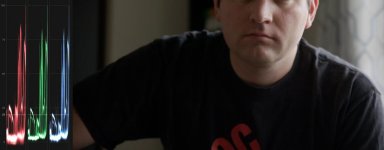
C500: C500 II Streaking

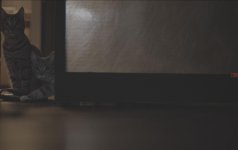
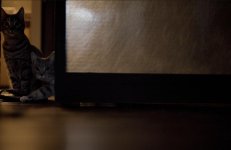
I always thought that C500 MKII would be perfect for making cat videos.

(I kid, I kid)

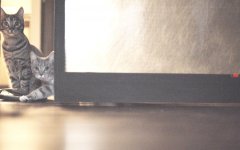
Hey if Phillip bloom can do it with the Fx9, right? Funny, My girlfriend had been listening to me go on about this camera since launch, so I thought I'd try to get some shots of her kittens the first day as a present. They were having nothing of it. I'll need to try again.
 
Barry if you can closely replicate the other 2 cams, that would make a case that it's normal for the sensor. .

Ha...well if you keep pushing any image it will eventually fall apart...here's that image pushed another stop or two...actualy I'm a little surprised at how little it's breaking up given where it started...but there's a streak! (hard to see with DVXUser ProGamma applied). Still, it's totally, absolutely normal.

Noise floor raised again.jpgNoise floor.jpgScreen Shot 2020-01-21 at 11.10.55 AM copy.jpg
 
Well Barry you did achieve some streaks- especially on the cats (looks kind organic lol; j/k)!

In all seriousness, I'm sure those seeing this issue appreciate your effort to help solve. While you did surface some streaks with a bit of effort, it's fairly subtle compared to the other examples? It seems that the issue is strongest when there's very bright and very dark elements in a shot at the same time (high/max DR) and then the shadows are pulled up significantly in post.

Perhaps you guys can set up a similar test, with at least one clipping level light source and do the same tests on all the cameras, then compare results (Ideally you'd test in the exact same conditions). Perhaps use fixed ISO, F, shutter, peak brightness in scene (as shown on camera meter(s)), etc., then share footage.
 
I should mention also - that I downloaded the test low light footage that Cinema5d posted here: https://www.cinema5d.com/canon-c500-mark-ii-lowlight-test-6k-raw-clip-download/ - And was not able to replicate the streaking. There were definitely some underexposed areas in those shots.

Actually I'm well acquainted with that footage, having produced the alternative grade of it that is posted in the comments of that site. So that footage is different than your case...all shot at higher ISO (something you'll remember I suggested as an option for you), and it's XFAVC, which means it should have less noise, and I think, given the subject matter is generally exposed rather well. There are two shots though, at the very end that are underexposed quite a bit. Increase the gain on them, and you will find various forms of streaking, some from smear, others are pattern noise. Nothing to write home about. The LUT, as always, tells all, those areas "should" be black based on where they are exposed.

c500 mark ii tests2.jpgc500 mark ii tests lut.jpg
 
Hey if Phillip bloom can do it with the Fx9, right? ...
Phil shoots his cats with every camera he gets. I think one of the cats is even named 1D C. For unknown reasons.

Side note - if you want to use a quote feature, highlight the text and then click on the far right icon

Like this.

If you want to keep the poster's screen name in it, copy and paste it with the post reference after it. There's probably some other way to do this but I haven't figured it out yet.
 
Phil shoots his cats with every camera he gets. I think one of the cats is even named 1D C. For unknown reasons.
My first assisting job was for a photographer with a Jack Russell named Kodak (who replaced a previous model named Ilford), and a cockatoo named Agfa. Which tells you just about how old I am.
 
My first assisting job was for a photographer with a Jack Russell named Kodak (who replaced a previous model named Ilford), and a cockatoo named Agfa. Which tells you just about how old I am.

If the bird was a Dodo we'd be asking if you have a Highlander sword lol.
 
My first assisting job was for a photographer with a Jack Russell named Kodak (who replaced a previous model named Ilford), and a cockatoo named Agfa. Which tells you just about how old I am.

Agfa (Aktiengesellschaft für Anilinfabrikation) was started in 1867 by the son of Felix Mendelsohn and a partner. During the 1920's, it was taken over by a united chemical conglomerate known as IG Farben (Interessengemeinschaft Farbenindustrie AG), effectively a state controlled cartel of BASF, Beyer, Hoechst, Agfa and others. Arguably, the 1930's Agfa color film was superior to any of its competitors and the German WWII color photos were of higher quality than any of the Allies (which were mosly in black and white anyway). After the war, Agfa film patents were appropriated as "compensation".

BASF/AEG reel-to-reel tape recorder (Magnetophon) was similarly exported. It was then modded by Ampex in the US as Ampex20a and changed the face of radio.

Not a professional historian. Just play one on DVXU.
 
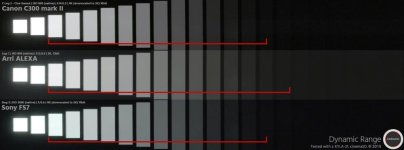
-----Fix pattern noise is generally not something that can be cleaned up in post. Take a look at the Fs7 xyla chart below and you'll see some streaking and plenty of fixed noise


Yes I've seen that Xyla chart before Barry. What you are showing is not the whole picture though. The original below shows three cameras were compared and the third one was the C300 Mark II where you see broad band dark streaking starting to appear at least 1.5 to 2.5 stops prior to the end of the red line denoting usable range. Worse than the FS7 even. I just hope the 500 II is not going to exhibit the low end streaking that quite a few C300 Mark II users have mentioned. Time will tell I guess.

Chris Young

dynamic-range-C300-mark-ii-vs-fs7-vs-alexa_B.jpg
 
I didn't show it for that reason. We weren't discussing the C300II, but we were discussing a camera (the FS5) that has the identical sensor as the FS7, and talking about illusory streaking in another camera, as if somehow a crazy abundance of pattern and color noise in the FS5 was simply "no problem".

Also that streak in the C300 chart is polarizing and not particularly accurate (it's caused by the first patch of the xyla essentially being a full stop plus above clip. (ever wonder why a xyla wedge is shaped like that, it's because lots of sensors exhibit this, and readings aren't taken from the center of the patch for exactly that reason, as it would give inaccurate results.) If you read the article, you'll see that even the very critical reviewer wasn't too concerned about it, and for those of us that have shot with the C300 since the beginning will tell you it for the most part isn't a problem, unless you're prone to underexposing things. (I saw it maybe 3 or 4 times in my work, and typically it was eliminated by changing from ISO 800 to 400.)

That said, the C500 doesn't seem to have issues with cmos smear in the way that the C300II did. (actually I believe Canon improved it somewhat on the C300II with a firmware update, sometime after this chart was made). As someone who's used the camera daily since I've had it, I can tell you it's much cleaner than the C300II, especially at the margins of exposure, and that I have to really work hard to find any inconsistencies in the sensor pattern even at the noise floor.

The message is still pretty simple. Log gamma's still require accurate exposure. Exposing to protect the highlights when you really want to open the deepest shadows is the wrong approach. 15+ stops doesn't mean 16 or 17 but rather 13 or 14.

You know I was thinking about the image that Airwolf had posted. He's exposed it to hold detail in the highlights out the window, and has underexposed his subject by a stop or maybe close to two. This is what some folks "think" a 15 stop camera is supposed to let you do. It's not. If it were, then Roger Deakins would have done it in all of the interior day shots in No Country For Old men. He wanted a natural light look, and shooting on negative, he had access to just as much usable DR as an Alexa. Why would you spend money on 10-18k lights positioned in the parking lot, and bounced into unbleached muslin, if all you need to do is fire up a C300 or an FS5 or his new favorite camera, the ALEXA Mini LF, and not add a light or even a freaking fill card. I'll tell you why...because you can't. I showed my "into the sun" shot because that's a known DR amount...but doing the same thing with my actor positioned "inside a box with a hold cut in it" is more DR than any camera should be asked to deal with, at least if you're trying to hold everything you can see (I'd love to know what you'd actually do with 15/16 stops of DR, in this situation, when even current HDR displays are maxing out around 10 or 11, but that's a digression.) So Roger Deakins, NCFOM. shooting long scenes with Tommy Lee Jones posited in the middle of a coffee shop. Wanting it to look like he's lit from the windows. Using 180,000 watts of light to get the DR down to 7-8 stops, where it belongs.

No Country.jpg

By Comparison, In order to show us the streaking, Airwolf has had to take tones that the LUT shows are solid black, and raise them into the 60-70 IRE range.

Screen Shot 2020-01-20 at 6.39.40 PM copy.jpgPushedFrame.jpg
 
Last edited:
I didn't show it for that reason. We weren't discussing the C300II, but we were discussing a camera (the FS5) that has the identical sensor as the FS7, and talking about illusory streaking in another camera, as if somehow a crazy abundance of pattern and color noise in the FS5 was simply "no problem".

Understood Barry. Didn't know where you got the JPG from as the only one I knew off had the three cameras. For all I knew the image you had might have arrived at yours with just the two camera samples. I was just drawing attention to the fact that what was being displayed was not the full image I knew of. My past experience is it's best not to edit others images or videos when trying to illustrate points. Leave well alone just explain and nobody can get the impression of selective editing. Not suggesting that was the intention but it avoids any possibility of confusion and maintains transparency. My own personal POV of course. Others may or may not agree.

That said regards the FS5 and the FS7 and for that matter the FS700 they all have the same sensor, yes I agree that is the case. The post sensor A to D processing is quite different between all three cameras. Plus the entire color paint menus are totally different. The FS5 comes up from the A7 range and the FS7 comes down from the F5 which has a traditional SMPTE matrix setup. As anyone who has tried to set up 5s and 7s up to work together knows all too well that from both the noise and color point of view they are like chalk and cheese. With regards to firmware updates yes agreed Canon have tried to improve the streaking issues, especially the hard edged high luminance to low luminance transitions many C300 Mk II users have encountered. Canon seem to issue firmware more from an improvement point of view which is good as opposed to adding features which is more of a Sony approach. Sony introduced NR in Cine EI which was needed in one of their FS7 upgrades but not much else has changed. Or if it has I haven't seen much evidence of any change that has materially changed the images out of the FS7.

It's just interesting that these posts re streaking are popping up on the C500 II. Generally when people who own a product start a thread like this it's because one or more people aren't super happy with what they are seeing. That being the case it's good we are having the discussion. I remember the FS5 encoding artifact issues with the first model FS5 and it was many postings here and elsewhere that got Sony to fix the issue pretty quickly. If there is an issue with the C500 II re streaking sure as day follows night forums like this and others will shed light on the issue. If it proves to be an issue I trust Canon will look after their loyal customers by fixing it.

Chris Young
 
  • Like
Reactions: jcs
Every CMOS sensor has smear, even an Alexa. But the Canons and some Reds have it in spades. While correct exposure will help, it can't completely mitigate the problem, especially when shooting into windows. I returned a c200 for this reason and there is a video online of a c700 on a professional film shoot, exhibiting this same problem. I went to canon in Burbank to see if my sensor was faulty, and they said this was normal behavior. I read somewhere that the DPAF is to blame. So, essentially all of the DPAF cameras are all flawed, but Canon isn't going to advertise that. The 15 stop number that these cameras supposedly have is flawed in 2 ways. One, the camera is way too noisy to really have that much range and two, the smear makes that number way smaller, maybe even 8-10 stops, for certain scenes. One of the above posts is correct about Roger Deakins and a 7-8 stop range, when lighting for that style. But watch a Terrence Malick film like Knight of Cups or To the Wonder, shot for the most part with natural light, by another great Lubezki, on an Alexa and you will see what a true 14+ stop dynamic range can yield, with beautiful contrast and lifted shadows.

I swapped the c200 for a VariCam LT and if you can deal with no autofocus (and some overly complicated menu / system quirks), you will get the best image this side of an Alexa, I promise. The VariCam is a true 13 stop camera, maybe 14, depending on your measurement technique. It does really nice low light (a bit noisier than regular, but very useful) is ergonomically better balanced for over the shoulder handheld work and can shoot uncompressed RAW. But ProRes HQ is all you really need, to an Atomos Shogun Inferno. You'd probably save a bit of money, too, even after all of the accessories.

All that said, you really need to study dynamic range, contrast, luts, and color grading. If you shoot without viewing through a lut, you will miss exposures and not make the right choices. You really want to aim for footage that can be put into resolve or editor, with essentially no adjustment and look 90-95% of the way there. If you are adjusting every shot, just to make it look correct you're exposures aren't correct and / or your lut / grading setup is flawed.

Hope this helps and happy shooting
 
Nice 1st post and good points re: DR (no way C300 II and C500 II come close to advertised usable DR) and using preview LUTs live + getting shots 90+% correct in camera when possible (except for certain extreme cases, e.g. protecting highlights).

Another option if needing more usable DR along with AF: Sony FX9 (also doesn't produce manufacturer claimed usable DR, however is much better than Canon so far, especially in the highlights). Alexa/Amiras still the only cameras coming close to advertised specs for usable DR (amazing achievement given ~10 years on the market!).
 
Nice 1st post and good points re: DR (no way C300 II and C500 II come close to advertised usable DR) and using preview LUTs live + getting shots 90+% correct in camera when possible (except for certain extreme cases, e.g. protecting highlights).

Another option if needing more usable DR along with AF: Sony FX9 (also doesn't produce manufacturer claimed usable DR, however is much better than Canon so far, especially in the highlights). Alexa/Amiras still the only cameras coming close to advertised specs for usable DR (amazing achievement given ~10 years on the market!).

Thank you! I thought I’d posted before, but I guess not haha.

I’ve not tested an FX9, but 6k bothers me a bit. Frankly, 4K bothers me a bit. Unnecessary waste of pixels. The Alexa was fine at less than 4k, but it’s semiconductor companies, Netflix and uninformed consumers who are driving demand. Ask any serious cinematographer and I bet dynamic range is first on their list for things they look for in a camera. You don’t see any top DP demanding RED for the most part. Unfortunately, it’s only going to get worse with 8k around the corner. When does this stop? The Alexa LF will destroy all of those 8k cameras for the next 5-10 years, but won’t be Netflix 8k approved. It’s physics, bigger pixels gets more dynamic range. I was really hoping someone would make a full frame 4K camera, but alas it’s 6 and 8k. And it will possibly happens again with 16k medium format. Same problem haha. I’m sure someone will figure out a way to cram the resolution and DR onto the same chip, but we will have to wait and see.

Also, to add to the Varicam, a lot of shows on Netflix use or have used this camera or the V35 (same sensor). That was a good indication to me that its quality had been vetted. Where as you don’t see much canon stuff or Blackmagic. I do think the canon’s have really nice features and would be great for documentary, however. With the Alexa lf out, I think that will change, though.
 
Thank you! I thought I’d posted before, but I guess not haha.

I’ve not tested an FX9, but 6k bothers me a bit. Frankly, 4K bothers me a bit. Unnecessary waste of pixels. The Alexa was fine at less than 4k, but it’s semiconductor companies, Netflix and uninformed consumers who are driving demand. Ask any serious cinematographer and I bet dynamic range is first on their list for things they look for in a camera. You don’t see any top DP demanding RED for the most part. Unfortunately, it’s only going to get worse with 8k around the corner. When does this stop? The Alexa LF will destroy all of those 8k cameras for the next 5-10 years, but won’t be Netflix 8k approved. It’s physics, bigger pixels gets more dynamic range. I was really hoping someone would make a full frame 4K camera, but alas it’s 6 and 8k. And it will possibly happens again with 16k medium format. Same problem haha. I’m sure someone will figure out a way to cram the resolution and DR onto the same chip, but we will have to wait and see.

Also, to add to the Varicam, a lot of shows on Netflix use or have used this camera or the V35 (same sensor). That was a good indication to me that its quality had been vetted. Where as you don’t see much canon stuff or Blackmagic. I do think the canon’s have really nice features and would be great for documentary, however. With the Alexa lf out, I think that will change, though.

I studied quite a bit of online footage of the C500 II and FX9 before briefly testing both cameras in a studio (including a really nice high resolution test chart). Agree with your points regarding 4K, as a delivery target. In order to capture max resolution before aliasing, for any sensor, we need 3/2 or 1.5x oversampling: that's Nyquist-Shannon sampling theory and physics. We can use a lower resolution sensor with a stronger OLPF (which is what e.g. the 4.4K Alexa LF is doing to produce 4K) to deal with aliasing, and I agree the Alexa (m)LF is the best looking camera right now (Sony Venice and Red Monstro have their moments (and uses) too). So 6K to get 4K is fine, and when we examine resolution charts, we see the C500 II producing Nyquist limit detail with little or no aliasing for 4K, and the FX9 just a hair behind (slightly less detail with slightly more aliasing: no one will ever notice the difference between cameras for real world images beyond a test chart).

CPUs and GPUs are so powerful now, that we should easily be able to edit even 16K (or more) in real-time like butter, if 3D game developers were writing the rendering code (best coders in the world IMO). Resolve has the best chance to get there- however they need to hire the right people as so far it's not utilizing all the available compute resources. Adobe really needs to do a from-scratch rewrite for Premiere (+ fix all the bugs and rename it: Dependable). In the rewrite, add all the functionality of After Affects and Audition (same model used by Resolve).

While 4K is a fine delivery target for the foreseeable future (especially with excellent AI upscaling for 8K displays and beyond), 6K, 8K and beyond capture provides more options in post for reframing, stabilization, VFX, etc.
 
I’ve not tested an FX9, but 6k bothers me a bit. Frankly, 4K bothers me a bit. Unnecessary waste of pixels. The Alexa was fine at less than 4k, but it’s semiconductor companies......

Problem is, while HD might be fine, distribution companies are requesting 4k content. I shot my last doc in 4K, mixed with archival footage (film scanned in 1080) and mastered in 1080/2k for DCP delivery. Not even talking about Netflix, talking about independent film distributors that distribute docs and small budget narratives.

I could have got more dollar-wise out of my films had I offered it in 4k. Would it have really looked any better? To the average user, no. Would it have looked better on the big screen? Probably not, since most projectors and DCP delivery is STILL 2k. But they want 4k, which means i'd like 6k or 8k so I can cover-up crap in the interviews by cropping in without having to switch to a second camera.

4K is here to stay, and 8k is approaching fast. The market demands it.
 
Sony FX9 (also doesn't produce manufacturer claimed usable DR, however is much better than Canon so far, especially in the highlights).

John, I really don’t want to start this up again, so maybe you could help by quantifying how much “much better” is in terms of highlight detail. 1/2stop?.. 1stop?... more?less? For weeks you demanded that others produce tests (skin tone ramps) refuting your comments (instead of the more typical scientific approach of.. “here is what I think, here are the results of tests I’ve conducted that prove it”). Several weeks ago you got ahold of both cameras. Did you conduct that test? I’ve really hoped to see your results.

I’ll say that, from the Side by side tests I’ve seen, the fx9 has about 1/2 stop more latitude in overexposure, and at least as much less in under exposure. I’d say the fx9 is a little better in the highlights, and a little worse in the shadows. Does that seem right to you?
 
Back
Top