

MattDavis
Well-known member
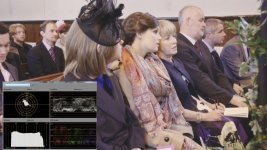
Erm, guys, just to point out - the still I showed was from a slide deck I use to show how NOT to do it... As an ICE for Sony, I do my FS100/700 workshops, so have to demonstrate how things go wrong as well as how things go right.
So the current speil is about exposing a 109% PP as if it were 100%, and adjusting your black point according to the scene... plus the Spaghetti Sauce analogy for PPs: you can't have just one. You need a High Contrast one, you need a Low Contrast one at the bare minimum; you probably want an indoor office lit one, an indoor properly lit one, a cloudy outdoor one, a sunny outdoor one, and a chromakey one if you do that sort of thing. That means looking at the Histogram and doing something about it (or the waveform monitor if your outboard monitor/recorder does it). The codec isn't that intelligent - you need to plant black with as much care as you plant your whites. Yes, the codec will spread the brightness ranges you set over your range ACCORDING TO YOUR CHOICE OF , but it is up to you to plant the Alpha and Omega of that range.
It's not funny, it's beautiful. Our job as editors/graders is to take that amazing dynamic range and alter the curves, the gamma, the mapping of input to output, to fit the REC709 display. It's our job. Look at a Red Raw image - it looks horrible. But it's just unformed clay. We push it, we pull it, we form it into a brightness range - have you ever printed B/W negatives? Look at how Ansel Adams took an understanding of how silver halides reacted to light and formed a system of mapping exposure to final print. It's the only way we can communicate what we 'see' as photographers/videographers to how our audience will see (on their REC709 devices). REC709 gives us a platform to aim for. We don't want/need 1:1 mapping unless we're ENG shooters doing Live stuff.
But... the nurse says I must rest now. I hope the crayon is legible.
So the current speil is about exposing a 109% PP as if it were 100%, and adjusting your black point according to the scene... plus the Spaghetti Sauce analogy for PPs: you can't have just one. You need a High Contrast one, you need a Low Contrast one at the bare minimum; you probably want an indoor office lit one, an indoor properly lit one, a cloudy outdoor one, a sunny outdoor one, and a chromakey one if you do that sort of thing. That means looking at the Histogram and doing something about it (or the waveform monitor if your outboard monitor/recorder does it). The codec isn't that intelligent - you need to plant black with as much care as you plant your whites. Yes, the codec will spread the brightness ranges you set over your range ACCORDING TO YOUR CHOICE OF , but it is up to you to plant the Alpha and Omega of that range.
With the camera arms race raging it's quite funny to see the specs of these new cameras 14 stops of RAW at >>HD yet the delivery medium is nearly always 8 bit REC709 (or sRGB) HD if we're lucky. There is only so much of that quart that can be squeezed into a pint pot.
It's not funny, it's beautiful. Our job as editors/graders is to take that amazing dynamic range and alter the curves, the gamma, the mapping of input to output, to fit the REC709 display. It's our job. Look at a Red Raw image - it looks horrible. But it's just unformed clay. We push it, we pull it, we form it into a brightness range - have you ever printed B/W negatives? Look at how Ansel Adams took an understanding of how silver halides reacted to light and formed a system of mapping exposure to final print. It's the only way we can communicate what we 'see' as photographers/videographers to how our audience will see (on their REC709 devices). REC709 gives us a platform to aim for. We don't want/need 1:1 mapping unless we're ENG shooters doing Live stuff.
But... the nurse says I must rest now. I hope the crayon is legible.






 )