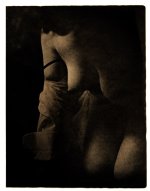
How do you make that loook ?

deleuze3

Well-known member
https://vimeo.com/122607315

How do you make that look as a video with DSLR ?

All i can do is this kind of footage : https://www.youtube.com/watch?v=kj1wrXWSibE

My compression has artifacts.

Probably on the video footage, there is much work on color correction, lighting is impeccable. Those are the 2 variables i know.

Maybe the compression of my footage was not good, but i followed the compression setting from Larry Jordan (that gives good advices i think)

Any tips ?
 
Start by comparing apples to apples. Vimeo compression looks better than youtube.

Next, you need to get a handle on exposure and controlling the light in your shooting environment. Using filters and lighting controls to feed your sensor what it needs. Also all settings to manual if you want to control your image. There were a lot of little adjustments going on in yours as your camera attempted to deal with changes as you moved around. Get some ND. Set your own aperture. Get contrast filters if the DR of the scene is too much for your camera. Otherwise choose what you want to expose correctly for and let the background blow out. Most importantly you have to make these decisions, not your camera.
 
In that commercial, its DP knew every one of his shots. He wasn't just pushing the record button and letting the camera take images of whatever was in front of it.
 
Wow… really has nothing to do with compression. The Vimeo ad was shot by someone who knows exposure, framing, knows how to compose a shot and which lenses to use, how to use DOF, etc.

The youtube video is just pointing a camera at stuff.

Not trying to be a jerk, but… you got a long way to go (we all did at one time or another).

For starters, I'd recommend:

1 - get one decent lens and don't rely on the kit lens. Get a 50 1.8, try to get like an older Nikkor pre-AF (just look at old film bodies on eBay and buy one with a 50 for $30 or whatever, ditch the body, keep the lens. Or whatever you can adapt for you camera - (a 50 is usually the cheapest fast prime you can find though). Shut off all the auto stuff on your camera. (Usually a pre-AF era lens will have a bigger focus ring and better focus feel). Get a couple cheap-ass ND screw-ons for it - even super-cheap asian filters are fine for learning how to use them.

2 - read everything you can about exposure, how it works, how to control it.

2a - read everything you can about fashion and beauty lighting tips (since you seem to be after that look).

3 - if you want to shoot like that vimeo spot, go to the bookstore, get a cup of coffee, and grab a pile of fashion magazines. Mainstream and european artsy stuff. Buy a couple that have the kind of images you want to shoot. You will likely find dozens of ads and features that make you go "AHHHHHH, THAT'S WHAT I WANT TO MAKE!!!" Tear out those pages, make a folder, pick one, find a model, and try to replicate it -not even video, just shooting manual stills. Just learn to light and frame and compose with stills for now. Keep your shutter at a 50th or 60th. Learn what stops give you the DOF you want for a shot.

Get as close as you can, come back here, and on the cinematography section (not the Canon APS-C section, this has nothing to do with camera brands) post the ad you're trying to copy and how far you've gotten. Don't mess with us by just posting the ad and asking "how" - get as close as you can, then ask for advice. You'll get 20 different paths to the same image, and many will be using "shop lights and bed sheets" which is what you want for now (unless you're crazy wealthy).

I'll say, with all the kindness and humility I can muster - you know next-to-nothing about this stuff. (We all once knew nothing about what we do, ain't no thing). You seem to have good taste in the looks you want to do, that's a good start. But you gotta learn how light and exposure and lenses work - I've been doing this for three decades and still learning myself. Keep at it and someday you'll be answering instead of asking.

Go get busy, and good luck. And if you lie awake all night thinking of this stuff, that's a good sign...
 
Last edited:
High five to Michael Carter. When I bought my 7D with filmmaking in mind, the first thing I did was put the camera in manual mode and shoot stills for six months. And look at me now--five years later I'm unemployed and leave marginally useful comments in filmmaking forums.

Well this comment didn't go quite like I planned, but the point is, he's right.

Your comment did provide me a good laugh though (at the expense of your modesty)! :) I'm sure your skills IRT cinematography have improved, yes?
 
To add a tiny bit to what Michael said --

a lion's share of the beginner writers/actors/comedians/photographers/business executives/athletes/musicians, etc. doesn't have a bleeping idea of what they're doing ... well, everyone except Allen Iverson, which is why he had such an aversion to practice. Everyone else needs some learnin'. Even Messi. So aspire to be Messi and, if you end up kicking the ball in Finland with Freddy Adu, don't forget that you're still more successful than a vast portion of those who tried to make a career out of it.

(ps. if one looks at eBay, as recommended above, one can find some pretty darn cheap LED panels to go along with cheap used 50mm primes. Even with a couple of 500 bead panels and a couple of 126's, some practicals -- and let's not forget windows... and, by associations, curtains - one could set up a huge variety of lighting combinations and all for a price of a point&shoot)
 
I've been re-learning black and white film and darkroom printing the last year, got a nice darkroom going, etc… trying to really dial in what developers work with what films, how to get the exposure that prints best (and using zero scanners or photoshop for this project) really reminds me of one huge thing:

Digital is a killer way to learn exposure, composition and lighting.

Even developing my own film, if I don't take meticulous notes when shooting tests, I have to struggle to figure out what things affect the final outcome. If you wanted to learn color shooting back in the day, you waited for the lab to process your E6 - and you paid for it.

So to all the newbies out there - test test test. Test like a mothaf*cka. Before you post a question here, try to answer it by testing. At the least, you'll dial your question in a little tighter.

And to all the experienced cats - never stop testing. It's got a magical effect on everything you do - you often learn three times what you were hoping to.

(And my darkroom lith printing is coming along!!)

scan2.jpg
 
I got a 20-min photography tutorial from a portrait/wedding pro on my dad's Zenit TTL. I am sure the original post-WWII designs were copies of Leica and Contax cams that the Soviets got as trophies but this was the shiznit back in the late 1970's. For some reason, I remember that it cost 240R (lens included ... and the Wikipedia page agrees), which was about a double of what a teacher, a doctor or a recent engineering grad made per month.

In all its glory.

https://ru.wikipedia.org/wiki/Зенит-TTL#/media/File:Zenit_TTL.JPG
 
I'm pretty gay for old retro mechanical cameras. I shoot with cheap minolta rangefinder often - great lens and cool looking gear.
 
deleuze3, I stumbled across this today and thought it might give you a little more direction for dealing with bright daylight. Of course, this wouldn't fix your sample footage 100% unless you had a really, really big silk, but it'll get you in the right neighborhood.


LINK (for those reading this on a browser that doesn't show the embed)

As a side note, there's a LOT more than this to getting the "film" look, and I think he's throwing that term around very loosely. A better title would be someting along the lines of "cinematic exposure contol for DSLR," but whatever.
 
Last edited:
https://vimeo.com/122607315

How do you make that look as a video with DSLR ?

All i can do is this kind of footage : https://www.youtube.com/watch?v=kj1wrXWSibE

My compression has artifacts.

Probably on the video footage, there is much work on color correction, lighting is impeccable. Those are the 2 variables i know.

Maybe the compression of my footage was not good, but i followed the compression setting from Larry Jordan (that gives good advices i think)

Any tips ?

The differences you perceived between the vimeo video and the youtube video have very little to do with color correction, or lighting, or compression. The biggest difference between them is in the content: the vimeo video is a sequence of carefully planned shots combined to execute a flow of ideas that are supposed to serve the theme of a commercial ad. To the contrary, the youtube video is more or less just like a random recording made by someone or some robot hand holding a surveillance camera: t doesn't know what to shoot, what to express, what to focus, what to pursue... recording the video doesn't require knowledge or skills or effects or looks or anything other than a working camera. It doesn't strive to achieve a certain look such as one that can mimic the look of that viemo video, so understandably it doesn't have any look except the one that happens to be.


There is a very successful YouTube filmaker named Devin Graham, or devinsupertramp. His YouTube movies have ten of millions of viewers. T o best shoot a forest scene (like that in your YouTube video), technically, one can learn a lot from Devin. He is very mobile, shoots very fast, doesn't use ND filters, and doesn't reply on computer-based "tricks" such as CGI or color corrections to make his movies stand out. He's focused exclusively on the content.

Here is an example (over 7 millions views)

https://www.youtube.com/watch?v=Vp63nbOfxgs&index=11&list=PL708E2FE711E7B3C3

It's shot on a 5D Mark 2 and had just 1 actress and 1 shooter (Devin himself). Many shots were obviously captured in broad daylight and have a beautiful cinematic look.


Had your YouTube video had an interesting theme and proper planning, one could follow Devin's example (or similar approaches) to make a decent movie out of it, with a beautiful cinematic look. And you wouldn't have to worry about color correction or compression or anything like that, despite editing and grading are always essential in making a final good movie.
 
Last edited:
Back
Top