GH4 GH4 SD Cards

The review says: "Switching to random large-block transfers, we measured a write speed of 10.3MB/s for the Komputerbay SDXC 128GB card. "

You would be making a relavent point if video was written in large random block transfers but that is not how video writes to these cards. The sequential write speeds are what is relavent to the discussion.

Maybe you have a special one of a kind camera that writes in large random blocks and if that is the case then I would definitely stay away from these cards. If, however, like the rest of the universe you are working with a camera that writes data sequentially, like the GH4, then you should probably refer to the sequential write speed performance numbers.

However, if you want to refer to the random block performance numbers you should also note that the Kingston U3 card had random block performance speeds of 11.2MB/s....so by your logic it doesen't matter what card we get as neither the Kingston or the Komputerbay card is fast enough....

I am not going to try convince anyone here to buy these cards. In fairness none of us knows whether these Komputerbay cards will work in the GH4. Using basic logic and reasoning some people will be willing to give them a try and others won't. Do as you wish.

I wanted to reply to your post just to make sure that some poor hapless soul doesen't come across this thread and your reference to Random large-block transfers speeds as some sort of new gauge on how to judge the worthiness of an SD card for video and then take it as gospel.

Incidentally, if I go to some of the most reputable card manufacturers reviews (Sandisk and Kingston for instance) you will find all manner of problems and issues and bad feedback from various customers. Go on B&H and look up almost any highly regarded product with a history and you will find dissatisfied customers. It's not absolute proof of anything.
 
Last edited:
You would be making a relavent point if video was written in large random block transfers but that is not how video writes to these cards. The sequential write speeds are what is relavent to the discussion.

Ah I understand my mistake here. Absolutely correct. I have confused it's relevancy as I was shopping for new microSDs and SSDs as a medium for my apps and OS, which contributed the confusion. My apologies everyone!

However, it does not change the fact that the manufacturer has stated it can drop to a minimum of 10MB/s regardless whether sequential or large block.

True North said:
Maybe you have a special one of a kind camera that writes in large random blocks and if that is the case then I would definitely stay away from these cards. If, however, like the rest of the universe you are working with a camera...

It's this kind of attitude that's totally unnecessary.

Regardless, the Komputerbay 128GB is a very good price and even if it dips down to 10MB/s, it'd still be useful for other shooting modes. Actually I may buy one just to fill it with music and leave it in my SD slots.

Looking forward to knowing if this and the Kingston are good enough because damn the Panasonic ones are a lot more pricey right now :)
 
Will the GH4 use the same batteries that the GH3 uses? Or is panasonic going to make us pay for different
battery design?
 
On the subject of these SD cards, does the fact that they are formatted "FAT32" pose any issues regarding file size? And would that correlate to possible limitations in length of shot, when shooting video? 4K files are going to be very large and I'm just wondering what limitations we may be facing. I own 2 GH2s and am thinking of skipping over the GH3 in favor of a "4" when the time comes. Thoughts?

Thanks!
Terry
 
I read through this thead about cards for the GH4 but didn't see any discussion of shooting time capacity of the cards when shooting 4k. In this hands-on review the author says a 64 GB card will hold 29 minutes of 4k at 100 Mbs: http://photofocus.com/2014/02/24/panasonic-lumix-dmc-gh4-hands-on-review/

Here is a quote of what he said: "What is clear is that we will need faster and perhaps bigger cards. Shooting 4K @100mb/s 30p on a 64GB card will give you about 29 minutes of shooting time."


Is that right? By my calculation, a 64 GB card should hold an hour or more of 100 Mbs video.

100 megabits/sec divided by 8 bits per byte = 12.5 megabytes/sec.
12.5 times 3,600 seconds in an hour = 45,000 megabytes or 45 gigabytes.

So a 64 GB card should easily hold an hour. Where is my calculation going wrong? Is there something else besides the bits-per-second that affect how much time a card can store?

My calculations as well... I think somebody is missing something. May just be bad math on their part.

The fellow from the camera store in the other thread said he got 1 hr and 10 minutes on a card (64GB I believe) at 100mbps. (4k I believe) Sounds much closer to what we should expect.
 
Now THAT's interesting... 128GB U3 cards for $109? Sign me up!
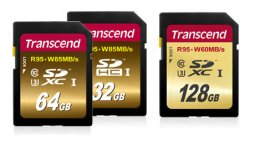
Yes pinch pennies on the most important aspect of the recording- your media. Having just one card to record to is sketchy enough, SD cards being the most unreliable media out there. Go ahead and try using Transcend. With this brand it's not the question if, but when. SD cards were notorious for failing in the heat or cold, zero customer service. These guys will never call you or answer email. When filming on a project on Mt Rainier, I had 2 Transcend cards die, losing all the important footage. So go ahead and buy Transcend, but know very well you are buying a piece of garbage.
 
Yes pinch pennies on the most important aspect of the recording- your media.
So true. In film, it all came down to the negative, that was what all your work was reduced to. Now, it's the card or the disc. The sum of all your work, all your casting, wrangling, crewing, traveling, scheduling, art direction, rehearsing, spending, and favor-pulling is in the end entirely represented by the 0's and 1's on your card. Buy the most reliable brand you can, and consider the price difference production insurance.
 
I'm sorry but that argument could be made for any piece of gear….. Pinching pennies by purchasing a cheapie camera like the BMCC instead of an Alexa when your reputation is on the line? Supporting your expensive camera with an inferior fluid head like a Manfrotto when an O'Connor is clearly better? Editing your footage with FCP X when Smoke clearly has the advantage with it's Node based compositing and 3D effects? Give me a break! Let's be honest, if a card is going to fail, it's going to fail. And even the most expensive best of the best cards have failed. Just like there are users of inexspensive cards made by companies like Transcend, that have never had a failure. The price and brand of an SD card, is not an insurance policy against failure.
 
I'm sorry but that argument could be made for any piece of gear….. Pinching pennies by purchasing a cheapie camera like the BMCC instead of an Alexa when your reputation is on the line? Supporting your expensive camera with an inferior fluid head like a Manfrotto when an O'Connor is clearly better? Editing your footage with FCP X when Smoke clearly has the advantage with it's Node based compositing and 3D effects? Give me a break! Let's be honest, if a card is going to fail, it's going to fail. And even the most expensive best of the best cards have failed. Just like there are users of inexspensive cards made by companies like Transcend, that have never had a failure. The price and brand of an SD card, is not an insurance policy against failure.
Its about reducing likelihood. All of the examples you list above are qualitative, but lost footage is absolute, when it is gone, it is 100% gone, and all the work prior to getting the shot, regardless of camera type or fluid head or handheld, is lost.
 
Back
Top