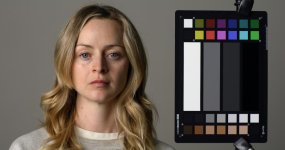
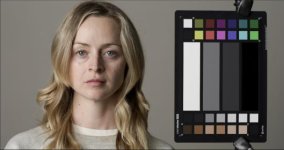
C500: C500 Mark II: Observations from a C300MkII point of view

Hi Everyone. Thank you so much Barry G for all the work you've put in, it really is very much appreciated. I wonder if anyone has noticed any loss of sharpness or increase in noise when going from FF to S35 (in XF-AVC especially).

I haven’t looked at it myself, but the link above to Matt Porwoll’s posting has a nice section on all the resolutions and frame sizes. Worth a look.

Thanks voor sharing.

Barry, what autofocus setting we're you using if I may ask?

Unfortunately, all of them. :-). In practice, for this type of shoot, I’ll be using the face detect, face only.. and varying the response times depending on whether there are foreground elements I’m dealing with. (In FD-FO, if the response time is set too fast, the camera wants to jump to foreground objects, but faster response seems helpful, give the types of movements she is doing. )
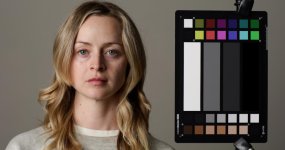
 
Still monkeying around with this footage, and I wanted to bring up something that I noticed last night which is that, again, Canon's LUTs are remarkably bad at rendering the range of their Log formats. I started to question why I was seeing such different results in color between the Clog3 XF-AVC and the CRL's shot at the same time. Turns out it was that new LUT I was chiming on about. It would appear that it is significantly desaturating lighter skin tones (not talking about specular highlights, but literally "pale Caucasian" skin tones sitting around 50 IRE in the log recording. I opened up the CRL chart shots, which default to the CLog2 LUT in FCP, and there was a lot more color in the keylight side of her face. No matter how I wrangled the XF-AVC version, with that LUT applied, that side of her face just lacked color. So I stripped the LUTS off both files and just colored them manually, and low and behold, they matched. (and frankly the XF-AVC just looks a lot better than it did before). This is an old lesson I learned with the C300II, but I was trying to be by the book with these ISO tests. If you look below, note the image on the top, with the LUT has a brighter, more neutral "key" side, even though the image on the right, with global HSL adjustments has a brighter white on the chart. Essentially the LUT is lifting and desaturating specific skin tones. Now I'm not sure I prefer then hand colored version, Nellie's skin doesn't have anywhere near that much yellow in it, but that's a really easy fix. What I've found with the LUT applied is I can't really (globally) get more saturation and color into that area without throwing off the balance everywhere, and without the LUT there's just so much more differentiation between the neutral colors. And for those of you who like your blues to be blue, you might want to take a look at that as well.

One other note, Still quite impressed with how well the 25,600 footage cleans up with Neat video. Unfortunately it doesn't currently work with the 5.9k files, but converting the CRL to 444 4k and denoising is like you shot it at 800-1600. Crazy.

C500 Log3 LUT.jpgc500 II no Lut.jpg
 

Attachments

  • Screen Shot 2020-01-17 at 10.33.57 AM.jpg
    Screen Shot 2020-01-17 at 10.33.57 AM.jpg
    18.6 KB · Views: 0
  • Screen Shot 2020-01-17 at 10.34.07 AM.jpg
    Screen Shot 2020-01-17 at 10.34.07 AM.jpg
    18.2 KB · Views: 0
Last edited:
I stopped using Canon LUTs with the C300 II. CLog3 with a color space that worked well for skintones is what I ended up using (+ massive tweaks to all settings, including the matrix). Then in post just adjusting curves, highlights, shadows, blacks etc. was all that was needed in post.

LUTCalc might be useful in creating usable LUTs.
 
I agree. Canon LUTs really are bad. I've found they increase the noise in my C200 footage considerably. I prefer to just use Arri's Rec709 LUT and then boost saturation.

BTW, this guy has a great write up on the C500 II. It's the most in-depth writeup on the camera I've read so far. His findings mirror a lot of what Barry is saying:

http://mattporwoll.com/blog

Update: Just noticed this was already posted on the C500 vs FX9 thread in the Sony Forum.
 
Last edited:
From Matt Porwoll’s tests, the internal deBayer looks good, however the raw examples have a lot of color aliasing.
 
From Matt Porwoll’s tests, the internal deBayer looks good, however the raw examples have a lot of color aliasing.

I found color aliasing in the C300 MKII RAW footage. I've also seen it in the C200 RAW from what I've seen. It looks like the price you pay with Canon for their increased detail in the RAW footage.
 
I found color aliasing in the C300 MKII RAW footage. I've also seen it in the C200 RAW from what I've seen. It looks like the price you pay with Canon for their increased detail in the RAW footage.

Perhaps a better deBayer method would help? Canon raw stills in PS look pretty good at 1:1. Don’t recall color aliasing with 5D3 ML RAW, or ARRIRAW. The OLPF can reduce aliasing at the expense of (perceived) detail (aliasing increases perceived (not real) detail).

To eliminate aliasing, 1.5x oversampling works well (as shown by the ~6K => 4K footage).
 
From Matt Porwoll’s tests, the internal deBayer looks good, however the raw examples have a lot of color aliasing.

By color aliasing, do you mean false color artifacts like moire etc? If that's it, I'm not sure I'd characterize it as "a lot of color aliasing". Yes there is some visible in a 400% crop, but looking at it at 100%, that bit is not visible to my eyes... It would have been nice if he had moved the camera in that mess of bricks, as thats usually a way to highlight those types of issues.

That said, in some early raw clips posted on Cinema5d, there was a very minor amount of moire being exposed in a detailed overexposed highlight area of a tree that I noticed, although the rest of the shot, which was all high frequency detail looked just fine. As is always the case, aliasing occurs when it's "too" sharp, and engineering an OLPF that makes everybody happy must be the worst job in the world (well...next to sulfur mining in Indonesia). I think they've hit it right on the nose on this camera, based on what I've shot so far.
 
Last edited:
Barry:

Thank you for your tests and observations. I am working on a C500 MKII review but rather than just cover tech data, I am also writing about the value equation of the C500 MKII. As a C300 MKII owner/renter, did you buy the C500 MKII because you need features it has (6K, RAW, IS, etc.) that your C300 MKII didn't have?
In your pricing breakdown for your clients, will owning the C500 MKII allow you to increase your camera rental day rate? If so, by how much? The C500 MKII is obviously a very good camera, as was the C300 MKII and the C200, I'm just curious why various users are paying the price and
upgrading from cameras that are now quite a bit less expensive than the C500MKII and while perhaps not as "good", generally I would consider the C300 MKII, C200 and FS7 at least in the ballpark as far as the end result.

These questions also to anyone else in this thread who bought or are seriously considering upgrading from the C200/C300 MKII especially. I'm trying to figure out if people are buying the C500 MKII instead of a RED Gemini, used Amira or Alexa, etc.
I'm curious if any of you think that higher end production that would normally rent or hire an owner operator with a Gemini, Epic, F55 are wanting the C500 MKII as a viable alternative to those type cameras or if it's merely feature stretching for owners of
lower end C200/300 MKII/FS7s? As we've all discussed, the C500 MKII is in a bit of an uncharted price segment so I want to put some of that into my article.

Thanks for your input guys!
 
I own a C300mkii and I'm seriously considering purchasing a C500mkii in the coming months. I'd keep both and have the c300 as a b-cam. For me there's a number of reasons:

- I love cradle style shooting but I've never been able to make shoulder mount really work with the C300. I bought the entire Zacuto recoil setup with the gratical HD, etc. and for me it was just too much to setup, not nimble enough for my style. It seems like there will be less fighting with the C500 in that regard. Luckily I have all of this Zacuto stuff I never use and never got around to selling, so I can just transfer it over to the C500
- On that same note, not having to deal with the clam shell monitor/audio thing will be AMAZING + on camera XLR inputs
- I almost never made use of DPAF on the C300 but I'm pretty excited from what I'm seeing on the C500, it seems like a much more useable feature for realistic documentary shooting
- 4k60p + way easier access to getting to slowmo and back to 24p
- I realize the jury is out on the electronic IS but from what I've seen I'm pretty excited. Even with walking + run and gun footage I've seen it does just enough. I don't think I've seen anyone try an IS lens PLUS electronic IS yet (for example 24-105 at the wide end with electronic IS enabled). That combined with 60p I suspect would produce a very smooth image when required
- I shoot mostly doc but I'm getting more opportunities now for music video and short narrative work. Even for more polished documentary b-roll having RAW is really nice. The more I reflect on it the more I think I'd actually make use of it
- Lots of small improvements - false colour, custom LUTs, etc. all of these things add up to less time and a more enjoyable shooting experience IMO
 
... These questions also to anyone else in this thread who bought or are seriously considering upgrading from the C200/C300 MKII especially. I'm trying to figure out if people are buying the C500 MKII instead of a RED Gemini, used Amira or Alexa, etc.

I'm curious if any of you think that higher end production that would normally rent or hire an owner operator with a Gemini, Epic, F55 are wanting the C500 MKII as a viable alternative to those type cameras or if it's merely feature stretching for owners of
lower end C200/300 MKII/FS7s? As we've all discussed, the C500 MKII is in a bit of an uncharted price segment so I want to put some of that into my article.

Thanks for your input guys!

Since you're doing the review - what are the best auto focus lenses for this camera? Sigma Art primes? Canon native? Tokina zooms?
 
Barry:
These questions also to anyone else in this thread who bought or are seriously considering upgrading from the C200/C300 MKII especially. I'm trying to figure out if people are buying the C500 MKII instead of a RED Gemini, used Amira or Alexa, etc.

I have way too much time on my hands tonight so I'll toss in my two cents:

I am an original C300 owner. I still own that camera. After the C300 I bought a Red Epic Dragon and from there I moved to a C200. I have to say I have missed the Dragon, despite it's horrible lowlight abilities, lack of NDs, and all the bugs and quirks of the Red system. Of all the cameras I've personally owned, some of my favorite stuff was shot with that camera. The texture and palette of the Dragon footage just looked very cinematic to me, right out of the box. I loved not having to shoot log. And I think that is one of the best things about the Red system. Being able to use Redraw and have a certain look baked in, yet still fully adjustable in post is one of the most understated and positive attributes to Red cameras. It's a shame Red has never been able to figure out internal NDs or make a camera that doesn't act erratically on occasion.

I eventually moved onto the C200 for my lower end jobs and started renting an Alexa Mini for my higher end, commercial stuff. While the C200 has been great to shoot with, the C200's raw has been a lot of storage to deal with. I have to transcode a lot. And the 420 MP4 is not good enough for me and I won't touch it. I use it solely as an emergency backup in case I have a CFast failure.

I've shot with the C200 over the past 2 years. I feel like it's been the best camera Canon has made to date, but it has also been one of the most frustrating, with its lack of a middle ground codec. I've also never been 100% satisfied with the footage I got from it out of the box. I've not fallen in love with the footage like I did with my Dragon. But honestly, I attribute that to my lack of knowledge on how to deal with Canon Raw Light and my reluctance to dive into the world of LUTs and heavy grading sessions. I'd been using Canon's LUTs and those are very digital and "videoy" in my opinion. I also think that the C200's raw requires more grading than I was willing to commit to, especially for the level of jobs I was using it for.

Now that the C500 II has come out, I've found myself at a crossroads. I was just about to sell my C200 and buy a Gemini or a used Amira when it was announced. I have to say, I feel like the C500 II's footage will be similar to the C200, where it's going to take a little more work in post to get the image you want out of it. But, now that I'm more familiar with LUTs and Resolve, that might not be as big a deal as it used to be. Especially because the C500 II allows you to load your own LUTs into the camera and expose your footage to that look. That is HUGE. Because now I can shoot for the look I want and expose for what I see on the monitor, which will mean less post work later. That's a bit closer to what I had with the Red system. And that alone might be what convinces me to get the C500 II. Because the C500 II has a lot of huge features that the Arri or the Red lack.

Currently, I'm still on the fence, and I'm still weighing between the C500 II, Gemini or used Amira. As far as my clients go, they usually turn to me for camera input. And if I can dial it in enough to accomplish with the C500 II, something comparable to the Alexa or Gemini, I would prefer to use a C500 II due to form factor, power management and usability. The one thing that gives me hesitation are the gigs where I may not have the time and budget to do major color grading sessions. And this is where the Arri and Red shine, because in those cameras, the images right out of the box, look great to me. But now that you can shoot with in-camera LUTS in the C500 II, that might change things with the Canon. I think Sony recognized the importance of this very thing, which is why they put that Venice profile in the FX9. You get a gorgeous, cinematic image right out of the box, which for some shooters, is a very important thing to have.
 
Last edited:
I have way too much time on my hands tonight so I'll toss in my two cents:

I am an original C300 owner. I still own that camera. After the C300 I bought a Red Epic Dragon and from there I moved to a C200. I have to say I have missed the Dragon, despite it's horrible lowlight abilities, lack of NDs, and all the bugs and quirks of the Red system. Of all the cameras I've personally owned, some of my favorite stuff was shot with that camera. The texture and palette of the Dragon footage just looked very cinematic to me, right out of the box. I loved not having to shoot log. And I think that is one of the best things about the Red system. Being able to use Redraw and have a certain look baked in, yet still fully adjustable in post is one of the most understated and positive attributes to Red cameras. It's a shame Red has never been able to figure out internal NDs or make a camera that doesn't act erratically on occasion.

I eventually moved onto the C200 for my lower end jobs and started renting an Alexa Mini for my higher end, commercial stuff. While the C200 has been great to shoot with, the C200's raw has been a lot of storage to deal with. I have to transcode a lot. And the 420 MP4 is not good enough for me and I won't touch it. I use it solely as an emergency backup in case I have a CFast failure.

I've shot with the C200 over the past 2 years. I feel like it's been the best camera Canon has made to date, but it has also been one of the most frustrating, with its lack of a middle ground codec. I've also never been 100% satisfied with the footage I got from it out of the box. I've not fallen in love with the footage like I did with my Dragon. But honestly, I attribute that to my lack of knowledge on how to deal Canon Raw Light and my reluctance to dive into the world of LUTs and heavy grading sessions. I'd been using Canon's LUTs and those are very digital and "videoy" in my opinion. I also think that the C200's raw requires more grading than I was willing to commit to, especially for the level of jobs I was using it for.

Now that the C500 II has come out, I've found myself at a crossroads. I was just about to sell my C200 and buy a Gemini or a used Amira when it was announced. I have to say, I feel like the C500 II's footage will be similar to the C200, where it's going to take a little more work in post to get the image you want out of it. But, now that I'm more familiar with LUTs and Resolve, that might not be as big a deal as it used to be. Especially because the C500 II allows you to load your own LUTs into the camera and expose your footage to that look. That is HUGE. Because now I can shoot for the look I want and expose for what I see on the monitor, which will mean less post work later. That's a bit closer to what I had with the Red system. And that alone might be what convinces me to get the C500 II. Because the C500 II has a lot of huge features that the Arri or the Red lack.

Currently, I'm still on the fence, and I'm still weighing between the C500 II, Gemini or used Amira. As far as my clients go, they usually turn to me for camera input. And if I can dial it in enough to accomplish with the C500 II, something comparable to the Alexa or Gemini, I would prefer to use a C500 II due to form factor, power management and usability. The one thing that gives me hesitation are the gigs where I may not have the time and budget to do major color grading sessions. And this is where the Arri and Red shine, because in those cameras, the images right out of the box, look great to me. But now that you can shoot with in-camera LUTS in the C500 II, that might change things with the Canon. I think Sony recognized the importance of this very thing, which is why they put that Venice profile in the FX9. You get a gorgeous, cinematic image right out of the box, which for some shooters, is a very important thing to have.

This is very similar to my thoughts right now. I feel that the arri sensor is still king and is the benchmark of all other tests. Hard to beat that cam. Just wish they could be had for low 20’s
 
Since you're doing the review - what are the best auto focus lenses for this camera? Sigma Art primes? Canon native? Tokina zooms?

My Sigma Art Primes work brilliantly in AF. Interviews at F/1.4 are a breeze with face tracking. Given touch-screen monitor is useless outside in sun, the AF has saved my bacon in the last week (my EVF hasn't shown up yet).
 
I have way too much time on my hands tonight so I'll toss in my two cents:

I am an original C300 owner. I still own that camera. After the C300 I bought a Red Epic Dragon and from there I moved to a C200. I have to say I have missed the Dragon, despite it's horrible lowlight abilities, lack of NDs, and all the bugs and quirks of the Red system. Of all the cameras I've personally owned, some of my favorite stuff was shot with that camera. The texture and palette of the Dragon footage just looked very cinematic to me, right out of the box. I loved not having to shoot log. And I think that is one of the best things about the Red system. Being able to use Redraw and have a certain look baked in, yet still fully adjustable in post is one of the most understated and positive attributes to Red cameras. It's a shame Red has never been able to figure out internal NDs or make a camera that doesn't act erratically on occasion.

I eventually moved onto the C200 for my lower end jobs and started renting an Alexa Mini for my higher end, commercial stuff. While the C200 has been great to shoot with, the C200's raw has been a lot of storage to deal with. I have to transcode a lot. And the 420 MP4 is not good enough for me and I won't touch it. I use it solely as an emergency backup in case I have a CFast failure.

I've shot with the C200 over the past 2 years. I feel like it's been the best camera Canon has made to date, but it has also been one of the most frustrating, with its lack of a middle ground codec. I've also never been 100% satisfied with the footage I got from it out of the box. I've not fallen in love with the footage like I did with my Dragon. But honestly, I attribute that to my lack of knowledge on how to deal Canon Raw Light and my reluctance to dive into the world of LUTs and heavy grading sessions. I'd been using Canon's LUTs and those are very digital and "videoy" in my opinion. I also think that the C200's raw requires more grading than I was willing to commit to, especially for the level of jobs I was using it for.

Now that the C500 II has come out, I've found myself at a crossroads. I was just about to sell my C200 and buy a Gemini or a used Amira when it was announced. I have to say, I feel like the C500 II's footage will be similar to the C200, where it's going to take a little more work in post to get the image you want out of it. But, now that I'm more familiar with LUTs and Resolve, that might not be as big a deal as it used to be. Especially because the C500 II allows you to load your own LUTs into the camera and expose your footage to that look. That is HUGE. Because now I can shoot for the look I want and expose for what I see on the monitor, which will mean less post work later. That's a bit closer to what I had with the Red system. And that alone might be what convinces me to get the C500 II. Because the C500 II has a lot of huge features that the Arri or the Red lack.

Currently, I'm still on the fence, and I'm still weighing between the C500 II, Gemini or used Amira. As far as my clients go, they usually turn to me for camera input. And if I can dial it in enough to accomplish with the C500 II, something comparable to the Alexa or Gemini, I would prefer to use a C500 II due to form factor, power management and usability. The one thing that gives me hesitation are the gigs where I may not have the time and budget to do major color grading sessions. And this is where the Arri and Red shine, because in those cameras, the images right out of the box, look great to me. But now that you can shoot with in-camera LUTS in the C500 II, that might change things with the Canon. I think Sony recognized the importance of this very thing, which is why they put that Venice profile in the FX9. You get a gorgeous, cinematic image right out of the box, which for some shooters, is a very important thing to have.

If AF isn't a big part of your operating life and you have that kind of money to spend on a cinema camera, please for the love of god don't spend it on a Canon.
 
If AF isn't a big part of your operating life and you have that kind of money to spend on a cinema camera, please for the love of god don't spend it on a Canon.

Right now a used Red Gemini, a used Arri Amira and a new Canon C500 (with media, batteries, EVF and cards) are all about the same price. They all offer unique things and I think a lot of serious work will be accomplished with the Canon.

I shoot a wide range of stuff, from editorial and documentary content where I fly to remote areas with budgets of $10k and below, to mid-range/high budget commercials and branded, corporate content ($100k+). I usually rent an Alexa for my high range stuff. And I don’t want to spend $65k to own an Alexa Mini. Renting that has been working out just fine. I do, however, want a good camera for my smaller productions and for personal projects. These productions often have little to no crews. And this where the Canon shines. AF is a serious tool for a one man band. More efficient power management means smaller batteries which makes flying with equipment much easier. I can usually fit my entire C200 with LCD, 5 batteries, media and 6 lenses into a single, carryon Pelican case. That is a huge benefit. Try doing that with an Arri Amira.

I get that the Alexa is the default standard. I use it all the time. It’s the best image, for sure. But despite my early struggles with the C200, I do believe that was attributed to my resistance to learn the best practices and post flow with it. I do believe that in the hands of a good DP, armed with the right knowledge, anyone can get amazing footage out of any modern cinema camera. So usability, form factor, modularity, power management, AF... all those things are now becoming things to seriously consider. I bet we’re going to see some pretty amazing stuff shot with the C500 II in the coming years.
 
Since you're doing the review - what are the best auto focus lenses for this camera? Sigma Art primes? Canon native? Tokina zooms?

I'll let you know if Canon ever actually gives me the camera. Based upon existing Canons I shoot with regularly (C200, C300, C300 MKII), you have wide degrees of varying performance even with Canon lenses. For instance, I have the EF S 17-55 f/2.8 IS. The focus to me, is slow and clunky and takes too long to adjust/track. The EF S 18-135 f/3.5-5.6 IS STM has great AF because of the STM stepper motors but it's a fairly crappy lens. The EF 70-200 f/2.8 IS II is pretty damn good too, AF is great and the images are MAGIC. I sold but used to have the Tokina 12-24mm f/4.0 and the AF was like the 17-55, slow and clunky. I bought the EF 24-105mm f/4.0 IS II and it's been decent too as far as AF and image. I've only shot with the Sigma Cine Primes, not the ART series but I know a LOT of Canon owners are in love with the 18-35mm f/1.8 ART so the AF must be pretty good.

My New Years Resolution is this year I am going back to primes as often as possible. I'm tired of slower speed and the less sharp zooms as far as the still lenses. I have the EF 28mm, 50mm and 85mm f/1.8 Canon primes. I'll still have to use zooms for BTS/EPK type stuff but for my own docu series, we are shooting a few more interviews and some lifestyle footage where the situations and how much control I have over the talent are going to be pretty good so I want the speed, DOF and sharpness of the primes. I will eventually supplement my Canon still primes with some real Cine Primes but I've noticed more and more of my colleagues are dumping zooms and going back to primes, even for non narrative stuff. Primes simply are smaller, cheaper, look better and are faster. Zooms are just more convenient/flexible. Both have their places obviously but I love what primes, even cheap ones like my $129.00 EF 50mm f/1.8 STM, give you, they're sharper and look better than zooms that cost ten times as much.
 
Last edited:
Thank you all for your C500 MKII feedback. Interesting through that not one response, really, about the business case, day rates, will spending $16k on a body get you more business/clients or more profit?
Just really all about features and feature improvements, which I get, it is a noticeably better camera than the C200/300 MKII/FS7, but to me, that only matters if it makes me more $$, if I am going to shell out
$20-25k with all of the media, backs and accessories. Thank you for your perspectives also against REDs and Arris, I agree, Arri still looks best, REDs can look really nice but operationally, the C500 MKII is
going to be much easier to deploy as a OMB or on a small crew without ACs.
 
Back
Top