C500: C500 II an interesting little wrap up.

Yeah. Was it you that pointed out that way out of focus shot in the Bad Boys for life trailer?

Yeah, that one bothered me a lot.

My OCD catches them all; everything from Hollywood to Lifetime (I like their movies because you can learn a lot about nationally accepted shot sequences and basic filmmaking).
 
The added file size of multiple focus points would embarrass a 16K 120P video. A long halftime walk would be a million miles longer. Besides, an AI AF is getting to be almost a sure thing.
 
The added file size of multiple focus points would embarrass a 16K 120P video. A long halftime walk would be a million miles longer. Besides, an AI AF is getting to be almost a sure thing.
The Lytro Illium is a 4 megapixel camera that is 50 mb for one RAW photo. 4K is about 8 megapixels, so at 4K it would be 100 mb. Times 24 per second, times 60 per minute, times 60 per hour, equals 8640 gigabytes (8.6 terabytes) per hour of footage.

F65 shooting 4K 120 fps is 23 minutes for one terabyte, approximately three terbytes per hour. 16K is about five times the amount of pixels as 4K, so that would be 15 terabytes per minute, almost twice what the Lytro would be at 4K 24 fps.

Will AI AF be able to tell when a particular actor's emotions and improvised dialog are worthy of being rack focused to from a different character that was in focus?

Not to mention possibly enabling multiple focal points like a diopter but with more control, racking separate points in and out of focus etc. Could be cool.
 
Deciding between those cameras should really come down to the different features each has (FF on the C500ii, and 4k 120fps and DGO on the C300iii).

According to the tests at cinema5D, the C300III with DGO still has a touch less DR than the C500II. But basically on par.
 
The Lytro Illium is a 4 megapixel camera that is 50 mb for one RAW photo. 4K is about 8 megapixels, so at 4K it would be 100 mb. Times 24 per second, times 60 per minute, times 60 per hour, equals 8640 gigabytes (8.6 terabytes) per hour of footage.

F65 shooting 4K 120 fps is 23 minutes for one terabyte, approximately three terbytes per hour. 16K is about five times the amount of pixels as 4K, so that would be 15 terabytes per minute, almost twice what the Lytro would be at 4K 24 fps.

Will AI AF be able to tell when a particular actor's emotions and improvised dialog are worthy of being rack focused to from a different character that was in focus?

Focusing would be part of post process, no need to do it in real time.

Lytro cinema camera has 755 megapixels capable up to 300 fps, data rates up to 400 GBps.
 
I never said I disagreed with you in the first place. but your original comment was "I think that for the most part, all cameras "clip hard"....or really...clipping is clipping, everything else "isn't clipping"." ...and I felt that was true, just a little misleading.

That is the beauty of working with gear you know. You learn how to get the best out of it and make it work for you.

:-)...no I got that...I didn't, and still don't think it was misleading...most Cineon style logs follow nearly identical curves with slightly different bumps in the highlight and shadow areas. I don't think any of them have significantly different "clips". I find myself often bypassing Canon's LUTS because I don't really like rolled off highlights most of the time (I think that comes from me being a still photographer first). But I am starting to learn how to roll with the WideDR LUT as it does provide that forgiveness as the camera approaches clipping.
As for knowing your gear...Thats one of the reasons I've always owned versus rented. I have too many "paid hobbies" to be trying to decipher multiple cameras in multiple formats (that along with living in the sticks, of course). While I'm still generally using the C500II on the CLog2 preset, I have experimented with upping the temporal and spatial NR to 1 and there seems to be no penalty in terms of smearing or detail loss, and it gives a result that really takes the edge off the shadow noise in the camera, which really does extend the usable DR. More to come on that.

As for all the talk about Lytro...haven't they been "done" for a couple of years?...most of the tech went down a hole at Google, and the smart guys in the company ended up starting a holographic display company which may actually be the real deal.
 
As for all the talk about Lytro...haven't they been "done" for a couple of years?...most of the tech went down a hole at Google, and the smart guys in the company ended up starting a holographic display company which may actually be the real deal.
Yeah, they're done, but they showed the technology is possible. Remains to be seen if it will be standardly integrated into cameras before we retire.

I would not want to be a high end focus puller if that day ever comes. Focus pullers will still be useful, but there wouldn't be as much need to pay a premium for the better ones when the mediocre ones can get it close enough and then the rest adjusted in post. I suppose you may still want good focus while on set for on-set viewing and playback, and if you nail it on set it means less post focusing work.
 
Last edited:
I suppose you may still want good focus while on set for on-set viewing and playback, and if you nail it on set it means less post focusing work.

It would be an automated process. AI would figure it out upon import or playback.

Any future technology will have less human manual labor, including camera operation.
 
All of the functional examples I've seen of Lytro missed a lot of focus. The idea you could focus on any point in post was a bit of scientific smoke and mirrors in practice and didn't really work.
Not there yet for sure in any samples I've seen.
 
Any future technology will have less human manual labor, including camera operation.

This may be true, though I think the physical aspect of shooting will keep us from being replaced by robots for a while longer. (Am I being naive?) Being able to climb on rocks and up ladders, duck down and run etc. It's not necessary for every type of shooting, but moving the camera around isn't trivial.

In Blade Runner 2049, Ryan Gosling had a drone fly around on command to photograph a crime scene. But that's a basic sort of archival documentation. I suppose in theory if the drone were good enough and could fly indoors, they could take my job and would just need someone to change their batteries.
 
:-)...no I got that...I didn't, and still don't think it was misleading...
A ZCAM E2C and a C500ii clip the same? In that comparison you wouldn't stress that both cameras clip. even though it is true.


most Cineon style logs follow nearly identical curves with slightly different bumps in the highlight and shadow areas.
That doesn't mean anything. A GoPro can do that too.


I don't think any of them have significantly different "clips".
Here, we agree. the word "significantly" helps. I also don't think there is a significant difference between the Gemini and the C500ii clipping behaviour, however I do see a difference. and that difference is big enough for me to prefer the Red. I don't see a significant difference in DR between the gemini, Venice, and Alexa, but I still see a difference, and sometimes that really matters, sometimes it doesn't.


I find myself often bypassing Canon's LUTS because I don't really like rolled off highlights most of the time (I think that comes from me being a still photographer first).
You may have a different idea of roll off. Roll off is just going for a more analogue or organic look, it isn't meant to be a style. A lot of earlier sensors with between 8-13stops DR did and do benefit from not over allocating dynamic range to roll off. Sensors have to have a lot of dynamic range to really do justice to a good roll off. Otherwise it messes with the midtones and/or shadows. NR in the shadows helps mitigate this when the DR is not enough. Even the Alexa LF still rocks some NR in the shadows to help with tricky exposure situations. We may have to switch from CMOS to see significant improvements in digital image capture.


But I am starting to learn how to roll with the WideDR LUT as it does provide that forgiveness as the camera approaches clipping.
Wide DR LUT in post is nice. Baked in, I believe one loses some DR? The project I shot, I briefly tested Wide DR, and at least in the monitor I felt I lost a stop in the highlights compared to the raw. But I never intended to use the wide dr anyway, so didn't look into it.

As for knowing your gear...Thats one of the reasons I've always owned versus rented. I have too many "paid hobbies" to be trying to decipher multiple cameras in multiple formats (that along with living in the sticks, of course). While I'm still generally using the C500II on the CLog2 preset, I have experimented with upping the temporal and spatial NR to 1 and there seems to be no penalty in terms of smearing or detail loss, and it gives a result that really takes the edge off the shadow noise in the camera, which really does extend the usable DR. More to come on that.
Good deal. Yeah, these cameras are all good enough and limited enough that it comes down to skill on most levels. However, if a director wants the Alexa look, I don't attempt to shoot on anything but Alexa. The Alexa Classic can be found for free in LA, so I just go with it, because I'll never get that look with anything else. I think those old “GH2 looks as good as camera "X" videos” were cool, but when running from location to location scene to scene, a Red or BM won't keep pace with the Alexa look. So, when I hear people try to use technical jargon to say how the camera doesn't matter, I realize they're just using words to ignore the realities.
 
Last edited:
According to the tests at cinema5D, the C300III with DGO still has a touch less DR than the C500II. But basically on par.

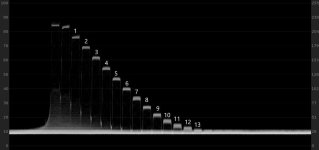
Yeah, looking at their waveform, it does appear that the roll-off into the highlights is a lot smoother with the C300 III. I'm not sure how accurate Cinema5D's tests are though. There seems to be a lot of animosity towards that site around the web. In this particular test they were using a preproduction version of the C300 III, so it's possible it might perform even better than this when it actually ships with the latest firmware.

C300 III
Waveform-Canon-C300-MK3-XF-AVC-CLOG2-4096x2160-25fps-ISO800.jpg

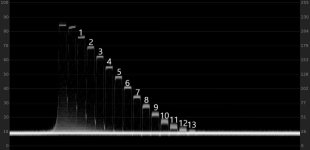
C500 II
Waveform-Canon-C500-MK-II-ISO800-CLOG2-with-stops.jpg
 
C5d do get some deserved animosity because from the beginning they have seemed to not know how to use their fancy imatest suite. This comparison to me would seem to reflect that. They give the C500II a higher DR rating, when it's clear from these two WF, that the C3003 is substantially cleaner at the bottom end, and is resolving exactly the same number of steps (probably more) than the c500II. While I'd probably rate them near the same, you'd have to give the edge to the new camera, but they went the other way.

As for seeing any difference in the highlight...they look identical to me. I don't place a lot of credence in xyla/imatest as it doesn't show you much about what the camera is doing in terms of color at the extremes of DR, and only gives you a rough reading of the noise, but as a blunt force test, at least it's reasonably repeatable.
 
I don't hate Cinema5D's testing abilities. I also don't hate birds, pigs, cows, horses, dogs, cats, and all the other unintelligent creatures on our wonderful planet.
 
This may be true, though I think the physical aspect of shooting will keep us from being replaced by robots for a while longer...
On "Newsradio "(one of the best sitcoms of the 1990's), there was a bit about robots set in a "Star Trek" like future.

Beth - What are you reading?
Joe - It's a baseball almanac. Tells you all the World Series winners ever.
Beth - So, who won in 2021?
Joe - The Yankees.
Beth - 2022?
Joe - The Dodgers.
Beth - 2023?
Joe - Robots.
Beth -2024?
Joe - Robots.
Beth - 20?
Joe - Robots, robots, robots, robots.

(I am going off memory .. the actual exchange may have been slightly different)
 
C5d do get some deserved animosity because from the beginning they have seemed to not know how to use their fancy imatest suite. This comparison to me would seem to reflect that. They give the C500II a higher DR rating, when it's clear from these two WF, that the C3003 is substantially cleaner at the bottom end, and is resolving exactly the same number of steps (probably more) than the c500II. While I'd probably rate them near the same, you'd have to give the edge to the new camera, but they went the other way.

As for seeing any difference in the highlight...they look identical to me. I don't place a lot of credence in xyla/imatest as it doesn't show you much about what the camera is doing in terms of color at the extremes of DR, and only gives you a rough reading of the noise, but as a blunt force test, at least it's reasonably repeatable.

Yes, I appreciate the cinema5D imatest because it's repeatable and since the same testers are putting together a database of cameras, at least you can draw inferences about relative performance. I feel the same way about dxomark and know less about their methodology.

The highlights look the same to me, too.

But if you look at the noise floor of the C300III, isn't there a bit of fuzz rising up to the top of that 13th stop? We can see the shape of the 14th+ stops but they're overlapping with a lot of noise. In contrast, the c500ii has a super clean noise floor.

Their imatest result is based off a 2-to-1 signal-to-noise ratio for cutting off the final stop, I believe. Incidentally, testing the Alexa that way yielded 14 stops. Testing other cameras to the less rigorous 1-to-1 SNR for their final stop usually yields the manufacturer's optimistic DR number (which was 16 stops for the C300III).

As for indicating color performance at the extremes of DR, can't we glean some insight into that by the latitude over and underexposure tests that cinema5D does? Progressively changing the exposure in each direction and then correcting it and seeing how it looks?

I don't hate Cinema5D's testing abilities. I also don't hate birds, pigs, cows, horses, dogs, cats, and all the other unintelligent creatures on our wonderful planet.

This is pretty harsh, bro. They're not the gospel or the last word on anything, but I think they're a useful data point.
 
Yeah, looking at their waveform, it does appear that the roll-off into the highlights is a lot smoother with the C300 III.

The highlights looks identical to me, in the shadows, the top of the 13th stop is clearly separated from the noise floor in the C500ii, whereas with the C300iii, although the noise floor is more diffuse, there's less of the 13th stop that sits out clearly above it. I'd say their conclusions look pretty spot on to me.

The difference is so small though as to be completely negligible. And from the comparison tests posted thus far - it looks like the two cameras will cut in with one another COMPLETELY seamlessly.

No one seems to be able to match their cameras quite like Canon.
 
Back
Top