No audio as i shot in hfr. I guess it could be around 180-200mbps in vbr? It could probably peak at higheer bitrate if the scene was busier? It does say "intra 4k lt so we know its not longgop.I
I make it about 160Mbs? The number of seconds must be 1340/24, which would give a file size of 160*1340/24 Mb, and divide by 8 to get MB - so would give about 1,117MB - pretty close to 1.13 GB.
May not be as simple as that though as your 1.13GB must include audio and I'm not sure if quoted video bitrates normally do? But yes, it's pretty heavily compressed, even allowing for the efficiencies inherent if it's long-GOP encoded.
(For 4K at normal I-frame AVC type codecs, you can get the bitrate by roughly multiplying the frame rate by 10 to get the bitrate in Mbs. Hence for normal I-frame 4K I'd expect 10x120=1,200Mbs. So it's of the order of an eighth of that. Long-GOP coding will make up for quite a lot of that, but even so.......)

Navigation
Install the app
How to install the app on iOS
Follow along with the video below to see how to install our site as a web app on your home screen.
Note: This feature may not be available in some browsers.
More options
You are using an out of date browser. It may not display this or other websites correctly.
You should upgrade or use an alternative browser.
You should upgrade or use an alternative browser.
Varicam pricing
- Thread starter steve phillipps
- Start date
I've just been checking the figures and realised that you'd said "1340 frames @ 24p is 1.13 GB" and did the maths accordingly for 24p - but didn't you mean "1340 frames @ 120fps is 1.13GB"?
Which changes everything. It gives a data rate of about 0.85MB/frame, compared to the about 1.25MB/frame I'd expect at normal frame rate. And a bitrate of about 800Mbs. Presumably chosen to just fit in to the max recording rate of the P2 cards?
Which changes everything. It gives a data rate of about 0.85MB/frame, compared to the about 1.25MB/frame I'd expect at normal frame rate. And a bitrate of about 800Mbs. Presumably chosen to just fit in to the max recording rate of the P2 cards?

hardrive. You're making a lot of assumptions here based on the spec sheet. My advice, if you're this interested in a camera enough to write so many posts, use it.
Have you used the F5? If not, use both and then tell us what your thoughts are.
Have you used the F5? If not, use both and then tell us what your thoughts are.
Hardly assumptions. In the case of the Varicam, matters such as rolling shutter (not global), no compressed RAW mode, and relatively high power consumption are matters of fact in the negative sense - the ability to now record 120fps 4K to I-frame AVC-Intra a matter of fact in the positive sense. I'm just surprised why the latter was not more publicised when the camera got the ability a month or so back.hardrive. You're making a lot of assumptions here based on the spec sheet.
Yes, I've used an F5, though not to the extent that I've used such as 2/3" shoulder mount cameras from various manufacturers. But "use a Varicam" isn't as simple as you make it sound. As Steve Philips said some posts ago, it "certainly doesn't seem to have made much impact over here". Not only has nobody yet wanted to employ me to use one, I don't know anybody who has one or even who is thinking of getting one.My advice, if you're this interested in a camera enough to write so many posts, use it.
Have you used the F5? If not, use both and then tell us what your thoughts are.
And I'm not sure what it would prove that I don't already know from a brief hands on at a show, and various reading. Physically, it seems very similar to comparable cameras operationally and ergonomically, and from what I've seen the end results are influenced far, far more by camera operator, lighting and grading than the camera itself. It's good - but you can get equivalent much cheaper.
Yes, I'd like to get to the bottom of the dual ISO claim, but in the absence of being able to access a Varicam myself all I can do is see if anyone who does have such access can do what is a very simple test.
Hardly assumptions. In the case of the Varicam, matters such as rolling shutter (not global), no compressed RAW mode, and relatively high power consumption are matters of fact in the negative sense - the ability to now record 120fps 4K to I-frame AVC-Intra a matter of fact in the positive sense. I'm just surprised why the latter was not more publicised when the camera got the ability a month or so back.
Yes, they're specs.
And I'm not sure what it would prove that I don't already know from a brief hands on at a show, and various reading. Physically, it seems very similar to comparable cameras operationally and ergonomically, and from what I've seen the end results are influenced far, far more by camera operator, lighting and grading than the camera itself. It's good - but you can get equivalent much cheaper.
First, Im going to be clear on one point, it's not my job to convince you of anything and if the above is your approach to testing cameras for usability to various jobs then I'd have zero chance even if it were my job. You seem adamant in comparing it to the F5 simply because neither have a global shutter. Are we then to assume that the URSA is a better camera? Simply put the F5 is no comparison when it comes to a higher end workflow. That's my opinion. Ive used them. You don't have to agree - Im not asking you to.
And I never said anything else - they're specs, but not "assumptions", that's the point. "Assumption" implies an element of guesswork. With the four factors I mentioned they are straightforward facts, no "guessing".Yes, they're specs.
Rolling/global shutter is one factor - one of four I named above. The shutter is an aspect in which neither has an advantage, the F5 is the winner for both power consumption and RAW working, the Varicam seems the winner for high frame rate ability. There are many other attributes I could have mentioned (such as codec choice - AVC-Ultra and XAVC are very comparable) and it's on a basis of all these factors and more that, yes, I'd say *OVERALL* it's comparable to an F5. And therefore should be a similar price to offer value for money. That is way, way different to saying it's "simply because neither have a global shutter".You seem adamant in comparing it to the F5 simply because neither have a global shutter. Are we then to assume that the URSA is a better camera?
And let's not forget image quality. I've seen mixed results from each of the cameras, some very good, some more mediocre. What comes across strongly is that image quality is little dependent on whether an F5 or Varicam is used, much more on factors such as grading. Both potentially very good - but how good depends on other factors.
Just answer one simple question then. What about a RAW workflow?Simply put the F5 is no comparison when it comes to a higher end workflow. That's my opinion. Ive used them. You don't have to agree - Im not asking you to.
I'd say 4K RAW was about as higher end workflow as it's possible to get?
And in this respect the Varicam is simply no comparison to the F5 is it? A popular workflow for the F5/55 seems to be compressed RAW simultaneously with XDCAM422. The latter files are small enough to be seen (and used) as edit proxies, but good enough to fully comply as broadcast standard, at least for HD.
From all I hear it's the lack of any compressed RAW workflow that is seen as probably the biggest single negative to the Varicam compared to it's competition. It doesn't rule it out, doesn't make it a poor camera per se by any means - it has it's plus points - but *OVERALL* it is not being seen in even the F55 class, let alone the likes of Alexa or F65 - which is what Varicam money can get you. But if you disagree and intend to get one, that's your business, your money.

Jim Martin
DVXuser Sponsor
" From all I hear it's the lack of any compressed RAW workflow that is seen as probably the biggest single negative to the Varicam compared to it's competition[/QUOTE]
That may be what is being said over there but is not being said here in town (LA).....and, the Varicam is mentioned in the same vain as the F55 & Amira and Alexa here in town. They are all considered the high end choice for doing the larger budget projects. Each camera has a few things on the others but the way you put it regarding 4K RAW, if a camera doesn't have it, then they are no good... that may be true for you as an individual but is simply not the case here in town.....look, work flow, functionallity....I wish posters would not take a feature (or lack of) and turn it into an absolute...there are better ways to get your point across without being so negative....or giving the impression of being negative.
Jim Martin
That may be what is being said over there but is not being said here in town (LA).....and, the Varicam is mentioned in the same vain as the F55 & Amira and Alexa here in town. They are all considered the high end choice for doing the larger budget projects. Each camera has a few things on the others but the way you put it regarding 4K RAW, if a camera doesn't have it, then they are no good... that may be true for you as an individual but is simply not the case here in town.....look, work flow, functionallity....I wish posters would not take a feature (or lack of) and turn it into an absolute...there are better ways to get your point across without being so negative....or giving the impression of being negative.
Jim Martin
".....if a camera doesn't have it, then they are no good...." is absolutely *NOT* what I said, either above or at any other point. Read again the sentence you quoted and my words are "it's the lack of any compressed RAW workflow that is seen as probably the biggest single negative to the Varicam". That is absolutely NOT the same as saying it (or any comparable camera) is "no good". It is indeed an undeniable disadvantage of the Varicam, but that is absolutely *not* the same as saying "the whole camera is therefore no good"!!............. the way you put it regarding 4K RAW, if a camera doesn't have it, then they are no good... that may be true for you as an individual but is simply not the case here in town.....
(And the feature in question is 4K RAW compression - not 4K RAW as such.)
Sorry, but if you read my whole post I mention a number of features with regard to comparing the Varicam with (in this case) an F5. One (shutter) is the same for both, one is in favour of the Varicam (slo-mo), and two are in favour of the F5 (power consumption and RAW compression).I wish posters would not take a feature (or lack of) and turn it into an absolute...there are better ways to get your point across without being so negative....or giving the impression of being negative.
Jim Martin
That is far from "taking a feature ....and turning it into an absolute". It's taking a raft of features to compare (I can think of a lot more, but they don't affect the overall conclusion) and trying to reach some sort of comparative conclusion. I am certainly not presenting the lack of RAW compression as an absolute - just one aspect that is not in it's favour.
If I emphasised the RAW compression factor in my last post it was in response to Noels comment that "Simply put the F5 is no comparison when it comes to a higher end workflow." A RAW workflow must be seen as a very high end workflow, yes? And RAW compression makes such far more viable - hence I can only say again that I strongly dispute Noels assertion until Panasonic come out with a viable RAW compression system. If they do so, I'll happily rethink the relative merits.
Imatest shows 15 stops at both ISO800 and 5000.
This testing is achieved using multiple exposures of the Kodak Q13 chart.
Here’s the link to the technique and maths if you’re interested - http://www.imatest.com/docs/dynamic/
ISO800
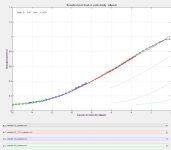
ISO5000
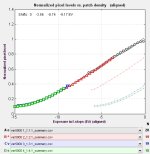
This testing is achieved using multiple exposures of the Kodak Q13 chart.
Here’s the link to the technique and maths if you’re interested - http://www.imatest.com/docs/dynamic/
ISO800
ISO5000
So, if no one wants to comment on this Varicam clip, I'll say it myself - it looks lovely.
steve phillipps
Veteran
So, if no one wants to comment on this Varicam clip, I'll say it myself - it looks lovely.
As does pretty everything I've seen from the Varicam. Reinforces my thoughts though that what you see from cameras these days is largely down to the skill and experience of the shooter and colourist - and those that get their hands on Varicams and F65s etc. tend to be the more skilled for sure, and a good part of the reason why it looks great compared to the lower-costing gear that is being hoovered up by all sorts of users.
Steve

puredrifting
Major Contributor
I attended the Varicam Road Show at Panasonic Hollywood this week. Based upon presentations from multiple Panasonic sales and engineering staff, Paul Geffre from Light Iron Digital and having hours of hands on time with both version of the Varicam, there are a lot of misinterpretations and misinformation about the Varicam.
1. On the Varicam 35, the sensor output yield after de-Bayering issue. According to Panasonic, the actual sensor does have a window outside the utilized area and the true yield is 4k, not 3.7 or 3.5k.
2. Panasonic designed and manufactured the sensor. It is not made by Sony or anyone else.
3. The latest Varicam brochure shows 120fps recording, "Is to be supported by firmware upgrade". This was also supported by the Panasonic staff, it is coming soon, along with some other firmware and software updates.
4. The camera is capable of recording four different raster sizes and codecs at once, Codex, Full resolution to P2 Express, 1080/2k and 960 x 540 Proxy to P2 Micro.
5. The camera can selectively apply watermarks, multiple time code burns to the different formats, in real time, at once.
6. The camera can apply LUTs and CDLs to the different formats as well.
7. Panasonic did discuss global versus rolling shutter. They felt that they have improved the scan rate on their sensor to a point where rolling shutter artifacts are not really a factor in almost any production scenario. The implementation of a global shutter would have siginificantly inreased energy consumption and the global shutter camera gives up one ot one and a half stops of sensitivity, probably not the best design strategy when you are hanging your hat on low light sensitivity.
From a performance perspective, they showed us a scene shot by Theo van de Sande at a book store lit at 10 Foot Candles in the brightest areas. The shot was a very wide overhead view of the crowded bookstore and was lit with a wide variety of small practicals. The footage was projected in 4K and looked quite amazing, the rendering of several different areas, each with differet light temp/color proved that the camera doesn't tend to exaggerate or favor warm vs. cool or specific color spectrum as many cameras do. The showed is a couple of short films, one shot in a bar and one shot on an LA rooftop at night, both at ISO 5,000, both with very low light levels and minimal lighting. Projected in 4K, the images were remarkably clean. I spoke with a few DPs there and what we all observed was that most footage shot at high gain levels, the image can be detailed and the footage not overly noisy, but as gain is added to achieve high ISOs, color fidelity goes away quickly and you end up with drab, dull color. When the footage is graded to add some color back, that is where noise typcially gets you. Then when NR is added, the skin tones and bold areas of color tend to smear. Collectively known as "the image falls apart" The scenes presented by Panasonic showed rich, vivid color at ISO 5000 with very good handling of exposure latitude as well. I don't know if the ISO 5,000 is as low noise as the cameras 800 ISO setting but I can tell you that an audience would never notice the difference if the ISO 5,000 is more than 1dB noisier than the ISO 800. I can say that I have never seen footage that looked like the ISO 5,000 footage they showed, it is a whole new way of shooting. I wonder what talented filmmakers will use this technology for? I am a huge Kubrick fan and even seeing the candlelit scenes in Barry Lyndon, this "new look" I will call it for lack of a better term, is different. We have all seen good low light work, but this camera renders something very different, I can't explain it well but if you have a chance to see it projected in 4k, do so. The Varicam sees things much more like our eyes do in real life, the low light scenes have a very realistic, almost surreal quality that we aren't used to seeing in recorded footage. I suppose it struck me as a bit surreal because my eye and brain have been so trained to "decode" what is being presented on a theater screen, to re-interpret that as "real" whereas the scenes we saw looked like something new to me. Hard to explain.
I agree that the camera is expensive and they are definitely going for the F65/Arri crowd. They have very tight compatibility with Codex so if a DP wanted to use the Varicam for feature or high end episodic, this camera system does many workflow operations that the F65, Arris and REDs don't and it is supported by Codex in ways that the other camera systems are not. The Codex unit literally was designed in conjunction with the engineers at Panasonic so it integrates very nicely through an integrated 56 pin input on the back of the Varicam. No extra cables, settings, etc. Attach the Codex unit and the Codex RAW menus are activated inside the Varicam menus and you are ready to shoot. The only option is choosing raster size. True plug and play. Codex has also developed a Thunderbolt interface to their workstations that allows the downloading of the Codex material in about the same time as the downloading of the 256GB P2 Expresss cards.
Panasonic had some of the cameras setup in a room with small tabletop scene lit by a single candle. The output was sent to 8" 4k camera top monitors, as well as to a 32" 4K broadcast monitor. The scene showed no recognizable noise to me with the cameras set at ISO 5,000. The transitions, color detail and latitude in the scene looked very good. Unfortuantely I was not able to switch the camera ISO back and forth from 800 to 5,000 to compare noise, it just didn't occur to me to do so until I read updates to this thread today but the ISO 5,000 looked very good. The eyepiece is very good realistic, OLED looks so much better than LCD. One thing I liked about the presentation, Panasonic said basically the same thing Steve says in the post above, it is true, all of the top end cameras are bascially at parity. This was unusual to hear from a sales guy and I respect that observation a lot more than the brand religion that is often hammered home by owner operators, rental houses and production companies. I have not shot with the F65 or the RED Dragon, but I have shot the F55, the RED One and the Amira as well as I have been on plenty of Alexa shoots and grading sessions. Whether or not the Varicam look, the Dailies in Camera, multiple codecs and multiple outputs and the dual ISO are worth it to you is a question only you can answer. It is an expensive camera. Even if I was rich, which I definitely am not, I would not buy any of these cameras. Todays top cameras are next weeks has beens. But if I am shooting a project that warrants a camera system this good, I would definitely want to shoot with the Varicam 35.
1. On the Varicam 35, the sensor output yield after de-Bayering issue. According to Panasonic, the actual sensor does have a window outside the utilized area and the true yield is 4k, not 3.7 or 3.5k.
2. Panasonic designed and manufactured the sensor. It is not made by Sony or anyone else.
3. The latest Varicam brochure shows 120fps recording, "Is to be supported by firmware upgrade". This was also supported by the Panasonic staff, it is coming soon, along with some other firmware and software updates.
4. The camera is capable of recording four different raster sizes and codecs at once, Codex, Full resolution to P2 Express, 1080/2k and 960 x 540 Proxy to P2 Micro.
5. The camera can selectively apply watermarks, multiple time code burns to the different formats, in real time, at once.
6. The camera can apply LUTs and CDLs to the different formats as well.
7. Panasonic did discuss global versus rolling shutter. They felt that they have improved the scan rate on their sensor to a point where rolling shutter artifacts are not really a factor in almost any production scenario. The implementation of a global shutter would have siginificantly inreased energy consumption and the global shutter camera gives up one ot one and a half stops of sensitivity, probably not the best design strategy when you are hanging your hat on low light sensitivity.
From a performance perspective, they showed us a scene shot by Theo van de Sande at a book store lit at 10 Foot Candles in the brightest areas. The shot was a very wide overhead view of the crowded bookstore and was lit with a wide variety of small practicals. The footage was projected in 4K and looked quite amazing, the rendering of several different areas, each with differet light temp/color proved that the camera doesn't tend to exaggerate or favor warm vs. cool or specific color spectrum as many cameras do. The showed is a couple of short films, one shot in a bar and one shot on an LA rooftop at night, both at ISO 5,000, both with very low light levels and minimal lighting. Projected in 4K, the images were remarkably clean. I spoke with a few DPs there and what we all observed was that most footage shot at high gain levels, the image can be detailed and the footage not overly noisy, but as gain is added to achieve high ISOs, color fidelity goes away quickly and you end up with drab, dull color. When the footage is graded to add some color back, that is where noise typcially gets you. Then when NR is added, the skin tones and bold areas of color tend to smear. Collectively known as "the image falls apart" The scenes presented by Panasonic showed rich, vivid color at ISO 5000 with very good handling of exposure latitude as well. I don't know if the ISO 5,000 is as low noise as the cameras 800 ISO setting but I can tell you that an audience would never notice the difference if the ISO 5,000 is more than 1dB noisier than the ISO 800. I can say that I have never seen footage that looked like the ISO 5,000 footage they showed, it is a whole new way of shooting. I wonder what talented filmmakers will use this technology for? I am a huge Kubrick fan and even seeing the candlelit scenes in Barry Lyndon, this "new look" I will call it for lack of a better term, is different. We have all seen good low light work, but this camera renders something very different, I can't explain it well but if you have a chance to see it projected in 4k, do so. The Varicam sees things much more like our eyes do in real life, the low light scenes have a very realistic, almost surreal quality that we aren't used to seeing in recorded footage. I suppose it struck me as a bit surreal because my eye and brain have been so trained to "decode" what is being presented on a theater screen, to re-interpret that as "real" whereas the scenes we saw looked like something new to me. Hard to explain.
I agree that the camera is expensive and they are definitely going for the F65/Arri crowd. They have very tight compatibility with Codex so if a DP wanted to use the Varicam for feature or high end episodic, this camera system does many workflow operations that the F65, Arris and REDs don't and it is supported by Codex in ways that the other camera systems are not. The Codex unit literally was designed in conjunction with the engineers at Panasonic so it integrates very nicely through an integrated 56 pin input on the back of the Varicam. No extra cables, settings, etc. Attach the Codex unit and the Codex RAW menus are activated inside the Varicam menus and you are ready to shoot. The only option is choosing raster size. True plug and play. Codex has also developed a Thunderbolt interface to their workstations that allows the downloading of the Codex material in about the same time as the downloading of the 256GB P2 Expresss cards.
Panasonic had some of the cameras setup in a room with small tabletop scene lit by a single candle. The output was sent to 8" 4k camera top monitors, as well as to a 32" 4K broadcast monitor. The scene showed no recognizable noise to me with the cameras set at ISO 5,000. The transitions, color detail and latitude in the scene looked very good. Unfortuantely I was not able to switch the camera ISO back and forth from 800 to 5,000 to compare noise, it just didn't occur to me to do so until I read updates to this thread today but the ISO 5,000 looked very good. The eyepiece is very good realistic, OLED looks so much better than LCD. One thing I liked about the presentation, Panasonic said basically the same thing Steve says in the post above, it is true, all of the top end cameras are bascially at parity. This was unusual to hear from a sales guy and I respect that observation a lot more than the brand religion that is often hammered home by owner operators, rental houses and production companies. I have not shot with the F65 or the RED Dragon, but I have shot the F55, the RED One and the Amira as well as I have been on plenty of Alexa shoots and grading sessions. Whether or not the Varicam look, the Dailies in Camera, multiple codecs and multiple outputs and the dual ISO are worth it to you is a question only you can answer. It is an expensive camera. Even if I was rich, which I definitely am not, I would not buy any of these cameras. Todays top cameras are next weeks has beens. But if I am shooting a project that warrants a camera system this good, I would definitely want to shoot with the Varicam 35.
Last edited:
Here's the 4K YouTube version of Noel's footage, posted by Panasonic Australia
https://www.youtube.com/watch?v=3ZHqJq7dMhM
https://www.youtube.com/watch?v=3ZHqJq7dMhM
Go to the official Panasonic brochure for the Varicam 35 - ftp://ftp.panasonic.com/provideo/varicam_35/varicam-35_brochure.pdf - from the official Panasonic website and go to the last but one page giving the specifications. Here it quite clearly states under sensor specs Pickup Device: super35 mm MOS 8.9 million pixels. Do the maths and 4096x2160 = 8,847,360. Either Panasonics official specification literature is incorrect (and that is far from the only place they state that) or the active area of the sensor is 4096x2160, end of story. And such a photosite count will never give "true 4K" output after deBayering whoever makes the camera. It is true for the F5, the F55, and any other 4096x2160 sensor. You'll measure deBayered luminance resolution of about 3.1K from such a sensor, it's physically impossible to get more.I attended the Varicam Road Show at Panasonic Hollywood this week. Based upon presentations from multiple Panasonic sales and engineering staff, Paul Geffre from Light Iron Digital and having hours of hands on time with both version of the Varicam, there are a lot of misinterpretations and misinformation about the Varicam.
1. On the Varicam 35, the sensor output yield after de-Bayering issue. According to Panasonic, the actual sensor does have a window outside the utilized area and the true yield is 4k, not 3.7 or 3.5k.
They don't seem to realise how soon! Err, like it is supposed to have happened in February already via a firmware upgrade. See ftp://ftp.panasonic.com/provideo/pressrelease/varicam-35_varicam-4k_launch_pr.pdf for the official link.3. The latest Varicam brochure shows 120fps recording, "Is to be supported by firmware upgrade". This was also supported by the Panasonic staff, it is coming soon, along with some other firmware and software updates.
It's worth pointing here to the F5 and the F55, very, very similar cameras with a key difference between them being rolling v global shutter. Yes, in this case the F55 is supposed to be about 1/2 to 2/3 of a stop less sensitive than the F5 - but that's all. Nowhere near 1 to 1 1/2 stops. And they have virtually identical power consumption. (The F55 power consumption (with global shutter) is well under half that of the Varicam (with rolling shutter)!7. Panasonic did discuss global versus rolling shutter. They felt that they have improved the scan rate on their sensor to a point where rolling shutter artifacts are not really a factor in almost any production scenario. The implementation of a global shutter would have siginificantly inreased energy consumption and the global shutter camera gives up one ot one and a half stops of sensitivity, probably not the best design strategy when you are hanging your hat on low light sensitivity.
Is the subject important at all? There may be a lot of truth in saying that it's rarely a problem in practice, and the F5 and other similar cameras have it to a similar extent, and may all be regarded highly. But "rarely" is not the same as "never". Such as the Varicam, F5 etc may be good - but move into the highest tier and people are prepared to pay for global shutter.
But what is it being compared with? I don't dispute what you say, but is the comparison with earlier 2/3" based cameras, Varicam or whatever, or another of the latest generation s35 high end cameras?The scenes presented by Panasonic showed rich, vivid color at ISO 5000 with very good handling of exposure latitude as well. I don't know if the ISO 5,000 is as low noise as the cameras 800 ISO setting but I can tell you that an audience would never notice the difference if the ISO 5,000 is more than 1dB noisier than the ISO 800. I can say that I have never seen footage that looked like the ISO 5,000 footage they showed, it is a whole new way of shooting. I wonder what talented filmmakers will use this technology for?
And this is really the nub of it. It almost seems that there is a surprise that it is giving high quality pictures? For heavens sake, did anybody seriously expect anything else from a camera costing this much? The title of this thread is "Varicam pricing" and what IS at issue is whether any of it's competitors can give *as good* performance for cheaper. I still believe the answer to be "yes".
Yes - but the same can be said of other cameras, most notably the RAW units from Sony. And it has to be said again that the huge elephant in the room which Panasonic wish would simply go away is it's lack of RAW compressed mode. However nicely the Codex and Varicam mate physically, being forced into uncompressed when you want to use RAW is bad news.They have very tight compatibility with Codex so if a DP wanted to use the Varicam for feature or high end episodic, this camera system does many workflow operations that the F65, Arris and REDs don't and it is supported by Codex in ways that the other camera systems are not. The Codex unit literally was designed in conjunction with the engineers at Panasonic so it integrates very nicely ........
I certainly tend to agree about it being highly difficult to tell the difference in "quality" between many of these higher end cameras - it's why I find real life "tests" pretty meaningless as more a test of the camerawork, lighting, grading, even choice of subject! Which is why factors such as power consumption, ergonomics, codec choices can be such a big deal - and let's not forget price. If I offered you a choice between an F5 and a Varicam for your forthcoming 4 week shoot, which would you choose? You may say "Varicam", but then what if I tell you the Varicam will be twice the cost to your budget of the F5? (That's close to the difference in retail price.) Still the same answer?I was not able to switch the camera ISO back and forth from 800 to 5,000 to compare noise, it just didn't occur to me to do so until I read updates to this thread today but the ISO 5,000 looked very good. The eyepiece is very good realistic, OLED looks so much better than LCD. One thing I liked about the presentation, Panasonic said basically the same thing Steve says in the post above, it is true, all of the top end cameras are bascially at parity. This was unusual to hear from a sales guy and I respect that observation a lot more than the brand religion that is often hammered home by owner operators, rental houses and production companies. I have not shot with the F65 or the RED Dragon, but I have shot the F55, the RED One and the Amira as well as I have been on plenty of Alexa shoots and grading sessions. Whether or not the Varicam look, the Dailies in Camera, multiple codecs and multiple outputs and the dual ISO are worth it to you is a question only you can answer.
steve phillipps
Veteran
They seemed to také forever to get into the serious 4k market, and when they eventually did they didn't seem to study it!
It was different when the original Varicam was released - it was basically the only choice if you needed a camera that did slow motion - it was the same price as the Sony F900 etc even though it had half the resolution - but, it had that killer app of the slomo. Now it basically doesnhave anything unique that would make many customers want to pay the extra.
I think the same is true withhe C300 - when the original came out same thing - if you wanted a 35mm chip with a broadcast codec you had a choice of F35 at $200k or the absolute bargain of the C300 at only $16k or whatever it was. Now with the mkii it just doesn't have that unique selling point - in fact spec wise it's way below the FS7 that's 1/3 the price.
I'm rambling, sorry - just my thoughts out loud, based partly on a little disappointment that having used them for years it looks like the days of a Varicam being the talk of the town are a thing of the past.
Steve
It was different when the original Varicam was released - it was basically the only choice if you needed a camera that did slow motion - it was the same price as the Sony F900 etc even though it had half the resolution - but, it had that killer app of the slomo. Now it basically doesnhave anything unique that would make many customers want to pay the extra.
I think the same is true withhe C300 - when the original came out same thing - if you wanted a 35mm chip with a broadcast codec you had a choice of F35 at $200k or the absolute bargain of the C300 at only $16k or whatever it was. Now with the mkii it just doesn't have that unique selling point - in fact spec wise it's way below the FS7 that's 1/3 the price.
I'm rambling, sorry - just my thoughts out loud, based partly on a little disappointment that having used them for years it looks like the days of a Varicam being the talk of the town are a thing of the past.
Steve

Run&Gun
Veteran
Not trying to be "that guy", but I don't remember the F900 and (tape)VariCam ever being close to each other in price, at least here in the U.S. When I bought my 27H (brand new w/VF) it was about $45K and at introduction around $60K. The F900 most of the time was in the mid-high $90K's to low $100K's here. Heck, the 900R is still $80K, ~12-15 years after the original.
steve phillipps
Veteran
I don't recall exact prices, but same ballpark as the HDCams anyway, HDW700 / 750 if not the 900. That was my point.
Steve
Steve
T
I think the same is true withhe C300 - when the original came out same thing - if you wanted a 35mm chip with a broadcast codec you had a choice of F35 at $200k or the absolute bargain of the C300 at only $16k or whatever it was.
True.
T
in fact spec wise it's way below the FS7 that's 1/3 the price.
Where?
I certainly tend to agree about it being highly difficult to tell the difference in "quality" between many of these higher end cameras - it's why I find real life "tests" pretty meaningless as more a test of the camerawork, lighting, grading, even choice of subject! Which is why factors such as power consumption, ergonomics, codec choices can be such a big deal - and let's not forget price. If I offered you a choice between an F5 and a Varicam for your forthcoming 4 week shoot, which would you choose? You may say "Varicam", but then what if I tell you the Varicam will be twice the cost to your budget of the F5? (That's close to the difference in retail price.) Still the same answer?
harddrive, Im going to say this in the nicest possible way. Please go ahead and use Sony. Here, many of us are discussing the Varicam and its attributes. Your points are based on theory and not actual use. I'd greatly appreciate it - as a moderator - if you could stop postulating in this thread. Thank you.