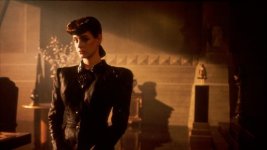
Stylized Lightings in different eras

Not exactly the same, but I remember on certain things, there was sometimes a full day given to light important interviews. And until recently(the last few years), two hours always seemed to be the accepted minimal allowance of time(of course I mean usually the entire set-up of un-packing, camera, lighting, etc.). Then it dwindled to 1 1/2 hrs. There are also times when you’re lucky to be budgeted an hour. And of course, there are some who expect you to be able to set-up without setting up. “All you have to do is turn the camera on, right?”.

I tell clients it's an Algebraic formula. The faster you want a beautifully lit, good audio and art directed setup, the more crew positions you'll pay for.
I can be ready to go by myself for an interview in an hour, but it's not going to look good. I've been really lucky this year being able to hire my gaffer
and a grip and sometimes a PA and sound mixer on about 45% of our live streams.

IMHO, we need to manage client expectations and if they don't understand how it works, it's our job to educate them to reality. If you want to cheap out
and not give me a crew to shoot a talking head, I will require three hours minimum to load in, unpack, setup and test camera, find a frame, light it, set up
audio, test audio, art direct the BG a bit. If you want that in two hours, you're going to hire my gaffer and a PA. If you want it in one hour, gaffer, grip and PA

Time is money and if they are stingy with their time, they're going to pay to make it happen in those unrealistic time frames. If they balk at this, take a hike,
find someone who says they can do it and see what you get. I've stopped sugar coating it for clients. Tell me what you want to accomplish, the time frame and
your expectations and I'll tell you the resources needed to accomplish that. That's the producers job. If they want to cheap out, I tell them, "I can't do it for that,
you'll have to look elsewhere."

Same with live streaming now, we just bought three new expensive high bright teleprompters. I just build in the cost of a prompter op and the prompters automatically,
I don't even ask anymore. if people are live streaming and they want to stay on track and make it professional and smooth, they require prompters. We just bought a
$2,000.00 talent timing system, same thing, I charge them $100.00 per day for it, I don't ask, I just put it in the bid. How else is their on camera talent going to know
that we have 13 minutes left in the live stream while they are talking?

I've reached the point where as a professional, you are hiring me to tell you what you need to create a professional product. If you want to disregard my strong
recommendations, unless there is a legitimate reason I didn't know about, you're not letting me do my job as a producer and you are handicapping your own
project's success out of the gate. We're the pros, most clients are clueless about this kind of stuff so they have to trust us that we know what we are doing.
If they have issues with that, we tell 'em to shop the competition and maybe we'll see them, maybe not.

I've had so many clients this year where I inisisted on various components of the production that they initially grumbled about or were unsure of, but when
we get to live stream day and the stress and anxiety kicks in and that thing that is causing them stress is handled quickly and professionally, they often
thank me profusely for MAKING them pay for the certain line item.
 
Last edited:
I like this approach, its the same as I use for theatre events - they don't understand, so quote them for the package. If they get raspy and want to cut corners, I ask them which part of our service do they want to remove? They always look blank. So I say, well we could just have an open white stage, that would save the lighting people. We could easily cut out your rehearsal if you don't need it - I'm sure all your people know what they are doing, and you can just give me your completed running order with the timings and all the other stuff we need. I tailor this to their production as I know where the time and effort goes. It's always worked. One client was bloody minded and decided he didn't need things - so while we prepared just in case, we actually let him wander around on an empty stage for half an hour with his people, until he asked where the "things to stand on" were, and how he turned on the lights. One of my guys with a toolbox in his hand, looked at the empty stage and said "we haven't rigged any lights. I was told you didn't need them and were sorting it yourself". Cue the Managing Director running up and yelling at the guy in charge for spoiling the event. He ran up to us and pleaded with us to get him out of the mess and not spoil the event. They've been a regular repeat client since then.
 
Not exactly the same, but I remember on certain things, there was sometimes a full day given to light important interviews...

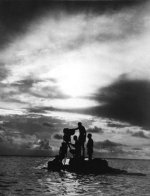
Marlene Dietrich, 1948

"I first had the opportunity to photograph Marlene Dietrich whilst working at Denham Studios. I rushed into the studio and was given a set on a small corner of an enormous 120 ft. by 80 ft. stage. I was nervous. Once set up, I waited in the dark, with my radio at the ready thinking it might help ease the situation and, more importantly, calm my nerves. Suddenly a light came on in the entrance to the studio a hundred feet away, and she and her entourage proceeded across the stage. I only took five photographs of her that day. The shoot finished and she announced she would be back the next day to see the rough prints. I re-touched the prints following her explicit and detailed instructions to a tee. The next day Dietrich arrived, took out her magnifying glass again and re-examined the prints. Pleased, she turned to me, shook my hand and said, 'Join the club Mr. Lucas.' I was rather perplexed and wasn't sure what she meant so asked her publicist what she had implied. He simply sad 'Mr. Lucas it means, you’re on the road to success.' And I was!"

https://time.com/53169/creating-icons-cornel-lucas-perfect-portraits-from-the-silver-screen/
 
Not exactly the same, but I remember on certain things, there was sometimes a full day given to light important interviews. And until recently(the last few years), two hours always seemed to be the accepted minimal allowance of time(of course I mean usually the entire set-up of un-packing, camera, lighting, etc.). Then it dwindled to 1 1/2 hrs. There are also times when you’re lucky to be budgeted an hour. And of course, there are some who expect you to be able to set-up without setting up. “All you have to do is turn the camera on, right?”.

It takes me about 1hr 15min minimum to unpack and set up a OMB 2-camera 3-light (with modifier) shoot (although in that case I'm usually setting up a boom mic as well). and then usually another 15 min of tweaks during/after the first subject.

But it's such a drag because I'm basically just following whatever my predetermined plan was or what I decided when I got there. Theres no time to play around and try things out. And certainly no time to scrap the whole set-up and change to a different background/concept.

Then of course there's the 1 or 2 battery-powered lights in the hallway interview with a 5-minute setup, but that's a different story.

Theres no substitute for time to think/work
 
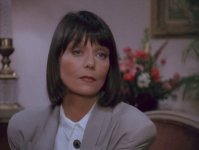
Totally OT, but I was staying with my cousin in a tiny hamlet in France and we went to the market, and I heard a voice which I recognised and came face to face with Commander Torreth, The Romulan from Star Trek - and without thinking I said Hello Commander - and her face froze, and she asked how on earth I knew it was her, without the ears, from 30 years ago, in a foreign country. Just the voice I said, just the voice. Lovely lady.

What a great story, and I'm sure you flattered Carolyn Seymour memorably.

720full-carolyn-seymour.jpg

 
I tell clients it's an Algebraic formula. . . .

So: fast, cheap, good --- pick any two? :)

we need to manage client expectations and if they don't understand how it works, it's our job to educate them to reality.

I think that's a good attitude. It goes along with all the ancillary things we don't want to do but must do (sales, accounting, etc.)

I just build in the cost of a prompter op and the prompters automatically. I don't even ask anymore.

I think that's a good strategy, for your sanity as well as the client's.

I've reached the point where as a professional, you are hiring me to tell you what you need to create a professional product.

I agree, it's better to just organize your services as packages. Let the details remain opaque to the client, unless they ask. A mechanic doesn't check with the customer every step of the way, "Is it okay if I unscrew this screw and then detach this plate? I kind of need to do it to fix thing you asked me to fix..."
 
I agree, it's better to just organize your services as packages. Let the details remain opaque to the client, unless they ask. A mechanic doesn't check with the customer every step of the way, "Is it okay if I unscrew this screw and then detach this plate? I kind of need to do it to fix thing you asked me to fix..."

I don't think that's a good example, because I keep getting screwed by mechanics and their work really is opaque to me because I know ****off about cars. (Well, they don't screw me per se but they convince me to replace parts that still have plenty of life in them.) Now I just ask if I can make it home safely without making the replacement, and if they say yes I know I'm good for now. Usually it's another 6 months or a year before the part actually needs replacing.
 
I dont think time in = results out. Which is a shame because that makes it harder for clients to see the value.

Time in = safety and control.

The most extreme examples of control are waking into a black box and building a desert island or snowy Xmas scene.

If you live on a desert island getting the desert island look is quick and simple an looks very legit in five mins with minimal crew.

I tell clients it's an Algebraic formula. The faster you want a beautifully lit, good audio and art directed setup, the more crew positions you'll pay for.

..is therefore not exactly true.

Most of my van of kit goes to building a safe scene that is repeatable not driven by sun position etc. We can do the same shot all day for 10 hours if that is what the cient wants. Its not delivering look - its delivering safety and repeatability.
 
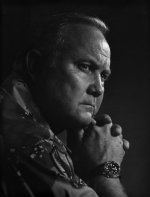
Elizabeth Schwarzkopf.

Elisabeth-Schwarzkopf-02.jpg
 
MW-FV813_BladeR_20171006122440_ZQ.jpg

sean_young_2049_1328.jpg

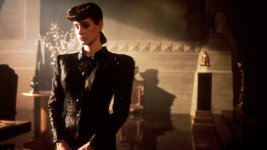
Can anyone help me understand what it is about this shot that makes it so unusual? I mainly am thinking about the background. Somehow it looks otherwordly.

On the subject herself, I think I mostly understand it: a hard light from the left, a fill of some kind on the right (since her face is not completely dark). Feel free to comment on the foreground lighting.

But that background, it's weird! Sure, there is some main light, from the top left, casting those shadows. But first of all, the shadows aren't black. So there must be a second light shining into the shadows from somewhere. Any idea of the angle or character of this second, background-fill light?

Also is there some real haze in the air? Maybe that is contributing to the ethereal feel I'm getting from this photo.
 
Last edited:
Maybe unusual because of the mixture of lighting symmetry that's creating various patterns/shapes (triangles, squares, lines) of luminosity that are mixed with a shallow DOF subject possibly shot on an anamorphic lens.
 
The blade runner scene is just very cleverly put together - the blending of lots of different elements. Absolutely real haze, but I'm also guessing there are colours here. The background is lit with hard light too, from a different direction to her shadows - in the scene the re is a huge window to the left - so that's why that side of her is so bright - In many ways it is similar to traditional German Opera - very popular over the years to have this kind of setup, but turned around. A very high high power Fresnel - we're talking about at least an old 5KW, often in later years HMI - pointing from the back wall of the stage down towards the audience, just high enough the front row don't get blinded. Then you get amazing shadows. You then fill in faces from the front, and anyone turning left or right on stage starts to look quite like the Blade Runner setup. Incidentally the theatre people consider Fresnel lenses to NOT be hard, just in between their floods, (TV/movie soft lights) and their real hard light - the ellipsoids/profiles that rarely get a look in on a movie set apart for effect.

I see real similarities between Opera Stage and Blade Runner in look. Take her out of the scene, pop in an Egyptian King and you have Aida!
 
View attachment 142011

View attachment 142014

Can anyone help me understand what it is about this shot that makes it so unusual? I mainly am thinking about the background. Somehow it looks otherwordly.

On the subject herself, I think I mostly understand it: a hard light from the left, a fill of some kind on the right (since her face is not completely dark). Feel free to comment on the foreground lighting.

But that background, it's weird! Sure, there is some main light, from the top left, casting those shadows. But first of all, the shadows aren't black. So there must be a second light shining into the shadows from somewhere. Any idea of the angle or character of this second, background-fill light?

Also is there some real haze in the air? Maybe that is contributing to the ethereal feel I'm getting from this photo.

This is exactly why Bladerunner is probably my favorite film ever produced, the amazing cinematography of Jordan Cronenworth.
He also photographed Altered States, Peggy Sue Got Married and a ton of great music videos. I give a lot of the credit for how incredible the lighting looks
to Ridley though, he is a pretty hands-on director with a definite vision for how he wants things to look.

Bladerunner is a neo noir film so Cronenworth did go for a lot of harder lighting as the film noir DPs of the 40-50s did. But the look of the frame above is all about
the synchronicity of the wardrobe, production design, music and lighting, it just sets a mood and makes everything look otherworldly. Where did you access the two
different colored frames? The one on the top, besides the color and tone difference, is blown out and shows little detail on the lit side of Rachael's face while the same
frame below shows pretty good detail holding on that lit side of her face?
 
Thinking more about that publicity still that I posted, my best guess is that what is eye-catching about the background is: (1) the use of haze, and (2) a secondary, softening light source that adds complexity, in a good way. In this case, that secondary light was bounced off an underwater mirror, causing a shimmering effect on the wall, which you can't tell from the still photograph.


The watery light is a little unnerving because it is entirely unmotivated. There are no pools of water in sight. The crew, in fact, brought this up with Ridley, but he insisted because "it looked cool", which I can't disagree with.

When I first saw Blade Runner, I was too young to notice the craft (maybe also because it was on VHS). I just came away from it feeling down from of the unrelenting darkness and rain. Nowadays I find it extraordinarily beautiful but still can take only so much of it. The sets and lighting are just so fancy, with layer upon layer upon layer, that it's like a syrupy chocolate cake. It tastes great, but you can't live on it.

But I love haze. I think that's why I like that shot so much. I think any shot could be improved with some haze :)

But I mean haze, not fog or smoke (though those can be cool too from time to time). I like a totally uniform, subtle effect of haze throughout the room, one that a layperson would not notice. In fact I didn't know what it was I liked about certain movies for many years until I read an article about the technique. Oh, they all have haze!

Adrian Lyne is another director from Great Britain who likes to suffocate his actors with haze. I think maybe this scene has it?


There are those who scoff at digital diffusion effects in post, saying it's never the same as a real filter over a lens during the actual shoot. But then there is another tier who scoff at those who use glass filters, saying it's just a cheap shortcut to the real effect, which is filling the whole room with diffusion :)

Ridley Scott loves not only haze but any atmospheric, any thing he can throw between the camera and subject: haze, smoke, fog, rain, snow, ash, falling leaves.

gladiator.jpg
 
Last edited:
When Blade Runner came out, I had just graduated from high school and it just absolutely blew me away, I had never seen anything like it.
I still havent. Because it's one of the last of the big budget spectacles that was made WITHOUT digital effects, it's special, just as movies
like Pandora's Box are special because it was one of the last big impact silent films made just before the talkies spoiled everything.

It's one of those rare films that just takes me out of the technical and into the story, atmosphere and characters. I actually
haven't really analyzed it technically very much because watching it is just such a special experience for me. Ridley is such an amazing director
and everything about that film and story is just magical.

I suppose that's why I am such of fan of Lynch and Kubrick as well, their films just ooze atomosphere, they set a mood like "normal" films
just don't and those, to me, are cinema. A lot of people say Barry Lyndon is too long and it is long but for me, it just works because of the mood
and the epic spread of a man's life told in a way that is leisurely and slow moving, just as I imagined life during that era must have been in comparison
to how "fast" we live today.
 
Back
Top