puredrifting
Major Contributor
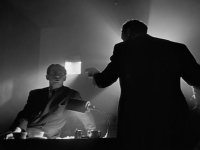
I a bit of a heretic in that I think a lot of old stuff looks old. It is interesting to consider using hard lights which are now so unpopular for shooting people.
I think it is well worth considering the tech when examining images. As the cinematographer would have been restricted if, for example, shooting 25ISO stock. Many of these looks are created by slow stock, bright lights, and off colour film stock*
These may not have been options desired or specced by the cinematographer they were just the tech of the day. Just like most of us have LEDs now that are not as punchy as we want.
If looking to reproduce such images engagement of the ND would be the first step?
*not to mention stock can have degraded or been badly scanned (every digital image we see of film has been scanned!)
I agree, these images look dated. But the lighting styles have translated pretty well to what a lot of cinematographers are doing today.
Reading through American Cinematographer, I do see a few DPs using hard sources directly on talent today, it can be a cool look if a person
has the skills, equipment and crew to carry it off.
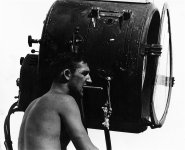
One thing that is commonly overlooked by modern cinematographers when looking at images of the era is that lights were big. Really big.
An 16" fresnel of the day might have been used as a key source by Hurrell. Few shooters, unless they have ten ton trucks and generators,
have access to 16" or 18" fresnels. Of course, a source so large, with a thick glass fresnel element, especially when used close to talent is a
relatively large and soft source compared to someone blasting talent today with an Arri 1K open faced light, which is what a lot of modern
shooters consider "using hard light".
When I produced the documentary on Harold Rosson's cinematography for The Wizard of Oz, which was shot with ASA 25 Technicolor three strip, the literal
wall of carbon arc instruments used, when added up into one key source, was literally the size of a huge wall, 50' high. So at say 35' from talent, a single one of
those sources would have been a very tiny, super hard source, the combined wall of them ended up acting as a huge, soft source, even though they were used
"bare" with no diffusion. Imagine trying to expose ASA 25 film stock indoors. Crazy. It's no wonder the talent and even crew were passing out from heat exhaustion
and things close to the source were catching fire.




 .