FS7: Sony FX9 v Canon C500 mkII

At 11K this is going to be everywhere.
Did you see that low light sensitivity that PBloom shot? It's gorgeous.

It's not going to be shooting car commercials, but all that branded content, unscripted, and mid to low tier stuff that's the bread and butter of a lot us of shooters will all be condensed into the FX9.
The C500 MKII will get some of that as well, but I think Canon is attempting to punch a little higher tier with their offering and that competition is tougher (ARRI, RED, Venice, Varicam...)
 
Sorta, right? You can adapt EF glass to e-mount without a "speedbooster". The purpose of a speedbooster is to boost speed. You can speedboost PL glass as well.

That doesn’t make any sense, why would anyone speedboost a lens onto the S35mm crop of a full frame sensor? It would be merely be duplicating the look of the same lens mounted in front of the full frame sensor anyway. The stop of light you’d gain won’t offer you anything more than the reduced noise level of the full frame sensor in the first place.
 
The FS700 had its monitor like that. Everybody complained about it.
FS7/FX9 seems way more flexible to me.

It was a different time/world...everyone was using cameras with LCDs off to the side.

People didn't know what to think of it and comfort zones weren't changed much back then.

Having a monitor which you can mount anywhere with your own accessories is of course way more flexible, but also having a port you can use to temporarily or permanently (if you choose) affix it to adds to that flexibility (as mentioned in that previous post).
 
Some good points being made by everyone - damn you all, now I've deposits on both cameras. Which way to roll...
 
It was a different time/world...everyone was using cameras with LCDs off to the side.
People didn't know what to think of it and comfort zones weren't changed much back then.
Well, I'm still using my FS700 and have on many occasions cursed that I can't see the monitor because of its position... Can't see how that would be much better on those RED cameras?
I'm ready to try a camera with a detachable monitor. Question is, is that the FX9? (only thing that really holds me off is that you need the damn extension module to output raw)
 
The Amira will still be better balanced for that kind of work. While the FX9 is a pinch longer than the FS7, you will still need to purchase the extension to get good weight balance when using a large zoom. It’s amazing that after all these years Arri is the only one who thought of making that unibody style that doesn’t require all the gak to have a nice balance on the shoulder.
 
That doesn’t make any sense, why would anyone speedboost a lens onto the S35mm crop of a full frame sensor? It would be merely be duplicating the look of the same lens mounted in front of the full frame sensor anyway. The stop of light you’d gain won’t offer you anything more than the reduced noise level of the full frame sensor in the first place.

It's not so much a matter of duplicating 'the look' of full frame it actually has more to do with the MTF of the lens and perceived contrast and 'resolution' of that lens.

The generally accepted (line pairs per millimeters) of 10 lp/mm wide open to 40 lp/mm at f/8.0 on the resolution curves for a full frame 35mm format is equivalent to about 20 lp/mm wide open and 60 lp/mm at F/8.0 for the resolution curves in APS-C format (x1.5 crop factor), and up to to 30 lp/mm wide open to 80 lp/mm curves in the Four Thirds format (x2 crop factor.) For instance Olympus with their M4/3 format presents it as 20 lp/mm and 60 lp/mm curves. These curves are directly comparable to typical 10 lp/mm and 30 lp/mm MTF curves for 35mm format, like those quoted by Canon.

In other words a FF lens designed to be capable of resolving 40lp/mm at F/8.0 on a 24 megapixel FF sensor doesn't have the resolution to deliver deliver 60lp/mm when used on a 24 megapixel APSC/S35 sensor which will have much smaller photosites, due to the crop factor of 1.5. In effect the photosites also have a crop factor of 1.5. That is why an APSC lens has to be able to deliver about 50% greater resolution at F/8.0 e.g. 60lp/mm.

There are many factors influencing the transmission of light and but put in simple terms In effect what is happening when using a speed booster on a FF lens you are reducing the image size via an optical relay and at the same time increasing the resolving power of the FF lens closer to the resolving requirements of the smaller 24 megapixel sensor's photosites, as outlined in the lp/mm examples described above. The same amount of photons that were originally coming through that FF lens are now being concentrated on the smaller APSC sensor the end result being a brighter image that now gives you roughly a one stop gain. This is one of the reasons why a FF lens looks sharper through a decently designed lens relay such as the ones designed by Caldwell Optics for Metabones. One of the downsides is of course is as most of us would know is this 'downsizing' comes at the price of a lower signal-to-noise ratios which translates into noise, narrower dynamic range and often lower tonal richness with the use of smaller sensors.

In the case of the FX9 I think as far as I can ascertain that the S35 crop is exactly that an S35 crop. No down-rez sub sampling as in the 6K sensor being down-sampled to 4K. If that is the case that the S35 crop is exactly that, an S35 crop, then using a speed booster will help resolution as with the speed booster you will be employing down-sampling but not electronically as in the 6K > 4K in the FX9 but with an optical relay that is giving you a 1.5 down-sample in effect.

There again I don't think many lenses on a speed booster would come close to beating this FF lens on an FX9 :)

Chris Young

https://www.lensrentals.com/blog/2019/03/sony-fe-135mm-f1-8-gm-early-mtf-results/

A reasonable overview here for 4K shooting

https://www.usa.canon.com/CUSA/assets/app/images/cameras/cine_lenses/4k_optics/4k_lens.pdf
 
Well, I'm still using my FS700 and have on many occasions cursed that I can't see the monitor because of its position... Can't see how that would be much better on those RED cameras?

We're thinking about the monitors in different ways and what we're both saying makes sense for us.

Like why would you personally want a monitor in a position that doesn't work for you, right?

My mindset is more about using them for quick reference, for settings. (The RED was just an example to show how a separate monitor can 'click' into place and be screwed down at the top.)

Chances are all of us will have to compromise in the world of production at some point or another, and are not always going to be able to see our monitors perfectly no matter where they are, how big they are, or if they can turn, twist and/or swivel in any direction. Also, I would be using an external 7" monitor anyway so the other one's position doesn't matter much to me.

My main desire is to have it a part of the camera without a cable. Or have a side panel.

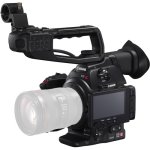
C100.jpg

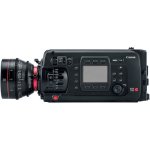
C700.jpg
 
At 11K this is going to be everywhere.
Did you see that low light sensitivity that PBloom shot? It's gorgeous.

Bloom has made some files, a 13Gb 4k ProRes of the day and a 3Gb XAVC file straight out of the camera available on his blog site. I've downloaded both files and on a good 10-bit reference monitor the color is indeed something to have a double take of seeing as that it comes from a lower end Sony. Sony not really being much admired for its color science. A big step forward I think. Also the 12800 ISO is again pretty impressive.

Liking the color improvement to the degree that I'm now working in 3D LUT Creator grabbing frames from the FX9 footage to see if I can build firstly a similar looking LUT for the FS7 and then secondly to see how close I can get to it with a scene file.

Chris Young
 
... It's not going to be shooting car commercials, but all that branded content, unscripted, and mid to low tier stuff that's the bread and butter of a lot us of shooters will all be condensed into the FX9...
Was flipping through the channels at halftime of an EPL match, found an NCIS New Orleans rerun on TNT. 80% handheld with the cam ops walking backward early and often. The footage isn't even stabilized in post, wobbly on purpose, as it "adds to the realism" of the show. Those guys would kill for an AF Cine Zoom. Especially, if it's mounted on FX11.*

*FX11 is an F5/55 replacement, which exists solely in people's imagination at this time.

NCIS New Orleans regularly uses Sony Fs7’s, btw. As C-cam and on splinter unit.
 
That doesn’t make any sense, why would anyone speedboost a lens onto the S35mm crop of a full frame sensor? It would be merely be duplicating the look of the same lens mounted in front of the full frame sensor anyway. The stop of light you’d gain won’t offer you anything more than the reduced noise level of the full frame sensor in the first place.


Me: “Can you speedboost on the Canon?”

You: “No Sir, you cannot.

Me: “Thank you very much. I think we’re done here.”


:smile:
 
Liking the color improvement to the degree that I'm now working in 3D LUT Creator grabbing frames from the FX9 footage to see if I can build firstly a similar looking LUT for the FS7 and then secondly to see how close I can get to it with a scene file.

What I'm most curious about is to see the FX9 side by side with the FS7. So far FX9 color does look nice but without being able to directly compare it to the FS7, in the same scene, it's hard for me to tell just how much of an improvement it is. I've shot with the FS7 for over 3 years now and although it's color is definitely not perfect by any means, it's not too hard to get a nice looking image from it.
 
What I'm most curious about is to see the FX9 side by side with the FS7.

Yep, me too. I'd also like to know how that autofocus works with EF lenses via an adapter. Lots of FS7 users, like me, use EF glass with a speedbooster. If I have to replce all my EF glass to get the most out of the FX9 I may as well pay the extra and get the C500 mkII.
 
At 11K this is going to be everywhere.
Did you see that low light sensitivity that PBloom shot? It's gorgeous.

It's not going to be shooting car commercials, but all that branded content, unscripted, and mid to low tier stuff that's the bread and butter of a lot us of shooters will all be condensed into the FX9. The C500 MKII will get some of that as well, but I think Canon is attempting to punch a little higher tier with their offering and that competition is tougher (ARRI, RED, Venice, Varicam...)

I think the initial footage from the Sony FX9 looks fantastic, especially when you consider these are ungraded shots coming from DPs who only had a couple of hours to familiarize themselves with the quirks the camera. The FX9 seems to be designed to continue the FS7's domination of the market you described as "mid to low tier" where Sony and it's XAVC codec variants are known quantities. My guess is based on the initial IQ even some who hated to FS7 will find something to love about the FX9.

I agree it does seem that Canon is targeting the higher end of the market with the C500 MKII where shooting RAW is not as seen so much as a safeguard against incorrect camera settings, but as tool to give professional colorists the greatest amount of flexibility for difficult secondary color corrections like making a radical change to the red section of a sweater without affecting an adjacent orange section. I have a buddy who is a colorist at Technicolor who helped me out with a project that I have seen do absolutely amazing work in Resolve with ARRIRAW and ProRes 4444 XQ footage. He has a clear preference for working with expanded the color data in 444 or RAW files versus the reduced color data in 422 codecs like XAVC-I. FWIW, he is also a big fan of Sony's 16 bit linear RAW.

Canon's appears to be attempting to compete on price and features with the C500 MKII for the tier occupied by Sony's Venice and the Alexa LF for productions that want to shoot internal large format 5.7K+ RAW. Canon's not so secret weapon is you can buy three to six C500 MKIIs for the price of one of the respective Sony and Arri models. It seems to me this price difference will have to resonate with someone, but time will tell if the C500 MKII's IQ, features, and price allow it to find a home in a production Canon can brag about. Maybe this time next year it will be the 'it" large format gimbal camera.

Interestingly Atomos' press release regarding FX9 only confirms 4K RAW recording rather of the sensors full 6K resolution. That means you could buy three 4K RAW capable C200's for the price of one 4K RAW capable FX9. The FX9 is further disadvantaged because the only announced RAW recording solution for the FX9 is a 17inch monitor. The FX9 looks to be is a much better camera but Canon appears to be competing on price here too. Three is better than one. I could easily see some production companies choosing the C200 for internal projects since the lighter C200 also means lower cost gimbals, Steadicams, and other support gear.

I am pretty sure I would happy with either the C500MKII or the FX9 but given a choice I find myself drawn more to the C500 MKII with it's cleaner RAW configuration. Hard drives are cheap and FCPX has a great proxy workflow. I won't be in the market for either camera until next year at the earliest so it will be interesting to see how this develops.

What a time to be alive!

Bill, I checked out your site and you've shot some beautiful stuff!
 
The FX9 definitely looks like it has a great image, and a lot of great updates in it, but I'm at a loss on how to make any more money with this camera over an FS7.

In my situation, I work as a freelance DP and Cam Op and the FS7 is my primary camera. Rent for higher end jobs.

Raw
FS7 -> Never done it, wouldn't do it with the mess of cables and bad reviews on it. Rent a Red.
FX9 -> Exact same mess to make raw work - will be very difficult to use. Rent a Red (and at the price of firmware cost, recorder, xcda, raw license on recorder, you could just buy Red Gemini)

Autofocus
I already manual focus, so I'm not losing any jobs by not having autofocus. Would auto focus be nice to have? Absolutely, but it would be at the cost of swapping my EF lenses over to E lenses. Can I charge more having autofocus? No.

4K / HFR
Both do it. FX9 doesn't offer anything in terms of resolution or framerates. Can't charge more (although if I'm honest, I have never been asked for more than 4K).

Full Frame
Again, nice to have, but speedbooster + EF glass looks decent as well. Can I charge any more money with an FX9 because the full frame? No.

Better Viewfinder
Same situation - would love to have it, can't charge anything for it.

Colour Science
This is the biggest one IMO. I'm not losing jobs because the 'look' of the FS7 isn't there. It can certainly be made to good. I'd DEFINITELY want the better colour science -> I dont think I'd be able to 'educate' or 'convince' a producer that the FX9 is worth paying Red/Arri prices for though.


All told, there are a ton of 'nice to haves', and if you don't already have a camera, or are upgrading from the A7 line or similar, this would make sense.
As an FS7 owner, I don't see how this camera makes me any more money unfortunately. It would make my life easier or more enjoyable, sure, but it certainly wouldn't be cheap to swap bodies and still make the same rate! :(
 
Chappell:
white balance in Cine EI and Dual ISO and though you did mention it above Autofocus all 3 are big deal.
Will you make more money , not at first, but if it becomes the popular flavor camera it will make a difference.

Personally I'm liking it especially if it will intercut with existing FS7s
 
... Interestingly Atomos' press release regarding FX9 only confirms 4K RAW recording rather of the sensors full 6K resolution. That means you could buy three 4K RAW capable C200's for the price of one 4K RAW capable FX9. The FX9 is further disadvantaged because the only announced RAW recording solution for the FX9 is a 17inch monitor. !

A) It's not surprising for the Raw output to be "post signal", i.e., post 6K-to-4K conversion. It is still a full 6K readout vs. the 4K of C200.

B) As was explained on the FX9 thread on the Industry News, Atomos has "digital backs" that work with many of their high end monitors and whatever arrangement will take place with Sony ought to be available across the 5"-7"-17" selection. In Sony's own video, there's a 7" (or so it looks ... it could be 5") Atomon monitor/recorder attached to the camera.

C) Sony Euro rep appeared very careful to say that it is intended for the "documentary" - perhaps, he also meant "reality" - film makers as separate from those in the high budget narrative. My take is that it will be good enough for most applications sans the previously mentioned high budget narratives on network TV and features.

D) As has been mentioned in other threads, a major advantage on Sony's side vs. Canon could be its line of the AF enabled Cinema lenses. Canon right now has the T4.4 zooms but Sony promises T3.1. (each line will have the AF on its own mount stills glass, i.e., E and EF)

The rest, as it usually the case, is a matter or preference. Personally, I don't think CRL vs. XAVC-L will be a huge difference on the set and the documentary, reality, corporate, news might even like the quick turnaround of the baked-in Cinetone vs. C200's 8-bit or C500 MKII XF-AVC 10-bit 4:2:2.
 
Back
Top