New Interior Dialogue Mic

mw5j1

Active member
Hi Guys,

I am looking at a new mic for interior dialogue. Basically, I am deciding between an Audix SCX1/HC and an AT4053b. Or, possibly just get a NTG-3 (even though I am aware shotguns aren't really supposed to used indoors, I see many people doing so with fairly good results).

The mic will be fed into a Mixpre-d and then into a DR-40.

Thoughts?

Thanks in advance.
 
There are a few very thorough threads here with pro audio people talking about these two hypercardioid mics (and a few others) for interviews/interior dialogue. But, as just a doc video guy, I have both of these mics and use them interchangeably. The AT4053B sounds slightly bassier. You'll do great with either.

Cheers -
thanks!
 
(even though I am aware shotguns aren't really supposed to used indoors, I see many people doing so with fairly good results).

It's not that shotguns aren't "supposed to be used indoors", it's that certain interior (and even some exterior) environments can expose the weakness of a shotgun.

Large rooms with lots of absorbtion from overstuffed furniture, carpets/rugs, bookshelves, etc., can be perfectly fine for a shotgun mic. It's very small rooms and rooms that are highly reverberant that can be problematic. The interference tube, which is what makes a shotgun mic what it is, uses phase cancellation to help reject off-axis sound. In reflective environments (and this can happen outdoors as well, where pavement and concrete walls can create lots of reflections), the off-axis sound bounces around and is already slightly time-delayed, so the phasing caused by the interference tube just created a mushy soup of audio. So, what makes the shotgun a stronf performer elsewhere becomes it's weakness in these places. It's in these types of situations where the hypercardioid is the stronger tool.

I also tend to use a hypercardioid indoors where physical headroom of the frame line is a concern. If I can get just a little bit more wiggle room above my frame line, I'll take it, and a hypercardioid rig is typically much shorter than a shotgun rig. It's not an issue with high ceilings.
 
I auditioned both the Audix and the AT4053b a few months ago. The difference between them was subtle, with the AT having just a touch more low end warmth.

In the end, I wound up finding a barely-used AT4053b that came with a decent windscreen and shock mount for a price that was $200 less than the best deal I could find on the Audix, and that sealed the deal for me.

I also feel a little more secure knowing that a wide range of Audio-Technica spare parts are readily available through Full Compass -- not that I've actually ever had many maintenance problems with microphones (except for lav cables).

- Greg
 
I love my Audix SCX1. I use it for pretty much all my indoor dialogue. Here's a short I shot almost exclusively with it last year. All the indoor scenes used the Audix. The one outdoor scene with dialogue was boomed with an NTG3. https://vimeo.com/85498605
 
Are you recommending this over the Audix or AT4053b? I am a fan of Audio Technica gear, and do admit this 875r does sound decent.

To my ear the Audio Technica 875R sounds better than most microphones at any price. It also has very low handling noise and good rear rejection. Finally, it's just $170.
 
Basically, I am deciding between an Audix SCX1/HC and an AT4053b. Or, possibly just get a NTG-3 (even though I am aware shotguns aren't really supposed to used indoors, I see many people doing so with fairly good results).

The mic will be fed into a Mixpre-d and then into a DR-40.

I'm using a AT4053b for this duty, into a MixPre-D also. The MixPre-D gets along quite well with the 4053b. Really nice combination. If you can go higher, look at a (new or used) Sennheiser MKH 8050. Sounds great, very sensitive, very low noise, and very lightweight which matters on the end of a boompole.

It's not that shotguns aren't supposed to be used indoors, it's that shotguns aren't supposed to be used indoors if you don't know what you are doing. Shotguns are interference tube mics; they get "confused" by early reflections off of close walls and ceilings (for boompole work you're usually overhead so floors aren't as much of a problem, but a hard reflective floor can also be a PITA). If your "interior" is a sound stage, it's usually not such a problem. If your "interior" is someone's house with 8' ceilings, just the ceilings often causes experienced people to switch to hypers.
 
To my ear the Audio Technica 875R sounds better than most microphones at any price.

I own one and generally find it to be great value for the price, but I always end up using EQ to boost the lower end on this mic, which is on the weak side. ( I also own the AT4053b, which is the indoor dialog mic I use the most. )
 
Have to chime in on the AT987R love - it's just an excellent mic. The other thing I'd like to say, is that technique is important, good technique will have a bigger impact on the quality of sound you get, than a slightly better/worse mic... and I'm not even talking about real pros who of course have the skills, Im just talking about absolute basics - keeping the mic as close to the sound source as practical, being aware of the pickup pattern of your mic so you can optimise how you position the mic to minimize distracting sound while getting the sound you want, watching for how sound travels/bounces (room treatment), eliminating distractions (AC running, refrigerator, etc.).

Now, I'm a huge believer in just using your ears - and pros will regularly say (on boards that I read, like this one), that this $5K mic is much superior to that $3K mic - and I have zero doubt they're right... but the problem is I can't tell the difference - and I doubt the audience can either... sure, maybe you can do more with the sound in post if it's been recorded with this mic vs that mic, but honestly, often I just can't tell - or I can tell it sounds different, but not necessarily worse/better, just different. There is also personal taste - most sound people seem to like bright mics (various high end Sankens come to mind), but to me, they sound brittle and thin, and I'd take the sound I get from the $150 AT875r over the $5K Sanken any day of the week and twice on Sunday.

Once you let go of other people's opinions based on their taste and preferences, and focus on your own, it's pretty liberating. It doesn't mean that I think my own opinions are superior - I don't, I just acknowledge that I don't have the ear of a sound person, and therefore I'll just go with little ole me when it comes to my taste on my projects. And that applies to everything, including picking mics - I don't care if it's a shotgun used in interiors, to me the AT875r sounds good, and I know I'm supposed to use a hypercardioid, but I like the sound of the AT875r just fine, even if it's a shotgun - for that matter, I did some tests with an el-cheapo cardioid mic and it sounded just fine recording dialogue in a small room that had no other noises, and I'd use it in a heartbeat and not worry that "it's not a hypercardioid".

My best advice would be to rent, or otherwise obtain the mics you are contemplating, and run some tests, and pick what you like, and ignore the "experts". I had a chance to test a Sanken CS-3e and I hated it - I much preferred the sound of my Senn MKE 600. I read reviews of both, and people were universally praising the Sanken, while opinion of the infinitely cheaper Senn were more mixed (some claimed it sounded "muddy", "too bassy" etc.), but to my ears the Senn sounded much better, and the Sanken sounded brittle and thin. So I wouldn't take the Sanken even if I could get it for free, because I want to record my projects with sound I prefer.

Get both mics, test them, and decide for yourself. Btw. Curtis Judd did a test of the AT4053b recording his voice, and a bunch of other mics at various price points - it was a blind test. Well, guess what - I liked the sound of the NT5 best... and it's not even a hypercardioid! Most people picked the NT5 with a Joly mod, but I didn't care for it. And the NT5 is like $200, so why buy the $600 AT4053b that was not picked by most people... because of the reputation? Meh, I don't care about the reputation. But honestly, what I took away from that test wasn't that one mic stood out above the others - while listening to these tests, my thought as so often under those circumstances was "sure, it sounds a bit different, but not worse/better - just different" and the key takeaway was "really, I could have used ANY of those mics on my project and it would all sound equally up to the job". So to me sound quality is by far not the only issue - other issues come to the fore - maybe one mic has more handling noise and for that reason alone is preferable to what I shoot, or maybe one mic is better in windy conditions, or maybe it's smaller, or maybe the pickup pattern works better for this project, or maybe there's heat/moisture considerations etc. Sound quality (under what circumstances?) is of course an important - but not only consideration; from my understanding, some high end mics are expensive not so much because they sound better under all circumstances, but because they can perform under some very adverse sonic conditions where other mics fail, and a sound pro will need such a mic in his/her kit.

Use your ears. Don't worry about expert opinion - use those opinions only as suggestions for mics you should check out, but make the tests and ultimate decision using your own ears, since you know more about the requirements of your project(s).
 
I've never looked back since getting the 4053. Great sounding mic, been around for some time (so you can often score a used one), low handling noise and an LF rolloff switch. They have a good rep for durability as well.

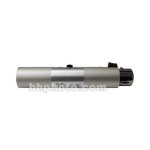
One trick I've never heard mentioned - when I use it in a blimp (no sound-man gigs where I'm doing everything, I use it outdoors often) I got one of those xlr on-off barrel switches. I don't use the switch, but it will get shorter mics right up to the nose of a blimp, essentially like adding about 3" to the mic body.

Hosa_Technology_GMS_274_GMS_274_In_Line_XLR_1232956554000_408141.jpg
 
Thanks guys for all the feedback. Oldcorpse, I appreciate the detailed response.

I have a NTG-2 and an ATU873R which are good, but looking to upgrade both. Might look at renting the AT987R, AT875R and 4053 see how they compare to each other and my current mics. Thanks!

Some of my work with current mics.
AT U873R

ntg-2:
 
Last edited:
The Audix is a very good sounding mic. I use it all the time and I'm always amazed by the quality it produces (for the price).
 
For the price, the AT U873R is a great hyper-cardiod microphone. You need to spend $$$ (US, Canadian, or other) to get better
 
For the price, the AT U873R is a great hyper-cardiod microphone.

It is a good mic, but be aware of a relatively low output level. I have several of these (mostly for live music). They're actually marketed by AT as handheld vocal mics, which may explain why they're not quite as hot as other hypercardioids. That being the case, they need quite a bit of clean gain. Small recorders (DR-40, DR-60mkII) may not have enough clean gain to drive these mics. Even with a MixPre-D, gain may have to be driven at or above 75%.
 
Back
Top