Need camera advice

Tom, have you shot and keyed out green screen before? It's not the miracle that a lot of people think it is. Special care has to be taken to light the green screen evenly, and at the correct contrast ratio to the actors. Even if you do everything right, you might still have to do some rotoscoping, due to unavoidable shadows.
You need 10-ft distance from your subject to the green screen to avoid shadows.
You need to evenly light the green screen separate from the lights on the actors. I think adequate lights, modifiers, and stands/rigging will cost much more than $800.
I recommend you get a field monitor with false color to gauge whether your green screen is lit evenly.

Some times DPs have their own camera package that you can hire along with them.
Green screen changes my camera recommendations considerably.
Consider MFT cameras like the Blackmagic Pocket series, or Panasonic GH5S, GH6, or GH7.
Camera resolution is very important in pulling a clean key, so it's best to get a camera that supersamples rather than pixel bins.
Disregard my lens recommendation, you'll probably have to apply a fake rack focus in compositing software.
Download the Blackmagic camera app on your phone, it will help you start learning until you've ordered a camera for your film.

You need a hypercardioid condenser mic for recording indoors, which range from $500 - $700 on the cheap side, but you could get one for less if you buy used.
Look at the Audix SCX1-HC, or Audio-Technica AT4053b. On the cheap side, you could compromise with a supercardioid mic, and look at the Audio-Technica AT875R or Rycote SC-08.
It sounds like the crew won't be very experienced, and will be wearing multiple hats, so I'd recommend that you get a 32-bit float audio recorder, ideally with respectable preamps. The TASCAM FR-AV2 comes to mind, which scored a little better than the Zoom equivalent.

Filmmaking gear is expensive, but it's not nearly as expensive as it used to be, just ask Charles.
Thanks so much for taking the time to provide me with all this info, it's not wasted on me, I will study your words.

I have worked with green screens in DaVinci, so it will be challenging, but it's what i have to work with. I have studied lighting scenarios, seen a 6 light model work to get rid of shadows, you are correct about the 10 feet back, didn't think of that, so I will increase set depth.

The field monitor with false color is a good idea, been considering it, like ninja?

Why do you suggest MFT and Blackmagic or Lumix? Full frame is the standard and I've ruled out super 35, APC-S and 4/3, but not from an expertise, just industry chatter and recommendations. I've studied Blackmagic and Lumix cameras a bit, I like them all, these have beautiful color, cinematic which is what gives me a good feeling. Sony is more popular now, so you think Blackmagic or Lumix with MFT will be better than Sony A7s iii for my project? Was also looking at used Panasonic EVA1, Canon c300 mkii or R6 mkii. Why do you suggest those cameras, if i can ask? Is it higher resolution or supersampling that causes you to suggest them, or something else, like 12-bit color, RAW or log outputs?

I'll keep it in mind about a fake rack focus and rotoscoping. This input is great. and I think these concepts will work great with the nature of the narrative. And I hadn't thought of them. I was thinking everyone in focus, but that may work well with my subject matter.

I will check out these mics, so I understand your sound suggestion from the patterns. I was considering Audio Technica and zoom. I have seen the Tascam product, didn't know anyone was using it, it looks better than zoom, but I haven't gotten there yet.

Wow, what a great post thanks so much, I'm sure others will benefit from your words. I really didn't expect anything so nice. Tom
 
Hi Zachadoodle,
Thanks for you insight. Not a run and gun, so guerilla probably not the way to go, all green screen, might go off the set if there is a real good reason but just for landscape backgrounds. I think you are right, big cameras are more impressive, but will be older in my budget. I don't know if they are adequate, hence, my post.
Great advice, if you have more, I appreciate you.
Thanks, Tom
You got to understand the feel people have when you're doing guerilla filmmaking with not only the camera but your presentation as a director. Usually you get more done when the talent is not distracted by the positives and negatives of your film, and that you're invisible. Most importantly, be invisible. I may even suggest figuring out a way to make your audio equipment invisible or use a on-camera microphone. You definitely do not want to have one of those gorilla pods around too as those attract a ton of attention. A monopod is the best option as it'll just look like a stick to people. Better yet is having to go with a GH6 with a IS lens going handheld with it.
 
Som thoughts on green screen.

1) I dont know about keying thin DOF images. Experiment.

2)thin DOF image look nice often.

3) you background will need to appropriately defocussed for your shooting Fstop

3a) you should record your camera positon and setting to help render the background.

4) If the scene is 'the sun sets to camera left' then while your screen needs good lighting you subject should be hit with a golden hard light from camera left (and the rendered backdrop too)

5) green can cause reflection. You may consider a 'bad key' - in Dune they had 'greyscreen' while the key may not have been so good any nasties popping in did distract less. Reflections were less of a problem

6) if you are shooting a single subject get more resolution by shooting 9:16

7)To pull of anything good on a screen is very tricky to make into a 'legit' narrative fiction film
 
Renting would make sense if I had decent experience using cameras, but I don't. So I need some hands-on so I can at least work with DP or camera operator.

Better suggestion, rather than spend that money on a camera that may or may not be a smart, longterm investment: if you’re planning on bringing a DP on board, you might want to look for a DP who is an owner/operator, and bring them in with their camera package. Or, discuss the project with your DP and rent the camera that is appropriate for the project. It might work out better for your film that way.
 
Som thoughts on green screen.

1) I dont know about keying thin DOF images. Experiment.

2)thin DOF image look nice often.

3) you background will need to appropriately defocussed for your shooting Fstop

3a) you should record your camera positon and setting to help render the background.

4) If the scene is 'the sun sets to camera left' then while your screen needs good lighting you subject should be hit with a golden hard light from camera left (and the rendered backdrop too)

5) green can cause reflection. You may consider a 'bad key' - in Dune they had 'greyscreen' while the key may not have been so good any nasties popping in did distract less. Reflections were less of a problem

6) if you are shooting a single subject get more resolution by shooting 9:16

7)To pull of anything good on a screen is very tricky to make into a 'legit' narrative fiction film
Hi Morgan,
Thanks for your continuing input. I spent an hour researching the R6 mkii, a nice camera I think.

Because of the challenges of green screen, I think I will go the BlackMagic RAW route as I use DaVinci.

Blackmagic is manual focus, but the characters in my film are talking not walking, so the fstop will be determined accordingly I think for DOF. The characters are not part of the background scene, just viewing it, like the ghosts in A Christmas Carol, so my characters are perfectly lit no matter which scene, so that's why I'm not afraid of it so much.

Big issue is shadows on the green screen background. I've seen a lighting guy have the green screen back 10 feet and use 2 light like Godox 60 with barn doors, one on each side to get no shadows, so that's the plan.

I can find the Ursa Mini for under $1500 used, though I will need a SSD to record the RAW, I think the BM can go directly to external SSD. I can rent a BMCC 6k for like $100 a week. Comparing the Cinema Camera 6k with full frame to Ursa Mini with super 35 using DaVinci, output tests are about the same using 12-bit RAW, a bit better with Ursa, based on BM users on YouTube. I can rent an Ursa for $300 a week, worst case. I'm hoping for a 3 day shoot so I would have a few days to play with it, hopefully find a DP who knows it.

Lumix cameras can also work with RAW, but they default to ProResRAW, which is Apple's RAW, so not workable for me. To take files out of Apple ecosystem is messy at best. Lumix has AF but is still only a 4/3 for a GH6 or GH7.

The URSA uses PL lenses, so pricey, but I can get an adapter to EF, etc. or find a good deal or rent a PL. What do you think? I love your idea of a good 24-70mm 2.8. Given my production, do you think that is still the way to go? Would you use an adapter so you could get an EF or maybe a Sigma or Tamron?
Thanks again, Tom
 
Better suggestion, rather than spend that money on a camera that may or may not be a smart, longterm investment: if you’re planning on bringing a DP on board, you might want to look for a DP who is an owner/operator, and bring them in with their camera package. Or, discuss the project with your DP and rent the camera that is appropriate for the project. It might work out better for your film that way.
Hi Alex, thanks for chiming in, I think you are correct, I just said the same in reply to Morgan. Will use BlackMagic Ursa to shoot RAW 12 bit on SSD, maybe CC 6k for b-roll, so these can be rented cheaply. If I can find DP/camera with BL experience, great.
Thank you for taking the time, you validated my tentative plans before you saw them lol, which helps so much. Tom
 
You got to understand the feel people have when you're doing guerilla filmmaking with not only the camera but your presentation as a director. Usually you get more done when the talent is not distracted by the positives and negatives of your film, and that you're invisible. Most importantly, be invisible. I may even suggest figuring out a way to make your audio equipment invisible or use a on-camera microphone. You definitely do not want to have one of those gorilla pods around too as those attract a ton of attention. A monopod is the best option as it'll just look like a stick to people. Better yet is having to go with a GH6 with a IS lens going handheld with it.
Hi Zachadoodle,
I appreciate you taking the time. This is very helpful, I'm definitely guerilla budget, so own it. Having a bunch of gear gives the impression of pro, but I don't have gear anyway, so keep it neat and as simple as possible, invisible, to let talent shine and get the shots I need. Thanks, Tom
 
Hi Zachadoodle,
I appreciate you taking the time. This is very helpful, I'm definitely guerilla budget, so own it. Having a bunch of gear gives the impression of pro, but I don't have gear anyway, so keep it neat and as simple as possible, invisible, to let talent shine and get the shots I need. Thanks, Tom
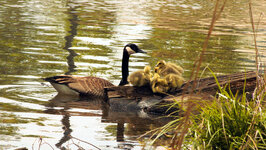
You can still have professional gear, but it's all about how you attract attention to yourself as the filmmaker. It's like how I photographed a Canadian Goose with its chicks at one point. A natural performance is the best performance. I bet had I gone in there with a flash I would have scared it off not able to get another shot of it.
 

Attachments

  • Photo_of_a_Mama_Goose_and_her_Baby_Chicks_50.jpg
    Photo_of_a_Mama_Goose_and_her_Baby_Chicks_50.jpg
    688.4 KB · Views: 5
You can still have professional gear, but it's all about how you attract attention to yourself as the filmmaker. It's like how I photographed a Canadian Goose with its chicks at one point. A natural performance is the best performance. I bet had I gone in there with a flash I would have scared it off not able to get another shot of it.

Zack, he’s talking about shooting on a green screen, not sneaking up on wildlife. There’s no need to go at this in a guerrilla filmmaking style.

And to be clear: guerrilla filmmaking isn’t at all about the actors not knowing you’re there. It’s about shooting on a skeleton crew, and moving quickly in and out of public spaces without attracting attention of passers-by, or law enforcement, and without getting proper permits. Guerrilla filmmaking often involves trespassing.
 
Zack, he’s talking about shooting on a green screen, not sneaking up on wildlife. There’s no need to go at this in a guerrilla filmmaking style.

And to be clear: guerrilla filmmaking isn’t at all about the actors not knowing you’re there. It’s about shooting on a skeleton crew, and moving quickly in and out of public spaces without attracting attention of passers-by, or law enforcement, and without getting proper permits. Guerrilla filmmaking often involves trespassing.
It's controversial I admit, but it was a result of things like the French New Wave in cinema history.
 
It's controversial I admit, but it was a result of things like the French New Wave in cinema history.

Zach, seriously. You need to have a lot more real-world experience before you start trying to dole out advice like this. You're using terms you've read about or watched videos about, but don't have any actual experience in.

Not trying to be harsh, but some of what you say is way off the mark.
 
Renting would make sense if I had decent experience using cameras, but I don't.
Renting is a great way to get experience using cameras, not a non-starter.

you can learn that by using the camera on your phone.
To add to this, if you want to shoot yourself, hire one or two cameras, then run tests between them, as well as adding your phone in the mix. You can buy an extremely small, cheap green screen too (don't buy lights). Then just test - did you hate shooting with the phone? Were the types of files helpful for keying the green screen etc.
So, that's like $3500.
Do you want to do everything yourself or do you want help?

Buying your own equipment lets you do future projects, but future projects at the DIY level (not fantastic).

What if you spent $3,500 not on equipment, but on the best professionals you can afford?
The hiring professionals scenario could still have you doing post, where you're paying in your time to learn etc, but at least won't be a bottleneck while shooting.

Is it more beneficial to have a much stronger looking sample, or will it be more helpful to shoot a series that overall looks and sounds worse? How will you scale up from here?

I HATE doing everything by myself. I've taken a hit on rates many times just to get extra crew members over the line. But I also own equipment. If you want to enjoy the process of wearing as many hats as possible, that's fine, but you also have to be prepared to wear the hat of someone who made something that sucks. I'm only joking, it sounds like you're approaching this with an open mind and have a lot to think about. Can you share the 100k views link?
 
Hi,
Hope this is the right forum, not looking for specific camera brand. I'm new, but I'm hoping to tap your experience. I am making a low budget film and want to buy a used camera to get started. Renting would make sense if I had decent experience using cameras, but I don't. So I need some hands-on so I can at least work with DP or camera operator. I'm tentatively looking at 4k, 10-bit 4-2-2. I'm not sure about sensor size (full frame or super 35). I've been studying YouTube videos, articles, and Reddit posts about Panasonic (EVA1, Varicam), Canon (c500, c300, R8) and Sony (ZV-E1 or even E10). Trying to work with $2k or so, several possibles on ebay, etc. Would be very thankful for anyone's input, opinions come from experience, so all good. Thanks, Tom
With that sort of budget, consider one of these, possibly?

Chris Young

 
Hi Rob,
Thank you so much for chiming in and taking the time, I will study your words, so not wasted time to me. Your input validates options I have in mind.

1. I want help. I'm only wearing lots of hats because I don't have help. I wrote the scripts and have a general vision, but I love the value others bring with their vision. Certainly finding help with decent expertise on my budget can be challenging but lots of people are reasonable, just don't know if they'd like my project.

2. It's a 3 day shoot hopefully, so I have 3500 for equipment, maybe that much for cast and crew as well plus gross points all around. So what you say makes sense to me.
link:
 
With that sort of budget, consider one of these, possibly?

Chris Young

Hi Chris,
Thanks for taking the time to help me. We are of the same mind, dude, the FS7 was my first thought, you can get them for a thousand. The problem is that they use a discontinued data card which was only made at that time, to buy it now is like $500 a card, and a guy who bought 2 this year said they didn't even work. It's a shame but I'm glad I found out before I jumped. I think the Panasonic EVA1 looks good for under $2k, and the Canon c500 mkii looks great but is still $4k used, you can get a the current fav Sony A7s iii for 2500 or so, all good choices. I settled on BlackMagic to get the 12-bit raw to get the control in DaVinci. I can get an Ursa for a thousand or so even though some still go for 3 or 4 thou, or I can rent for 300 for a week. Glass next.
Thanks again, Tom
 
I have owned an FS7 since the week after they were launched. I used it professionally for five years.

For a locked off greenscreen shoot it might be good. Even on sticks with a wide at the back of a concert/conference it is good.

Venture into the 'real world' you are better with an AF mirrorless.

Every day I go out and choose to leave it at home.

-poor screen, poor to position screen, heavy, no af, crummy software and menu will mess you up.

-nice ND audio and sdi, file is fine.

*manual focus mixed with small shiney poor screen for the solo operator is the killer combo that breaks you. Im all for cine folk pulling forucs on thier 27in monitor in a black tent with a preston and terribledeck.
 
2. It's a 3 day shoot hopefully, so I have 3500 for equipment, maybe that much for cast and crew as well plus gross points all around.

So, $7000? If you put all of that into getting the people you need who already have the gear required, instead of buying/renting gear separately and ending up with a less-than-ideal solution, you might be better off.

Also, to be brutally honest, “gross points all around” means absolutely nothing. Do you have distribution lined up? Do you have a guaranteed price to sell this film? Have you ever done this before? Crew pretty much know that an offer of points on the back end has little-to-no chance of actually paying out.
 
Back
Top