odonnelly99
Active member
Can anyone explain to me the actual technical reasons why recording to an external recorder is considered better than recording in camera?
Thanks!
Thanks!

Follow along with the video below to see how to install our site as a web app on your home screen.
Note: This feature may not be available in some browsers.


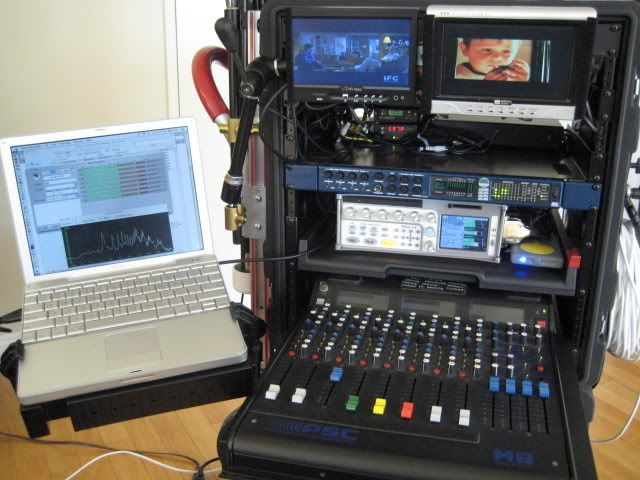
You DO NOT get "better signal to noise" simply by using an external mixer and feeding the output into the camcorder input. All camcorders in use today simply throw an attenuator pad in front of the mic preamp to accommodate line-level signals (such as out of an external mixer). Because you are still going through the camcorder's mic preamp, you are actually ADDING the noise from the camcorder preamp to the noise from the external mixer.
I have usually been very satisfied with the audio on my camcorders, provided I bypass the internal camera microphone and use external microphones plugged into the camera (with an XLR adapter). The only time I have used an external recorder was for backup. I am not saying you shouldn’t use an external recorder, but as long as the microphones are properly placed, the camera should capture good audio, IMO.Gotcha. Thanks guys. The reason I ask is that when I was talking with the sound crew for an upcoming film I'm working on, I realized that while its been hammered into me that external is better quality, I didn't really know why.
If I'm understanding correctly, you're saying that even though I'm feeding external mixer output direct to the camera's line in jack, I'm still going thru the cameras preamps, thus achieving an additive noise level ? Is this true of all digital cameras ?
How about line in to say a H4n or Fostex, Marantz, etc??
As far as no video cameras having exemplary audio sections, well, all portable broadcast television cameras have similar audio capabilities, and they are used to shoot some pretty important people and programming, and I think the audio sounds great. The notion that sound must be recorded apart from video is simply film tradition, not necessity.
One thing I will agree on is that DSLR video needs the audio recorded separately, if you are serious about what you are doing.
...
Dunno about the little recorders, but the lower price they are, the more likely they simply have pads vs. genuine line inputs.

It's not gear snob'ism - it's a matter of what level of quality - actual tangible differences in performance - is required in order to deliver a fully professional, no visible-or-audible compromise from the audience's perspective, result. If you can't afford adequate tools such as are required to do the job in a fully professional manner, you don't just live with it, you figure out how to gear up properly before undertaking the project. If you can't afford it, sell your car and mortgage your house. It's all about the audience and their perceptions. Remember, they have been steeped for years in the best of the best and your production is inevitably going to be compared to the market that has been established by years of exposure to the studios and broadcast networks offerings. Your dramatic video is going to judged against "CSI," your interviews against "Oprah," your standups against "60 Minutes," and your theatrical story against "Hurtlocker" in their eyes. This is just as true for the corporate market as well as it is for shows hoping for distribution to the public. For your story to be accepted beyond perhaps a fan or cult audience or for your corporate video to have credibility in the eyes of its audience, the audience can't be allowed to perceive any difference from a techncal standpoint between those shows and yours. Amateurish sound (or picture) is never acceptable except as a learning exercise never shown to an audience. You don't have to spend millions but when you go public you're entering a NASCAR race and you don't do that driving a Yugo.They're not suppose to be on the same league as the more expensive professional recorders, but I use it occassionally for the projects and gigs that call for it. Sometimes you just have to bite it and use what you have or can afford at the time. Don't be blinded or persuaded by gear snobberism (opening a can of worms), but make the most out of the tools around you. It gives you new challenges to work with.

and your theatrical story against "Hurtlocker" in their eyes.

Broadcast camcorders that cost many 10s of thousands of $$$ still have switchable pads to create "line-level" inputs. And the mic preamp circuits themselves are rather ordinary and bear no resemblance to the high-quality mic preamps that audio people crave. Of course that is not to say that they don't perform reasonably well. But "Broadcast Quality" doesn't mean what it used to.
It's not gear snob'ism - it's a matter of what level of quality - actual tangible differences in performance - is required in order to deliver a fully professional, no visible-or-audible compromise from the audience's perspective, result. If you can't afford adequate tools such as are required to do the job in a fully professional manner, you don't just live with it, you figure out how to gear up properly before undertaking the project. If you can't afford it, sell your car and mortgage your house. It's all about the audience and their perceptions. Remember, they have been steeped for years in the best of the best and your production is inevitably going to be compared to the market that has been established by years of exposure to the studios and broadcast networks offerings. Your dramatic video is going to judged against "CSI," your interviews against "Oprah," your standups against "60 Minutes," and your theatrical story against "Hurtlocker" in their eyes. This is just as true for the corporate market as well as it is for shows hoping for distribution to the public. For your story to be accepted beyond perhaps a fan or cult audience or for your corporate video to have credibility in the eyes of its audience, the audience can't be allowed to perceive any difference from a techncal standpoint between those shows and yours. Amateurish sound (or picture) is never acceptable except as a learning exercise never shown to an audience. You don't have to spend millions but when you go public you're entering a NASCAR race and you don't do that driving a Yugo.

It would be interesting to hand an H4n to a recording engineer working back in the 60's or 70's and see if they would have the same disdain that so many have for it today.
...- Tim
Yugos vs Nascar certainly sounds like disdain to me. A more apt analogy would be a V-8 Vega (or something similarly tricked out, amazing in one or two performance metrics, but sereiously lacking in others.It's not a matter of holding it in disdain - it's a great tool for certain purposes. ...