Don't you hate it when Photographers butt into a video discussion?

Exactly but to some extent - well a big extent- photographers a a lot further down that curve - learning both the capabilities and the influence on business practice. Many photographers have failed to quote properly for increased post budgets and been bitten on the bum. Avoidance of that bite is one thing Video people can take from photographers is learning from that experience and also the exciting possibilities that it brings.

The reason we are ahead on that curve is not some innate superiority it is simply that workable high iso and raw have been affordable at stills frame rates for a decade or so.
 
Last edited:
LOL. Many videographers also claim to be photographers as well. But here is the catch. I'm not seeing many "traditional" videographers breaking into a successful stills studio (for one, they can't understand how to shoot vertically). But I do see LOTS AND LOTS of "traditional" photographers now running successful video studios. Lets just say the videographers aren't threatening the stills world were as the stills world has invaded the videographers world.

The funny thing I see here is the OP post. Look at the gear he lists in the signature. Bunch of stills cameras and a camera from 2004. I mean, it is 2013. Do you at least have the DVX100B?
 
Last edited:
This could also work in video, but this would look silly in motion.


I guess he's a rebel :)

So, cleaning up the 'jaw' line isn't something to be done in 'motion'. I guess that works if one has young 'perfect' models in front of one's camera.

However, I've seen plenty of 'motion' pictures wherein it seems that the people in front of the camera could use a bit of jaw cleaning. To be sure if the camera moves to a different angle, or the talent moves in some way, the jaw cleaning becomes an awkward look. Perhaps that's the director's job in 'motion' pictures...
 
The funny thing I see here is the OP post. Look at the gear he lists in the signature. Bunch of stills cameras and a camera from 2004. I mean, it is 2013. Do you at least have the DVX100B?

Ouch- What's so funny about that?
I've bought and sold more cameras over the years than I care to list. I only mention the ones I currently have in my sig. All my other camcorders are gone, but I kept the original dvx for nostalgia. It does get used at times (recently was asked to project a live feed to a 4:3 standard def screen for a speech).

Also, who really considers the Panasonic GHs still cameras? :P
 
Also, who really considers the Panasonic GHs still cameras? :P

The only reason why I bought the GH-1 was for the 'digital film' features. I'm not a 'vidographer', and so working with a camera that has 'ISO' settings rather than 'gain in db', and of course 'interchangeable' lenses, were major 'features'. The DVX100A was the first camera I bought for its 'filmmaking' aspect. I did sell my 4x5 in the mid-80's to buy the Wife a 8mm 'video' camera, but she never took to 'moving pictures', and remained a still photographer. (That one got stolen, so I think we got a Hi8 as a replacement...).
 
Anyone who does not have full respect for other professionals and their talent base will only be losing out.

+1

Started shooting large format ( Sinar 4x5 and 8x10 ) studio still photos in 1984, back when you had to know your stuff because it took a day to see the results of your shoot...
 
The only reason why I bought the GH-1 was for the 'digital film' features. I'm not a 'vidographer', and so working with a camera that has 'ISO' settings rather than 'gain in db', and of course 'interchangeable' lenses, were major 'features'. The DVX100A was the first camera I bought for its 'filmmaking' aspect. I did sell my 4x5 in the mid-80's to buy the Wife a 8mm 'video' camera, but she never took to 'moving pictures', and remained a still photographer. (That one got stolen, so I think we got a Hi8 as a replacement...).

I've always profiled my video cameras to an incident light meter with a gray card and waveform monitor. Then shoot by an assigned ISO rating based on the profiled camera settings. I map the ISO rating to 50 ire for 18% gray as a defined middle gray reference point and typically find optimum exposures fall within +/- 2 stops of that point depending on conditions and creative intent. Within that range I can map critical midrange levels to where I want them in the grade without incurring undesired results in shadows or highlights. Generally I find I wind up shooting about 1 stop under the camera's auto settings or internal meter calibration.
 
Last edited:
I've always profiled my video cameras to an incident light meter with a gray card and waveform monitor. Then shoot by an assigned ISO rating based on the profiled camera settings. I map the ISO rating to 50 ire for 18% gray as a defined middle gray reference point and typically find optimum exposures fall within +/- 2 stops of that point depending on conditions and creative intent. Within that range I can map critical midrange levels to where I want them in the grade without incurring undesired results in shadows or highlights. Generally I find I wind up shooting about 1 stop under the camera's auto settings or internal meter calibration.

When I finally 'got my bearings' using the DVX100A I did this sort of thing. I did have to get 'On Location' to give me the IRE value in a bit more 'realtime' than take a test clip, then load it in to Premiere.

I think I found that 45% was 'better' relative to good enough 'caucasian' skin tone, and enough 'room' for highlights without blowing them.

I still think that number is good for me with the GH-1 as well.

I've not yet really done any tests like that for the Nikon D600 that I bought the Wife.
 
When folks started adopting DSLR bodies for video a few years back, that line blurred. But it would make sense that it blurred more from the direction of photographers- we started treading on their turf, and not vice versa. Why a video person would think they know more than a photographer about still photos is baffling to me. But hey, there are jerks everywhere. :)

I remember reading in a couple of photo magazines and in one motion picture publication 3 or 4 decades ago that the line between still photography and motion picture was blurring.

That progress has moved much further by now and the manufacture of cameras that will do both sure makes the case.

I started working part time as a still photographer in the mid to late 1960's, but had done a few projects in 8mm in the early '60's including a Samurai themed short while stationed in Japan. Retired from active duty military in 1978 and opened up a studio business, did that for 10 years then took a position as a staff photographer at an Air Force training base. All along, motion picture had held a great fascination for me so when I fully retired in 2000 I took it up at a personal level.

Both still work and motion picture are photography, the principles of basic photography hold for both venues. FWIW, the people who have the easiest time "tuning into" motion picture with DSLR's and the mirroless SLR form factor cameras are the ones who spent a few decades behind the viewfinder of a 35mm film SLR.

But I do take a dim view of those who cannot do both when they "pontificate" on the superiority of their knowledge in only one of those "venues".
 
Either you tell your story with a single frame, or with a bunch of frames strung together. Either way it is the frame that counts.
 
I don't know about this DSLR video users versus DSLR still shooters argument actually. I did do a very low budget fictional narrative short recently where I had to crew up (The producer hired the crew and I owed him one) with mostly guys who have only shot with digital cameras, mostly 5DMIIs and 7Ds. All of them had shot projects, with those cameras, where they were the "DP". Not a single one of them knew how to set up a C-stand, set a flag or feather a light with a scrim and I damn near had to beg them to even just run g*d d*mn stingers to power the lights. What I found to be most disturbing about their attitudes was that not a single one of them showed any interest at all about learning what I was doing with the lighting. I did figure out pretty quick how hard of a shoot I had on my hands pretty much at the start of the first day when I was pulling out and setting up my FS-100, with vintage Nikkor lenses, and the most arrogant (And ultimately the most useless) of these "DPs" came over, looked over my kit and gave out a small snort of disapproval. He proceeded to tell me how he had recently "Shot" a feature on a RED ONE. He asked me if I have ever shot a feature. I advised him that yes I have shot features (I have actually shot 4). He said, "Oh really, so what camera have YOU used to shoot a feature". I then advised him that I had shoot my first feature with an Arriflex SRII. From the "Bambi caught in the headlights" look that he gave me I knew that he did not have a clue what I was talking about.

The digital, and especially, the DSLR video "Revolution" is a great thing and has opened up the tools to produce great moving images to more and more people. I think that is great. However, since these tools are so affordable, there are a lot of folks out there that have picked up a good camera, with very good HD video capabilities, and they now think that they are f*king experts on shooting video, or even worse, call themselves "Cinematographers". To the OP, "Don't you hate it when Photographers butt into a video discussion?", yeah, I find do it annoying, but in many instances the folks I am having a having a"Video discussion" with these days rarely have an understanding of what the heck they are talking about also. I apologize, and I do not want to disrespect anyone who is trying to make the best moving images that they can with the cameras that we have available to us today, but, really, the essence of making great moving images is a lot more than my camera is better than your camera. The essence of the craft is about learning basic skills, like optics, exposure and especially lighting that I am disheartened to find that a lot of folks taking up the craft these days are not really interested in mastering.
 
David - that doesn't sound like you were working with photographers but with dickheads.

Interestingly as a 'photographer' (or now ex photographer - hey I'm a DP!*) I struggle a lot with other people calling themselves 'photographers'.

I guess maybe making a full time profitable living for 3+ years?

S


*Im not a DP although I have DOPd on films that have festival release and been seen on the big screen. And that title-ing of ourselves is somewhat of a problem. Ive called myself camera operator - but was advised by a client that the fact that I light and can shoot solo (without a director - ie self direct to a script written by the client) means I am beyond 'operator' - so a title is hard to find. ShootingPD?
 
I remember old times (15 years ago) when hardcore REAL photographers were laughing at digital cameras. I remember old times when REAL videographers did tests and were saying that you don't need HD footage because it looks like SD on TV.
 
David - that doesn't sound like you were working with photographers but with dickheads.

Interestingly as a 'photographer' (or now ex photographer - hey I'm a DP!*) I struggle a lot with other people calling themselves 'photographers'.

I guess maybe making a full time profitable living for 3+ years?

S


*Im not a DP although I have DOPd on films that have festival release and been seen on the big screen. And that title-ing of ourselves is somewhat of a problem. Ive called myself camera operator - but was advised by a client that the fact that I light and can shoot solo (without a director - ie self direct to a script written by the client) means I am beyond 'operator' - so a title is hard to find. ShootingPD?


You're right, those guys were dickheads. I do have to say though, in the instances where I have run across pro photographers, they have been very deferential to my shooting video and did their jobs quietly and professionally. While it is sometimes frustrating to run across folks like I noted above, who have bought a (Insert inexpensive HDSLR camera of choice here) and are now "DPs", I have also been amazed at just how many folks I have run across who went out an bought a (Insert inexpensive digital DSLR camera here) and now call themselves "Photographers". Get camera, take some snapshots, set up a Facebook page for your photography and Viola.... your a photographer. I think that real pro photographers with a good bit of experience are having just as frustrating experiences these days.
 
A pro photographer is such a rare thing that even some top end DPs dont know what they do!

I see so many comments on stills post being 'different' to motion post particularly as (dps say) photographers can allocate extensive work to specific images.

They seem to think that photography doesn't involve creating matching sets of images or having a limited post budget per image.

If a photographer is producing a brochure whole website, whatever, they certainly do have to creat look matches, and under commercial speed pressures.

This means we have crossed (or not) a lot of walls, in 'set/post' land, that motion people are just crossing now that they are often shooting stuff that does not look good without post work (log/raw)

S
 
I don't know about this DSLR video users versus DSLR still shooters argument actually. I did do a very low budget fictional narrative short recently where I had to crew up (The producer hired the crew and I owed him one) with mostly guys who have only shot with digital cameras, mostly 5DMIIs and 7Ds. All of them had shot projects, with those cameras, where they were the "DP". Not a single one of them knew how to set up a C-stand, set a flag or feather a light with a scrim and I damn near had to beg them to even just run g*d d*mn stingers to power the lights. What I found to be most disturbing about their attitudes was that not a single one of them showed any interest at all about learning what I was doing with the lighting. I did figure out pretty quick how hard of a shoot I had on my hands pretty much at the start of the first day when I was pulling out and setting up my FS-100, with vintage Nikkor lenses, and the most arrogant (And ultimately the most useless) of these "DPs" came over, looked over my kit and gave out a small snort of disapproval. He proceeded to tell me how he had recently "Shot" a feature on a RED ONE. He asked me if I have ever shot a feature. I advised him that yes I have shot features (I have actually shot 4). He said, "Oh really, so what camera have YOU used to shoot a feature". I then advised him that I had shoot my first feature with an Arriflex SRII. From the "Bambi caught in the headlights" look that he gave me I knew that he did not have a clue what I was talking about.

The digital, and especially, the DSLR video "Revolution" is a great thing and has opened up the tools to produce great moving images to more and more people. I think that is great. However, since these tools are so affordable, there are a lot of folks out there that have picked up a good camera, with very good HD video capabilities, and they now think that they are f*king experts on shooting video, or even worse, call themselves "Cinematographers". To the OP, "Don't you hate it when Photographers butt into a video discussion?", yeah, I find do it annoying, but in many instances the folks I am having a having a"Video discussion" with these days rarely have an understanding of what the heck they are talking about also. I apologize, and I do not want to disrespect anyone who is trying to make the best moving images that they can with the cameras that we have available to us today, but, really, the essence of making great moving images is a lot more than my camera is better than your camera. The essence of the craft is about learning basic skills, like optics, exposure and especially lighting that I am disheartened to find that a lot of folks taking up the craft these days are not really interested in mastering.

I definitely feel for your David.
I am a photographer turned DP/Director.
My experience is that there is actually so much more responsibility working in moving images than in photography, that I do not understand why people in this industry are often paid less.

Leading a team of people with an eye for creativity and yet also trying to meet professional standards is a tough business. I am lucky in that having shot fashion for many years, I am pretty comfortable with a team situation. However, I find video/film more challenging. This is why the salaries don't often make sense to me. I suspect the reason is that photographers are often marketed as artists and DP's are viewed as craftsman. This is unfortunate because it is a false dichotomy. The truth is both jobs require being good orchestra leaders and a heck of a lot of imagination under pressure. That takes time and experience.

It seems to me that these photog's who were working for you don't yet understand the importance of a team effort and the collaborative process. Nor do they understand the various roles on a film set. If I sign on as a DP, I do not confuse my job with that of the director's for instance or vice versa. In general I find this to be true of photographers (their inexperience in a collaboration) because it is a more solitary profession, aside from certain aspects of the profession like fashion.

One of the first things I do when I encounter resistance, is I teach. I walk over and explain in as simple, non judgemental and clear way the importance of doing a certain task in a certain way. I try to be sincere and without condescension. I find very frequently that people use arrogance as a way to cover up what they feel ignorant or uninformed about. Thus I usually am able to bring them into line without them ever even being aware of what I am actually doing. Often they seem to appreciate this, instead of resenting me and we begin to work together, in a way that they are not afraid to ask questions. Filmmaking is also always about being a good diplomat. Surprisingly I have come to feel that this seems to be chief among all the skills that are required to work in this field.

Perhaps, most of all, this is what they have to learn from you.
 
Last edited:
I remember old times (15 years ago) when hardcore REAL photographers were laughing at digital cameras. I remember old times when REAL videographers did tests and were saying that you don't need HD footage because it looks like SD on TV.

By the same token, I find a number of 'hot' ideas, such as shallow DoF, the Ever Effervescent Holy Grail Film Look, 'moving' camera, ranging from shaky cam, to 'slider/dolly', etc. also 'shallow' (as their desired DoF...).

But really this is no different from the olden days... people would pick up a camera, and start shooting, then some set would claim to be photographers... perhaps eventually some smaller set actually developed skill and a success at image creation... despite entering college as an 'art major' and specifically 'photography' as my medium, I've never 'made my living' from photography, needless to say, I don't count 'making money' to be the only test for 'becoming a photographer'... The Wife had the luxury of my income to support her business endeavors... That does not mean I stopped 'being a photographer', just didn't look to it as a career.

The Wife would give seminars for the Professional Photographers of America (PPA) and Wedding and Portrait Photographers International(WPPI), and some set of non affiliated groups. A frequent attendee would be the partner/spouse/wife of 'the photographer' who may or may not have had any formal training themselves, but the partner was learning to shoot to assist, typically for 'wedding' or 'event' coverage.

We would see all types of people, but one element that seemed to predominate, was an almost complete lack of 'art' background... so, our seminars often would be directed to 'the art', that is viewing 'thousands of years of art history', and applying some set to develop an individual artistic sense and style.

Since I'm the official family manual reader, I would usually spent some amount of time with the 'photographers' to get them going with their camera... the Wife and I were always amazed at how many people didn't even know the most rudimentary settings.

As for 'digital', in the early 80's my 'day job' was developing DSP software for imaging... it was clear to me then that 'silver' was dead, and only a matter of time before the rest of the world 'knew it'... ok it took about 25 years... but at no time did I 'disparage' digital, just knew that the technical difficulties were tremendous. As soon as an 'affordable' offering came our way, we started taking digital shots... mostly of wedding candids, while retaining the Hasselblad for the 'formals', or the like. But eventually the Wife was able to do several international destination weddings 'all digital', and so cut down on the equipment transport price/problems to a minimum.
 
Still Photography captures a very precise moment in time. Everything important to the impact of the image is in the frame at once. Picture sets change that rule, but a set can be viewed in time nonlinearly.


Motion Photography captures the movement of time. Everything important to the impact of the video will be played out over time.


They are closely related mediums in many technical areas, but that just distracts from the fact that they are different disciplines with different strengths. It is a different thought process to capture a moment, versus a passage in time.

1483107_10151857876037842_613286728_n.jpg
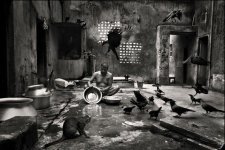
This image is good in either stills or motion, but it becomes exceptional as a still image.
 
Last edited:
.. aside from certain aspects of the profession like fashion.

I feel my experience in fashion/brochures/hotels, in fact many larger corporate shooting situations, have set me up to DP - it is indeed the teamwork, possibility that one is just a craftsperson (ie under a director), and higher time/budget pressures that make this the case.

S
 
No, I do not. Most of my friends use DSLR to make short videos. We can share the reviews of the products, good places for fun and so on. I like their videos that seems very pro. :)

Best regards


David
MustHD On-camera Field Monitor
Website: www.musthd.com
 
Back
Top