D750 or D810 until the 4K dust settles

DPStewart

Veteran
For me at least, it's the right move.

The D750 'Reflection issue" aside, these are the cameras that I think will best get me, and others working lower budgets (like myself) through the transition years until everything is 4K.

These really are 2 beautiful cameras that leave....really NOTHING to be desired for a DSLR. Especially for those who are already invested in Nikon glass. (Again, like myself.)

I checked the Sony A7s and it's really cool....but to me it has a lot of shortcomings like using something like...say...a Black Magic camera.
Shooting S-LOG 2 under good conditions, and with the time and resources to properly grade it, can really turn in some fantastic footage. But the A7s really does NOT seem to be the "point it anywhere and get something decent" like can generally be said for the Canons and the higher-end Nikons.
Plus I really like having a 24MP (36MP) stills camera in my hand at the same time. It just makes life easier when you don't know how many hats you are going to have to wear on a job.

The way technology is going - we are going to see a ton of amazing cameras all shooting real 4K raining down on us within 18-24 months.
I, for one, would rather not get stuck with a camera that isn't solidly in one world or the other.

"The best images with the least amount of work" is what my tools need to give me at this budget range. I'm not "camera duties only"...I have too much other stuff I'm responsible for on most of my jobs.
Maybe that describes some of you too.

Once Nikon is shipping again, I will be putting a D750 into service immediately.

I'll be sure to post all the projects here should folks want to take a look.


....now where the heck did I just leave my 50mm.......
 
The a7S is not perfect, but also nowhere near the blackmagics in terms of ergonomics. In any case, the D810 and D750 are awesome cameras too. So many great options nowadays...
 
I was very close going from D800 to D750 but now I think I will finally move into the "proper" bodies and go for an Sony F3. Used, It costs about the same as a D810.

If a camera has a good looking image, 1080 or 4k, I think it can be used successfully within both these format enviroments. A 4k cellphone generally does not have a good image in my opinion. A D750 seems to have a good image, and it will look as good in two years. The 5D mk2 still looks good if you shoot well.
 
If you're assuming you'll jump to 4K as the market opens up, consider a 5200, 5300, or D7100. (If you can live with APS-C, which is still my video preference). If you assume you'll be dumping your body soon, you could invest a lot less and still get veery nice 1080.

I really don't know if we'll ever see useable 4K video from Nikon - you'd need to have a head injury to understand their video "strategy"… but this new firmware program (or at least a web site for a new firmware program) may mean they're going to focus a bit more on this niche. Who knows… they have developed a very pretty and useable video look at least.

You know Michael, I almost wouldn't mind avoiding 4k for as long as possible.
A pretty image is far more desirable to me than a higher resolution image. Hence my affinity for the Nikon and Canon DSLRs.

I shoot a hacked GH2 with a speed booster and a handful of Nikon primes so I'm basically at the APS-C level already.
With the resale value of a GH2 body falling so low, I'd probably not even bother selling it. put the 20mm pancake on that thing and it's the ultimate stealth camera.

Yeah, I don't see any signals at all that Nikon is interested in 4k video yet...

That Sony F3 looks nice, and used prices are indeed around $3,700 U.S. But a design like the F3 would mean all sorts of new costs for me at this point.
 
I really don't know if we'll ever see useable 4K video from Nikon - you'd need to have a head injury to understand their video "strategy"…

lol that's great.

I think they (more than even Canon who I think is just trying to price/feature tier so as not to hurt their C series) is just trying to perfect their 1080p before moving on to 4K. If they could increase dynamic range even more and give us 10bit 4:2:2 H.265 recording (because I doubt we'll ever see prores or raw) that would be cool. I too prefer a better image over a high res image.

These companies seem behind now, but in the grand scheme of things 4K will be with us for a long time. Even if they don't deliver 4K in the next three years, 10-15 years from now it will seem like they've been doing 4K forever. So I don't think they are in any rush to get there.
 
You know Michael, I almost wouldn't mind avoiding 4k for as long as possible. A pretty image is far more desirable to me than a higher resolution image. Hence my affinity for the Nikon and Canon DSLRs.
That is true, however I think that the benefits of working in post with 4k images (cropping/reframing) and retaining an excellent HD quality for delivery is something that I personally cant overlook! Thats why Im seriously thinking of adding a 4k camera to my gear (thinking about the Samsung NX1) even if I know that I ll not be asked for 4k delivery anytime soon. That doesnt mean that I ll sell all my Canon gear the time I ll buy the NX1, but keep them together for sometime until and if I ll be sure that the NX1 works for me. I dont know if that sounds like a good strategy or not but thats what Im thinking to do. Anyway I dont have high hopes about Canon delivering 4k cameras that will be in my budget...
 
Cropping and reframing 4K vs digital zooming

Cropping and reframing 4K vs digital zooming

I think that the benefits of working in post with 4k images (cropping/reframing) and retaining an excellent HD quality for delivery is something that I personally cant overlook
Cropping and reframing 4K image to HD. Every advocators of 4K are talking about this, but I've never seen any examples, not even a bad one. Digital zooming, sounds cool, but in practice it has severe limitations.
 
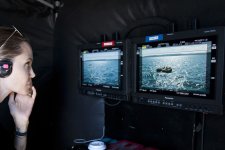
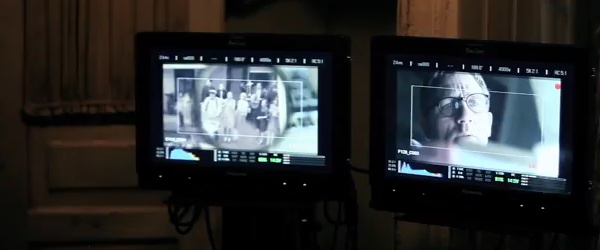
If you watch the BTS extras of many Hollywood films, you'll see that being used: they leave a big margin around the frame, and adjust the framing in post.

(at least that's how I think it is; maybe the super-expensive cameras I've never used show you a much bigger frame in the monitor than what gets actually recorded)
 
Cropping and reframing 4K image to HD. Every advocators of 4K are talking about this, but I've never seen any examples, not even a bad one. Digital zooming, sounds cool, but in practice it has severe limitations.
I'll try to find the awesome example I saw on youtube. A guy videoed a small flock of geese flying, then zoomed in on one and kept it perfectly centered. The stabilization from cropping made it look like you were flying along with the bird. There were also examples of animals walking across the frame that he turned into panning and keeping the subject centered.
There are also many examples of the "ken burns effect" and zooming in on one subject's face, with a group of people, slowly while the subject is talking talking.
 
Reframing is an incredible power to have in post. It just feels like comparing between a 2mp stills camera and an 8mp one, even though we deliver on the web and in small prints at a very low resolution, having a big, 8mp image for editing and supersampling is much more desirable than a 2mp one that will be delivered at 2mp, that's quite limting compared to 8mp.

One of the examples I use all the time is I shoot interviews in a medium close up, and punch in to close ups in key moments, and ALL of my audience never saw anything different from optically zooming, which would be impossible to do with having two camera with two lenses and two operators, a very complicated solution for most of (even if it's better for YOU)

Another example is when shooting a distant subject, you can take a 1080p crop and get way closer than a 1080p image would, it effectively turns your 400mm lens into 600-800mn, that pretty important for wildlife/birds/sports/etc

another example is stabilization, which we all always avoided because of the crop it takes, as if you stabilize a 1080p image, you end up upscaling to fit the window. With 4K, you stabilize, then DOWNscale to 1080p, with no loss in quality at all, plus the fact that giving the software that much information gives pretty astonishing stablizing results.

Example, when doing green screen work, 4K makes it 10x more accurate to pull a fine key when you do it with so much resolution, then after downscaling it's almost perfect, really much much better than 1080p in that regard where you have to use at least 10 bit 4:4:4 1080p image to get a similar key.

These are some practical examples of why 4k is so much better than 1080p for cameras in that price range. If you have no use personally for any of th, 1080p is just as good.

Yes having a C300/alexa/f35 perfect DR with wide DR and huge colour depth is better than many 4K images, but the point is that 4K gets us closer to that image for those of us who can't afford these cameras.

All things being equal, higher resolution is better. I would take a 36mp video if I can, because it's more percision and quality, and if I need to crush it to HD it's a click of a button away. You can crush it down to SD for all I know.

I would take a GH4, an NX1, A7s right now over a Canon or Nikon 1080p-ish DSLR, because they give me full 1080p images with all the benefits mentioned above. The only reason you might go for one of these is that you specifically believe in subtle colour science differences and find Canon/nikon superior. Or if you specifically want a pro photography camera.
 
"The best images with the least amount of work" is what my tools need to give me at this budget range. I'm not "camera duties only"...I have too much other stuff I'm responsible for on most of my jobs.
At this point in 2015, Nikon still manages to hit the sweet spot of delivering the best out-of-camera 1080p video performance, but not without third-party assistance. Unfortunately, it's still the D800, until we get the following tools for the D750 and D810:

* Mosaic Engineering's VAF-D800 Optical Anti-Aliasing Filter
http://www.mosaicengineering.com/products/vaf/d800.html

Yes, it's a pain to insert the thing in the D800 and you can't shoot stills while it's in there. But the moire-free images it produces are crucial for any shot that requires panning or post-production cropping and reframing. Minimizing aliasing artifacts also frees up bitrate for capturing genuine fine details.

* Nikon Hacker's D800 35, 54, and 64Mbps video bitrate patches
http://simeonpilgrim.com/nikon-patch/nikon-patch.html

Nikon's H.264 encoder is very efficient and completely reliable. Its stock 20Mbps bitrate, however, is only marginally capable of capturing high-speed motion shots. On the D800, inadequate bitrate can produce macroblock artifacts that cannot be fully corrected in post. For handheld video shots, I use the 36Mbps patch, which can be played back in-camera. For the highest quality tripod shots, I use the 54 or 64Mbps patch. The drawback, however, is that the D800's 4GB SD card max file size limits video duration at higher bitrates.
 
I love my D800, but it is time to upgrade to 4K.

As for the professionals, many big players use the extra space to crop in post.

cropping_hobbit.jpgcropping_unbroken.jpg

David Fincher is known to significantly alter his framing in post. Roger Deakins also did this for Skyfall and framed it in 2.40:1 for normal theaters and 1.85:1 for IMAX screenings.
 
Ok, so my d800 got a F3 friend for a real bargain of a deal :)

With the body armour and a nikon adapter and an SxS to SDHC adapter the F3 was a quick step away from shooting-ready for me!

The internal codec seems to perform over expectation so far.
 
Oh, there is NO DOUBT that 4k is a better file to have for about 1,682 reasons (to be exact).

But for $2,500? - Nope. Not yet.

The tool I need for so many purposes right now must be small - DSLR or Canon C100 sized AT MOST.
Otherwise I would just get a Black Magic camera or sell off a few things and get that STUNNING used Sony F35.

Again - the dust WILL settle and the tools will be wonderful. But not in 2015.

Now LPowell's statements are actually something I was factoring in. I could get bitten on my bum, (as usual) but I am figuring the Nikon higher bit-rate hack is something that WILL happen - his points are beyond solid - those 2 items are a MUST.

Now if only someone could hack Nikons to shoot video in RAW like Magic Lantern - THEN it would be a much better long-term investment.
 
Does the D810 still need an anti-aliasing filter? I thought not... Which leaves just the hack, which I would algo guess must be coming to the D810 at some point. Hopefully.

I'd definitely go for D810 instead of D800... if I hadn't already gone to a7S because I'm DR-obsessed.


David Fincher is known to significantly alter his framing in post.

Indeed. this is from the BTS of GWTDT, and the extra space around the cropmark is even larger than in the previous examples
(super awesome bluray extras, BTW)
The-Girl-With-The-Dragon-Tattoo-BTS.jpg
 
Does the D810 still need an anti-aliasing filter? I thought not...
Not for 36Mpix photos, but for 1080p video the D810 will have the same aliasing issues as the D800 and D800E. I expect the Mosaic Engineering D800 OLPF will work on the D810 as well. I sent them an email a couple months ago asking if the D800 OLPF will work properly on the D750, but they hadn't tested it yet at that time, and I haven't seen any updated info on their website.

The current major issue with Nikon hack development is that the D810 and D750 use the ARM-based Expeed 4 processor, which runs different microcode than the Expeed 3 processor used in the D800. That makes it harder to find the bitrate patches in the new models.
 
Last edited:
... I really don't know if we'll ever see useable 4K video from Nikon - you'd need to have a head injury to understand their video "strategy"...
Since Nikon is using Sony sensors in their 800 series camera, I assume that the absence of 4K is part of the agreement between these two companies.

The same notion probably applies to the new Canon 5DS cameras - Sony sensor and no 4K.

Which means that the only full frame 4K camera in that sub-$10K range is ... well, you guessed it, Sony.
 
Not for 36Mpix photos, but for 1080p video the D810 will have the same aliasing issues as the D800 and D800E. .

Glad to announce it doesn't have the same aliasing as the d800, this has been completely fixed with zero aliasing/moire artefacts on the d810, and a bit sharper image, that lovely Log profile, Simultaneous HDMI recording, zebras, better audio, better sensitivity (quite a lot, a stop or more).

In fact, of all sub 5000$ cameras, the D810 is my favourite, it jumps on you with that FF aesthetic and Nikon colours, the only reason I am not using it now is because of resolution, I (unfortunatly) am not able to go back to 1080p, if Nikon makes it 4K, the image will be right up there with the highest end cinema cameras.
 
Nikon's D810 may be the height or close to the best they're going to do with 1080p. Unfortunately, I doubt they're going to have a good 2nd generation 4K video camera - not until 2016.
 
Back
Top