D5200 Anyone got it ???

squig, does this camera record true 24.000 or 23.978 when recording 24P? I ask b/c the 720P mp4 file is 24.000.

Thanks again!
 
This camera certainly performs well above it's price point, and it would be a nice small body to pair well with my D800 (but that's what my GH2 is for, right?). So I decided not to get one, and put that $700 into audio and/or towards a Tamron 24-70 VC.
 
squig, does this camera record true 24.000 or 23.978 when recording 24P? I ask b/c the 720P mp4 file is 24.000.

Thanks again!

It's 23.98 out of the camera. I just dropped it on a 24p timeline, maybe that's why it plays back funny in quicktime player. :grin: "Slap".
 
I have to say that I'm finding the ProRes version impressive. The .mp4, not so much. Can you post one original source clip, i.e. one take? Thanks for considering this.
 
Can you post one original source clip, i.e. one take? Thanks for considering this.

I could but it won't look any better than the ProRes files. Andrew Reid posted some ProRes vs camera H.264 screenshots and the ProRes looked a lot better. I think it's got something to do with how quicktime and NLEs interpret the H.264 data.
 
Thanks!!!

Okay, I got a chance to check it out and here's what I've been able to conclude, FWIW.

1. There is essentially no difference between the ProRes and H.264 files. The color levels are the same and they seem to respond the same to grading.

2. The camera internally records video 16 to 235. This is good in that it keeps NLE's from clipping "illegal" levels. This is not so good in that it does remove gradations from the aleady limited 8-bit recording levels.

Hope that helps a little. ;)
 
Last edited:
A tip about lenses:

The Sigma 20mm 1.8, 24mm 1.8 and 28mm 1.8 are the best lenses in these focal lenght for video. They look very sharp wide open for video and 2.0 is the sweet spot. Used in APS-C or M43 cameras they are great because the crop factor helps to avoid the dark corners usually found in wide lenses. They are more expensive than old manual focus lenses but worth it.

I would like to experiment more with Neatvideo for the D5200. If someone could upload to vimeo small videos (original from camera) in iso 3200, 6400 and 12800 I will try to improve the Neatvideo presets. Also if the clips have just two seconds in low light out of focus and the remainder in focus it will be good to extract the noise profiles. I think portrait dialed down would be a good settings to do this. Thanks.

This video below shows tests comparing sharpness from various lenses including sigma, canon, nikon, vivitar, olympus, minolta, tokina (read video description to find which lenses was used):

https://vimeo.com/34423217
 
Last edited:
That's awesome, thnx Squig. I've been playing with some Linear2Log conversion and is pretty amazing how much you can recover. Also, res can hadle moderate sharpness quite well beyond any GH2 footage IMHO

I had the sharpness set to 3 which I think is a little too sharp with that lens, the edges look a little artificial and like they're just about to halo. I'm gonna shoot with a Leica-r and try dialling it down a bit. It looks sharper to me than the 5D MKIII does after post sharpening.

So you were able to recover the highlights? I shot it pretty hot but it seemed to like it more than the 5D. I've just done some tests for Samuel so he can measure the dynamic range. My guess is there's close to 12 stops.
 
2. The camera internally records video 16 to 235. This is good in that it keeps NLE's from clipping "illegal" levels. This is not so good in that it does remove gradations from the aleady limited 8-bit recording levels.

Doesn't cinestyle do the same thing?

@ Apefos. I have a Sigma 20mm f/1.8, it's quite soft and low contrast @ f/2 so much so that I really consider it to be an f/2.8 lens.

I'll get some low light tests done sometime this week.
 
Last edited:
I'm sorry, I don't know what cinestyle does. :( Perhaps other settings create different mappings, IDK.

What I could tell while comparing the h.264 to the ProRes is that their color levels look identical. And opening the h.264 file in other media players, there are color level shifts, but it does not look like QT is clipping any information. Of course, this stuff can get really weird, esp. when QT is involved, so while I believe I'm right, there is definitely a chance that I'm missing something.


P.S. Did you get the kit lens? And if so, what do you think of it?
 
P.S. Did you get the kit lens? And if so, what do you think of it?

Na didn't get it, not a big fan of AF glass, but I probably should have got it considering it only cost $50 more, might come in handy for steadicam work.

Cinestyle is a picture profile Technicolor developed for the 5D, it clips to broadcast levels and also has gradation issues.

Interestingly I'm not seeing any blue sky posterization.
 
The camera internally records video 16 to 235. This is good in that it keeps NLE's from clipping "illegal" levels. This is not so good in that it does remove gradations from the aleady limited 8-bit recording levels.
Not according to Adobe After Effects and Nikon. As with Canon DSLR videos, the H.264 MOV files are tagged with metadata flags that indicate they contain full-range 0-255 Rec. 709 video streams. I can also see the full-range luma excursion in After Effects, and manipulation of the gamma curves confirms their full-range nature.

When you decode or transcode the original video stream into another format, the video editor and/or codec may convert the data into broadcast 16-235 range, and may do so behind the scenes without notifying you. The only way to know for sure is to analyze the original H.264 file.
 
I agree the Sigma 20mm 1.8 is better when stop down to 2.8, every lens is better with 1 or 2 stops down, but in the video I did comparing it to other lenses (link in previous post), the Sigma is higher contrast and higher resolution than all old manual focus lenses at same fstop. For my eyes, the sigma at f2.0 is even better than the canon FD, Olympus PenF and Vivitar at f2.8 and is more or less the same as the lumix kit lens and the nikons. At f2.0 it is pretty usable for low light and shallow dof. Also, there is the option to apply a small amount of sharpening in post.

Interesting and curious behavior is when used for photos the Sigma is soft wide open, but for fullhd video it does not show the same softness, I do not know why, maybe because video is just 2 megapixels and photos is more.

I think the look of the lenses is a subjective choice, there are lots of people who prefer the old manual focus softness and low contrast and there are people who prefer the high contrast and sharpness of new lenses from digital era. It also depends on the script and/or on the mood you want.
 
Last edited:
Not according to Adobe After Effects and Nikon. As with Canon DSLR videos, the H.264 MOV files are tagged with metadata flags that indicate they contain full-range 0-255 Rec. 709 video streams. I can also see the full-range luma excursion in After Effects, and manipulation of the gamma curves confirms their full-range nature.

When you decode or transcode the original video stream into another format, the video editor and/or codec may convert the data into broadcast 16-235 range, and may do so behind the scenes without notifying you. The only way to know for sure is to analyze the original H.264 file.

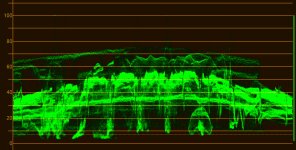
Actually, looking at the original source file more closely, it looks like it is recorded 16 to 255. I could be wrong (again) of course. But I'm looking at RGB Parades and Waveforms in both Avid Media Composer and Color Finesse in After Effects.
 
TESTS TESTS TESTS!!!

First, squig sent me the clips to calculate the light-response function for Neutral and for Flaat_11. They both look very nice. Flaat, in particular, has a light-response that is very similar to that of the D800, which, together with the nice colors from the other tests I've received, means Flaat can be happily used for the D5200.

I still have to look at the highlights, but I rate the D800 at around 11.3 stops of DR, and the D5200 seems very similar, so it will probably be something like that too.
For context, my measurements for other DSLRs are:

550D Flaat_10p 10,3
550D Flaat_11p 10,7
550D Flaat_12p 11,3

D800 Flaat_10p 11,3
D800 Flaat_11p 11,3
D800 Flaat_12p 11,3

5N Flaat_10p 11,0
5N Flaat_11p 11,0

(that's absolute DR: if there's detail, it counts, no matter how noisy or ugly it is)
(for example, Flaat_12 on the T2i is a lot noisier than Flaat_12 on the D800; they both deliver the same absolute DR, but the D800 would win if you care a lot about noise)
(then again, all my tests are at ISO 100, and this affects results too; macgregor tested Canon vs Nikon DR in video mode at higher ISO, and his conclusion was that the Canon was the winner)

Anyway, that DR measure would be in line with these other tests (thanks, Oleg):
Here are links to new test with Flaat11, I had to open up half a stop on GH2 to match exposure,
http://yadi.sk/d/kprDlbBt31RYk
http://yadi.sk/d/vjONtqku31Rfo

Nostalgic all -2 on GH2, Flaat11 on Nikon, not changed.
focus on letters on the box.
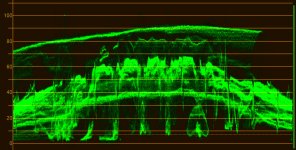
He said he was not seeing much of a difference, and, again, there are basically no highlights so I can't be sure, but they clip the shadows at about the same point (maybe with a slight advantage for the D5200, but very minor), and looking at the waveforms it seems to me that the D5200 has to have more headroom in the highlights:

GH2 left, D5200 right
gh2.jpgD5200.jpg


And finally, going back to squig, and his kids-on-bikes piece:

* in the ungraded clip the skin tones are not as good as in the graded one, but they're not too bad either; a WB adjustment to add some green helps a lot; the bigger problem would be adding some saturation without affecting the rest of the picture too much (they're a bit pale)

* rolling shutter: I've measured sensor readout speed at around 24ms for the NEX-5N, and around 29ms for the D5200. Take these measures with a pinch of salt the size of an SUV. For these measures to be accurate, I would need the camera to be level, and performing a fast pan at constant speed across a perfectly vertical line (like a post or the corner of a building); if the camera is not level, or the line is not vertical, or the pan is not at constant speed, then the measure is skewed. I'm using a pan from the kids-on-bikes piece for the D5200, so guess how accurate that measure is.
(there were clips of camera-on-top-of-camera rolling shutter tests earlier in this thread, but I need full res files to measure this, not youtube clips)

edit: as I've learnt here, you really need to setup your rolling shutter test very accurately to measure this, otherwise the numbers will be useless. The real number for my NEX-5N is 29.4ms. No idea yet about how the D5200 compares.
 
Last edited:
Back
Top