C500 MKII Leaked on Canon Rumors

A few thoughts that are completely anecdotal, and I'm not trying to pick any anecdotal fights.

I have been working as a freelance DP, videographer, and editor for 10 years. I own and use a Varicam LT. My paid work is all your typical CEO talking heads and misc corporate, with some sports and event shooting thrown in. I direct (and end up shooting :)) a lot of shorts and pilots in the Chicago comedy scene for passion dollars. All of that to provide context when I say, I have never had a client demand raw or demand a certain camera...not one in 10 years has even asked about what camera model I have or plan to use. They just look at my work, meet me, and then hire me if they enjoy both of those experiences.

I get that I'm at a relatively low level compared to the industry at large, I'm not getting paid to shoot Nike commercials, but even with bigger corporations I've worked with, no one ever ever ever cares. So I'm always puzzled when I see a bunch of comments about which cameras get client demand. It makes me wonder how much is self-perpetuated.

I totally get that technical considerations are more complex if you're working on big budget commercials and features, but like...those don't seem to be the people harping on camera specs and internal raw and masterful control over every pixel in DaVinci Resolve. I think people at that Nike level are too busy working? It seems like after a certain point, the cost and specs of various camera bodies become irrelevant because you can and will just rent whatever you need/want. Yet all the mid level guys and gals (I'm one of those too) seem to spend a lot of time picking apart what the next hot camera has or doesn't have. Genuinely, who are you people working with where they are demanding raw? Why would that even make sense? It's good to have every option available to you in post? Should you buy a 9 bedroom house just in case you have 8 kids even though you've just got 2 now and are in your mid 40s?

A lot of this stuff doesn't seem like it's based in reality. When someone posts a link and says this was shot with raw and graded etc, no offense, but who would ever know? To be clear, I'm not dismissing color! I am picky and very detail oriented, I care a lot otherwise I wouldn't have bought an LT. But lots of projects I will bake in a look because practically it makes sense and I know what I'm doing. And others I'll shoot log and use some power grades from Juan Melara, which I tweak to taste. There is a real difference there that I prefer. I just cant imagine myself going you know this client really needs me to get an Odyssey and shoot raw out of the LT to take this thing to the next level. Or you know I really need an 8K camera so that I get a true 4K file after the debayer. My goodness, show me the person who can tell outside of scientific testing.

I won't devolve into platitudes about "the story is all the matters," but I do wonder, for most of us, is this really where the bottleneck is? Raw, or 6k/8k, THEN everything will finally be on the level? I know this is not an original thought and there are plenty of comments and articles about the gear treadmill, just throwing my 2 cents into this one. I also know my experience is not everyones and to each their own. If you enjoy shooting 8k raw, I wish you nothing but happiness.
 
I have been working as a freelance DP, videographer, and editor for 10 years. I own and use a Varicam LT. My paid work is all your typical CEO talking heads and misc corporate, with some sports and event shooting thrown in. I direct (and end up shooting :)) a lot of shorts and pilots in the Chicago comedy scene for passion dollars. All of that to provide context when I say, I have never had a client demand raw or demand a certain camera...not one in 10 years has even asked about what camera model I have or plan to use. They just look at my work, meet me, and then hire me if they enjoy both of those experiences.

That's been my experience also. Most of the time they ask me what kind of camera I have AFTER they've decided to hire me, and usually that's when they're trying to figure out logistics like how to back up the footage and all that. Honestly, most of them really don't care, they just care about the end product.

A lot of the top cinematographers don't even OWN cinema cameras, so which camera they own is obviously not a big deal for them, either!

A lot of this stuff doesn't seem like it's based in reality. When someone posts a link and says this was shot with raw and graded etc, no offense, but who would ever know?


Agreed. And the proof's in the pudding, since even on major productions using Alexas as A cameras, they often end up mixing in Reds, Phantoms, various crashcams (IndieCam, IO Industries, GoPro, Canon, Black Magic, etc). MI: Fallout even though it was mainly shot on film had a major action scene shot on Reds.

They don't push off the matching part to post though... they start that process in pre-production.
 
A few thoughts that are completely anecdotal, and I'm not trying to pick any anecdotal fights.

I have been working as a freelance DP, videographer, and editor for 10 years. I own and use a Varicam LT. My paid work is all your typical CEO talking heads and misc corporate, with some sports and event shooting thrown in. I direct (and end up shooting :)) a lot of shorts and pilots in the Chicago comedy scene for passion dollars. All of that to provide context when I say, I have never had a client demand raw or demand a certain camera...not one in 10 years has even asked about what camera model I have or plan to use. They just look at my work, meet me, and then hire me if they enjoy both of those experiences.

I get that I'm at a relatively low level compared to the industry at large, I'm not getting paid to shoot Nike commercials, but even with bigger corporations I've worked with, no one ever ever ever cares. So I'm always puzzled when I see a bunch of comments about which cameras get client demand. It makes me wonder how much is self-perpetuated.

I totally get that technical considerations are more complex if you're working on big budget commercials and features, but like...those don't seem to be the people harping on camera specs and internal raw and masterful control over every pixel in DaVinci Resolve. I think people at that Nike level are too busy working? It seems like after a certain point, the cost and specs of various camera bodies become irrelevant because you can and will just rent whatever you need/want. Yet all the mid level guys and gals (I'm one of those too) seem to spend a lot of time picking apart what the next hot camera has or doesn't have. Genuinely, who are you people working with where they are demanding raw? Why would that even make sense? It's good to have every option available to you in post? Should you buy a 9 bedroom house just in case you have 8 kids even though you've just got 2 now and are in your mid 40s?

A lot of this stuff doesn't seem like it's based in reality. When someone posts a link and says this was shot with raw and graded etc, no offense, but who would ever know? To be clear, I'm not dismissing color! I am picky and very detail oriented, I care a lot otherwise I wouldn't have bought an LT. But lots of projects I will bake in a look because practically it makes sense and I know what I'm doing. And others I'll shoot log and use some power grades from Juan Melara, which I tweak to taste. There is a real difference there that I prefer. I just cant imagine myself going you know this client really needs me to get an Odyssey and shoot raw out of the LT to take this thing to the next level. Or you know I really need an 8K camera so that I get a true 4K file after the debayer. My goodness, show me the person who can tell outside of scientific testing.

I won't devolve into platitudes about "the story is all the matters," but I do wonder, for most of us, is this really where the bottleneck is? Raw, or 6k/8k, THEN everything will finally be on the level? I know this is not an original thought and there are plenty of comments and articles about the gear treadmill, just throwing my 2 cents into this one. I also know my experience is not everyones and to each their own. If you enjoy shooting 8k raw, I wish you nothing but happiness.
The difference is likely your clients. If you work directly for a company or corporation, often the marketing director who hires you is not very tech savvy in terms of cameras, so they just want good work, and could care less what camera you use because they know so little about cameras.

As for me personally, most of my clients are producers, and they're often hiring me to film part of say a documentary that is already in progress, and has already been shot 80% on the C300 Mark II, and they want to maintain that look without having to tweak a different camera to match the rest of what they've been shooting. So, they go online, search for a local DP, find me, a local owner of the C300 Mark II, and reach out to me requesting myself with that camera. That's a pretty common scenario and most of my clients (often producers) are tech savvy enough to know the difference between cameras, and they often have their own preferences, of which often the reason they're contacting me is because (in addition to my portfolio) they saw my equipment list.

As I'm also a producer who hires owner/operators, I can tell you that the camera an owner/operator owns most definitely matters to me when I'm hiring, as I mostly just hire people who own the same or similar (such as the C200) cameras as myself. Oftentimes when I'm subcontracting an owner/operator, it's to replace me because I'm double booked, so since the client reached out to me and I quoted them based on what cameras I own (C300s and Amiras), in order to not complicate matters I most definitely prefer if an owner/op has the same or a similar camera, so I won't need to explain to the client that they'll be getting a different camera, which could botch the whole deal.

That said, I rarely get requests for RAW. The Amira came out with the RAW license over a year ago for around $4K and I haven't bought it.
 
Last edited:
So I'm always puzzled when I see a bunch of comments about which cameras get client demand. It makes me wonder how much is self-perpetuated.

I'm sure some is self-perpetuated. But I have dealt with a few clients who are VERY specific about camera, set up, frame rate, I have even had some give me specific LUTs and or scene files for their projects. Then again, I am located about 40 miles from Hollywood and some of the clients we shoot for are production houses so that makes more sense.

At times, the client will pay a DP to develop a specific look with a certain camera, LUT, style, lighting and then have to hire DPs all over the country or even the world, to replicate that look. I've done that for certain projects where the client couldn't fly me all over the world and I've also been on the receiving end it as well. I recently did a shoot for a cable channel, not an obscure one, but a very popular one you've at least heard of and they would only hire an owner/operator with a C300 MKII. I own the C200 so I had to speak with their head of post and a producer to convince them that my C200 output to the Ninja Blade would give them the equivalent they could get on a C300 MKII (it was a 1080 project also, surprise, surprise!) No 4K, they said on their spec sheet they would reject any 4K footage. They were happy with my footage, but their spec sheet specifically said, Canon C300 or 300 MKII only, no Sony, Panasonic or BMD cameras. They were also ridiculously specific about how they want their shots framed, logged as we shoot and how we submited the footage, etc. It was insanely specific, the most specific I've ever seen in this business.

I have another client who specifically only wants their green screen shoots shot on RAW, they love the footage from the C200, they really dislike Sony cameras as they have hired freelancers in other states and countries and have gotten financially hosed trying to get skin tones they and their client (usually Fox, Sony or Netflix) approve of and ended up having to go to a high end color grading facility and spending many hours with a colorist. They like Canon specifically for the out of camera skin tones are usually pretty good and they can just do a simple CC with their editor instead of a heavy CC and grade with a colorist.

Then we have several clients who are just like yours, they don't care what we shoot on as long as its well lit and well shot.

I guess it's like everything else in this business, there are so many niches that we all work in, its almost impossible to make sweeping generalizations about anything. Some clients are super picky and specific, others don't care at all.
 
Let's consider a big budget movie chose the wrong camera

So what's a "wrong" camera ?

I can see trying to use the same type of camera for all your shots to minimize the amount of work in post and generally make life a heck of a lot easier.

But it seems like there are many good camera choices from ARRI, Canon, Panasonic, Panavision, RED, Sony, etc...
 
So what's a "wrong" camera ?
Well like these producers I worked for a few years ago who told me about this 12 million dollar budget movie they produced where the DP convinced them to shoot it on the Canon 5D, and they iterated how trying to make it look good in post was a nightmare and they regretted letting the DP shoot on the Canon 5D considering they had plenty of budget to shoot on a better camera. I watched the trailer and it definitely wasn't a case of the shoot actually needing a small camera; it was a case of a DP making a stupid choice.

https://www.imdb.com/title/tt2598580/?ref_=adv_li_tt

 
Wow. $12m movie shot on a 5D Mark II? That's nuts.

Nobody's saying that every camera can be made to look like an Alexa. But the flagship cameras from most companies (RED, Panavision, Sony, Panasonic, Canon, etc.) with all the bells and whistles designed for crewed operation can carry a Hollywood movie no problem.

Not a 5D II though. That's just dumb.
 
Nobody's saying that every camera can be made to look like an Alexa. But the flagship cameras from most companies (RED, Panavision, Sony, Panasonic, Canon, etc.) with all the bells and whistles designed for crewed operation can carry a Hollywood movie no problem.
Well as one example, to quote Dan...

I know Thirteen Reasons Why was shot on the Varicam 35 and I thought S1 looked pretty good but when they would introduce LED fixtures at the high school dance, the illusion was broken,
the Varicam 35 did some pretty strange looking artifacting with the blue-purple LEDs and I knew an Arri couldn't look like that.
13 Reasons Why had a pretty good budget, but not good enough to spend the money to fix in post the issue that Dan was talking about. Perhaps there were other issues they had to fix in post due to the camera that they did fix before releasing the final product, and because of the extra spending on that post budget, they couldn't afford better writers.

Speaking of another 13 movie, I get that Michael Bay wanted lens flares for 13 Soldiers, but are all those colored dots showing up in the movie supposed to be there or was it a defect of the Red camera? I thought the flares of say Star Trek 2009 (shot on film) looked cool, but I've seen colored spots like this in some other movies (I believe also shot on Red) and I can't say it looks good.

13-Soldiers-1.png


56521384dd089515058b45bd-960-399.jpg
 
Last edited:
A few thoughts that are completely anecdotal, and I'm not trying to pick any anecdotal fights.

I have been working as a freelance DP, videographer, and editor for 10 years. I own and use a Varicam LT. My paid work is all your typical CEO talking heads and misc corporate, with some sports and event shooting thrown in. I direct (and end up shooting :)) a lot of shorts and pilots in the Chicago comedy scene for passion dollars. All of that to provide context when I say, I have never had a client demand raw or demand a certain camera...not one in 10 years has even asked about what camera model I have or plan to use. They just look at my work, meet me, and then hire me if they enjoy both of those experiences.

I get that I'm at a relatively low level compared to the industry at large, I'm not getting paid to shoot Nike commercials, but even with bigger corporations I've worked with, no one ever ever ever cares. So I'm always puzzled when I see a bunch of comments about which cameras get client demand. It makes me wonder how much is self-perpetuated.

I totally get that technical considerations are more complex if you're working on big budget commercials and features, but like...those don't seem to be the people harping on camera specs and internal raw and masterful control over every pixel in DaVinci Resolve. I think people at that Nike level are too busy working? It seems like after a certain point, the cost and specs of various camera bodies become irrelevant because you can and will just rent whatever you need/want. Yet all the mid level guys and gals (I'm one of those too) seem to spend a lot of time picking apart what the next hot camera has or doesn't have. Genuinely, who are you people working with where they are demanding raw? Why would that even make sense? It's good to have every option available to you in post? Should you buy a 9 bedroom house just in case you have 8 kids even though you've just got 2 now and are in your mid 40s?

A lot of this stuff doesn't seem like it's based in reality. When someone posts a link and says this was shot with raw and graded etc, no offense, but who would ever know? To be clear, I'm not dismissing color! I am picky and very detail oriented, I care a lot otherwise I wouldn't have bought an LT. But lots of projects I will bake in a look because practically it makes sense and I know what I'm doing. And others I'll shoot log and use some power grades from Juan Melara, which I tweak to taste. There is a real difference there that I prefer. I just cant imagine myself going you know this client really needs me to get an Odyssey and shoot raw out of the LT to take this thing to the next level. Or you know I really need an 8K camera so that I get a true 4K file after the debayer. My goodness, show me the person who can tell outside of scientific testing.

I won't devolve into platitudes about "the story is all the matters," but I do wonder, for most of us, is this really where the bottleneck is? Raw, or 6k/8k, THEN everything will finally be on the level? I know this is not an original thought and there are plenty of comments and articles about the gear treadmill, just throwing my 2 cents into this one. I also know my experience is not everyones and to each their own. If you enjoy shooting 8k raw, I wish you nothing but happiness.

I think you are completely on target. I own an Alexa Classic and to be honest I bought it for the name and highlight retention in a few circumstances. But I can easily cut my F3 from 7 years ago with it and no one knows the difference. 4K ? Lot's of people ask for it. When I ask them which they would prefer, my Alexa or a 4k camera ? They all say Alexa. So basically, it's all about name recognition. A few years ago people were asking for RED. Now there are so many owner operators, that in fact it has fallen out of fashion. The truth is most client's needs still aren't beyond FullHD and dynamic range is adequate at even 12 stops. What I think is that 95% of jobs that look good, do so because of the choices that are being made in terms of lighting, production values and the core basics surrounding proper exposure, etc. Skill and creative vision trump technology most of the time. My .02 cents.
 
Well like these producers I worked for a few years ago who told me about this 12 million dollar budget movie they produced where the DP convinced them to shoot it on the Canon 5D, and they iterated how trying to make it look good in post was a nightmare and they regretted letting the DP shoot on the Canon 5D considering they had plenty of budget to shoot on a better camera. I watched the trailer and it definitely wasn't a case of the shoot actually needing a small camera; it was a case of a DP making a stupid choice.

https://www.imdb.com/title/tt2598580/?ref_=adv_li_tt


The funny part is that if they had shot Magic Lantern raw on the 5D Mark III they would have gotten some of the truest skin tones out there. I am also a freelance colorist and I am still amazed at how little work needs to be done to have true colors out of the box with that combination. Would I use ML on a feature ? Probably not, but 14bit from a 5D looks pretty damn good.
 
  • Like
Reactions: jcs
really well written and thoughtful question.

I won't devolve into platitudes about "the story is all the matters," but I do wonder, for most of us, is this really where the bottleneck is? Raw, or 6k/8k, THEN everything will finally be on the level? I know this is not an original thought and there are plenty of comments and articles about the gear treadmill, just throwing my 2 cents into this one. I also know my experience is not everyones and to each their own. If you enjoy shooting 8k raw, I wish you nothing but happiness.
We can ask the question “does the camera matter?” and pretty much any answer is going to be correct. Generally in the end people gravitate towards “what makes business sense” and “story first”.... ...neither which have anything directly related to shooting a camera, or making compelling images.
 
Last edited:
...
but are all those colored dots showing up in the movie supposed to be there or was it a defect of the Red camera?

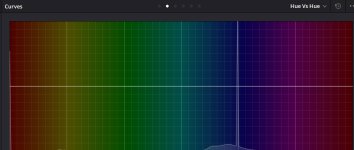
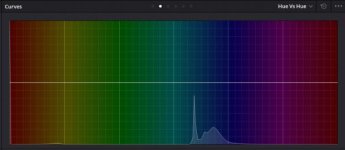
I think it's more the inability of many modern sensors being able to handle massively over driven cheap blue/purple LEDs being used in many stage and film productions now. Very poorly chosen when they need to be used in film production of any kind. These cheap out of gamut types of LEDs produce the most hideous over drive to the point of clipping in the blue channel. Here is a pair of stills from a Panasonic LT frame brought into Resolve 16 using DaVinci ACES color management with VF35 in and 709 out. The image is totally destroyed by the floor to ceiling spike through blue. I can't use the ACES workflow on these types of LED lit scenes. Just look at the accompanying Hue v Hue grab. The second set is bringing the same image in but using the default DaVinci YRGB color management. Much better but again the absolute overdrive in the blue channel is virtually beyond recovery. It's not only Panasonic that has this problem but many other brands exhibit the same symptoms. I've chosen this clip because it is freely available if anyone wants to see if they have a decent grading answer to this problem. They can actually test their workflow out by downloading this particular bit of LT ProRes which was kindly put up by Emmanuel Pampuri on Vimeo a couple of years back. If you do have a decent solution please post back because I run into this sort of problem quite often. I've found the best result is to use a 709 LUT and then work from there but the end result is never anything I'm super happy about when I run into these types of lighting situations. The original ProRes clip is available at:

https://vimeo.com/155708488

Chris Young

LT VLOG DaVinci ACES in V35 out 709.jpgLT VLOG DaVinci ACES in V35 out 709_Hue v Hue.jpg

LT VLOG DaVinci YRGB.jpgLT VLOG DaVinci YRGB Hue v Hue.jpg
 
If you do have a decent solution please post back because I run into this sort of problem quite often.

It's cheap narrow spectrum LED dance-floor lighting that keeps coming up over and over again. The only solution I've read about ( but I've never tried yet ) is to raise your shooting color temperature to 10,000 Kelvin or higher, and then pull it all back to normal in post.

BTW, do ARRI sensors handle this problem any better ?
 
Well like these producers I worked for a few years ago who told me about this 12 million dollar budget movie they produced where the DP convinced them to shoot it on the Canon 5D, and they iterated how trying to make it look good in post was a nightmare and they regretted letting the DP shoot on the Canon 5D considering they had plenty of budget to shoot on a better camera. I watched the trailer and it definitely wasn't a case of the shoot actually needing a small camera; it was a case of a DP making a stupid choice.

https://www.imdb.com/title/tt2598580/?ref_=adv_li_tt

BoxOfficeMojo has no details on how badly this $12 million dollar turkey must have tanked. I'm curious to find out if they made back even 10 percent of their budget.

I have to admit I laughed when I read your post. I can't believe that anybody would greenlight this thing on a budget of 12 million, and shooting it on a Canon 5D is truly icing on the cake. :nads:
 
It's cheap narrow spectrum LED dance-floor lighting that keeps coming up over and over again. The only solution I've read about ( but I've never tried yet ) is to raise your shooting color temperature to 10,000 Kelvin or higher, and then pull it all back to normal in post.

BTW, do ARRI sensors handle this problem any better ?
In a recent Aputure made clip, they did this to get the warmer look without adjusting the lights themselves. But I don't think those were RGB lights and subduing the blue channel wasn't their intent.
 
BoxOfficeMojo has no details on how badly this $12 million dollar turkey must have tanked. I'm curious to find out if they made back even 10 percent of their budget.

I have to admit I laughed when I read your post. I can't believe that anybody would greenlight this thing on a budget of 12 million, and shooting it on a Canon 5D is truly icing on the cake. :nads:

If they said it was $12m it was only to fool investors and buyers. With that cast and crew more like $500k at best.
 
If they said it was $12m it was only to fool investors and buyers. With that cast and crew more like $500k at best.
I'd agree with that sentiment; watching the trailer it looks hard to believe they spent 12 million dollars on that unless they were just really bad with money. I would have guessed in the $200k-$500k range based on the trailer. I guess they did have a decent size cast looking at IMDB. But even at $500k or $100k, back around 2014 when that movie was filmed, there were plenty of better cameras that would have worked better for the production. Even a C300 Mark I would have looked considerably better and cost insignificantly more.

My best guess is the DP was friends with the producers, the DP owned the 5D, was still using it after the DSLR revolution, still in love with full frame and the super shallow look, and perhaps wanted to get some rental money from his camera, so that's what ended up being used.


I worked on a web series that had about a $20k budget, but later read a news article that it had had a $250k budget which I know was not accurate. The film commission gave grants based off of a percentage of a project's budget, so a percentage of $20k is a lot less than a percentage of $250k. Part of the reasoning for the higher number was that (pretty much) none of the cast, crew, studio space, etc., were getting paid so most of the money was going to food, props, etc., so if they had all been paid, perhaps the budget would have actually been $250k. Someone said that is still fraud. I don't know, but as mentioned above, apparently it's common to exaggerate budget.

In another case, some friends of mine worked on a short film and the producer ended up spending $50k of his own money on the short, but, the short did not look good. It looked more like a $5k-$10k short film. Meanwhile, the producer who'd spent the money was bragging about how he'd done this $50k short film, while another person who worked on it thought the end product was poor, and was like, "Dude, don't go telling people the budget because it's embarrassing to admit you spent $50k on a movie that looks like it cost $5k-$10k."

Trailer for that 20+ minute $50k short...

 
Last edited:
Back
Top