Best Documentary Camera

Sam, I wouldn't call 3-5 second edits fast; I'd say that is a normal everyday cutting speed. In fact, I'm sitting here right now editing a feature documentary that I shot which often cuts much faster than that. When sizing up a scene I'll work on the basis of 3-5 seconds a shot to help me work out how much coverage I'll need. That's not to say I wont hang on a shot, but it helps me determine how many angles I may need and how long I can spend on each set-up.

I don't think anyone is disputing there are times when you need to roll continuously or shoot in a 'safe capture' mode. These are things we all have to determine for ourselves, usually on the fly with little or no back-up.

I think, what we are primarily discussing here is directing. I'm a shooter/director so I get to make the call that every shot has to be an engaging composition and usually just have a producer to placate. Inexperienced producers always want everything covered, 'just-in case' - a recipe for mediocrity in my book.
 
Also sometimes you need to roll long to 'catch the bunny'.. an extreme example of this is waiting for an animal to pop out of its hole.. you may roll for hours looking at a hole but only the shot is going to 'make' is when the face pops out. With filming humans it is sort of the same.

We only want 5 seconds.. but which 5 seconds?
When I film a bunny I count to three to get the shot. No more, no less. You spake of five seconds, but five is right out.
 
But the bunny (an extreme example) may come out of its hole at 0400 hours.. or 0800 hours.. so you might roll for 4 hours to get your 5 seconds.. unless you have cache record.

Consider the police doco.

-Police in car eating burger.
-Radio call. "suspected bugrlay in 52nd street"
-Police switch on blue lights and drive to scene of crime.

This is the begining of a story/sequence and very important to tell your story with the radio call.

But how do you get it if you are not rolling loads on the police sitting in the car eating a burger?

I think maybe watch some stuff and imagine how it was created.
 
Last edited:
Documentaries aren't the news. I can think of lots of ways to tell that story without having to roll continuously Sam. Lots. Of course, if the director calls for 'reality' and is dogmatic in his approach, which is completely fair enough, then yes, you'd have to keep rolling, or at least keep capturing audio.
 
Of course.. you need a strategy to tell your story.

Some strategies will need long roll or pure reality, some can be directed almost the same as directing drama. A sequence of set up shots, on sliders or whatever.

I think erics concept that all can be done as planned shots is wrong.

Personally I would like functional cache record on my FS7 and am thinking of popping a go pro on the top of the rig and maybe leaving that rolling when I get a sense the action is about to start.

To answer the question of 'the best doc camera' I would certainly want to put cache record on the list.. I dont know if it works on the vari or the C300ii

Ive just ordered the Vlock (hawkwoods) for the back of my camera and it will give me a Dtap to run the gopro on a dummy batt.

The concept of the post requirements of just rolling horrifies me :).. especially in a world where most of my kit does not have functional timecode. I do know a shooter (worked with simpson in afghan et al.) who just hits record when she arrive at the location!

S
 
Last edited:
I think someone in this topic said they could get the shots they need for a five minute doc (or feature; whatever you want to call it) over the course of one day. So, say five minutes of interviews and "crafted" b-roll shots that look nice and aren't all handheld. Which means what in relation to time to get the same on a feature length doc? Well, a 90 minute doc would at the rate of five minutes per day take 18 days to film. That doesn't sound like an unreasonable schedule to film a feature length doc. So, I'm with Liam on this one; I don't see why you can't film with more sophisticated stabilization gear on a reasonable budget and schedule.

Yep, that was me who said that, but you've completely misinterpreted the context of what I said. Shorter form doc's don't require the same sort of narrative cohesion to keep them interesting. Hence, with short form doc's, you shoot the interviews and figure out the overarching storyline or theme, figure out exactly what coverage you need, then go and shoot all the cut-aways the same day.

With long-form doc, you are following the development of events over months or even years. At certain times throughout that shooting schedule, there will be events where missing just ONE critical shot, can significantly impact the coherence or legitimacy of your narrative and jeopardise the whole film. So you need to be rolling A LOT MORE in order to make sure you don't miss those moments.

You also don't yet know the outcome when you start shooting - because it might be a year in advance - so you need to plan for all contingencies. This means you have a much higher shooting ratio than what you are currently used to. I can easily shoot short-form doc-style packages with a ratio of roughly 3:1 or even 2:1. With longer doc's, that can easily be closer to 100:1 because you've got to cover all your bases - you can't go back and re-shoot things later if the story changed along the way.

And of course this is also ignoring the other part of my post regarding long vs short form: the level of control you have over your subjects. For short form doc's you're usually dealing with small subject groups. You're essentially all working together and you can direct your subjects as required to get the shots that you need. Longer form doc's require a larger subject matter to keep them interesting. There's going to be good guys and bad guys (or at the very least, opposing viewpoints), and they don't all want to work together. You've got to be the fly on the wall ready for when the conflict bubbles over, or sniping shots from the corner when a non-co-operative antagonist doesn't realise you're there. You spend a lot of time rolling so that you don't miss these critical moments when they occur. If your story doesn't require these kind's of shots then it is either (a) primarily based on archival footage in which case the whole "which camera" discussion is a moot point, or (b) probably not a very interesting subject.

You've misrepresented my original comments and used them as the basis to do an apples-to-oranges comparison. The context of my original comments was that you can't necessarily use short-form-doc experience as the basis of decisions regarding long-form-docs. And I stand by that. I'd strongly agree with other posters here that you need to really study some longer form documentaries, if not actually edit a few, to get a real sense of what good documentary camera work encompasses.
 
Last edited:
+1 this. When I hear people talk about "directing" a documentary... I get concerned (always makes me think of that non 2nd camera in Broadcast News) that something is being presented as linear fact when rather it was staged or rehearsed to appear that way. And for sure - I see it and know it happens all the time. ( more and more all the time ) Sure certain kinds of shots in certain kinds of documentaries can be "directed". But frankly for me, the best / most interesting docs are done by letting things unfold - trying to be the fly on the wall with your best doc camera - rather than staging pre-planned shots. It's a fine line but worthy of distinction.
 
Excellent point, Mark.

In many cases we can build the story using pre-planned, directed shots, but at what point does it start to lose integrity for the sake of aesthetic? When does it become a biased re-constuction rather than a balanced, true story? And if everything can be pieced together with those well-planned or staged shots, does your story really have enough drama, tension, and characterisation for it to be worthy of a feature-length documentary?

This is why I'd say the best documentary camera is not necessarily the one with the best raw IQ, but the one which is fast, flexible and familiar.
 
Another point worth considering is basically a good relationship with the producer/director and fitting the kit to that.

I for example rarely roll long, but talking about a cooking pilot with a director he go excited about hanging a small camera over the action.

He was less excited when he found out my nex5 and go pro would not roll for 45mins duration of a 'meal cook'

No probem other options (and cost points) will do this.. but we did not need to find that out on the shoot day.

Clear comms aligned our expectations..
 
To answer the question of 'the best doc camera' I would certainly want to put cache record on the list.. I dont know if it works on the vari or the C300ii
All of the C-series have pre-record. I don't see the point to it, in practice, for the most part. If I'm not recording, then my shot is not composed. If I go to press record, then I still need to take time to compose my shot, so by the time it's composed, the camera is already rolling anyway, so pre-rolling five seconds before I hit record doesn't do me much good. There are also some disadvantages to using dual record; I forget what they are, maybe something to do with timecode, or not having dual record available. I don't remember, though.


When I film a bunny I count to three to get the shot. No more, no less. You spake of five seconds, but five is right out.
But the bunny (an extreme example) may come out of its hole at 0400 hours.. or 0800 hours.. so you might roll for 4 hours to get your 5 seconds.. unless you have cache record.

Consider the police doco.

-Police in car eating burger.
-Radio call. "suspected bugrlay in 52nd street"
-Police switch on blue lights and drive to scene of crime.

This is the begining of a story/sequence and very important to tell your story with the radio call.

But how do you get it if you are not rolling loads on the police sitting in the car eating a burger?

I think maybe watch some stuff and imagine how it was created.
Apparently you are not familiar with the Book of Armaments, Chapter 2, Versus 9-21.


You also don't yet know the outcome when you start shooting - because it might be a year in advance - so you need to plan for all contingencies. This means you have a much higher shooting ratio than what you are currently used to. I can easily shoot short-form doc-style packages with a ratio of roughly 3:1 or even 2:1. With longer doc's, that can easily be closer to 100:1 because you've got to cover all your bases - you can't go back and re-shoot things later if the story changed along the way.
Doc style promotional project I just finished I filmed five hours of b-roll and five hours of interviews (15 if you count multi-cam for interviews) for a 3.5 minute video. That's a shooting ratio of 171:1. Another eight minute doc style promotional video I did I filmed about 20 hours of footage (30 if you count multi-cam), so a shooting ratio of 150:1. I tend to stage very little.

For reference, here is the 3.5 minute project I just finished from 10 hours of footage.

 
All of the C-series have pre-record. I don't see the point to it, in practice,

Audio. You still have usable audio for that first 5 seconds before you get your shot properly composed. This is absolutely critical on doc work.


Doc style promotional project I just finished I filmed five hours of b-roll and five hours of interviews (15 if you count multi-cam for interviews) for a 3.5 minute video. That's a shooting ratio of 171:1. Another eight minute doc style promotional video I did I filmed about 20 hours of footage (30 if you count multi-cam), so a shooting ratio of 150:1. I tend to stage very little.

For reference, here is the 3.5 minute project I just finished from 10 hours of footage.


Interviews should not be included in your shoot ratio. The very nature of the subject in that video is staged, given that a lot of it is ceremonial and repeated 3x a week at every church on the planet. Other shots in that sample look very staged, either in the sense that you've directed them, or you've been given a level of access to set-up and prepare which is generally not afforded to documentary workers.

Shooting doc's is very different to shooting promotional stuff where they want you to get the shots. They're working with you even when you are not directly instructing them. In doc work, any worthwhile subject will have times when they don't want you to be filming but you have to do it anyway. Other times they will be actively trying to avoid the camera. Usually it is at the most dramatic, critical times when it is crucial to get the shot even with everything working against you.

You seem to be refuting all the advice given to you by citing examples of your previous work, but I haven't yet seen anything which would prepare you for the realities of big-budget real-world doc production. If you want to ignore the advice and buy an Arri, feel free, but if you're going to ask the question it is worth considering what people are telling you.
 
(cache record)

Audio. You still have usable audio for that first 5 seconds before you get your shot properly composed. This is absolutely critical on doc work.

​This.

And also you can frame up on the bunny hole at 0400, wait till he pops out at 0800 and then hit cache, saving a load of GB.

Obviously doing a four hour wait would make one need to consider power options, and battery hot swap capabilities.

(One thing I love on the first BM cameras is the small onboard battery that runs the cam while you swap out your vlock)


S
 
Last edited:
Standby: Long Ramble from Ned. 3,2,1...

Dateline: Lincolnshire Dog Park (for freelance and unemployed males and their happy canine companions)

Thanks for the kudos Slavic!

Eric: Pre-Record is important in certain aspects of our biz, mainly doc and news. Say you're on assignment aimed all day at an eagle nest for the hunting parent to return and feed the eaglets. You've been there hours, you temporarily look down at your phone for a couple of seconds and then hear big wings flapping and you now feel horrible that you missed the shot! But wait! You have Pre-Record! There's a cache thank God. Also works if your camera is aimed at the back door of the courthouse for a perp walk. Some of you may say a "per walk" is news, not doc, but many docs are now about social justice, such as Making of a Murderer, right? Matter of fact, I was one of the several DPs on The Innocence Project about the wrongfully convicted on Death Row, so I can speak with some authority that there is a confluence of News Meets Documentary, and the skills are interchangeable. In sum, Pre-Record may save you when seconds count.

I was trained by two hard men, I called it the Mike Ditka Film School. All they cared about, and it's the same in news or I suppose having any boss in our weird biz, is: DID YOU GET THE SHOT? Really, that's all that matters. No Excuses. And when doing an uncontrollable doc situation, that's what counts and makes your rep. Are you the kind of guy they can Count On to: Get the shot. I never had the Pre-Record feature on a camera I owned and there were hundreds of tapes I had to rewind because of that! Nature shots, architecture and landscapes are about the easiest subjects us shooters can do, I call it low hanging fruit, we merely waited for the light to be best, place the camera for the best composition, pimp it up in post then pat ourselves on the back as to what a great "photographer" we are, but wow, wildlife is very challenging and if you have Pre-Record that will make you a hero. I used to shoot wildlife for the Army Corp of Engineers, I had the Upper Mississippi, and I was the worst choice, being a suburban kid who never hunted, so having a cache would have been great. Don't underestimate that feature. BTW (off topic): Did you know that the cop following you, when they turn their lights on, they have two or three minutes of video cache? I know cuz I filmed many cop shows and did ride alongs. However, when I read between your lines I'd say Eric, you're headed towards being your own producer/prod co rather than a true freelance DP so all this thread is probably now moot for you?

Topic Shift 1: The two documentary guys who trained me after college: The father was the first non-combatant on Omaha Beach during D-Day, did the only color footage shot there, he was a Fox Movietone cameraman. His son Warren Lieb was my mentor (owned the Eclair NPR mentioned below) and was a Signal Corps combat cameraman during the Korean War. So being ex-mil they only cared about one thing, whether it was corporate, doc, spot, etc., as I shlepped in the cases from a day out shooting: Did you get the shot? So Pre-Record is very helpful for docs, especially wildlife, (I shoot and field produce for Animal Planet), and one time events where you don't know when the shot will start and it's non-repeatable. We did many military shoots and there were no Take 2's due to logistics, so calculating positioning was paramount. In sum, I come from a No Excuses background and doing cinema verite handheld puts me on the knife edge of paying attention. To me, composing perfect establishing shots, I feel as if I'm on vacation with my 70D.

And Liam, we are of different worlds. I came of age graduating film school in the mid 70's, when a revolutionary French 16mm camera was created, the Eclair NPR, that if you were strong enough, could be hoisted on your shoulder (which you seem to mock), and get you out in the real world rather than confined to a studio. It was the start of the cinema verite style. So that's how I roll, I love capturing real life. I'm not a still guy composing at 24fps, doing "photography", or what you call cinematic, although I can do very nice b-roll when I have the time, it's just that there's often no time, especially when you're not the producer. I've lived through three recessions since college and each time the crews get smaller, the money offered is less, the schedules are tighter, they ask for more gear without wanting to pay...So Liam, I have absolutely no idea as to how you're able to find clients who will give you the time to set up what you would prefer as angle, comp, etc. More power to you. My theory is it's a cultural difference in perspective as to production scheduling. I am in the dog park without wifi so I can't look up and don't know, or care, what "horses for courses" means. I presume: The right camera for the right situation.

Case in point: yesterday I finished two days of car spots shot doc style, the shoot should have been 3 days, twenty years ago it would have been a 4 day shoot and two more crew members. Here in 2016- just me and my usual soundman, who is half my age but arrived with a bum knee and bad back, so I carried the load. My client, who I have worked with before on a one hour TV special documentary, had a "schedule", which was ridiculously optimistic, especially when working with car dealerships where Murphy's Law prevails and a live customer trumps the shooting. Also, we needed to dress in black to avoid reflections yet found ourselves outside in the heat wave doing exteriors, the fatigue of heat stress slowing us down. The first morning there were opportunities to do very nicely composed set ups, camera constantly moving as per today's bulls*%t style, but once we fell behind due to no fault of our own, it became an extremely fast hamster wheel. As per the custom in this shooting condition it became a gig of checking off the shot list as quickly as possible. If you are a freelance (US) shooter you have to do what is possible in the time they have allocated and if they aren't going to pay OT, I'm sure you wouldn't suggest we make cinematic "take your time to set it up right" shots if we can't do it in a ten hour day, correct? I'm in it to make a living. If I blow their schedule I won't be hired again. I am not an artisé with a beret and ascot, I'm a working freelance documentary DP. A client who wants beautiful imagery needs to schedule for it, which means I am not going to throw in a free day after the shoot to come back and make postcards for them. If you watched the doc I suggested a few posts back, Who Needs Sleep, there's an interesting cultural comparison between US and French crews as to how they handle scheduling and hours. As someone who has travelled all over hiring local foreign crews I can assure all here, no one moves as fast and has to work as long hours, and takes a shorter lunch, than an American crew. Much of my biz is for (laid back) LA folks coming to Chicago and they are always amazed at our Midwestern work ethic and how fast we hustle. Johnny Hustle. US schedules are brutal, it's an extension of our bare knuckle capitalism: Fit as much as possible into the shoot day.

For many years I shot for the BBC when they came to Chicago, mainly because they would only shoot on PAL Digital Betacam. There was only one such model camera in town, owned by a very large, expensive production company, but they would rent it to me because they knew and trusted me as one of their freelancers, so I had a lock and have had a lot of BBC experience on documentaries. The British approach to production scheduling is very different than the American Way, it could be cultural as in the French difference. European clients always take us to lunch in a restaurant, whereas 99% of all US producers will throw a bag lunch at us. Our way (which I think is worse), is to fit as much in a shoot day as possible, that's the usual approach to scheduling by staff who want to stay employed, independents who want to make a profit, clients who want to minimize the budget. So taking your time for "photography", good luck with that if you move to the US. Unless it's your own project? But I digress...

Topic Shift 2: When I read the last two days' posts...one needs to shoot and hang on much longer than you'd think for a few reasons. When dealing with people in conversation, we never know when someone will say something incredibly useful to propel the story, something the editor really needs, so only by rolling and rolling and rolling, what we used to call "the fly on the wall", can you hope to capture it. This is physically challenging when hand held so when this thread started, that was my focus: Handheld. And as for the bunny example, it's common to get a style sheet from a TV show that, besides all the tech specs, they say to hang on the heads and tails of establishing shots for a good 10 seconds. The reason is: During the rush and stress of shooting and only seeing what we're doing on a small EVF there may be something in the middle of the 5 seconds they plan to use that we did not see in the field. A reflection, someone picking their nose in the crowd, etc., so they want longer holds. In the days of tape there may have been a "drop out" in the middle of the shot. Do you young shooters know what a drop out was? A millisecond of death. Also, when you get to long form docs they have a lot of VO to cover. An awful lot of VO because the trend now is to get off the talking head ASAP because today's audiences will zone out, the American attention span is so short now, so even if the doc is an hour they won't stay on the talking head too long compared to just a few years ago. If Making of a Murderer is considered the most riveting recent doc (series), watch at how long they will stay on one speaking face. As for artsy b-roll, some companies call it "abstracts", or establishing b-roll, and some can be compositionally beautiful "cinematic" shots but they are often done by a second crew because the A Crew are running their asses off keeping up with the main subjects. I've been on both: A Crew for action, B Crew for postcards.

And for those of you who poo-poo shooting too much, or long...on a true doc I am often in the subjects' lives for days on end. The first couple of days they do not act themselves, they are on guard, they feel my presence, but after a few days you really are filming their true selves and that's where the magic happens and you end up with an incredibly high shooting ratio but when the editor finds the pearls in there, wow, you the DP are the hero. And even if there's no pearls on that card no big deal: Reformat. The problem I now find is that the shooting days are cut in quantity so we don't dive deep anymore, as I once did on a doc on the homeless and had to sleep in their shelter so I could get them waking up. We don't become part of them anymore because the budgets aren't there. Reading this thread it seems most wouldn't do it anyway. But I digress again...

Topic Shift 3: And when I say "retire"...my business is very healthy and I'm a little money making machine because everything is paid for (my monthly overhead is a few hundred for insurance, car payment and gear repairs), my office is the dog park, library and various coffee shops (depending on the beauty of the baristas), and I am NOT looking to invest in 4K. Rather, I will be 64 next month and I feel usable time is running out so there is so much more I want to do in this one life. I am a man of a zillion hobbies and intensely curious about almost everything that I haven't done. I LOVE shooting, it almost doesn't matter what I shoot, I love the act of shooting, but there's more to life when you feel you have perhaps ten good years left! You'll see and I hope you all max out your 401K every year before buying any new gear. I had thought that in my Golden Years I could follow the path taken by most aging DPs: I would teach Documentary Production 101, but the adjunct controversy has ruined that idea. Now the chump change won't pay for gas...I need to move on soon but I will always miss doc shooting and here's why:

The reason I love the handheld documentary approach that Liam holds in low regard: There's something called "Flow", and only when I have a camera on my shoulder, immersed in the lives of others and I have to keep up with the reality of the situation, capture it correctly for the editor, then I am in my blissful state of Flow:

https://en.wikipedia.org/wiki/Flow_(psychology)

https://www.ted.com/talks/mihaly_csikszentmihalyi_on_flow?language=en

It's what a freestyle jazz musician experiences and I don't get that rush acting like a still photographer, only with Documentary shooting, fast and furious and handheld. That is my blissful state. It also draws a client base who want that style and are afraid to hire the Sprinter guys with the shiny Anvil case of matched primes, focus wheels and matte boxes, so I have a niche that serves me well: Mr. Documentary. I don't come from a stills or studio background. Product photography actually bores the hell out of me but I will do it for the dough, it's great for heat waves and the five months of a Midwestern winter. To me doc is not setting up a series of postcards, I love to get into the meat of the subject matter. I do a few Dr. Phil episodes a year, where I parachute into the lives of dysfunctional families and they barely stop screaming and throwing plates to do a sit down interview! Love it! In fact, for them I shot the immediate Hurricane Katrina aftermath while the city was still in darkness, shut down, no electricity, no nothing, crazies running around with guns in the dark that matched the firepower of the swat teams I was with, shooting doc style handheld for seven days for their two hour prime time TV special: Rescuing the Rescuers. A BMC in a Zacuto cage or a Red wouldn't have worked. Seven days of being in Flow, my element, living a reality everyone else only saw on television. Not news, but documentary. I think I should know the difference. The subject was the severe, no sleep, being shot at, psychological stress the first responders were under. True character studies. A career highlight for me. Love the smell of napalm in the morning! Let's face it: We all choose the end of the biz that suits our speed and personality, makes us happy and a living, and we must buy the camera(s) that hit that ball out of the park. I'd say that's the C300 or now the FS7. For me, to move at a snail's pace making pretty postcards is not, to me, doc shooting, at least the kind of doc that would get me in Flow.

When I first got into the biz, like millions of others, I thought I wanted to do features, in fact, I gripped on Brooke Shields first movie and immediately became disillusioned with big Hollywood crews. As a PA/intern I even got fired for asking the star of a Robert Altman film, cover girl Lauren Hutton, out for a drink and an AD overheard me, the riff raff, making a move higher up than his pay grade allowed. But what the hell, how many times in your life can you hit up a Cover Girl? So I experienced the delusional Hollywood dramatic format as merely a hierarchal mobile construction crew and later as the owner of a Super 16mm film camera, when I started doing indies, shorts, slasher films, black exploitation, you name it, I came to the conclusion I preferred docs. When I started shooting professionally I learned that a cinema verite doc gave the DP the greatest creative freedom, since no one can control him, and I discovered my Flow, although then there was no word for it, plus it opened up worlds we otherwise could not visit or imagine, such as Katrina (and I have many other such stories). That is cinema verite, not post card shooting...

I got into this documentary field because I love learning about new subject matter, not to make pretty (cinematic) images. To me this field, whether it's corp or doc, is like going to perpetual night classes of different subjects, every week there's several different subject matter coming into my brain. Like most of you I need a profession that offers variety. So my "retirement" plan is to keep the biz open but only do freebie, doc style, non-4K, fundraising videos for very small worthy charities, excluding all religious, so my contribution will move the needle. No more giant non-profits: I've seen the executive salaries, benefits and hidden perks. I want to use my video super powers for the good, not to sell anymore. So when I say "retire", to me that means stopping accepting everything that comes in and only work non-commercially whenever I feel like it. I want to start doing only good works for worthy small causes, mainly the disabled, children and animals and they don't know 4K. I am also quite disdainful as to what has happened to our profession. Let me leave you with one of my million documentary stories:

In 1991 I was approached and constantly bombarded with an offer by a high end, east coast, doc prod co to shoot a prime time TV documentary series about life in a high school, six days a week. Considered a revolutionary concept at the time: Follow the lives of teenagers in the most transformational year of their lives: Senior Year. Could go on for 9 months they said. I did not want to do it, I was 38 and working constantly, I owned the best (no such thing now) documentary video camera, so they kept offering more money. My rationale for turning it down was: I would be taking myself out of the freelance pool and lose all my current clients, but they finally offered me (in 1991) $1000 a day. Long story short, I worked in 1991 six days a week, for six and a half months, for $1000 a day, only Sundays off. All handheld, even 90% of the interviews. Considered America's 2nd reality series after The Loudes. So that was $156,000 in 1991 dollars which today in 2016 would be $275,000! Can any of you documentary DPs imagine making $275K in a half of a year? I did. I'm a lowly doc DP but I once made $27K in 60 seconds (2 30-second phone calls), we bought my first house with the money from one $60K cancelled project, etc. Can't do that now. Oh well, buy and read my memoirs! Now do you see why a shooter my age is disenchanted with what's happened to our biz? There's no real money in it anymore, which is why it draws so many rich kids now. They don't have to make a real living. Making the WRONG camera choice can put a regular guy out of business. I've seen that a few times.

So there's a world of living to do, a couple of places I haven't been to yet. 4K is my excuse to bow out soon because I figure I would need to spend at least $16K and most of my clients' videos go right to the interwebby thing anyway, so I'm thinking of 7/17 just stop paid shooting and smelling the roses. It has been a marathon, but be forewarned, it's a horrible biz to grow old in, I lucked out. Many guys better than I didn't make it. I found and exploited several niches, the most important one being known as "great at docs". The shooting biz, and especially low budget docs, is now very hard to make a consistent living with freelance video services, especially if you "just" DP. But documentary shooting and watching has been the world to me, has made me, for better or worse, who I am. Not by making pretty postcard shots, although I can do that with a decent schedule (and weather!) and I do take umbrage at those here who feel handheld is beneath them. Hey, it's made my fortune!

Well, too nice a day to be looking at a screen. Chicago area weather doesn't get this beautiful too often. No personal offense Liam, we're just from, and in, different worlds, literally, figuratively, geographically and artistically. I'll take hand held anyday. What a rush! I hope photography gets you in your Flow.

Best,,


Ned Miller
Chicago-based Freelance Videographer
www.nedmiller.com
 
Last edited:
Some fascinating posts here,
has anyone seen a doc called "The Lift"? A guy installed himself in a lift in a towerblock in Scotland and filmed the residents as they opened up to him on their journeys to and from their homes in the block,
http://www.imdb.com/title/tt0410229/
fantastic doc, no idea what cam it was shot with
 
Great info in there Ned.

Only thing I can really add is regarding the news style vs cinematic style. There seems to be an assumption that news style means it is not as pretty, but just because you're faster and more efficient doesn't mean you're getting junk images. Good doc shooters, no matter what the camera, will be experienced enough to make the shots look good even in a fast moving situation. They'll still be able to isolate subjects with shallow DOF, insert camera movement where suitable, find the best lighting, angles and composition, and do it all even in the most critical situations. And when there is time to slow down and get a few really great beauty shots, they can still do that too.

Cinematic style shooters generally cannot move at the same pace if it's required, due to weight, bulk, design and features of cameras such as the RED or Amira which were just not optimised for this type of work. Whereas a doc style shooter with an FS7 might get you 98% of the IQ, he'll do it 99% of the time. With an Arri or RED, that hit rate might change to 100% IQ but only 25% of the time, or even lower when things are moving at breakneck pace.
 
Some fascinating posts here,
has anyone seen a doc called "The Lift"? A guy installed himself in a lift in a towerblock in Scotland and filmed the residents as they opened up to him on their journeys to and from their homes in the block,
http://www.imdb.com/title/tt0410229/
fantastic doc, no idea what cam it was shot with

Yes, I saw that. Very good. There are lots of great high-concept documentaries that use good filmmaking techniques to enhance the storytelling. I remember the "A to B of Motoring" starting a craze for portraits and 'thought-overs'. With so many other good examples I'm surprised some posters here seem fixated on the reality doc genre and not more craft based ones. Maybe I'll make a viewing list...


DID YOU GET THE SHOT? Really, that's all that matters. No Excuses.

I agree with, NO EXCUSES, amateurs and newbies make excuses, professionals deliver. That's a given. But, DID YOU GET THE SHOT is not all that matters.

DID YOU GET THE BEST SHOT is what counts.

Did you ask yourself, "is this the best way to tell the story?" And, if you have a good shot, did you ask yourself "can you get a great one?" That is what separates the men from the boys.


And Liam, we are of different worlds. I came of age graduating film school in the mid 70's, when a revolutionary French 16mm camera was created, the Eclair NPR, that if you were strong enough, could be hoisted on your shoulder (which you seem to mock), and get you out in the real world rather than confined to a studio. It was the start of the cinema verite style.


No, it wasn't, my father-in-law was shooting verite in the 60's. Anyway, you don't shoot verite. In verite you interact with the subject. It's different from other observational or news styles which you are advocating. And FWIW I like all these forms when done properly; DA Pennebakker, for example, was a big influence on me, and he favoured a hand-held style.


I'm not a still guy composing at 24fps, doing "photography", or what you call cinematic, although I can do very nice b-roll when I have the time

Now, now Ned, you sound like you are making excuses:-)

So Liam, I have absolutely no idea as to how you're able to find clients who will give you the time to set up what you would prefer as angle, comp, etc. More power to you. My theory is it's a cultural difference in perspective as to production scheduling.

Nothing cultural. I'm a Directer/Shooter. If I want the shot, I have to go and get it. Sometimes it's hard. I just dragged 120KG of gear round four continents in two weeks. You only get out what you put in. No excuses.

Case in point: yesterday I finished two days of car spots shot doc style, the shoot should have been 3 days, twenty years ago it would have been a 4 day shoot and two more crew members. Here in 2016- just me and my usual soundman,

Lol. You have a soundman. And you're complaining! Most clients took away our sound recordists years ago, yet they want more with less. And we deliver. With no excuses.

My client, who I have worked with before on a one hour TV special documentary, had a "schedule", which was ridiculously optimistic, especially when working with car dealerships where Murphy's Law prevails and a live customer trumps the shooting. Also, we needed to dress in black to avoid reflections yet found ourselves outside in the heat wave doing exteriors, the fatigue of heat stress slowing us down. The first morning there were opportunities to do very nicely composed set ups, camera constantly moving as per today's bulls*%t style, but once we fell behind due to no fault of our own, it became an extremely fast hamster wheel. As per the custom in this shooting condition it became a gig of checking off the shot list as quickly as possible. If you are a freelance (US) shooter you have to do what is possible in the time they have allocated and if they aren't going to pay OT, I'm sure you wouldn't suggest we make cinematic "take your time to set it up right" shots if we can't do it in a ten hour day, correct? I'm in it to make a living. If I blow their schedule I won't be hired again. I am not an artisé with a beret and ascot, I'm a working freelance documentary DP. A client who wants beautiful imagery needs to schedule for it, which means I am not going to throw in a free day after the shoot to come back and make postcards for them. If you watched the doc I suggested a few posts back, Who Needs Sleep, there's an interesting cultural comparison between US and French crews as to how they handle scheduling and hours. As someone who has travelled all over hiring local foreign crews I can assure all here, no one moves as fast and has to work as long hours, and takes a shorter lunch, than an American crew. Much of my biz is for (laid back) LA folks coming to Chicago and they are always amazed at our Midwestern work ethic and how fast we hustle. Johnny Hustle. US schedules are brutal, it's an extension of our bare knuckle capitalism: Fit as much as possible into the shoot day.

That's an awful lot of excuses right there. Last week I was filming in Oman in 49C. We got great shots and flew off to the next location. No excuses.

The British approach to production scheduling is very different than the American Way

Lol see my earlier reply. 13 flights in 14 days. Three nighttime long hauls in one week. Consecutive 20 hour days. That is my reality. If they worked us any harder we'd have to get up before we go to bed. But we do it. With no excuses.

one needs to shoot and hang on much longer than you'd think for a few reasons. When dealing with people in conversation, we never know when someone will say something incredibly useful to propel the story, something the editor really needs, so only by rolling and rolling and rolling

Of course. This is a given.

Do you young shooters know what a drop out was?

There are plenty of experienced shooters posting in this thread Ned. I'm in my 32nd year as a professional. I won't give you my life story though.

And for those of you who poo-poo shooting too much, or long...on a true doc I am often in the subjects' lives for days on end. The first couple of days they do not act themselves, they are on guard, they feel my presence, but after a few days you really are filming their true selves and that's where the magic happens and you end up with an incredibly high shooting ratio but when the editor finds the pearls in there, wow, you the DP are the hero.

Yes, I agree. Sometimes you have to wait for the nuggets of gold.

The reason I love the handheld documentary approach that Liam holds in low regard:

What I hold in low regard is those lazy shooters who dismiss searching for great shots to tell a stronger, more powerful, more visually pleasing film and default to camera on shoulder, f/11 and a whole bunch of excuses.

I'd say that's the C300 or now the FS7. For me, to move at a snail's pace making pretty postcards is not, to me, doc shooting, at least the kind of doc that would get me in Flow.

Who is moving at a snails pace? Come ride shotgun with me, Ned. You might revise that opinion:-)

I got into this documentary field because I love learning about new subject matter, not to make pretty (cinematic) images.

Ned, those things are not mutually exclusive. Which is entirely my point.

Anyway, have a good day Ned. I'm sure we'd enjoy a beer if met and swap some stella stories.
 
There seems to be an assumption that news style means it is not as pretty, but just because you're faster and more efficient doesn't mean you're getting junk images. Good doc shooters, no matter what the camera, will be experienced enough to make the shots look good even in a fast moving situation. They'll still be able to isolate subjects with shallow DOF, insert camera movement where suitable, find the best lighting, angles and composition, and do it all even in the most critical situations. And when there is time to slow down and get a few really great beauty shots, they can still do that too.

I agree. It's a mentality.
 
Eeeeshh...Breaking my new rule: Promised myself I would not go on the web over the weekends or check my phone and...here I am! My excuse is I am shooting tomorrow on Sunday, so I checked this thread. I think I have the OPs' topic line all figured out, below. But let me tidy up business:

Deltoid: As for news, the only time I have worked true news is when every other available news shooter was unavailable and they scraped the bottom of the barrel and called me, wanting me to leave the house that instant. Usually a major disaster with lots of casualties or some civil disturbance downtown such as massive demonstrations, or in the ghetto and other freelance DPs were rightfully afraid but I was too young, stupid or greedy, although this summer I will not do it. What I learned was there are two forms of news: Local vs Network. So local, the shooter (who they still irritatingly call a Photographer) only has an on-camera LED, wants to get it over with ASAP, has a long list of locations that day, doesn't care about aesthetics (just exposure), the older ones hate their job. I am often shoulder-to-shoulder with them when my shooting requires a press conference, etc. We know each other's faces enough for a head nod of recognition. The union ones will be older because they are protected but the new media and cheaper TV stations will have children "running camera". I shot the Chicago Auto Show last year and we were 50 shooters elbow-to-elbow and during breaks I would ogle all the cameras (and cars), some crap, some really interesting, but when working multi-crews I am always curious as to how other shooters solved problems, such as wireless boxes, etc. The local guys have run of the mill workhorse cameras but the network guys...you can tell them right off. Lot's of do-dads, major carts instead of back packs. They are also highly paid and tend to be bachelors because they are on the road, those are the ones who do the war zones because of the money (and adrenaline). When it comes to doing a package they will spend at least a full day if not more on it, take their time, have lights better than mine, tend to carry booms because the network guys will be doing the correspondent also, so they boom 1x1s for straight on flat lighting of (aging) females, often a three camera deal, shleppers, the works. I have a high respect for them as compared to local, who remind me of rental horses for tourist rides. I have respect for the network guys and they are under a real deadline. It is quite formulaic, they have rigid style sheets, the ego of the correspondent and their field producer is what runs it, light the women flat. When I have done them it is quite stressful but wow, good money since it is union. In fact, they are portal-to-portal which is almost unheard of nowadays. I did more of the high end investigative shows like 48 Hours which was fascinating and that lead me into other factual crime series such as Forensic Files, America's Most Wanted, Unsolved Mysteries, Call 911. And that brings me back to my post a week ago: These clients call and ask if you have a specific model camera, so if you are freelance you better damn have what's the most popular thing in LA & NYC, you can't go willy nilly and buy what you think "is best", if you are freelancing.

Hey Liam: Yes, cinema verite started in the '60s but for me, I got out in the mid 70's. I was trained to not distract the subjects, just be polite and quiet. In fact, to this day, when I arrive at the location I prefer to meet the subjects without my technology on me, even my belt, so I seem like a human. I grew up somewhat shy and introverted (no one would believe that now) so being in the middle of the lives of others is a real trip for me and it's usually because there is something stressful, funny, sad, happy or extraordinary happening and that is why I'm there. Even if it's a "Door Knock" where I am over the shoulder and the client is holding a big charity check or I'm with the sheriff and he has an eviction notice. I am addicted to cinema verite and I'm sorry if I took extra umbrage at your post of guys who put the camera on their shoulder. I took it as a dis.

I need to do my own audio I'd say about 50% of the time now due to the New Cheapness since the Great Crash, mainly because I am competing against "kids" who never have a soundman so I must also, but I did audio for years so it's not that big a deal, unless there's multiple radios involved. As to that gig you just completed, I am starting to turn down those grinder schedules UNLESS...I can carve out some fun time afterward. Last year I did a sizzle trailer for a pilot, a cross between a reality show and a Forbes business report, called Crazy Ass Billionaire CEOs. Even had to go up in a small parachute club plane and they put a chute on me "in case you get sucked out". Like your schedule they wanted a lot of shooting over many locations, yet I was solo with a bi-color 1x1 only. I was on a private jet which I hate because instead of sleeping and going to dinner I was flying to the next place and I assume your schedule was the same. Also, there's no way to get to the toilet on a private jet because we illegally pack more luggage there. Sounds like I'm a little older than you but what has been the great peak of my career in terms of FUN is: When the damn interweb was invented every resort, destination and high end hotel everywhere needed a website video ASAP and I hooked up with various marketing agencies and was flown all over the world to do the easiest promo videos you could imagine. My point is: When a shoot was finished and the GM was now my good buddy, I'd ask and arrange for clients to take back a couple of the largest cases and I would chill, comped, at the resort for perhaps a week! Like many DPs I learned to scuba dive since we can totally write off on our taxes that hobby. Often my wife would visit me since the room was free. This went on for 5-6 years so it's yet another comparison for me as to how this biz has gone downhill.

So Liam, you and I are similar but it seems you have more sway with the client as to schedule. My son is in London and when we visit I'll ring you up for a beer, hopefully retired!

Had one last thing to say about my experiences doing full length feature docs, this thread has rekindled memories. They can be divided into two categories: Independently Produced vs Moneyed Entity (such as a network or big prod co). I'd say a good third, perhaps half, of all the indie projects, when post was completed COULD NEVER SEE THE LIGHT OF DAY. Mainly due to them not being able to afford E&O Insurance and Rights Clearances no network would take them, no theater would allow them to be projected, and God knows if they are streamed everyone who would want to sue you will see themselves. Often they were produced by a well meaning activist, either social, political, religious and they never thought through the whole process.

ONE LAST THING THAT SETTLES THE TOPIC:

If one asks what is the BEST doc camera today to buy, I'd say the person asking that question, which would imply their present model is not cutting it, is to ask which category you are in:

• Are you a freelance DP who has to accept as many different style gigs that are requested so you can make a living?

or

• Are you an independent who has to answer to no one, therefore you can buy whatever makes you happy?

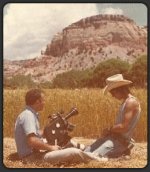
Had I asked myself this it would naturally be what's best handheld with a servo zoom that is the most requested model of the LA & NYC crowd, based on the previous posts you all know what kind of assignments I get. But in Eric's case it seems he is heading towards the latter. Here's me as a film AC with my mentor in 1973 with the venerable, and heavy as Hell, Eclair NPR. This camera was what allowed DPs to move around freely outdoors.


See ya,
 

Attachments

  • Warren & Ned.jpg
    Warren & Ned.jpg
    20.5 KB · Views: 0
Last edited:
The best documentary camera is the one that allows you to get the shots you need in a style that is required.

At one time for me the PD150 or DVX was the best documentary camera for me. Then with HD the EX1 became the best doc camera for me. When clients wanted the S35 look the C300I was the best doc camera for me. When my clients demanded overcranking options and 4K for post/archive the FS7 became the best doc camera for me.

In a few years there will probably be something new that is required by clients and that will become the best doc camera for me.
 
  • Like
Reactions: jvc
Back
Top