FX3/FX30: FX3 - did it lose slog2 with firmware update?

Would this be good for TV or no because the non legal black levels?
If you want to use this profile for broadcast, it works fine for broadcast, and I've used it often for that, just set your Black Level to '0'. Video levels under '0' in a broadcast situation will get clipped, and any detail in those sub-zero dark areas of your image will effectively get crushed out of visibility.

Chris Young
 
If you want to use this profile for broadcast, it works fine for broadcast, and I've used it often for that, just set your Black Level to '0'. Video levels under '0' in a broadcast situation will get clipped, and any detail in those sub-zero dark areas of your image will effectively get crushed out of visibility.

Chris Young
Thank you! I’ll give it a shot. So it can go straight to TV and not have to be converted or anything like when you put HLG3 in Premiere you have to change color input?
 
Thank you! I’ll give it a shot. So it can go straight to TV and not have to be converted or anything like when you put HLG3 in Premiere you have to change color input?
No need to change anything. You can use it as per the profile settings I posted. You will notice, under 'Color Mode', 709 is selected. This is a Rec 709 compliant file. It gives me the best dynamic range I can get within the Rec 709 specs for straight to air. The dynamic range is coming from the use of the HLG3 gamma curve but using it in the Rec 709 color spce. Here are the setting again:

Chris Young

Black -15 [-15 is not broadcast legal, it's way under. "0" puts you on legal broadcast black levels. BUT... I have found -10/-15 does surprisingly produce a pretty decent looking image]

Gamma HLG3

Black gamma Wide
[no other setting has any effect when an HLG gamma is selected]

Knee Manual - Point 100% - Slope +5 [In effect no knee, as this setting alters nothing when an HLG gamma is selected]

Color Mode 709

Saturation +7

Color Phase -3

Color Depth R-2, G-1, B-2, C-1, M+2, Y-3

Detail 0
[personal choice. If adding detail in grading, set to taste up to -7]
 
No need to change anything. You can use it as per the profile settings I posted. You will notice, under 'Color Mode', 709 is selected. This is a Rec 709 compliant file. It gives me the best dynamic range I can get within the Rec 709 specs for straight to air. The dynamic range is coming from the use of the HLG3 gamma curve but using it in the Rec 709 color spce. Here are the setting again:

Chris Young

Black -15 [-15 is not broadcast legal, it's way under. "0" puts you on legal broadcast black levels. BUT... I have found -10/-15 does surprisingly produce a pretty decent looking image]

Gamma HLG3

Black gamma Wide
[no other setting has any effect when an HLG gamma is selected]

Knee Manual - Point 100% - Slope +5 [In effect no knee, as this setting alters nothing when an HLG gamma is selected]

Color Mode 709

Saturation +7

Color Phase -3

Color Depth R-2, G-1, B-2, C-1, M+2, Y-3

Detail 0
[personal choice. If adding detail in grading, set to taste up to -7]
Thank you again. Last question. Zebra wise, is it 70 around skin tones?
 
Who's skin?
Doug. I find a little like S-LOG the HLG gamma curves do benefit with about one stop over as they are flatter curve than a stock six stop 709 curve in exposure. And yes, I find 70-75 IRE works quite well on Caucasian skins. Obviously, different skin colors would require different levels, as has always been the case. Normally in a 709 gamma world I base my Zebs anywhere between 60-65% dependent on the skin color/tone and lighting conditions at the time. The old rule of thumb that is that In the middle of the IRE range, 10 IRE is about one stop. So 70-75 IRE is about one stop over what I would be using if I was shooting with a stock six stop 709 gamma.

Chris Young
 
Chris, I don't know about Australia, but in the United States not everyone is white. Believe it or not, we frequently are faced with shooting a wide variety of skin tones (black, white, light brown, dark brown, Asian, albino, etc.) who all deserve to be exposed properly, regardless of their skin color. An exposure methodology that uses "white" as the normal exposure, and where we just make an educated guess as to how to adjust that exposure for everyone who isn't white is inherently racist, in my opinion. If I wanted to guess at the exposure, I wouldn't even need zebras, light meters, waveforms, false color or anything else. So I wish the people who are just guessing at exposure for non-whites, judging by how it looks on a monitor or viewfinder, would just admit they are just guessing.

Personally, I couldn't give a rat's ass how zebras appear on anybody's face because I'm never basing my exposure on skin or anything else that does not have a known level of reflectance in all circumstances.

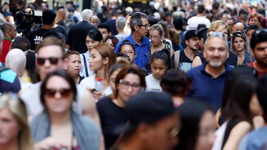
BTW, wow would you use zebras to expose for this shot?
 
Last edited:
Chris, I don't know about Australia, but in the United States not everyone is white. Believe it or not, we frequently are faced with shooting a wide variety of skin tones (black, white, light brown, dark brown, Asian, albino, etc.) who all deserve to be exposed properly, regardless of their skin color. An exposure methodology that uses "white" as the normal exposure, and where we just make an educated guess as to how to adjust that exposure for everyone who isn't white is inherently racist, in my opinion. If I wanted to guess at the exposure, I wouldn't even need zebras, light meters, waveforms, false color or anything else. So I wish the people who are just guessing at exposure for non-whites, judging by how it looks on a monitor or viewfinder, would just admit they are just guessing.

Personally, I couldn't give a rat's ass how zebras appear on anybody's face because I'm never basing my exposure on skin or anything else that does not have a known level of reflectance in all circumstances.

BTW, wow would you use zebras to expose for this shot?
Doug. 30% f our population are overseas born. They range from the driven white snow of a fair Irish maiden's face to the darkest skins of sub-Saharan Africans. We have a massive population of Indians, Chinese, Vietnamese and other Asians. We are in S.E. Asia, after all. What we don't have is a lot of people with a Hispanic background. Though we have a hell of a lot of southern Europeans from Italy and Greece just to name a couple. Melbourne in the state of Victoria has the largest Italian and Greek city populations in the world outside of Italy and Greece. So similar to the Hispanic complexion from an exposure POV. And don't forget our own indigenous native population of Aboriginals. Some of the darkest skins on the planet.

I tend to use Zebs as a double check. With a well-adjusted VF and a reasonably well lit subject I will, regardless of skin colour I will put the main exposure of their face between 60-70 IRE while paying attention to the brightest part of the face, usually the forehead, tip of the nose, tips of the ears etc. as my peak reference for a skin tone exposure. Obviously, for a sub-Saharan skin, this can be a couple of stops or more over a fair skinned Irish lass. I would use the above outlined approach for the shot you attached. As you would well know after many years of shooting, experience guides you greatly. You just know what's right. A hangover from my film days is that there is always an exposure meter in my case. Which I use from time to time. Especially for getting even lighting on blue screen shoots, I use it a lot.

Chris Young

Typical Aussie street scene.
 

Attachments

  • Aussie multicultural image.png
    Aussie multicultural image.png
    912.1 KB · Views: 3
According to the US census 71% are white. When you add other light skinned ethnicity like Asian it's probably closer to 80% in my legal work it's probably even higher. White skin is the one that you can't afford to over expose. So even if you think it's politically incorrect I don't care. I usually set my zebras to 75% so when I start to see it appear on the highlight sections of the face I know it getting close to becoming over exposed. I find it funny now a days everyone is looking to be offended. 70 ire for the face is a guideline not a rule.
 
If you think my post was about the about the demographics of someone's country, you both have missed my point entirely.
I don't care who you are shooting, setting exposure for skin using zebras is just plain wrong.
And using white skin as your "normal" base line for exposure borders on racism, whether you care to understand that point or not.
 
When you're filming people the most important part to expose correctly is their face, not their shirt or the highlights behind them. If I was filming in a country where the predominate skin color was black I would put that as the baseline. In event work where you might not have a monitor or wave form. You're not pulling out a gray card at a party ask guests to hold it up in front of their face. You pop on the zebras and even in bright sunlight you can spot that the face is over exposed.
 
The answer is a White Card.
You have the subject hold it up in front of their face for two seconds, set the exposure with zebras, drop the card. Simple. Perfect exposure in all but the most unusual setups. Best of all, the shade of the face behind the card does not matter. If the exposure is correct for Jim Gaffigan (very white skin) it will be correct for Kevin Hart (dark skin). That's right, if f/2.8, 1/60th, 0dB is correct for one, it has to be correct for the other.

With this method you are exposing for a reliable target (white), rather than the racist method of guessing how much lighter or darker the subject varies from the proverbial "caucasian" face.

For run and gun, and other times when a whit card is not practical, there are almost always white targets all around that can be used with zebras: shirts, hats, uniforms, helmets, paper, posters, signs, table cloths, cars, etc. White is all around us. And guessing is never needed.
 
Last edited:
Oh Dougie! I learnt to expose for skin before we had portable video cameras. Zebras were animals in the Serengeti. What worked then for me on film then works fine for me today. Each unto their own. Tell me. If you are in a dingy blue/red light disco with nary a piece of white in sight, how do YOU expose for correct skin tones?

Chris Young
 
Oh Dougie! I learnt to expose for skin before we had portable video cameras. Zebras were animals in the Serengeti. What worked then for me on film then works fine for me today. Each unto their own. Tell me. If you are in a dingy blue/red light disco with nary a piece of white in sight, how do YOU expose for correct skin tones?

Chris Young
Oh Chris, In that scenario, I wouldn't give a rat's ass about skintones. But I'd probably expose from a white card and hope for the best. There's a million hypothetical scenarios that you could propose where setting exposure would be challenging. But what about the day to day shots we have to do with non-white people in controlled situations? It's ridiculous in 2024 to talk about Caucasion skintones as being the standard by which exposure is judged.

BTW, I'm still waiting to hear how you'd expose for the Kevin Hart 60 MInutes shot -- without guessing or just going by how it looks in your viewfinder.

Also, be careful about talking about the good old days. You're starting to sound like one of my many redneck neighbors who can't understand why some things from the past are no longer in vogue. I dare you next time you're shooting a non-white person to verbalize your exposure method to them while you setup: "Well, let's see, if you were a white person I'd want to see some zebras on your face. But, since you're a medium shade of _______________, I'll make some adjustments just for you." Let us know how it goes.
 
Last edited:
Each unto their own. Tell me. If you are in a dingy blue/red light disco with nary a piece of white in sight,

Chris Young
Skin tones are the least of my worries if I’m in a dingy with disco lights 😄

Maybe I need to add a white mask to my kit for Kevin Hart interviews
 
Last edited:
The white of my 18% card takes deep offense from being on the reverse side. The way I would expose for Kevin Hart would be to first have the opportunity to film Kevin Hart.
 
Back
Top