What's wrong with Christian filmmaking?

Well, a lot of non-Jewish people watched 'Yentl'.
Excellent point. And I'd add, I'd dare say a lot more of them watched "Fiddler On The Roof." Neither of these films disguised their Jewishness, in fact they reveled in it.

A whole lot of people who aren't Greek watched and enjoyed "My Big Fat Greek Wedding" too.

There's no reason a well-told story about Christianity couldn't be equally successful. But there's a big difference between a film about Christianity, and the "genre" known as "Christian films". In the genre, the film is made for an audience, and like all genres it has specific expectations and storytelling conventions. That doesn't inherently make it "bad", it makes it a "genre film" -- just like any other genre film.

"Noah" isn't a "Christian film" -- it is a "big budget Hollywood blockbuster", which just happens to take its inspiration from a Biblical story. "The Matrix" is most definitely not a "Christian film", even though the storyline closely parallels the Christ story (even including Neo resurrecting and ascending into heaven at the end). "E.T." is not a "Christian film", even though its story parallels the Christ story quite closely.

So the question really shouldn't be one of "what's wrong with Christian filmmaking" -- because, as stated, it is a genre, and one that you either enjoy or don't. Like Anime. Or horror. Or mumblecore. Or "family films" -- (such as those featuring talking animals). You either like them or you don't, but that doesn't mean there's anything "wrong" with them. If they find an audience, and their audience appreciates them, then what's "wrong" with that?
 
Yet again - and I hate to say it, because it seems like a suck-up - but Barry G. got it right. Christian "Hallmark-type" films are a genre, for a specific audience. They can be successful - very successful. Are they good? Well, that's a matter of taste, isn't it.

Remember, we are not necessarily talking 'art'. Mass market movies are not art - though they can be - but entertainment. That's the key. Are they entertaining? For their niche audience - yes! For broad audiences - depends. But there is a different question, and that's what makes such films or entertainment in general - deeply felt?

And here I'm going to broaden the question to comedy and even music. The greatest entertainment is subversive by its very nature. One of the questions you see asked over and over again is: why can't we have really funny conservative comedy? Remember, it's not a question of whether an entertainer (standup comic, film director, actor, lead singer, guitar player etc.) is conservative, or Christian etc. - it's whether their material is done from that specific perspective. There are tons of very successful and great comics, actors, directors, musicians etc. who are conservative and/or religious. But are their acts/material Christian/religious? It's not for lack of trying. Every other year you get people try to have the conservative version of The Daily Show, or The Colbert Report. It invariably fails. Comics - tons are conservatives, but few try to base their act on that, and there are few who are even marginally successful. Dennis Miller is probably the most prominent, and he's far less popular and successful since he left SNL and decided to make his material conservative comedy.

The reasons are simple - entertainment is subversive. It is aimed at tweaking the nose of authority. People laugh at that. People love when the underdog comes out on top against overwhelming force and privilege. People don't laugh when a rich guy makes fun of a poor person. People don't find it funny when a privileged guy makes fun of the downtrodden. People don't laugh when a healthy person points and jeers at a handicapped person. Conservatives are seen as defending The Establishment against the rabblerousers. And people's natural sympathy is never with the Authority against the little guy. In comedy, there's a rule - you never "punch down". Don't beat up on the little guy who is already down and a low man on the totem pole - don't beat up on him from the position of privilege... it merely makes you look like an a$$...ole. God is the ultimate establishment - he can never, ever be wrong, and will always and forever win and be unquestioned... not much fun in seeing him dispatch the utterly powerless pathetic sinners, the ending is never in doubt.

Roman Polanski said something very incisive when discussing the ending to Chinatown. He had a serious disagreement with Robert Townsend (the screenwriter) about the ending. It was Polanski's idea to make Noah Cross get away with his crime. Townsend argued vociferously against it - he wanted Cross to be punished, and a more happy ending. After many years, finally Townsend came around, and today he agrees that Polanski's idea was far better. Here is how Polanski explained it, succinctly: if we had an ending like Robert wanted, people would walk out of the theater and think 'well, justice prevailed' and stopped thinking about it right then; whereas if we have an ending where evil triumphs, it unsettles people and now they won't stop thinking and talking about it, they can't just go back to their 'everything is fine' world. True art is real - and we know from obvious experience, that sometimes - very often indeed - evil triumphs, the good guy does not end up on top, justice does not always prevail. But the ultimate end in any Christian message film can never be that - there is never a doubt that God will prevail, and it cannot be otherwise, never, ever - you cannot have a Chinatown ending on a spiritual level. God has all the power, so unlimited, so overwhelming so absolute and complete, that "conflict" is really not even possible. Even in a genre film like the James Bond franchise - the film is only as good as the villain is strong... Bond must face a real chance of defeat, there must be peril. But in this scenario, the little guy never, ever stands a chance against God, nobody does, not even the devil - he is infinitely little in comparison, and infinitely powerless and will be crushed with infinite power (the ultimate is of course hell - tortured forever). This principle operates in all such entertainment, including music - rock music was the very expression of rebellion against authority - Christian rock will therefore have a deep contradiction at its core... it cannot rebel, it must affirm The Establishment (God).

That doesn't mean that Christian message films, music, fiction, entertainment etc. cannot be successful - it can be wildly successful in its own market and genre and even with the broad public, but it must do so while obeying the same rules that make all entertainment successful: conflict, strong emotions, strong story line, good performances, etc. It cannot simply rely on the "Christian message".
 
Last edited:
Excellent point. And I'd add, I'd dare say a lot more of them watched "Fiddler On The Roof." Neither of these films disguised their Jewishness, in fact they reveled in it.

A whole lot of people who aren't Greek watched and enjoyed "My Big Fat Greek Wedding" too.

There's no reason a well-told story about Christianity couldn't be equally successful. But there's a big difference between a film about Christianity, and the "genre" known as "Christian films". In the genre, the film is made for an audience, and like all genres it has specific expectations and storytelling conventions. That doesn't inherently make it "bad", it makes it a "genre film" -- just like any other genre film.

"Noah" isn't a "Christian film" -- it is a "big budget Hollywood blockbuster", which just happens to take its inspiration from a Biblical story. "The Matrix" is most definitely not a "Christian film", even though the storyline closely parallels the Christ story (even including Neo resurrecting and ascending into heaven at the end). "E.T." is not a "Christian film", even though its story parallels the Christ story quite closely.

So the question really shouldn't be one of "what's wrong with Christian filmmaking" -- because, as stated, it is a genre, and one that you either enjoy or don't. Like Anime. Or horror. Or mumblecore. Or "family films" -- (such as those featuring talking animals). You either like them or you don't, but that doesn't mean there's anything "wrong" with them. If they find an audience, and their audience appreciates them, then what's "wrong" with that?
Excellent points.
 
Then there's the movie "Son of God." Now...I'm not sure but it looks like the same cast of folks that were part of the miniseries that came on earlier this year on Television. That series was made for television. It looked like..."made for television." It's not as gritty and dirty as ..."Game of Thrones" or shows like that. It feels...."safe." Which is good for certain audiences.... But for the mainstream theater...I'm not too sure. I might go see it in theaters...but if a lot of folks are like me...then I don't know if it will do well at the box office. "Passion of Christ" is an example of a movie that did not play it safe. Look how well that did.

From the wiki
---
The film features select scenes from the miniseries as well as footage not aired in the telecast.[2][3]
---

The wiki has further details...

From my looking at BoxOfficeMojo, it looks like the film was 'front loaded' by the audience that would most appreciate the film. I've also read that the 'producers' consider this a long tail product, which is to say, it is expected to be in DVD/BD/Streaming distribution for a long time...

To me the trailers were pretty insipid.
 
True art is real - and we know from obvious experience, that sometimes - very often indeed - evil triumphs, the good guy does not end up on top, justice does not always prevail. But the ultimate end in any Christian message film can never be that - there is never a doubt that God will prevail, and it cannot be otherwise, never, ever - you cannot have a Chinatown ending on a spiritual level.

While perhaps 'spiritually' the ending can't be "Chinatown"(1974) or "McCabe and Mrs Miller"(1971), "The Passion of the Christ"(2004) proves that one can have a violent end, with the believers knowing the 'spiritual' end, but the visuals show the physical end.
 
While perhaps 'spiritually' the ending can't be "Chinatown"(1974) or "McCabe and Mrs Miller"(1971), "The Passion of the Christ"(2004) proves that one can have a violent end, with the believers knowing the 'spiritual' end, but the visuals show the physical end.

Right. Which is why a Christian film that doesn't rely solely on its "message" can definitely work with a broad audience. It only becomes limited to the core audience (and fails with the broad audience), if it relies on no more than the "message". TPOC didn't strike me as particularly pushing a Christian "message", which is why it worked. You can show injustice, and death, and evil, and the little guy - or indeed the big guy (Jesus!) beaten down, and it'll work.
 
But there's a big difference between a film about Christianity, and the "genre" known as "Christian films". In the genre, the film is made for an audience, and like all genres it has specific expectations and storytelling conventions. That doesn't inherently make it "bad", it makes it a "genre film" -- just like any other genre film.

Like Bollywood.
 
So the question really shouldn't be one of "what's wrong with Christian filmmaking" -- because, as stated, it is a genre, and one that you either enjoy or don't. Like Anime. Or horror. Or mumblecore. Or "family films" -- (such as those featuring talking animals). You either like them or you don't, but that doesn't mean there's anything "wrong" with them. If they find an audience, and their audience appreciates them, then what's "wrong" with that?

When I hear this sort of 'question', I suspect that the real question is, 'why aren't 'christian films' as a genre as popular as say, rom-coms, or heck even "Rocky Horror Picture Show"(1975)?" ("Jesus Christ Super Star"(1973) sure had an audience, and various stage productions and revivals, but the film adaptation has not had continuous showings since the 70's...)

Supposedly as of 2004, a Gallop Poll indicages that on any given Sunday 43% of the US population attends some church (ok... perhaps a few attend religious services on Friday and Saturday depending...).

So, for a population that has nominally 43% of its population attending some church somewhere some time during the week... why are 'christian' genre films not as popular as some of the other genres... is actual 'church' enough entertainment in that 'genre'... or is there something else that limits the appeal?

I suspect some of the various 'reasons' given are the reasons the genre is not seen as entertainment outside of a rather 'small' group.
 
Last edited:
Excellent point. And I'd add, I'd dare say a lot more of them watched "Fiddler On The Roof." Neither of these films disguised their Jewishness, in fact they reveled in it.

A whole lot of people who aren't Greek watched and enjoyed "My Big Fat Greek Wedding" too.

There's no reason a well-told story about Christianity couldn't be equally successful. But there's a big difference between a film about Christianity, and the "genre" known as "Christian films". In the genre, the film is made for an audience, and like all genres it has specific expectations and storytelling conventions. That doesn't inherently make it "bad", it makes it a "genre film" -- just like any other genre film.

"Noah" isn't a "Christian film" -- it is a "big budget Hollywood blockbuster", which just happens to take its inspiration from a Biblical story. "The Matrix" is most definitely not a "Christian film", even though the storyline closely parallels the Christ story (even including Neo resurrecting and ascending into heaven at the end). "E.T." is not a "Christian film", even though its story parallels the Christ story quite closely.

So the question really shouldn't be one of "what's wrong with Christian filmmaking" -- because, as stated, it is a genre, and one that you either enjoy or don't. Like Anime. Or horror. Or mumblecore. Or "family films" -- (such as those featuring talking animals). You either like them or you don't, but that doesn't mean there's anything "wrong" with them. If they find an audience, and their audience appreciates them, then what's "wrong" with that?

The author could have said "Why don't Christian Films reach a wider audience?" Or, why are Christian films merely genre films?
 
Forgive me if someone said this already...

How could Noah be a Christian film? THERE WERE NO CHRISTIANS BACK THEN!!!!
In the US, the predominant pathway that the Noah 'story' has been given to the general public is via the Christian Bible. Perhaps in Saudi Arabia the story is given by pointing to the Torah texts, which is good for the Jews, which Islam recognizes as a revelation from the deity.

But for the Gedankenexperiment, try thinking about how the Starz network would produce an adaptation of "Quo Vadis", along the lines of their "Spartacus" series...

Here's a wiki brief on the 1895 novel from which several films have been adapted one being the 1951 Hollywood adaptation.
---
Quo Vadis: A Narrative of the Time of Nero, commonly known as Quo Vadis, is a historical novel written by Henryk Sienkiewicz in Polish.[1] "Quo vadis Domine" is Latin for "Where are you going, Lord?" and alludes to the apocryphal Acts of Peter, in which Peter flees Rome but on his way meets Jesus and asks him why he is going to Rome. Jesus says "I am going back to be crucified again", which makes Peter go back to Rome and accept martyrdom.

The novel Quo Vadis tells of a love that develops between a young Christian woman, Ligia (or Lygia), and Marcus Vinicius, a Roman patrician. It takes place in the city of Rome under the rule of emperor Nero around AD 64.
---

And whether those who like 'christian' genre films would support it in ticket sales... as well as 'good' reviews.

(In fact, conduct that experiment for any of "The Robe", "Ben Hur", and the like...).
 
Forgive me if someone said this already...

How could Noah be a Christian film? THERE WERE NO CHRISTIANS BACK THEN!!!!

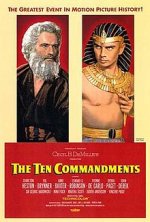
Christians believe in both the old and new testament of the Bible. So a story that takes place before Christ can still be "Christian", as in it appeals to Christians. For example you could do a "Christian" film about the Ten Commandments, even though it would take place long before Christ (about 1400 years before Christ).

220px-10Command56.jpg
 
When I here this sort of 'question', I suspect that the real question is, 'why aren't 'christian films' as a genre as popular as say, rom-coms, or heck even "Rocky Horror Picture Show"(1975)?" ("Jesus Christ Super Star"(1973) sure had an audience, and various stage productions and revivals, but the film adaptation has not had continuous showings since the 70's...)

Supposedly as of 2004, a Gallop Poll indicages that on any given Sunday 43% of the US population attends some church (ok... perhaps a few attend religious services on Friday and Saturday depending...).

So, for a population that has nominally 43% of its population attending some church somewhere some time during the week... why are 'christian' genre films not as popular as some of the other genres... is actual 'church' enough entertainment in that 'genre'... or is there something else that limits the appeal?

I suspect some of the various 'reasons' given are the reasons the genre is not seen as entertainment outside of a rather 'small' group.

I think the majority of people in the US that went to see Transformers would identify as "Christian". I don't think that so-called Christian movies actually appeal to the majority of Christians. They are going to see The Hunger Games or something like that. I think it's only a small subset of Christians that actually are entertained by "Christian" movies.

It's just my opinion, but I thought the Passion of the Christ was torture porn, similar to something like Saw or Hostel. Personally I don't care for torture porn, regardless of whether the theme is religious or not, but it does have an audience.


So, perhaps "Jesus Christ: Vampire Slayer" would do better than "Son of God"...

I realize some may consider such a 'sacrilege'... but that is sort of the point. Some amount of the current films are 'playing with the icons'... while it may be said that some of these films are not successful, what can be said is making the 'same old thing' is almost guaranteed to be less successful.

As for 'porn' or 'torture porn', the OT is filled with it... ranging from rape, genocide, to lurid hints of 'illicit sex', ranging from women 'lying' with animals, and of course the ever popular 'Sodom/Gomorrah'.

I do find it interesting that when described in 'words', some people are ok with such depictions, while the 'visual' story is considered 'porn'.

Since 'film' is a visual medium, it seems that any such visual depiction is necessarily condemned, and so this leads to 'subtext', 'euphemism', or much 'expository dialog'.
 
Last edited:
Probably THE hardest thing to do in the "Christian" genre is comedy, and few have succeeded- until this flick, which I saw an advance screening of a few weeks ago.


My wife interviewed the producers for Faithflix, her blog on faith based filmmaking. They got the script, then spent over two years tweaking it. Rather than a typical casting call, they started calling the actors they thought would be ideal for the various parts- and got them all. The result is a really, really funny movie that can easily appeal to both the Christian audience and the broad audience. The only "sermon" they will get comes in a short scene from none other than the huge tattooed biker played by Trace Atkins. The movie hits theaters on Mothers Day, and could potentially do even better than "God's Not Dead".
 
Last edited:
"J1clark, it's got to be said. Your 'quotes' are 'out of control.' What's going on there? Did I miss the enclosing double-qoutes around your whole paragraph? Are you quoting yourself? Just using your fingers to make little claws in the air around certain words? I'm trying to picture you speaking to me in person, as written, and the resulting speech pattern is both 'hilarious' and 'confusing!'"
 
So, perhaps "Jesus Christ: Vampire Slayer" would do better than "Son of God"...

I realize some may consider such a 'sacrilege'... but that is sort of the point. Some amount of the current films are 'playing with the icons'... while it may be said that some of these films are not successful, what can be said is making the 'same old thing' is almost guaranteed to be less successful.

As for 'porn' or 'torture porn', the OT is filled with it... ranging from rape, genocide, to lurid hints of 'illicit sex', ranging from women 'lying' with animals, and of course the ever popular 'Sodom/Gomorrah'.

I do find it interesting that when described in 'words', some people are ok with such depictions, while the 'visual' story is considered 'porn'.

Since 'film' is a visual medium, it seems that any such visual depiction is necessarily condemned, and so this leads to 'subtext', 'euphemism', or much 'expository dialog'.

So the Bible isn't actually filled with "porn". There are sex acts, but the description in the Bible isn't salacious. By definition, porn is designed to turn you on. Most people wouldn't be turned on by any of the passages in the Bible even when they do mention sex.

Is this pornographic? Designed to turn you on?

34 The next day the older daughter said to the younger, “Last night I slept with my father. Let’s get him to drink wine again tonight, and you go in and sleep with him so we can preserve our family line through our father.”35 So they got their father to drink wine that night also, and the younger daughter went in and slept with him. Again he was not aware of it when she lay down or when she got up.
Genesis 19:34

See what I mean? You COULD turn that into porn, but straight out of the Bible it isn't porn. Of course in Clock Work Orange they DO turn scenes from teh Bible into porn, but that's Alex's (the main character's) imagination, not what's actually in the Bible.

This is actual porn:
I nodded, and she kissed me soft like she cared. Then I pressed her perfumed wrists to the mattress and prepared to pretend to rape my twisted old lying cock-hungry ***** of an unfaithful teacher.

The Bible isn't written that way.


And that's what we see with Mel Gibson's Passion of the Christ. We see Mel Gibson's torture porn version of the Crucifixion, but if you read the Bible it's not so pornographic. You're missing all the bloody details that Mel puts into the movie from his own imagination. The Bible takes two sentences to describe it. The crucifixion in POTC takes like an hour.

So the soldiers took charge of Jesus.17 Carrying his own cross,he went out to the place of the Skull (which in Aramaic is called Golgotha).18 There they crucified him, and with him two others—one on each side and Jesus in the middle.
John 19

You could film that just like it's written. It would take less than two minutes, and you wouldn't have to show any blood.
 
Last edited:
Probably THE hardest thing to do in the "Christian" genre is comedy, and few have succeeded- until this flick, which I saw an advance screening of a few weeks ago.


My wife interviewed the producers for Faithflix, her blog on faith based filmmaking. They got the script, then spent over two years tweaking it. Rather than a typical casting call, they started calling the actors they thought would be ideal for the various parts- and got them all. The result is a really, really funny movie that can easily appeal to both the Christian audience and the broad audience. The only "sermon" they will get comes in a short scene from none other than the huge tattooed biker played by Trace Atkins. The movie hits theaters on Mothers Day, and could potentially do even better than "God's Not Dead".

So it looks kinda funny, but how is it "Christian"? What if those people were all atheists or Muslims? Doesn't everyone get overwhelmed taking care fo the kids sometimes? I mean, "Honey I shrunk the kids" is funny without any cursing in it, but it's not a Christian movie.
 
Back
Top