
Navigation
Install the app
How to install the app on iOS
Follow along with the video below to see how to install our site as a web app on your home screen.
Note: This feature may not be available in some browsers.
More options
You are using an out of date browser. It may not display this or other websites correctly.
You should upgrade or use an alternative browser.
You should upgrade or use an alternative browser.
Sony Cinema Line & FX6
- Thread starter Teddy_Dem
- Start date
One interesting perspective on the popularity of low/mid-tier professional cameras over the years:
https://crewscontrol.com/blog-central/the-rise-of-the-fs7-a-look-back-at-our-camera-usage-reports/
Am not talking just about pricing coming down, because that is what happens with tech over time, but also the economic trends which are pushing down budgets in general. And the current pandemic and economic recession is only going to make this effect even worse! Thus I'd say people are looking more at the sub $10K tier than cameras priced over $10K. (even if is "only" a grand or two each way, I'd say that figure of the "Ten Thousand Dollars" barrier can have a physiological impact upon people's buying decisions)
Suspect that is the 2nd most likely option after FX6 taking the #1 spot.
(with the 3rd most likely option being some other camera than the FX6 accomplishing this)
People can be sheep-like, and will follow the herd. Am inclined to believe one camera will rise above the others and become the de facto "industry standard" (because most people are surprisingly risk adverse, especially producers), and that camera will end up becoming as common place as the next two cameras combined.
C300mk1 wasn't the first S35 HD camera, the Sony PMW-F3 came before it. (and of course the vastly more expensive F35 was even earlier)
The Panasonic AF100 (which was 4/3", which is "almost" as big as S35, but is still a large sensor interchangeable lens camera. And cheaper too) came out a whole year earlier!
Plus the FS100 and FS700 were each released more or less around about that time-ish as well.
The C300mk1 became the rock star success not just because of timing, but because of the sweet spot it hit of features/specs and price. Likewise the same is true for the Sony FS7 as well.
We're probably not too far apart in our opinions! Just differ slightly in our assessments of the probability of each outcome.
You might get turned away for having a C300mk2, one person I worked with did the switch from FS7 to a C300mk2 and he commented he should've stuck with the FS7 and never sold it if he had wanted to keep a higher volume of work.
Producers/directors can occasionally be weirdly picky. For instance one shoot I was doing sound for, they were looking for a FS7 shooter at the last minute, thus I suggested a friend as the shooter. But nope, he wouldn't do! Because he owned a Sony PMW-F5.
Don't think there was ever a consensus that the C300mk3 would "dominate" over the FX9, just there might have been a small shift opinion coming back to backing Canon again, but never was there a clear "consensus" for the C300mk3.
https://crewscontrol.com/blog-central/the-rise-of-the-fs7-a-look-back-at-our-camera-usage-reports/
Yeah, but the fs7mk2 was like $10k at launch, similar to the $11k fx9. Prices naturally come down over time because it's old tech. But some aspects of superior build quality etc are reflected in that higher price tier (which is close to 2x the FX6 even if it's just several $k.)
Am not talking just about pricing coming down, because that is what happens with tech over time, but also the economic trends which are pushing down budgets in general. And the current pandemic and economic recession is only going to make this effect even worse! Thus I'd say people are looking more at the sub $10K tier than cameras priced over $10K. (even if is "only" a grand or two each way, I'd say that figure of the "Ten Thousand Dollars" barrier can have a physiological impact upon people's buying decisions)
I actually think it's likelier that we won't see a single dominant camera in this generation (or possibly ever again at this level of production).
Suspect that is the 2nd most likely option after FX6 taking the #1 spot.
(with the 3rd most likely option being some other camera than the FX6 accomplishing this)
People can be sheep-like, and will follow the herd. Am inclined to believe one camera will rise above the others and become the de facto "industry standard" (because most people are surprisingly risk adverse, especially producers), and that camera will end up becoming as common place as the next two cameras combined.
The c300mk1 was the first honest to goodness S35 HD video camera. The FS7 was the first S35 4K60p video camera. Each had basically no competitors in this price tier/form factor to begin with. And then things like eva1 with somewhat compromised codecs (only long GOP 4k60 IIRC) as well as seeming flimsier.
C300mk1 wasn't the first S35 HD camera, the Sony PMW-F3 came before it. (and of course the vastly more expensive F35 was even earlier)
The Panasonic AF100 (which was 4/3", which is "almost" as big as S35, but is still a large sensor interchangeable lens camera. And cheaper too) came out a whole year earlier!
Plus the FS100 and FS700 were each released more or less around about that time-ish as well.
The C300mk1 became the rock star success not just because of timing, but because of the sweet spot it hit of features/specs and price. Likewise the same is true for the Sony FS7 as well.
So, I agree with you that the FX6 is probably the direct spiritual descendant of the FS7 and reflects a downward price trend. But I think that there are more cameras that will foot the bill these days.
We're probably not too far apart in our opinions! Just differ slightly in our assessments of the probability of each outcome.
Certainly, no one would turn you away if you had a C300mk3. Some clients may always demand Canon color.
You might get turned away for having a C300mk2, one person I worked with did the switch from FS7 to a C300mk2 and he commented he should've stuck with the FS7 and never sold it if he had wanted to keep a higher volume of work.
Producers/directors can occasionally be weirdly picky. For instance one shoot I was doing sound for, they were looking for a FS7 shooter at the last minute, thus I suggested a friend as the shooter. But nope, he wouldn't do! Because he owned a Sony PMW-F5.
But I remember when the C500mk2 and FX9 were launched - the consensus was that the FX9 would triumph and take all the FS7 owners and that Canon had missed the mark on price and features.
But the later consensus until yesterday was that the FX9 had missed the mark and the C300mk3 would dominate.
I'm getting whiplash
Don't think there was ever a consensus that the C300mk3 would "dominate" over the FX9, just there might have been a small shift opinion coming back to backing Canon again, but never was there a clear "consensus" for the C300mk3.
morgan_moore
Major Contributor
My view on the 'history of cameras'
F3 vs C300 - F3 did not have 50mbs codec to meet broadcast standards .. C300 won
Fs7 vs C300 - Fs7 was cheaper and had more than 50mbs.. FS7 won
Somewhere here AF100 and JVC got 10bit.. but we were set up thanks.
C300ii, FS7 was cheaper and still exceeded 50mbs .. FS7 won
C300iii vs FS7 - FS7 was cheaper and still exceeded 50mbs .. FS7 won.. but AF on the competitor and raw was beginging to bite the FS7 at a higher level
FX9 vs C300iii - FX9 big, worse AF no 4k60.. C300iii won.. FS7 starting to look long in tooth but still does above 50mbs and the new corporate fave, 4k50/60
FX6 vs FS7 - AF, smaller, raw out FS7 starting to look very compromised
PAnny - ha - nice cameras years late still dont 4k60(?)
F55 and Varicam bubbing along at $20g set up, owned by a few who thought $20g was cheap vs thier old 2/3 cam and had clients who were in the same old position of thinking a $5g cam 'must be bad'

ahalpert
Major Contributor
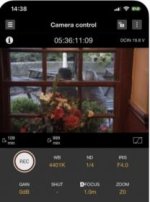
looks like you can control ND remotely from the mobile app at least, but I can't tell if it will be smooth and stepless:
Allard writes: "As I have mentioned in recent articles, the camera market has started to divide into two key sectors; the under $10K category and the high end. There really isn’t much in between. The FX6 falls clearly into that under $10K category."
"While they have tried to differentiate the FX6 and the FX9 by using different sensors, the lines have been blurred and this may well-upset owners of the FX9. However, there is still very much a place for both of these cameras as the FX9 is more suited to being shoulder-mounted than the FX6 and it has the ability to shoot 4K in an S35 crop mode."
"The FX6 can be used as your main camera, a B camera to the FX9, the A camera to a Sony a7S III, and so on. Given its feature set and capabilities, there really isn’t any reason why it couldn’t be used by anyone for anything."
ahalpert
Major Contributor
Take this with a very small grain of salt - someone comments on the newsshooter page about Gerald Undone's opinion: "He has found that the autofocus performance on the A7s III is better. He likes the color science of the A7s III more. And the handling of the FX6 also seems to be a bit weird since there are simply not enough custom buttons (Phillip Blooms opinion)."
morgan_moore
Major Contributor
I think the shoulder mount thing is BS. FX6 looks like a lovely shoulder cam. In a different class from the C200, C70. (too high and too wide)
A decent sholder rig usually starts with 60cm rods and has a Vlock at the back and handle bars and glass at the front.
What camera you plop in the middle is basiclly irrelevant. But the heavy ones (F3+recorder FX7) become wearing.
Ive had the same shoulder rig with since the 5d2 - all worked equally well.
The one thing is if the wire is long enough that you can use the EVF life becomes a bit better as you dont need to buy/power an external EVF.
It wasnt on the FS7.
THere was some chat about on bloom vs production gear about shoulder cam being for oldies. I virtually guarentee that no director wants nose hair cam looking up from a camera resting on the gut. However young thier operator. Having the lens at eyeline is a basic and a consistent need.
G
Guest
Guest
What about the vast number of scenes that have less contrast than 14 stops? Do you still think it makes an impact there?
It does.
ahalpert
Major Contributor
It does.
how so?
That Crewscontrol site is wrong on FS-7. It was always 4K internal. (It was F5 that required a paid firmware upgrade ... unless you just reprogrammed the menu yourself to record 4K ... one of the major crippling scandals of that era). C300 MKII appeared about half a year later but lacked 60P and was kind of a dead duck. 4K wasn't as big a deal around 2015, so a lot of shooters kept their C100 and C300. Those who wanted 4K, got FS-7.
FS-700 needed an external recorder - either Sony's own, with a digital interface, which brought its total price to about $20,000 - or with the Convergent Design Odyssey that could record ProRes (after Apple licensing went through) for about $10,000 in total.
The other option was GH-4, a terrific buy for that period at $1,700, especially with its 10-bit external recording.
morgan_moore
Major Contributor
Why swap the adapters around? If one is the best, why not stick with that one? If none is best, why bother to swap?
Because you are on location and want more reach so take off the booster you use as the standard thing day to day and put on a non G adapter that you have never tested at infinity with that specific lens and see it is failing to reach infinity on the first shot (the second shot in the film) -(that adapter, $20 from amazon is too long by .1mm or so) so you get your G adapter and find that is better. Panic stations over a bit.
You may be aware that super teles 'go past infinity' because they shrink/grow enough in heat that 'infintiy' (OK focus on the moon or a plane 2k away) moves.
It is not easy for me to test at our studio as its in a built up area.. no clear view of 2km away.. to perform a test would be a special trip to the park or whatever

Last edited:
G
Guest
Guest
how so?
My point about the extra DR is not for low contrast scenes. It is for scenes that I encounter everyday. It is because when digital breaks up, it looks ugly. It is because day and night scenes are full of specular highlights. It is because in drama, a camera can be moving about in a scene for 5minutes straight.
Exposing for a 12.5 stop camera and a 14+ stop camera is identical. Just that the 14 stop camera has a better feather roll off into blow out. And you don't have to mess up the midtones and shadows to achieve it. So you can have candles as key lights, and you can have blown out bits in the frame without it looking like video, because the transition to clipping is so smooth. It isn't about never clipping. It is about clipping naturally if you want to.
Having those extra two stops latitude can also give more options for choosing whether you want clean rich shadows in a lower contrast scene or more latitude for a sunset.
There isn't anything crazy about 14+. You have to watch your exposure with the Alexa, just like any other camera. Not like Deakins doesn't have to expose.
Why are DP's paying attention to the Venice? Why are DP's saying, I didn't like Red till the Monstro and Gemini? For the most part, after the raw, the colour science, the user experience etc: Dynamic Range.
You'd have to get a healthy amount more DR than 14 stops before it starts to feel completely ridiculous. Think about it. Film is around 12+ stops, but has a more natural tone curve, and when it blows out, it can kind of look cool. Do you ever say to your self, I hate film in low contrast scenes? Why? Why not?
It isn't that we can't shoot with 12 stops and make it look great, it is that with 12 stops or less, the fight against the CMOS video look is constant. I'd love to be more radical with lighting, but if I am, the whole thing breaks apart and it screams digital.
But, do I need it or expect it? no. But the extra stops in DR will be good. Just might need the new Arri to prove it, haha. Just like everyone realized the Mini LF didn't make harsh images just because it was 4K.
Last edited:
G
Guest
Guest
What about the vast number of scenes that have less contrast than 14 stops? Do you still think it makes an impact there?
So long as you have the bit depth for it, a DR beast like the Venice still looks good in soft light:
A lot of challenging scenes in this as well. Things that I don't think I would try with an A7s, F55, or Scarlet. It allows a certain amount of creative choice, since shooting into hot spots like that still can look good, as it isn't clipping all that harshly, yet despite that more organic roll off, the mid tones are still nice and contrasty, and the shadows look clean and rich. Then popping over to the soft light scene, they also take the camera low and tilt towards the clouds, which an A7s3 could likely handle, but the Venice likely provides a fatter negative. The Venice is still doing well in soft light, and the midtones look better on the Venice than the A7s3 to me in soft light, in most footage I have seen. Though that isn't directly because of DR. But what I meant is that extra DR in a properly tuned camera doesn't destroy the mid tones.
My thinking is this, if you don't see the value in a 14+ stop camera, then you certainly also don't need a 12+ stop camera. Because the perceptable difference in them is not some HDR effect, it is in the giving more finesse to the image quality.
Now, if we start getting into 17+ stop cameras, that would stat flirting with "exposing in post", sort of workflows. But not 15. 15 for digital is just for making things pretty. Like the difference between hard edge bokeh and soft edge bokeh.
Last edited:

Teddy_Dem
Well-known member
So long as you have the bit depth for it, a DR beast like the Venice still looks good in soft light:
https://www.youtube.com/watch?v=ydAsa2TZTA8&feature=youtu.be
A lot of challenging scenes in this as well. Things that I don't think I would try with an A7s, F55, or Scarlet. It allows a certain amount of creative choice, since shooting into hot spots like that still can look good, as it isn't clipping all that harshly, yet despite that more organic roll off, the mid tones are still nice and contrasty, and the shadows look clean and rich. Tan pooping over to the soft light scene, they also take the camera low and tilt towards the clouds, which an A7s3 could likely handle, but the Venice is still doing well in soft light. The midtones look better on the Venice than the A7s3 to me, in most footage I have seen.
My thinking is this, if you don't see the value in a 14+ stop camera, then you certainly also don't need a 12+ stop camera. Because the perceptable difference in them is not some HDR effect, it is in the giving more finesse to the image quality.
Now, if we start getting into 17+ stop cameras, that would stat flirting with exposing in post, sort of workflows. But not 15. 15 for digital is just for making things pretty. Like the difference between hard edge bokeh and soft edge bokeh.
Thanks for posting this. I really like what Sony have done with the Venice, really great tones coming off that sensor.
G
Guest
Guest
Thanks for posting this. I really like what Sony have done with the Venice, really great tones coming off that sensor.
Totally agree.

sleekmedia
Well-known member
I agree with all of this and think it really is a great explanation of dynamic range in terms of real-world usability.
My point about the extra DR is not for low contrast scenes. It is for scenes that I encounter everyday. It is because when digital breaks up, it looks ugly. It is because day and night scenes are full of specular highlights. It is because in drama, a camera can be moving about in a scene for 5minutes straight.
Exposing for a 12.5 stop camera and a 14+ stop camera is identical. Just that the 14 stop camera has a better feather roll off into blow out. And you don't have to mess up the midtones and shadows to achieve it. So you can have candles as key lights, and you can have blown out bits in the frame without it looking like video, because the transition to clipping is so smooth. It isn't about never clipping. It is about clipping naturally if you want to.
Having those extra two stops latitude can also give more options for choosing whether you want clean rich shadows in a lower contrast scene or more latitude for a sunset.
There isn't anything crazy about 14+. You have to watch your exposure with the Alexa, just like any other camera. Not like Deakins doesn't have to expose.
Why are DP's paying attention to the Venice? Why are DP's saying, I didn't like Red till the Monstro and Gemini? For the most part, after the raw, the colour science, the user experience etc: Dynamic Range.
You'd have to get a healthy amount more DR than 14 stops before it starts to feel completely ridiculous. Think about it. Film is around 12+ stops, but has a more natural tone curve, and when it blows out, it can kind of look cool. Do you ever say to your self, I hate film in low contrast scenes? Why? Why not?
It isn't that we can't shoot with 12 stops and make it look great, it is that with 12 stops or less, the fight against the CMOS video look is constant. I'd love to be more radical with lighting, but if I am, the whole thing breaks apart and it screams digital.
But, do I need it or expect it? no. But the extra stops in DR will be good. Just might need the new Arri to prove it, haha. Just like everyone realized the Mini LF didn't make harsh images just because it was 4K.
c300mk2 was never a dead duck despite lacking 60p (in 4k). it has been wildly popular. just maybe not as wildly popular as the fs7
It was as close to being a dead duck as a C300 heir was going to get. Let's not forget that FS-7 was $8,000 w/grip and EVF, while C300 MKII was $16,000 at the release. And while C300 MKII did have the dual pixel auto focus, FS-7 could work with any S35 manual glass available. One might argue that Canon grossly miscalculated. I'd argue that it was all prearranged.

NorBro
Major Contributor
Every single new major stills/cinema camera from Canon and Sony in 2020 is a Top Seller or Best Seller.
This is why they could do what they do for so many years...because they all sell no matter what. But fortunately that slowed way down over the last 2-3 years so they were forced to make them a bit better.
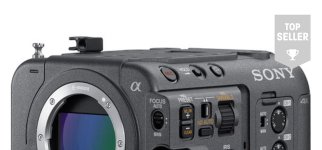
This is why they could do what they do for so many years...because they all sell no matter what. But fortunately that slowed way down over the last 2-3 years so they were forced to make them a bit better.
NorBro
Major Contributor
On the current 'Best Sellers' list (B&H), the FX6 blew past the C70 and KOMODO.
a7SIII still king @ #1 (keep in mind the R5 isn't on the 'cinema cameras' list) followed by both Pockets which have never been knocked out of the top three (either always #1 and #2, or #2 and #3) for the last 1-2 years, lol. (Which is why I like this list because those cameras cost pennies and there's no incentive to keep them that high for so long, so I feel like the data is legit as the preorders/sales/cancellations continue to change.)
a7SIII still king @ #1 (keep in mind the R5 isn't on the 'cinema cameras' list) followed by both Pockets which have never been knocked out of the top three (either always #1 and #2, or #2 and #3) for the last 1-2 years, lol. (Which is why I like this list because those cameras cost pennies and there's no incentive to keep them that high for so long, so I feel like the data is legit as the preorders/sales/cancellations continue to change.)
Last edited: