Sony A7SIII = $3500, 10-bit 4K120p internal, 16-bit 4K60p RAW out

F55 is a great camera but it is old. It is heavy. It requires a big heavy tripod that costs used more than people spend on a new A7 SIII.
Same with the Varicams, great cameras but the P2 media, ouch. And same story, you need a big, heavy expensive tripod to do a
camera in this class justice. For both cameras, you generally need a really nice, heavy expensive PL mount or EF mount lens to do the camera justice.

i think you are finally seeing that except for certain situations, the older tech has been surpassed by the newer, smaller, lighter weight tech. When I rent
either of those cameras, it's a whole thing, big tripod, batteries, expensive media, expensive lenses. A new camera like a C300 MKIII can do most everything an
F55 or Varicam can. Maybe not quite at the same level, but with a LOT less weight, and money for support, lenses, media.

If people are shooting a feature or episodic today, they're going to usually want an Arri, RED or Venice, not an F555 or a Varicam. If they are doing stuff a few notches
down from those, they probably want a smaller, lighter, newer camera. Not saying they aren't great cameras at an amazingly low cost. But buying one is a commitment in
a way that may or may not work out for people's overall business strategy.

While I agree with most of what you're saying, I'm not sure we can really levy the "heavy" tag on the F55/F5. The bodies are only 2.2kg - the FX9 is 2kg, and the C300iii/C500ii are 1.7kg. So there's really not much in it. Add a v-mount to the newer cameras and they're all sitting in basically the same place.

So the older Sonys certainly don't force you into a higher bracket of tripod if you're using them with comparable lenses/accessories to the newer cameras (which the FZ mount certainly allows you to do).

If you're shooting raw, well there the new Canons definitely pull ahead a bit weight-wise (thanks to recording it internally), whereas you have to add an extra 654g with the R5 recorder on the F55/F5 (and a whole lot more with the expansion module and external recording monitor on the FX9). But either way, rigged comparably, all of these cameras are pretty close to one another.

The newer cameras certainly bring some great advantages with them. But none of those differences are quite so night-and-day that the previous generation have been suddenly rendered obsolete. So I think it pays for people to weigh up the advantages very careful before parting with their hard-earned these days.
 
Stunning colour science (A7S III Slog3/S-gamut.cine graded to match ARRI Alexa)

A5knGqM.jpg


9pCtGVd.jpg


tR655KA.jpg


jQSuzqi.jpg

Yeah man check out these grades supplied by marvinhello and graded using cinematch
 
Here's another poorly-graded youtuber:


The most notable thing about it is that this hip youngster wears socks in sandals. When I was a kid, only crunchy hippies did that. If you wait long enough, everything lame will become cool and vice versa.

Also, I don't see the IBIS corner wobbles on his ultra-wide, but perhaps just because Sony has a weaker IBIS than Canon (or maybe they've ironed it out by now).

This video is painfully slow-paced:


But basically the dude is saying that the a7siii will overheat in 25 minutes of just 4K24p if it's standing in direct midday summer sunlight.

So, that is a concern, but could be easily remedied by shading the camera or covering it with something reflective, maybe a white sleeve. Inconvenient but surmountable.
 
Yeah, your points about big tripods, batteries and expensive media and lenses is why
I personally would not buy something like that. I don't usually live in that world so
I'm biased towards smaller, lighter gear.

I did just sign a 3 week contract to shoot something (NDA, sorry can't say.)
Basically was just lucky enough to be in the right place at the right time. The production
company is sending me a rental FX9 with some G Master Sony lenses to use so
I'll have that for 3 weeks which should be kind of fun to put it through it's paces.
I don't usually have a chance to test out the higher end stuff because of where I live.

Yep, love to hear your thoughts on the FX9 once you put it through it's paces. Here are my thoughts on it.
https://www.hdvideopro.com/gear/cameras/hands-on-review-sony-pxw-fx9-digital-cinema-camera/
 
While I agree with most of what you're saying, I'm not sure we can really levy the "heavy" tag on the F55/F5. The bodies are only 2.2kg - the FX9 is 2kg, and the C300iii/C500ii are 1.7kg. So there's really not much in it. Add a v-mount to the newer cameras and they're all sitting in basically the same place.

So the older Sonys certainly don't force you into a higher bracket of tripod if you're using them with comparable lenses/accessories to the newer cameras (which the FZ mount certainly allows you to do).

If you're shooting raw, well there the new Canons definitely pull ahead a bit weight-wise (thanks to recording it internally), whereas you have to add an extra 654g with the R5 recorder on the F55/F5 (and a whole lot more with the expansion module and external recording monitor on the FX9). But either way, rigged comparably, all of these cameras are pretty close to one another.

The newer cameras certainly bring some great advantages with them. But none of those differences are quite so night-and-day that the previous generation have been suddenly rendered obsolete. So I think it pays for people to weigh up the advantages very careful before parting with their hard-earned these days.

True. It's probably just because I have worked on so many projects where an F55 was REALLY rigged out and I had my relatively tiny and light C200 or C300 MKII.
The commercial campaign last year for Tubi TV, the A cam was a rigged out F55 with the Fuji Premista 80-250, 19mm rods, Teradek, etc. Weighted arounf 45lbs and was huge.
We were shooting some scenes in a small guest house with two actors and the rig barely fit in the room. Even though you could totally use it for more run and gun, smaller, lighter weight configs,
I rarely see the F55 rigged that way but I guess you easily could.

Definitely a bargain at $7K.
 
I don't know Abe. Seems crazy to me to consider relying on any camera these days if it overheats under any circumstance. I find on shoots I have so many other
things to worry about like clients, actors, teleprompters, my crew, releases, that having cameras like the R5/R6 or A7 SIII would just be
one more thing to worry about. What if it overheats? What is my plan B if it does? How long will we be shut down, waiting for the camera to cool off so we can
roll again? Seems to counterintuitive to professionals doing professional work for paying clients.

You shoot weddings and events, I would think having one of these tools would give you an Ulcer? To me, any camera that shuts down with thermal issues renders it
out of consideration. I can think of so many shoots I've done over the past couple of years where none of these newer mirrorless would have worked.
I've shot two hour and even a couple of three hour interviews, rolling continuously. I've shot interviews in the desert, in the Sahara, in the rain forest in Brazil,
been out on boats on the ocean with the sun beating down for full days of shooting. Covered an Ultra Marathon in the Florida Keys, rolling on and off in the Florida
sun for 18-20 hours. I don't think the things I shoot are unusual for a professional either. I just can't imagine trying to shoot in these circumstances with the R5/6 or
A7 SIII. The Fujis and my Canons did all of this without skipping a beat, other than when my C200 got seawater in the screen (my fault).

Specs and Ks are great, but if the camera just overheats and shuts down, what good is it to anyone in a professional setting?
 
Specs and Ks are great, but if the camera just overheats and shuts down, what good is it to anyone in a professional setting?

Yes, it's a concern. And I wish the A7SIII were overheat-proof.

But it seems like an edge case. Most of the reviewers did not get the camera to overheat, or only by putting it in an oven.

It seems like an intense solar-radiation problem. And I bet it could be alleviated with a covering.

If I were doing Sahara documentaries, it would be a big concern. But this type of ongoing intense sunlight shooting is probably about 1% of my filming. At an event, the guests themselves are rarely going to be put in such an uncomfortable situation, or at least not for long.

As it is, I cover my cameras or try to shade them as much as possible when I'm in intense sunlight. Someone (Tom Roper maybe?) said his GH5 overheated and shut down in the summer sun. That has never happened to my GH5, but maybe because I try to shield it.

I bet that a white sleeve of some sort would prevent this from happening. But even if it doesn't, it would be worth it for me to have the camera for the 99% of filming where this is not an issue.

It's not like the R5/R6 which self-heat and shut-off. It doesn't even seem like the A7SIII overheats in a hot environment. It has to be absorbing summer sunlight.
 
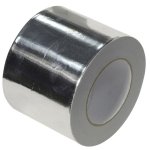
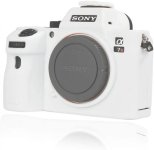
Here's a silicone case that might alleviate the problem and also protect the body for resale value: https://www.amazon.com/Easyhood-ILCE-7RIII-Silicone-Protective-Protector/dp/B07K8F51GB?th=1

View attachment 140023

With the way things have been the past few years, I can't help but think that resale, esepcially in low end cameras, is almost nill. What will a $3,500.00 mirrorless be worth in two years?
I pretty much think of mirrorless cameras as semi-disposable, they don't seem to wear nearly as well as video/digital cinema cameras. They are definitely more fragile.

Not that aesthetics matter much for working pros, but that ultra white, bright case will likely look pretty dumpy in three or four months of use (thinking about your customers seeing your gear).
Probably more brown from dust and hand oils and yellow just because that's what bright white plastic and Silicon things do as they age. It would be interesting if someone tested that case against
just the straight uncovered body. I can see that white is much more reflective of sunlight but you are also sheathing the body in a tight fit rubber coating, which I would think would be a factor in at least some heat dispersion?
Might be a "one step forward, two steps back" situation?

Of course, if this camera will earn you more money, none of these things matter. But I would hurry up and wait. Give the guineas pigs some time to use the A7 SIII in the real world and see
what shakes out with overheating, other issues that may not have surfaced yet.
 
Last edited:
...Seems crazy to me to consider relying on any camera these days if it overheats under any circumstance...I can think of so many shoots I've done over the past couple of years where none of these newer mirrorless would have worked.
I've shot two hour and even a couple of three hour interviews, rolling continuously. I've shot interviews in the desert, in the Sahara, in the rain forest in Brazi... I just can't imagine trying to shoot in these circumstances with the R5/6 or
A7 SIII. The Fujis and my Canons did all of this without skipping a beat, other than when my C200 got seawater in the screen (my fault)...

I think the situation is more nuanced. Since 2016 my doc team has shot about 400 multi-cam interviews, often using Sony Alpha cameras. These included tropical climates where it was so hot that some interview subjects fainted on camera. I almost fainted during a long duration shot inside a warehouse in Puerto Rico where the ambient temp was about 100F. The average interview length was about 25 min, but we had many go 45 min, often multiple back-to-back with only enough recovery time to swap batteries. I personally didn't experience a single thermal shutdown on any of the Alpha cameras, except the A7RII which was always marginal. My main team never had any thermal issues with the A6500, A7RIII, A7III, or A7RIV. We also used the DVX200 a lot and have an FS5, both of which have been reliable.

We'd often try to have the camera in the shade for outdoor interviews because it's easier on the operator and shade helps reduce washout on the front lens element (even if using a hood). But we nonetheless shot a lot of long-duration material with the crew and cameras in direct sunlight (typical documentary high shooting ratio).

That said, we knew the Alpha cameras (esp the A7RII) could be susceptible to thermal issues. The solution was relegate the RII to only backup use, always operate with the LCD panels out, and don't leave unattended cameras powered up and baking in direct sunlight for long periods.

We shot lots of long-duration motion-control timelapse with the Alpha cameras, which was nice due to electronic shutter. When grinding through a timelapse outside in direct sunlight we just put a cloth over the camera body.

We have external monitors on all the cameras and we can't just disregard the sun -- even IF the camera itself was invulnerable. The Ninjas have internal fans but I don't think the 5" SmallHD does. In general we treat monitor/recorders like cameras and if outside in direct high-angle cloudless sunlight, we drape a cloth over the monitor body. To some degree you must be aware of the sun's effect on equipment. E.g, we don't let direct summer sunlight bake the monitor LCD panel face for hours with no sun shade. The Zacuto EVF was very sensitive to on-axis sun burning the panel.

I loaned my A7RIII to another videographer who left it turned on and sitting unattended in direct high-angle summer sunlight for over 1 hr while audio, lights and talent were adjusted, and the camera LCD panel was not opened. It eventually had a thermal shutdown when rolling, so it can happen if you totally disregard any safeguards.

Thermal issues for cameras and other equipment will have varying impact on different production types. For me the A7RII was too sensitive to thermal issues, so we quit using it. The later Sony Alpha cameras were mostly OK, even in rigorous use. They were not invulerable to heat but neither was our other equipment, the talent or production crew.

If real-world testing shows the A7SIII has less thermal headroom than the A7RIII or A7III when shooting 4k/30, IMO that is insufficient. If the A7SIII at 4k/23.98 or 29.97 proves thermally more resilient than those cameras, it will probably be OK for us. We'll never shoot an interview at 59.94 but our gimbal operators shoot a lot of that, but takes are usually short. If it can't stay powered up at 4k/59.94 and shoot 60 sec clips every 2 min (about 50% duty cycle), that might be a problem. If it hits thermal shutdown after an extended power up period when shooting brief 4k/120 fps clips over a 1-hr period, and if that requires a prolonged cooldown, that might be a problem.

From the limited test info on pre-production cameras, we don't expect thermal issues, but we have three A7SIIIs ordered and will test them thoroughly.
 
All good points.

With the way things have been the past few years, I can't help but think that resale, esepcially in low end cameras, is almost nill. What will a $3,500.00 mirrorless be worth in two years?

I would probably want to protect resale value in case I decide to sell it in 1 year. If I keep it forever like my GH5/GH4/GH2, resale value won't matter and the camera would sell for nothing anyway.

But I bought a store demo Lumix S1 last fall with 24-105 for $2300. Some batteries and an adapter for another $100. Resold the lot last month for $2400 and pocketed $2100 after Ebay fees. The whole kit would have cost $3500 new at launch, so I would have lost about 1/3 the value. Which wouldn't be a terrible loss after a year or more of use.

Not that aesthetics matter much for working pros, but that ultra white, bright case will likely look pretty dumpy in three or four months of use (thinking about your customers seeing your gear).
Probably more brown from dust and hand oils and yellow just because that's what bright white plastic and Silicon things do as they age.

Meh. It could probably be washed. I could probably use it just during the summer or just during exterior shooting. I could buy a new one every year.

It would be interesting if someone tested that case against
just the straight uncovered body. I can see that white is much more relfective of sunlight but you are also sheathing the body in a tight fit rubber coating, which I would think would be a factor in at least some heat dispersion?
Might be a "one step forward, two steps back" situation?

Yes, this is the test I would like to see. I think the heat dispersion from the internals is relatively well-engineered. Even iPads shut down in the sun. I'm guessing that blocking the sun would outweigh keeping heat in, especially if you're only recording 24p.

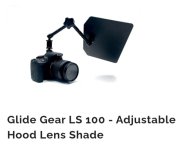
If this doesn't work, there may be a simple way to shade it from above (hotshoe French flag?)

Of course, if this camera will earn you more money, none of these things matter. But I would hurry up and wait. Give the guineas pigs some time to use the A7 SIII in the real world and see
what shakes out with overheating, other issues that may not have surfaced yet.

Probably the smart thing to do... let's see if I can pass the marshmallow test... I could always return it within the first month if my tests fare poorly or other problems are discovered... I'm undecided, everything is theoretical for me right now. Though as it stands, I am leaning towards building into the Sony ecosystem and abandoning Canon as an owner
 
Someone (Tom Roper maybe?) said his GH5 overheated and shut down in the summer sun. That has never happened to my GH5, but maybe because I try to shield it.

I bet that a white sleeve of some sort would prevent this from happening. But even if it doesn't, it would be worth it for me to have the camera for the 99% of filming where this is not an issue.

It's not like the R5/R6 which self-heat and shut-off. It doesn't even seem like the A7SIII overheats in a hot environment. It has to be absorbing summer sunlight.

Exactly right. Solar radiation is the problem. Worse in Denver at 1000M elevation than Florida. High air temps is a contributor, but air is the cooling medium. Touch car body in the sun, much hotter than ambient. Air removes the heat, even warm air. White terri ccloth will prevent problem on GH5. The day it happened I arrived early, set GH5 on tripod in the sun 1/2 hr, 45 minutes before ceremony. Camera recorded about 1/2 the ceremony before shutting down. It displayed a message on lcd that camera shut down due to overheating. I don't remember how long it took to refresh. I'm not even sure I used it after that. It was a backup.
 
When doing outdoor shoots, I always have large lens wraps handy and use them to protect the body when not shooting and the camera is sitting in the sun, that's just common sense. I also try to wrangle having the camera in the shade or I borrow 4x4 floppy from the grip department.
But when shooting documentary style run & gun, sometimes you just end up baking in the sun, you and your camera.

Joema, all good real workd experience. I think a factor though is all of your existing Sony cameras are recording at nowhere near the data rates of the A7 SIII. All of your cams are 100Mbps 4:2:0 or less. I can't recall but aren't some of the
data rates from the A7 SIII up to 600-700Mbps at 10-bit? I would think that factor in itself makes the A7 SIII a whole new paradigm as far as hear generation. I like the passive cooling system that Sony engineered into it but I still wish
they had just gone the S1H route and stuck a damn fan in the thing. I have not heard any overheating issues with the S1H, has anyone else?
 
Joema, all good real workd experience. I think a factor though is all of your existing Sony cameras are recording at nowhere near the data rates of the A7 SIII. All of your cams are 100Mbps 4:2:0 or less. I can't recall but aren't some of the
data rates from the A7 SIII up to 600-700Mbps at 10-bit? I would think that factor in itself makes the A7 SIII a whole new paradigm as far as hear generation.

I'm no engineer, but I think that the full readout from the 4k full-frame sensor generates more heat than writing to the card.

After all, the R5 uses the same bitrates in HQ as it does in pixel-binned but overheats in HQ and not binned. The GH5 records 400Mbps without much heating problems.

The only 600Mbps codec on the camera is all-I 4K 60. Everything else is 300Mbps or below and I personally would probably never use more than a 280Mbps codec from the camera.

I dont know how the overheating will compare to the a7iii but it may be a wash. The a7iii pixel bins in 8-bit but the A7SIII has a sigma-shaped heatsink on the IBIS unit and was generally designed for video.

It's a concern, but only a couple testers ran into it unlike every tester of the R5/R6.

Also - if you're running and gunning, different parts of the camera are taking heat and that might help? The youtuber tests were stationary on tripods
 
Back
Top