Small room cement block walls

our OP has stated you can't have any assistants or boom ops in the room?

Since we know the one man situation would never work let's modify the scenario, because if I knew in advance I had to record dialogue, which I didn't know, I would have had at least one assistant with a boom. Then what mic is the best for damage control in the small concrete room. There would still be no advanced time to prep the room however.
 
Last edited:
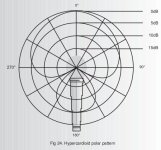
Since we know the one man situation would never work let's modify the scenario, because if I knew in advance I had to record dialogue I would have to have at least one assistant with a boom. Then what mic is the best for damage control in the small concrete room.


As has been said many times and contexts, a hypercardioid is better behaved than a shotgun in an environment live with lots of reflected sound. Going wider, IMHO, a plain cardioid is too loose and needs to be too close to be very useful for booming. Even with a boom, there still remains a lot of issues with mobility, getting mic close enough, quickly enough, to the person speaking to record them without breaking the rhythm of the conversation. I'd still consider a couple or three boundary layer mics placed on the table itself feeding a mixer, preferably an Automixer such as the Shure 410 that will automatically pot up one mic at a time - having multiple separated mics live at once and mixing them to a single channel invites phase issues. Perhaps also a lav on the interlocutor or facilitator if there is one. Of course that means you instruct the particpants not to whack their fists on the table if the conversation gets heated LOL.
 
Last edited:
I'd still consider a couple or three boundary layer mics

Do you have any links with more detailed performance descriptions between hypercardioid and boundary layer mics? Visual diagrams are helpful.
 

Attachments

  • Hypercardioid_polar_p212.jpg
    Hypercardioid_polar_p212.jpg
    35.8 KB · Views: 0
Last edited:
may I suggest a solution? in this case I would
1.ask for a couch in the room for the lo frequencies and
2.I would require a thick carpet for the whole floor

already those elements can reduce the slap considerably. If thats out of the question, there is hardly anything you can do practically....

you need to stop the reflections and cloth helps....already 18 persons are a big absorbant!

A carpet would be out but a table cloth would be available. Possibly another option would be a sound blanket held up behind the camera to cut reflections on one side of the room. There are always extra hands around here to hold things although not experts in any way.
 
A table cloth will not suffice. You need to think couch, large amounts of cloth wound around wooden frames.... I built lots of recording studios in the 80s and learned a lot about room acoustics. So you either get a chance to treat the room for sound or you can call it a "must be dubbed" right away and take it from there. Its a budget issue, some times acoustically treating a scene can be more expensive than a day in the dubbing studio
 
Do you have any links with more detailed performance descriptions between hypercardioid and boundary layer mics? Visual diagrams are helpful.
A boundary layer mic, also called a PZM or Pressure Zone mic, is a different critter altogether from the usual omni,cardioid, hyper, etc, pickup pattern descriptions. It often resembles a hocky puck resting on a flat surfaced pressure plate such as a table top. When sound strikes a flat surface, a wave of high pressure air builds up running parallel to the surface. The mic responds to this pressure wave while effectively ignoring sound waves hitting it directly from above. The resulting pickup pattern resembles a hemispheric bubble resting on the pressure plate, in this case the table top. This has tha advantage of picking up voices around the table well while somewhat reducing response to room relfections since the reflected sound from the walls is so much weaker than the direct sound due to the much longer travel distance. The pressure buildup on the surface of the boundary plate adds about 6dB of effective gain to the basic mic capsule sensitivity for the direct sound but only about 3dB gain for the diffuse room sound, giving a more relaxed working distance from the speaker and further helping it dominate over the reflections coming off the walls. PZMs are frequently used for press conferences, round table discussiuons, teleconferencing, and when mounted at the stage lip or on positionable 4 to 8 foot square panels, in orchestral and stage drama recording. Two or three PZMs on the table top, controlled by an automixer that only pots up the mic closest to the speaker of the moment, would give you good coverage of the group seated around the table while minimizing the effects of the room reflections. Of course the other advice to get some sound absorbing materials into the room as much as is possible also still holds true.
http://www.soundonsound.com/sos/jan07/articles/qa0107_2.htm
http://www.neal.co.uk/products/BoundaryLayerMic.htm
http://www.crownaudio.com/pdf/mics/136367.pdf
 
Last edited:
For this there's only one solution to have the sound GOOD (I mean GOOD, not "I can hear something very far...no GOOD...GOOD GOOD):

- HAVE A SOUNDGUY !!!!!!!!!!!!!!!!!!!!!!!!


- You have 18 people... But are they all going to tell something ? Or are there also who're only watching ?

- There's always one or two main persons who needs wireless mice (lavs)

- Having 18 wireless mices is possible... But then you'll need multitrack-recording.
"Why the hell do I need multitrack recording ??????"
Well, what are you going to do if you have 9 mices on one track...and one guy is saying something very interesting and another guy is scratching the mice....
Then it will be all on the same track...So you'll only hear scratching sound... It's like making some coctail and trying to remove the orange-juse.

- If you don't have 18 wireless mices... no multitrack... Well...then you'll have to choise a few persons. Have a talk with people and you'll see who has a big mouth and who has not.

But Rippie is right: you ask something...Which is...well... It's like building a house...but you don't have water, sand, to make the foundation.... And you ask to build the house on a morassy place.
 
Kit I'm sorry but that is just bad advice again.
2 dynamic stationary mic's overhead? to cover 18 people? You mention you say put a 3rd back near the camera?

The reason I'm taking the time to correct you is I don't want someone new to the field coming into this thread and thinking
they can cover a large group of people speaking with a few dynamic mics hung from the ceiling.
It's ridiculous.

Its funny how everyone wants to be right. I have shot a large number of people in smaller hard rooms with dynamic mics (sennheiser 835s and 845s) and it has worked out fine. I have done it, not theoretically, but I have actually set them up in this manner. I did audio since 1995, did it full time until 2007. And not just this once a month crap either, 5-6 days a week. A dynamic mic can work fine at distances within 10 feet depending on room characteristics. Typically hanging them overhead, over a conference table, distances are only going to be 5-7 feet max.

I'm not saying its the perfect solution. And different dynamic mics have differnt patterns on them. But for a cheap and quick "I need audio that is going to not reverberate and slap back like a condenser in a brick bathroom" scenario, it can work. It's not ideal. But it can work.

We're not talking about a 40 x 40 room here. We are talking about a 15x15 room (as per the op) that has hard surfaces and is very "live". In my experience, a dynamic mic can help cut down on the natural reverberation compared to a condenser.

Try it sometime, then tell me it's ridiculous. :)
 
Last edited:
Its funny how everyone wants to be right. I have shot a large number of people in smaller hard rooms with dynamic mics (sennheiser 835s and 845s) and it has worked out fine. I have done it, not theoretically, but I have actually set them up in this manner. I did audio since 1995, did it full time until 2007. And not just this once a month crap either, 5-6 days a week. A dynamic mic can work fine at distances within 10 feet depending on room characteristics. Typically hanging them overhead, over a conference table, distances are only going to be 5-7 feet max.

I'm not saying its the perfect solution. And different dynamic mics have differnt patterns on them. But for a cheap and quick "I need audio that is going to not reverberate and slap back like a condenser in a brick bathroom" scenario, it can work. It's not ideal. But it can work.

We're not talking about a 40 x 40 room here. We are talking about a 15x15 room (as per the op) that has hard surfaces and is very "live". In my experience, a dynamic mic can help cut down on the natural reverberation compared to a condenser.

Try it sometime, then tell me it's ridiculous. :)

Of course you can get something recorded mic'ed as you describe. It may even be understandable. But what does it sound like? Is it the intimate, present, rich-sounding speech that we associate with network broadcast and mainstream theatrical feature dialog or is more akin to a scratch track or a record for transcription, understandable but not really up to full professional standards?
 
Its funny how everyone wants to be right. I have shot a large number of people in smaller hard rooms with dynamic mics (sennheiser 835s and 845s) and it has worked out fine. I have done it, not theoretically, but I have actually set them up in this manner. I did audio since 1995, did it full time until 2007. And not just this once a month crap either, 5-6 days a week. A dynamic mic can work fine at distances within 10 feet depending on room characteristics. Typically hanging them overhead, over a conference table, distances are only going to be 5-7 feet max.

I'm not saying its the perfect solution. And different dynamic mics have differnt patterns on them. But for a cheap and quick "I need audio that is going to not reverberate and slap back like a condenser in a brick bathroom" scenario, it can work. It's not ideal. But it can work.

We're not talking about a 40 x 40 room here. We are talking about a 15x15 room (as per the op) that has hard surfaces and is very "live". In my experience, a dynamic mic can help cut down on the natural reverberation compared to a condenser.

Try it sometime, then tell me it's ridiculous. :)
You're absolutely right. I really don't understand why anyone in this business bothers wiring people up or following someone with a boom overhead scraping the edge of
the frame line in order to get good sound. There obviously isn't any reason or need to.

Thank you for setting me straight. I am a total noob and I'm going to go back to my day job.
 
Of course you can get something recorded mic'ed as you describe. It may even be understandable. But what does it sound like? Is it the intimate, present, rich-sounding speech that we associate with network broadcast and mainstream theatrical feature dialog or is more akin to a scratch track or a record for transcription, understandable but not really up to full professional standards?

And I completely agree with where you're going with that. It is not ideal by any means, but "on a tight budget", there will be few things that work better IMHO. No, it's probably not going to win you an Oscar or Emmy for best sound or score. But with some proper editing, it can be very usable.

Look, this wouldn't be my optimal setup. But to flat out say "its bad advice" I don't believe holds true from what I got from the OP. He asked "what's the emergency formula". I gave him my opinion.

Of course there are acceptable ways and usual ways of doing things. I am all in favor of things that work better in certain situations. But sound is just like lighting in the fact that sometimes you have to get creative because of the physical atributes of rooms.

It was never "wrong" information. I don't think that there is necessarily a wrong answer unless it produces uncomprehendable results. There are better ways to do it given more time and depending on budet. But in a pinch, I would definitely not just disregard it.
 
I invite anyone to place a dynamic microphone on a stand in front of them 5ft-10ft away
and talk at a normal voice and see what happens. Now take 5 steps to the side (just as if you werent one of the ones directly under the mic that is hanging)

Let me know how it turns out for ya.
 
You're absolutely right. I really don't understand why anyone in this business bothers wiring people up or following someone with a boom overhead scraping the edge of
the frame line in order to get good sound. There obviously isn't any reason or need to.

Thank you for setting me straight. I am a total noob and I'm going to go back to my day job.

You missed my whole point. You read what you wanted to read and responded to it. There is no need to be condescending. I never said you were wrong. I was just giving my opinion based on my professional experience. You said I was giving bad advice and I was respectfully disagreeing with you and presenting my case.

Sometimes it's not about "setting people straight". I am a member of this community and am entitled to give my opinion just like everyone else. If the OP wants to try it, then great. If he doesn't, then thats cool too. But there are times that people go in the direction of pointing someone to a multi-thousand dollar rig and acting like that is the only possible solution. Just like everything else. I was simply pointing out something that has worked for me in my experience and my opinion does not need to be unnecessarily bashed because it isn't the way you would do it.
 
This small cement-blocked room doesn't really sound as bad as it's described. Been there done that.

Since your camera has only 2 inputs, I would highly suggest mounting two boundary mics back-to-back placed at the center of this 18-person table. I'm not concerned about paper rustles nor table taps, what you see on camera is going to be heard. This method automattically eliminates one of the troubling reflecting variables, which is the floor. This is THE BEST possible solution in recording this scenario without having it sound reverberant under the given circumstances. Second option is to use two handheld mics, i.e. SM58, placed side-by-side and back-to-back to cover the entire table. LOTS of sound folks would first jump to conclusion that the SM58's wouldn't be adequate enough to pickup audio under a medium distance of 6-10'. It wouldn't sound upclose and/or intimate compared using it as properly designed, but it WILL work. Even hanging SM58s up from the ceiling would work. Last other option is using an omnidirectional microphone smack in the middle of the table. You would probably think I'm nuts, but this is far better than an omnidirectional microphone placed at the corner of the room, the one and only on-camera microphone. Make it two for stereo. The WORST place to record audio would be the corners of any-sized room.

There is absolutely no possibility of using wireless lavaliers to cover everyone unless you have an 18 audio-input camera that records ISO tracks. Wireless handheld is definitely out of the equation. Under a continuous block of discussion or topic the passing of handhelds from one side of the table to the other is a show stopper. No, even hiring a soundguy wouldn't solve your problem if they haven't a clue about how to approach and handle this kind of situation.
 
I think the OP gave a scenario that is a no-win really. IMO the best thing for one man, one camera is to put a hyper on the camera and stand close to whomever you are shooting. At least you might get intelligible dialogue of whomever you are pointing at. But the real solution, if there was an actual situation like this (audio wasn't necessary remember, this is just a new guy's imagination scenario) where the client wanted audio, you simply tell the client that his expectations are unrealistic and you need to change the location, or pay for the proper crew / gear to do it. It's not up to us to kill ourselves because an ignorant client wishes it. Clients aren't gods, and if they act like they are I'll frickin' walk out on them. Well that depends on what they are paying me!

I had to fight with a truly stupid lady who was getting a free 30 sec TV ad for buying air time. It was a clothes store for all ages, she wanted a runway scenario where all the models walk through, do a turn, walk off. Only there were more outfits than models. She actually imagined that she would get 6 models to wear 10-12 outfits and have it happen in one take - including dress changes. She thought we'd be there for half an hour and be done. I literally argued with her for 15 minutes telling her that even without clothes changes there is no way we're going to get the models to walk, turn, exit - and not trip or make some small mistake (and believe me these were not professional models used to walking and turning). She wanted to try none the less! No sense of how short 30 seconds is... I was only getting 300.00 bones for the spot and I just got so mad and said, "OK Hands up... Can anyone here change outfits in 30 seconds? How about 10 seconds? How about 5? Because that's what you need to do to get back in the line for your second outfit to appear on the 30 seconds we have to do the whole thing." No takers. I told her that my budget usually only allows for a VO and some shots of the store. If she wants me to do this runway spot, which is already asking too much, I need to do it my way for it to work, and not waste time explaining physics. I know I was probably rude, but I, WE, are people. We aren't slaves. They work for us as much as we work for them. I pay you in video production and I expect your money and cooperation or I'll fire YOU. Anyway the spot worked out and I still got it done in 6 hrs from shooting to uploading the final file, and guess what? The impossible client loves the ad and was thankful in spite of me having the audacity to tell her "NO."

Just for reference, here's the spot. She's the one doing the hair in one shot, and acting as half the audience to the right of the runway:
 
Second option is to use two handheld mics, i.e. SM58, placed side-by-side and back-to-back to cover the entire table. LOTS of sound folks would first jump to conclusion that the SM58's wouldn't be adequate enough to pickup audio under a medium distance of 6-10'. It wouldn't sound upclose and/or intimate compared using it as properly designed, but it WILL work. Even hanging SM58s up from the ceiling would work.

:beer::thumbsup:
 
LOTS of sound folks would first jump to conclusion that the SM58's wouldn't be adequate enough to pickup audio under a medium distance of 6-10'. It wouldn't sound upclose and/or intimate compared using it as properly designed, but it WILL work.
Jump to the conclusion? I've personally recorded MANY DOZENS of round table discussions and my actual PREFERENCE is using stick mic's in front of people.
Im talking 12-24 people. I'll put 1 mic between 2 people and it works quite well. MANY times ive had to try to pick someone up who is 2 people away and the sound is starting to get awful already.

You're talking about picking up sound from the side of a mic that is 4-5 people away speaking at normal volumes.
Will it "pick up sound" sure but at that point it isn't getting you anymore than a camera mic that IS more sensitive.
You must have clients that are extremely easy to please if you can pass that off as acceptable.

Once again I'm not debating the fact that a microphone can pick up a "sound" from 10 ft away, but is it a sound that someone is going to pay you an income to record.

Everyone on this forum is constantly trying to explain to people how you could never use a camera microphone to pick up any kind of quality dialog
because its so far away from the person speaking, and now your defending it saying how it "will work!"

And I don't know how many of these situations you've done, but in my findings there are always about 1/3 that are loud, a 1/3 that will still be loud enough to get what you need, and a 1/3 that
barely speak above a whisper. (hope they arent the ones 4-5 people away!)
 
Rippie,

Not you. I should have stated more clearly how lots of folks I know (not on this forum) talks a lot about having this microphone and that. The snobby kind that knows nothing.

Yes I am talking about picking up sound from multiple people speaking at different levels. It's bound to adjust accordingly on its own eventually when the discussion gets midway. There will always be at least one outspoken person and s/he will know that they'll need to adjust to the group. When in doubt if the group becomes unbearably hard to hear, the mic will always pick it up well enough to NOT pickup this room ping of reverberation. I'm sure you've done more table discussions than I have at a rate of 20:1, but we're talking about this scenario where a 15x15 room filled with 18+ people sitting around a table having only 2 inputs provided by the camera offered at an unreasonable rate to do it all.

Client is paying, but even before that happens the paying rate and circumstances should have already been discussed regarding the audio problems existing in that room and scenario.

Before you start comparing the methods I have suggested against the use of this camera microphone, you must realize that not a single person is going to turn their heads away from the discussion and speak into the camera mic just to get an acceptable manner of recording on tape. Btw, the camera is in the corner. Any microphone placed in the middle of that discussion is going to sound better than any other microphone placed anywhere else in that room. Mind as well put the camera in the middle of the table.
 
Back
Top