Small room cement block walls

ROCKMORE

Veteran
I had a shoot of a training session in a concrete room about 15x15 with about 18 people around a table discussing a new car model, watching a computer slide show. I didn't need to record audio, it was for picture only, but since audio was recorded anyway I got to hear how bad the room was.
If I had to record audio what would be the best solution. Keep in mind I have to shoot from every angle in the room continuously moving with a very wide lens so everything shows up in the shot , also the time was limited to the length of the training session which ended suddenly.
What's the emergency formula. Oh yeah, I worked alone.
 
I'm not sure there is an ideal formula for this. Typically, the rule is the sound should be focused on where the camera is pointed.

I was recently on a job where we had 6 tables with 6 guests at each table. There were also 4 facilitators at the head of the room. The facilitators would present informaiton, and then the tables would discuss the subject. Later, a person from each table would present their findings, and the audience would ask questions.

Here's how we approached it:

Two cameras. One wide, covered the group, one tight, covering who ever was speaking.

Sound:

The four faciliators were laved with wireless, recorded iso and also mixed to audio input 1 of camera 1. Input 2 of camera 1 was a boom op to cover both questions asked from the back of the room (3 tables) as well as booming the discussions held around a chosen table where camera 1 moved in (these were called "break-out sessions". This was also sent to an iso track.

4 cardioids were placed on stands at the four corners of the room on tall stands with the mics pointed inward and down. These were sent to iso tracks and also mixed to input 2 of camera 2. Input 1 of camera 2 was feed a second boom-op who covered the chosen table presenter when presenting their findings, as well as covering questions from the front half of the room and the "break-out session" of another table.

Total:

2 Camera ops, 2 sound mixers/boom ops, 10 iso tracks

I don't know what the total bill was to the client, but my partner and I charged $1700 to cover the sound requirements for this 1-1/2 day event. Of course, between my partner and I, we were carrying about $20 grand worth of sound gear. It's my understanding that both the director, and the client were very pleased with the results.

I had a shoot of a training session in a concrete room about 15x15 with about 18 people around a table discussing a new car model, watching a computer slide show. I didn't need to record audio, it was for picture only, but since audio was recorded anyway I got to hear how bad the room was.
If I had to record audio what would be the best solution. Keep in mind I have to shoot from every angle in the room continuously moving with a very wide lens so everything shows up in the shot , also the time was limited to the length of the training session which ended suddenly.
What's the emergency formula. Oh yeah, I worked alone.

Sounds like a focus group scenario and it's hard to understand how audio would NOT be important - the whole point of putting together such a group is hearing what they have to say about the new product, not what they look like while they're saying it. But be that as it may..

From this and your other posts, I don't understand why you insist on handicapping yourself by a: apparently accepting whatever conditions you are handed without taking control and insisting on adequate preparation for the specific shoot at hand; and b: further handicapping yourself by not either partnering up with someone or hiring someone so you don't have to operate as a one-man band. In this case, had you needed to record audio, hanging wall coverings or using free-standing screens to reduce room slap is a first thought. Sounds like booming would have been difficult in that environment - large group to cover and not much room to swing a boom - so my first thought would be two or three boundary layer mics on the table top itself, feeding to a mixer, preferrably an automix. Your partner/assistant/audio person (suggested above) would man the mixer. Audio would either be recorded to a dedicated audio recorder, double system sound, using a timecode workflow with TOD code and the recorder and camera jammed together, or sent to the camera via a wireless link for single system recording. If such shoots are important enough to your client for them to be done at all, they're important enough for you to do whatever it takes to do the job properly. Not just adequately but to the highest professional standards you can muster. As gpforet said, there is no magic formula ... IMHO, except for your personal commitment to make it perfect and the willingness to do whatever it takes to make that happen. I don't mean to sound harsh or disrespectful, but it sounds like you let your clients dictate how you will do your job .. you wouldn't presume to tell them how to do whatever business they're in and you shouldn't let them set the conditions under which you do yours.
 
Sounds like a focus group scenario and it's hard to understand how audio would NOT be important

From this and your other posts, I don't understand why you insist on handicapping yourself by a: apparently accepting whatever conditions you are handed without taking control and insisting on adequate preparation for the specific shoot at hand; and b: further handicapping yourself by not either partnering up with someone or hiring someone so you don't have to operate as a one-man band.

I don't mean to sound harsh or disrespectful, but it sounds like you let your clients dictate how you will do your job .. you wouldn't presume to tell them how to do whatever business they're in and you shouldn't let them set the conditions under which you do yours.

The shoot was exterior footage of new car line on a test track. There was zero budget to hire anybody or anything. I wasn't aware of any interior events and just grabbed a few shots of the Infinity training team at the table. The shots are not needed and will probably get tossed.

I don't think you mean to sound harsh or disrespectful, or condescending, and realize you are a professional. The reality is many clients today don't give a rats ass about what I need or want, just follow or be left behind. My question was about how to mic a small concrete room with 18 people in the shot and a one person crew. I do think you know what you are talking about and appreciate you advice. Let's stay on the technical audio discussion, OK Steve?
 
Last edited:
My question was about how to mic a small concrete room with one person crew. Let's stay on the technical audio discussion OK Steve?

So on the camera end, if you're in a room with no windows, you didnt bring any lights and the only light in the room is broken.. whats the emergency formula?

Point is, there isn't a solution to everything other than being prepared.

You answer your own question..
-You're by yourself so you can't obvious boom
- you are trying to cover 18 people at a table but without someone MIXING many microphones you are limited to 2 mic's to run direct into your camera so you can't cover 18 people.
- you say you're seeing the entire room so you cant even put blankets up to help deaden the concrete.

What do you possibly want us to say?

"Here Michael this is your magic pixie dust designed to get you great sound anytime you need it?"
 
In that situation, I would probably ditch condensers and omnis and go with a windscreened Sennheiser or Shure Dynamic handheld mic. It would help it to not sound as "live". If you had to use that room and had some set up time (at least a couple prep days), you could bring some diffusion / accoustacal tiles to help diffuse and absorb some of the sound. You may be able to do some EQing to get some of that natural reverb reduced further.
 
The shoot was exterior footage of new car line on a test track. There was zero budget to hire anybody or anything. I wasn't aware of any interior events and just grabbed a few shots of the Infinity training team at the table. The shots are not needed and will probably get tossed.

I don't think you mean to sound harsh or disrespectful, or condescending, and realize you are a professional. The reality is many clients today don't give a rats ass about what I need or want, just follow or be left behind. My question was about how to mic a small concrete room with 18 people in the shot and a one person crew. I do think you know what you are talking about and appreciate you advice. Let's stay on the technical audio discussion, OK Steve?

Technical discussions are useless unless you are able to put into practice the solutions proposed. My point is you need to stop allowing your clients tell you how to shoot their video and record their audio. They are hiring you because they don't know what is required in order to make a production that meets their business needs while presumably you do. You're the expert - you can't follow them, they have to follow you. You're asking for a technical solution to a problem that is actually a political and management problem. Given the limitations you allow your clients to impose upon you, a satisfactory technical solution to the shooting scenario you propose simply does not exist. Your on-camera mic will be as good as you can get. If the objective is to produce a decent quality recording of the meeting, you have to put your foot down with the client and tell them what is required instead of letting them tell you what is allowed. When it comes to video production, you have to become the boss and they have to follow YOU, telling you what they need and then getting the hell out of the way and letting you do your job the way it needs to be done.
 
a satisfactory technical solution to the shooting scenario you propose simply does not exist. Your on-camera mic will be as good as you can get.

The in camera mic would be a bad solution. I could in the future attach a boom poll to my shoulder rig and hang it out near the person speaking out of camera shot as a boomer would which if I'm correct would be better than the in camera mic.

Like I said in the beginning, I was there to shoot test shots of the new Infinity import line. This was a just a survey shoot for an upcoming project in January where I will have a full crew. The only reason I posted the question about the cement room is because I was curious to hear solutions to a scenario / Kit Hanna wins hands down as to an answer I would be looking for.
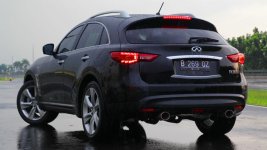
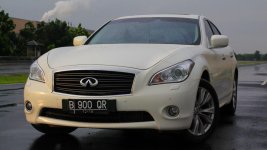
Here are a few of the test shots, not finals just tests.
 

Attachments

  • IMG_10603.jpg
    IMG_10603.jpg
    85.9 KB · Views: 0
  • IMG_21021.jpg
    IMG_21021.jpg
    60 KB · Views: 0
  • IMG_31083.jpg
    IMG_31083.jpg
    58.6 KB · Views: 0
I could in the future attach a boom poll to my shoulder rig and hang it out near the person speaking out of camera shot as a boomer would which if I'm correct would be better than the in camera mic.

Good luck with that. You're going to try to boom 18 people (having an ad-lib discussion) with 1 mic while also operating camera.
Classic.
 
Rockmore,

Something that I've decided for my own sanity and reputation is that I will not take a project that does not afford me the budget to do it properly. When my work is heard by others I cannot include a disclaimer saying that I was constrained by budget and that's why it sounds so bad. Either the client has the budget for sound or they don't. If they don't, I'll let others who are less concerned about their reputation take the work. At first this meant that I was turning down work that otherwise would have put a few hundred bucks in my pocket. But it also meant I was not putting crap audio out there with my name on it.

If it's the right client, and I think it will generate substantial future work, I'll bite the bullet and load out the appropriate gear and crew for the job, paying them out of my own pocket, but also letting the client know straight up that this is being done promotionally and future work will incur appropriate billing. Before taking on this kind of project, I snoop around to find out how ligitimate this client is (there are tons of "production companies" with no client base, no gear, and no skills looking for cheap professionals to exploit).

Bottom line: I'll either do the project correctly as best I know how, or I won't do the project. I've chosen to not sacrifice my brand for the sake of taking on projects that will not result in a quality product. I never know who will be exposed to my work and the working budget is never displayed in the credits.
 
Kit Hanna wins hands down as to an answer I would be looking for.
No offence towards Kit but you think a single (or 2) handheld microphones that 18 people pass around while having
their discussion is going to work? Because the 18 people wont hear what the microphone is doing ( no pa system), they will
very quickly start holding it down near their waist as they sit, that is IF they actually wait for the microphone to come to them.
You have no clue how disruptive its going to be to their discussion to have people pass around 1 (or 2) mic's to 18 people.
As far as the room acoustic's, while obviously being a problem its the LEAST of your issues with this scenario.

The best part about this is you have people that have a clue telling you its a lose/lose situation
and you insist you're right and it will work out just fine.
 
Good luck with that. You're going to try to boom 18 people (having an ad-lib discussion) with 1 mic while also operating camera.
Classic.

In a bad situation, what are you going to do, quit, walk out and go home?

Yeah, I forgot you had the magic pixie dust comment, very useful post.
 
Last edited:
The in camera mic would be a bad solution. I could in the future attach a boom poll to my shoulder rig and hang it out near the person speaking out of camera shot as a boomer would which if I'm correct would be better than the in camera mic.
Of course the on-camera mic is a bad solution - that was my point. It is a terrible solution and anything else you do with the limitations you've imposed is going to sound just as bad. And putting a pole on your shoulder rig to dangle a mic out in front of you over your camera line like an angler-fish's lure is simply ludicrous. A boom mic has to be aimed as precisely as a camera's lens and positioned just as precsiely as you select your camera shooting position. And such a pole, to reach from a typical camera position to the location of a properly placed mic, would need to be about 8 to 10 feet or so long. I can just see you moving around a crowd of people with that sticking out in front of you!

..The only reason I posted the question about the cement room is because I was curious to hear solutions to a scenario / Kit Hanna wins hands down as to an answer I would be looking for.
Here are a few of the test shots, not finals just tests.
With all due respect to Kit, he may win in your eyes but he doesn't win in mine, for the same reasons Rippie has posted. A hand-held dynamic would help with the room slap, sure enough, but you still need to have an assitant holding the mic, moving around the group carrying the mic to the speaker and holding it in the proper position. Better, two hand-helds. Even better, three. Even better, 3 wireless hand-helds. But now you're up to 4 audio persons - a mixer and three assistants.

Good photos, by the way. I particularly like the 'golden hour' look of the white car with the sunlight coming in from the low-left. Now learn to give your audio all the care and attention you give your stills. You wouldn't hand over out-of-focus, improperly exposed, colour-shifted stills to your client - don't ever give him second rate audio either. His not letting you do what it takes is not a valid excuse. What would you do if he insisted you shoot his ad campaign with a Barbie Camera toy? Would you just go ahead and shoot it without protest or would you put your foot down and insist on him letting you do it right?
 
Last edited:
Now learn to give your audio all the care and attention you give your stills.

That's exactly why I started this thread. To look at the options to the best solution of an unworkable scenario. This is the worst environment you could find, and from all the audio experts here, I was interested in hearing creative solutions however limited the outcome. There is something to learn about sound, and how it behaves in every different environment, and how to control it. I'm here to learn and understand how to record better audio for myself.
 
In a bad situation, what are you going to do, quit, walk out and go home?

Yeah, I forgot you had the magic pixie dust comment, very useful post.

Actually it was a useful post if you actually opened your eyes and realized what it meant.
How many times do we have to explain your answer doesn't EXIST given your requirements/situation/limitations.

Even though this has all been said already more than twice lets break it down yet again shall we?

Decent audio is going to be picked up one of 3 ways.
- A microphone overhead (or underneath)
- Person wears a microphone
- Person holds a microphone
THATS IT, THERE ARE NO OTHER WAYS.

You're the camera man so holding a microphone over a persons head while shooting and covering 18 people would be 100% impossible.
If you had a mixer you could hang a lot of lavs from the ceiling and try to cover it as best as possible but you dont have a mixer or someone to run it so thats out.
So there goes the overhead/undernearth mic out of the equation.

You have 18 people in a room so without 18 lav's on people and a guy mixing thats out.

So you have 1 remaining possibility PERIOD. That is people holding a mic. You have no one to walk around with the mic so the people in the group will be passing it.
You have 2 inputs on your camera so at a max you have 2 handheld mic's possible.

Lets say 9 people per mic just for simplicity.
How well do you think a person off the street with no audio/video knowledge is going to do passing a microphone 8 people away without distrupting the meeting?
What happens when person 1 and person 9 have a back and forth? It will simply be a mess. No if's and's or but's.

So what else is there? There is NOTHING other than simply using your camera mic and ACCEPTING IT FOR WHAT IT IS, a badly planned shoot.

Is this spelled out any clearer?
 
I think you guys misunderstood my post. A Dynamic mic such as an e835 from Sennehiser will still sound fine when used like a close range shotgun but will reverberate much less. You don't have to use just 1, you could use 2-4 of them if you would like and point them in directions for better coverage or boom them in a couple of spots, OVERHEAD. I never said you couldn't do overhead with them, in fact that is exactly how I would do it, overhead. With some EQ in post, those mics will sound just fine and probably do better than a condenser in that particular situation. Holding the mic would be a dumb idea to begin with. I would probably do 2 overhead and one by the camera pointing towards them. Assuming the room isnt gigantic, you should be just fine.
 
Kit I'm sorry but that is just bad advice again.
2 dynamic stationary mic's overhead? to cover 18 people? You mention you say put a 3rd back near the camera?
Is that standard practice for you to use mic's that are HUGE distances from the people speaking?

Dynamics handhelds work better in rough rooms because of the proximity you have to the source (signal to background ratio).
They aren't as sensitive and distance falls off quicker.
Problem is if you suddenly have a dynamic microphone 3ft-15ft away the sound level with fall off to an extreme and you will have to CRANK your volume
to get a usable level. Too bad it's also going to sound terribly thin, noisy and distant sounding as well.

The reason I'm taking the time to correct you is I don't want someone new to the field coming into this thread and thinking
they can cover a large group of people speaking with a few dynamic mics hung from the ceiling.
It's ridiculous.
 
I think you guys misunderstood my post. A Dynamic mic such as an e835 from Sennehiser will still sound fine when used like a close range shotgun but will reverberate much less. You don't have to use just 1, you could use 2-4 of them if you would like and point them in directions for better coverage or boom them in a couple of spots, OVERHEAD. I never said you couldn't do overhead with them, in fact that is exactly how I would do it, overhead. With some EQ in post, those mics will sound just fine and probably do better than a condenser in that particular situation. Holding the mic would be a dumb idea to begin with. I would probably do 2 overhead and one by the camera pointing towards them. Assuming the room isnt gigantic, you should be just fine.

The norminal working distance of a dynamic such as the SM-57and SM-58 stage mics, EV635, EV RE50, Sennheiser MD40, MD46 reporter stick mics or e835 stage vocal mic is about 4 inches from the speaker's mouth. How ya gonna cover 18 people booming them overhead and get them close enough to each person for them to be heard clearly, espcially since our OP has stated you can't have any assistants or boom ops in the room? Putting them overhead is going to require working distances in the order of several feet, way too far from the voices to record them properly.

The room is 15x15. Your on-camera mic is going to be at least 6 feet from the closest speaker and 15 feet from the farthest. Not even a top-shelf long shotgun such as the Neumann KMR82i records decent dialog at 15 feet.
 
Last edited:
Back
Top