
Navigation
Install the app
How to install the app on iOS
Follow along with the video below to see how to install our site as a web app on your home screen.
Note: This feature may not be available in some browsers.
More options
You are using an out of date browser. It may not display this or other websites correctly.
You should upgrade or use an alternative browser.
You should upgrade or use an alternative browser.
General reducing noise in low light
- Thread starter deleuze3
- Start date
Imamacuser
Veteran
You can get away with lowering your shutter speed ever so slightly, 1/45 or 1/40th. The other trick is to slightly underexpose the footage, and then in post create a second layer and adjust the opacity until the brightness looks good. You might have to shoot with a fast wide angle lens to keep people in focus under low light.

Ebrahim Saadawi
Carbonite Member
Please read up on this: Since I discovered the technique my Canon DSLRs video quality went up the roof!
http://www.eoshd.com/comments/topic/7922-ettr-the-ultimate-exposure-technique/
-So ETTR (read thread & my comments in all the pages)
-Use the MAGICAL neat-video plug-in, absolutely essential!
-Use faster lenses, 1.8/1.4/1.2
-Lower the shutter speed as much as possible (1/25s)
-DON'T UNDREXPOSE. Use 6400 if the image is bright at 6400 rather than use 1600 and the image is dark. 6400 will have less noise! (again read post)
-Add light of course as a non-camera related point

Michael Carter
Veteran
Neat Video is really worth the (very reasonable) price.
I don't agree with all the "shoot at f 1.8" stuff though. DOF is (or should be) a decision based on how you want the shot to look, not something you're forced into. Unless you're grabbing news footage or something, plan so you can get the DOF you want for a given shot. Lights kind of help… getting a little fill in the shadows and then boosting your blacks in post can help a lot too.
I don't agree with all the "shoot at f 1.8" stuff though. DOF is (or should be) a decision based on how you want the shot to look, not something you're forced into. Unless you're grabbing news footage or something, plan so you can get the DOF you want for a given shot. Lights kind of help… getting a little fill in the shadows and then boosting your blacks in post can help a lot too.
G
Guest
Guest
Ebrahim and Michael are right.
basically, the canon 60D starts to look noisey from 1250 iso on up.
Playing with pushing and pulling the exposure is a good skill to have. Ebrahim outlines some good stuff there.
Also, play around with picture styles, as one may give you better noise performance than another depending in how you shoot. In general neutral has the best noise performance, if i remember correctly.
when i have the choice, i just shoot near silhouettes, if it is too dark.
The biggest bang for your buck is going to be neat video denoiser. That will make a bigger difference than anything else you do.
Last edited:
Michael Carter
Veteran
The biggest bang for your buck is going to be neat video denoiser. That will make a bigger difference than anything else you do.
Really, lights will be a much bigger difference that a denoiser. You can crank a dark scene up all you want, but if there's no detaill or image, you'll have a nice, noiseless gray...

cpreston
Veteran
The thing I learned is to not be afraid of the ISO. With everyone talking about how bad noise is at higher ISO, it's natural to want to keep the ISO as low as possible. Don't. Bump the ISO up until skin tones and/or the image is correctly exposed. Worry about noise in post. It is much harder to use a denoiser on an image that is underexposed.
Or, even better, use more light.
Or, even better, use more light.
G
Guest
Guest
Really, lights will be a much bigger difference that a denoiser. You can crank a dark scene up all you want, but if there's no detaill or image, you'll have a nice, noiseless gray...
Or, even better, use more light.
Well, it wouldn't be "low light".
morgan_moore
Major Contributor
Well, it wouldn't be "low light".
I started off a very long time ago shooting stills for NME. Quickly I learned that the experienced staff 'togs basically said if "I cant add some light Im going home". The younger gen seem to get 'bent over' by venue rules and the like. There is nothing wrong with trying to do our jobs properly. Also at venues one can talk to the lights people!
S
G
Guest
Guest
Really, lights will be a much bigger difference that a denoiser. You can crank a dark scene up all you want, but if there's no detaill or image, you'll have a nice, noiseless gray...
Or, even better, use more light.
I started off a very long time ago shooting stills for NME. Quickly I learned that the experienced staff 'togs basically said if "I cant add some light Im going home". The younger gen seem to get 'bent over' by venue rules and the like. There is nothing wrong with trying to do our jobs properly. Also at venues one can talk to the lights people!
S
Well, it wouldn't be "low light". I can do this all day.
G
Guest
Guest
Most light sources are very bright, even a candle. It may not be enough to light a whole room, but the candle itself is bright. You can even see the flame in daylight. So, if you have to shoot by the light of one candle, use the candle to create contrast, rather than "light" your subject, you "carve" your subject from the background.
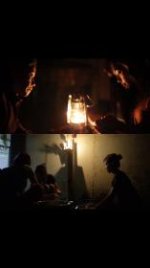
You have a lot of different factors to work with in low light.
-black and white. Easier to shoot in black and white and make it look good in low light
-style. Does the style of the shoot allow for noise
-denoiser.
-let your subjects be in the shadows. If the scene is lit by a candle, the expose the candle correctly, and let you subjects go dark.
-light for dark. Day for night. Just because it looks dark, doesn't mean it has to be shot in the dark.
-shoot at a higher iso, and then pull it back in post and add denoise. (Will lose your highlight detail a bit)
depending on the style, i didn't mind he noise on the 60d up until iso3200. I tried to not go past 1600, but as cpreston mentioned, sometimes a 3200 will look better than an underexposed 1600. Just have to know going in what you can manage.
(Warning: going down memory lane here and about to dump some useless info on you)
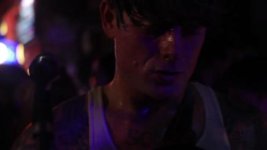
there was a time that i shot 3200 because i needed to. The band wanted to be in the dark. They abandoned the stage and it's lights, and found a spot between the bar and the bathrooms. There were a few decorative lights and all, but not much for a good strong source. But since the style was so rough and underground it worked alright., i now look back and like the whole lofi grainy. I was there as a fan. Was shooting a doc, and came across the band. The footy was never used professionally, but is still one of my favorites for it's honesty and allowing it all to just be there. It is pretty difficult to make a one camera performance good. Gets monotonous.
You have a lot of different factors to work with in low light.
-black and white. Easier to shoot in black and white and make it look good in low light
-style. Does the style of the shoot allow for noise
-denoiser.
-let your subjects be in the shadows. If the scene is lit by a candle, the expose the candle correctly, and let you subjects go dark.
-light for dark. Day for night. Just because it looks dark, doesn't mean it has to be shot in the dark.
-shoot at a higher iso, and then pull it back in post and add denoise. (Will lose your highlight detail a bit)
depending on the style, i didn't mind he noise on the 60d up until iso3200. I tried to not go past 1600, but as cpreston mentioned, sometimes a 3200 will look better than an underexposed 1600. Just have to know going in what you can manage.
(Warning: going down memory lane here and about to dump some useless info on you)
Attachments
Last edited:
cpreston
Veteran
I think lowlight is a misnomer. What we are actually dealing with is high ISO and shadow detail. I think it is better to think of it as working at high ISO because then you don't automatically decide to underexpose. Most cameras, including Canon DSLRs, have some amount of denoising built in in order to give a useable picture at higher than optimal ISO's. But due to compression and the denoising, if you shoot so that most of your detail is in the shadows below about 35% on a Canon at high ISO's, its going to be a muddy mess. This is especially true if you are thinking you can pull up any of the exposure in post. Therefore, it is better to find a way to a get your primary point of focus out of the shadows or people are just going to notice the added noise. Or the lack of detail if you are using a denoiser.
You will hear people giving statements like "I never shoot over 1600 ISO." This is the worst policy. If you need shoot at high ISO to get decent contrast and detail, do it. You can still crush your blacks in post. Just don't underexpose due to some common knowledge about noisy ISO's.
You will hear people giving statements like "I never shoot over 1600 ISO." This is the worst policy. If you need shoot at high ISO to get decent contrast and detail, do it. You can still crush your blacks in post. Just don't underexpose due to some common knowledge about noisy ISO's.
G
Guest
Guest
One thing is certain, if you shoot over iso 1600 on the 60d, noise will be evident.

henryqiu
Well-known member
I think lowlight is a misnomer. What we are actually dealing with is high ISO and shadow detail.
- Lowlight is about the environment in which we shoot.
- High ISO is about a setting that we choose or we let the camera choose.
- Shadow detail is about the capability of the camera+lens combo to capture the details in a shadow.
- As for denoiser and such, that's just a piece of software that are supposed to help cameras/us to capture cleaner images. Just a tool.
All four above are totally different things. Conceptually mixing them up leads to confusions.
Lowlight isn't a misnomer, but a description of a scenario that we have to deal with. It doesn't necessarily refer to a dark (to human eyes) environment. It just means lack of light to keep shooting at the range of desired settings. How to respond to it is up to the shooter: high ISO is just one of many options that a shooter can choose from.
Avoiding to shoot above 1600 ISO isn't a bad rule, but rather a self-imposed discipline for dealing with the limitation of our camera+lens combo. Here, all such rules are meant to break. Once you understand the rationale behind a rule, you can always choose to ignore it.