Red lenses

Greg Lowry said:
In fact, one front that I didn't previously think of was a B4 that would allow all of the electronic features of those lenses to be used on RED, including auto exposure control, etc.

That's essentially the thrust of my post on Page 17, Post #165 of this thread, where I suggested a multi-pin power bus on RED (simple adapter to use Canon, Fujinon, or Angenieux), and/or an RS232 bus (which most newer 2/3" HD ENG B4 mount lenses have), to enable the full capabilities of B4 mount lenses. Though RED is a manual camera, professional ENG-style shooters are equally schooled in fully manual use of their lenses, enabled as easy as flipping two simple switches on the lens (auto/manual iris on the servo, and auto/manual zoom on the bottom of the lens), I.E. any combination thereof: auto iris/manual zoom, manual iris/servo zoom, auto iris/servo zoom, manual iris/manual zoom. The flexibility of those four options with professional ENG zoom lenses is what actually enables the acquiring of good images in the "run 'n gun" environment of ENG-style work. Using zebra levels, user programmed camera profiles, and multiple channels of white balance for rapid indoor/outdoor transitions, completes the ENG-style shooter's work scenario. Cine-style shooters should shed the notion that ENG-style shooters are primitive "automatic camera pointers". With convergence having been in motion for some time now, I feel nothing could be farther from the truth! Myself, and those I hire for my ENG-style projects, need to use B4 mount lenses as described above in a fast-paced, dynamic environment, constantly switching from manual iris to auto iris, and from one saved white balance to another - and then take the same camera rig and re-setup the lens for fully manual shooting of cine-style creative b-roll for transitional montages, in-bumps and out-bumps of the program. For that, we're talking closely controlled lighting, manual everything, critical focus for shallow DOF, etc. - as cine-style as a 2/3" ENG zoom will allow. I expect my camera operators to be equally skilled in ENG-style and cine-style shooting, even though we may be using 2/3" B4 mount ENG zooms for the project. They need to be true convergence shooters. With my RED cameras in the workflow, that will be even truer. If someone wants to be a shooter for my company on a regular basis, and not be left out of projects for lacking skills, they'll need to be able to be real good at the ENG-style workflow described above, and equally skilled at cine-style shooting for when we wrap an ENG-style setup, and re-setup RED in full cine-style lens/accessories for a cinematic project. I'll be looking for shooters whose skill sets match the convergent capabilities of RED. Mono-dimensional shooters, who only know cine-style or ENG-style workflows and techniques won't be working much with my company, because someone who is equally skilled in both styles saves me as a producer/director from having to constantly find separate crews. I don't intend to arm my company with Cine/ENG capable cameras (RED) - and then incongruously hire separate ENG or cine-skilled crews. If RED has thought to include 1080p, 1080i, and 720p image formats and 2/3" ENG HD B4 mounts on their camera, I'd like to see them follow through and enable the entire ENG-style workflow by including a multi-pin connector and/or RS232 bus so that we can not only mount 2/3" B4 lenses - but also use them to their max capability in an ENG-style workflow.

Greg Lowry said:
Specifics aside, the concept of lens flexibility should be at least as important as flexibility of recording technologies, accessories, etc. It all starts with the lens.

Well said! I absolutely agree with you on this Greg. Many of us, myself included, are photographers, cinematographers, and videographers. We work in multiple mediums, with a variety of cameras and lenses. I'd like nothing more than to be able to, on a per-project basis, have the operational flexibility to use PL mount S35, 35, and S16 lenses, 2/3" B4 HD ENG lenses, and quality 35mm photo lenses on my RED cameras - and change them out quickly for the next setup or project. I always approach a project by simply sitting down and using abstract reasoning to visualize how I want the end product to look (right brain function). Once I have a handle on that, I then analyze what combination of equipment and format will get me to that particular look (left brain function). Overall camera system flexibility is critical to getting me to the production values I seek, including recording technology, accessories, lenses, support, etc. It's critical to my workflow, and it saves me funds on my project budget.

If "garbage in/garbage out" is the timeworn mantra of field production, and great images are the first critical element in any production workflow, it follows that lens quality, lens selection, and lens use is absolutely critical to the success of every single project.

Post script: Jared, I think this is the all-time best thread for the RED DVX User forum – tons of constructive input, a diversity of contributor backgrounds, etc. This thread rocks!!

Gibby
RED #8
www.cut4.tv
www.4umat.com
 
Greg Lowry said:
In my opinion, one of the cleverest things RED could do is to make the camera flexible enough to have interchangeable "fronts" with each front suited to specific types of lenses:

1) PL Mount with standard 51.98mm flange to focal plane distance;
2) A front for SLR still camera lenses (with interchangeable lens adapter mounts for Nikon, Canon, Olympus, etc.) with optimized flange to focal plane distance;
3) A front for rangefinder still camera lenses (with interchangeable lens adapter mounts (M mount, screw mount, etc.) with standard 27.5mm flange to focal plan distance;

Nice thought, Greg! I agree totally!
 
Quote:I'd like to see them follow through and enable the entire ENG-style workflow by including a multi-pin connector and/or RS232 bus so that we can not only mount 2/3" B4 lenses - but also use them to their max capability in an ENG-style workflow.
______________________________
With that option onboard Red would not only be modular in its design/lenses/mounts/ sensors etc but would become modular in the capabilities of its users From the expert to the more humble beginner (thats me):)

Also the idea of a front section being completely adaptable to almost any mount must surely ON ITS OWN make the Red camera "a great camera" I read somewhere that the interchangable lenses option with the Canon XL range played a significant part of its success story. HOW successful would a Red camera be with even more lens options.....

It is worrying to think that with certain lenses the distance to the sensor can be very close indeed. Is dust or even air at different temperatures likely to cause problems or is the technology for protection of the sensor good enough? So perhaps others can tell us what they think regard sensor protection with each change of lens.

With all these great ideas are we now at the stage when all we are doing is giving Red (and others) ideas for the future or is there still a possibility of getting some of these things added. Maybe we are all getting carried away with ourselves i dont know? i hope not.

In Red we ALREADY HAVE A UNIQUE RED CAMERA just on the specs we already know. Looking at this from someone new, i can clearly see the massive need for the lens situation and the suggestions by Gibby/Greg and others to be designed into Red. How many of you would rather be given the option of using all manner of lenses OR be given a dozen or so nice little wee design touches that ON OCASSIONS might be very useful.

This has /is a trully great thread. It would be fitting indeed to see as suggested by others a front end feature of Red to have universal mount capabilities built in.

Michael
 
mike the beginner said:
Is dust or even air at different temperatures likely to cause problems or is the technology for protection of the sensor good enough? So perhaps others can tell us what they think regard sensor protection with each change of lens.

I think that in front of the sensor, as far as possible from the focal plane, should be a sealed glass that will protect it from the environment (dust, smoke, humidity etc) and should be easily cleanable by the user.
The user should not be responsible to clean the sensor directly because the stress from such a terrifying process might make his hands shaking too much and he might end up with a new fuzzy aspect ratio!
 
Originally Posted by Greg Lowry
In my opinion, one of the cleverest things RED could do is to make the camera flexible enough to have interchangeable "fronts" with each front suited to specific types of lenses:

1) PL Mount with standard 51.98mm flange to focal plane distance;
2) A front for SLR still camera lenses (with interchangeable lens adapter mounts for Nikon, Canon, Olympus, etc.) with optimized flange to focal plane distance;
3) A front for rangefinder still camera lenses (with interchangeable lens adapter mounts (M mount, screw mount, etc.) with standard 27.5mm flange to focal plan distance;

Great post Greg and I absolutely agree! The more lenses we can easily throw on the RED, the more value it has.
 
Over at DV info regarding using Canon lens/quote:oops, good point Bryan, but I should have clarified. I mean manual focus, using the internal motors instead of external motors or cranks and gears. It made so much sense in my head. hahaha
I mean to use the EF interface to create a new follow focus and iris system. Basically, instead of finding gears to strap to the outside of the lens to allow follow focus... or re-housing the lens to allow iris adjustment, why not use the internal motors? Still manual control, but electro-manual.

The link I found has a simple rs-232 interface.. easy to make basic stamp controllers or pic controllers. But the idea is the same - the interface they made already has a LOT of cool features - like on a follow focus system you have to tell the controllor where o focus and infinity focus are. EF USM lenses already know! Rehoused cinema lenses require motors (preston, m-one, heden, etc) to interface with wireless focus devices. These motors are about 2k EACH! Every EF USM lense has a motor built in, which is matched and geared for that lens.
______________________________________
It looks like your idea Gibby is being thought of elsewhere :)
 
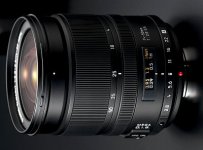
Leica D vario-elmart 14-50mm/F2.8-3.5 ASPH lens

Leica D vario-elmart 14-50mm/F2.8-3.5 ASPH lens

It would be cool if RED could use the new Leica AF lens built for the Lumix DMC-L1 digital SLR. The lens has IS and a manual aperture ring. It will never happen, but it would be great if RED were designed to use it. AF and IS and Leica. The L1 will take FAT32 cards. Too bad it is just a camera.
 

Attachments

  • leica_14-50.jpg
    leica_14-50.jpg
    24.6 KB · Views: 0
Quote from the Mini 35mm FAQ OVER AT DV info:
Q: What are the major differences between using cine lenses and still lenses?

A: As far as optical quality, the SLR still lenses rank very close to that of the cine primes. The major difference is the ergonomics of the lenses. Since they were not designed to capture moving images, the focus and zoom movements may not be as smooth as the movement on a cine lens. In addition, older zoom lenses will not hold their focus while zooming in and out and functionally become variable primes. We do have reports that the newest SLR zooms will hold focus throughout the range. Make sure to test the individual lens before production.

This confirms much of what has been said on this thread, just thought others might find this useful:)

Michael
 
Michael, I always highly endorse sources that confirm my views. haha. The other thing that should be pointed out is that some lenses for still cameras have focus and aperture rings that rotate in the opposite direction from cine lenses. That can be somewhat disorienting and occasionally disastrous for focus or stop pulling when switching between lenses with different rotation directions.
 
Greg your just a mind of information:Drogar-BigGrin(DBG)


just make sure you get to post LAST on this thread. As much as i appreciate others viewpoints and inputs i have to say you have went the extra mile on this thread and i have learnt a lot thoughout its path.

I laugh when you mention the aperture rings and focusing. My last camera was an XM2 (GL20) and i was only starting to use manual when it when filming on its own down under the depths of Loch Lomond:crybaby:

I wish you well wherever you go my friend:dankk2:

Michael
 
Here's another reason why an interchangeable M-mount hardfront option for the RED is on my wishlist: http://www.leica-camera.us/photography/m_system/lenses/465.html

Leica will soon be releasing an M-mount digital rangefinder still camera and I think this will signficantly boost interest in that format, leading to more lens development and innovation. Rangefinder lenses are smaller than SLR lenses and are generally sharper with better contrast because they have many fewer lens elements and less complex designs than SLR retrofocus lenses. I've said this before, but I'm dialing up the lobbying effort.

Note to RED: please design the optical block so it's not necessary to "chop" it to change the flange focal distance. The PL standard f.f.d. is unnecessarily restrictive.
 
Last edited:
? for Greg

? for Greg

http://diglloyd.com/diglloyd/free/FocusAccuracy/manual-focus.html

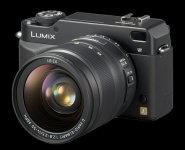
Qusetion: is the new Panasonic LUMIX DMC-L1 really a SLR? It looks like a rangefinder, but if it has a mirror I guess it is a SLR. The lens looks compact. If you are going to lobby, would you loby for this one? Will the Leica digital camera be better. The Panasonic has a Leica lens. I guess it is for a 3/4 chip. Do you have a link to the new Leica camera site? How do its lenses compare to the lenses for the DMC-L1.
 

Attachments

  • panasonic_l1_450-1.jpg
    panasonic_l1_450-1.jpg
    28.7 KB · Views: 0
LUMIX DMC-L1 is an SLR.

My primary interest in still camera lenses on the RED is M-mount rangefinder lenses for the reasons I've already mentioned and some I haven't. I believe Jim Jannard is on record as wanting RED to have the flexibility to use a variety of still camera lenses. M-mount lenses may not be under consideration for technical or other reasons, that's why I've mentioned them.

There is no site or official link for the forthcoming Leica digital rangefinder cam yet. Leica has said it's under development.

Leica (Leitz) lenses are among the very best. Leitz designs lenses for Leica, Panavision, and now Panasonic and others. I have no experience with these new Leica lenses for the Lumix so i can't comment or compare. Based on Leica's rep, they're probably very good optically.

No lens is perfect for every application and photographers and cinematographers have personal preferences. It's nice to have so much choice.
 
Last edited:
similar to digiLux-2

similar to digiLux-2

This is the old one. ln what ways will the new one be newer and better?
Image:Digilux-2-p1030294.jpg

and I saved space on the server :) no attachment
 
:d

:d

Hummm. It seems that ": D" is a good way to thwart people from linking your photos. It thwarted me above. Damn those :D :D :D
 
Leica Safari, treated against corrosion and moisture

Leica Safari, treated against corrosion and moisture

The Leica Safari looks nice in green. It was a Minolta design.
 
Last edited:
No, that's a Leica R. An SLR.

The digital rangefinder Leica won't necessarily be better than the 35mm film version. But it'll be digital and that may create renewed interest in high-end rangefinder cameras and lenses.
 
Last edited:
Back
Top