Oktava MK-012a Accessories

iamlance

Well-known member
Okay, so I'm going to buy the Oktava MK-012a with all 3 capsules ($340). First of all, is that needed? Would I use all of the capsules? I want to shoot inside and outside. Which ones are important for me to have? And of course you need all of the other accessories that go with it: shock mount, windscreen, boom pole, etc. So, my question is that there are a lot of "generic" types that fit many models from great brands. Should I buy those, or what? My goal is to get good enough quality at a cheap cost (for the items price-range).

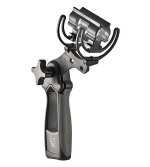
For the Shock Mount:
I've heard about 3 key shock mounts for this mic.
I found the next two myself:
WindScreen or WindJammer, and what is the difference? The jammer is used for outside, correct? Which specific one would work best for this mic at a reasonable price?

Boom Pole. These can be expensive, I know. I don't need anything fancy, as I'm only a senior in high school and am not shooting big productions yet.

What else do I need? A shoe mount, a mic stand? I know I need to get some cables.

Oh, and I've heard a ton about the Zoom H4n/H1/TASCAM DR-05. Would I need to get a recorder for something like this? Does it really help that much for someone without too much experience?

This is kind of a lot, I know, but I've looked around and haven't found the answers to some of these questions. -Lance
 
Last edited:
Hi, Lance.

Will you use all the capsules? Probably not, but what is it you're trying to do? Are you shooting short films? Documentaries? News magazine pieces? Do you favor interviews, or are you working primarily with narrative/dramatic projects?

The omni probably won't come into play unless you're doing music recording, and even then it isn't the most versatile. Hypercardioid and sometimes cardioid will be useful for on-camera dialog indoors. Outdoors, the hypercardioid can work but will have a shorter effective working distance. So, if you plan to shoot a lot outside for dialog, you may need to have a shotgun mic in your kit.

But let's assume that the hypercardioid is going to be a proper starting place for you:

The Rycote Invision series is stellar... very secure, and the lyre suspension design is one of the quietest I've experienced. You're probably going to want the INV-6 instead of the INV-7. Same price.

You can get an inexpensive boom pole. Look to RØDE or K-Tek. The thing about poles: aluminum is heavier than carbon fiber but generally less expensive, and length adds weight. How far do you think you need to reach?

Forget the shoe mount: you don't want to put your mic on the camera, and especially not a hypercardioid. And you won't need a stand unless you're doing locked-down interview shots (standing or seated) where you can have the mic positioned without moving. You will, however, need wind protection. Look at the Rycote Baby Ball Gag, and possibly the furry cover to go over it.

Recorder? What camera are you using? Recorders can be great, but if you're looking at the Zoom H4n, I'd suggest looking instead at the Tascam DR-40.

Also, take a look at the Audio Technica U873r as a low-cost hypercardioid. It doesn't have interchangeable capsules, but it's a reliable mic at a low price.

So now we're at the mic, the shock mount, the pole, and wind protection... and possibly a recorder. You'll need cables: get a short (6") XLR cable to jump from your mic to the main cable run as added decoupling from handling noise, and then get two long cables (an extra in case one fails in the field, and 25' cables should do depending on pole length).

Also: headphones. Get good headphones, and use them while recording. Sony MDR-7506 is a good place to start.
 
Last edited:
I would like to do a bit of music recording (not professional, just some vocals or guitar), some outside filming, and inside filming. Not really interviews or documentaries, more short-film types.

Eh, my budget it kind of limited, but I heard that this mic was one of the best at its price-range, so I'd rather stick to just this mic first, before adding shotgun mics to my list.

Awesome. I'll look into those accessories. Why would I want the INV-6 over the INV-7? They seem to be the same price.

I heard that using a recorder would make it easier? I think it got rid of the auto gain or something.

I have the T3i. Also, I've got some pretty awesome Shure earbuds which produce perfect sound and are noise-canceling. Do I really need headphones?

P.S. Would this mic require phantom power?
 
You may have need for all three capsules if you want to do things (like recording music) beyond traditional simple video production.

If you look at the specifications, you will see that the INV-7 is longer than th INV-6. The INV-6 is made for shorter mics like the Oktava, while the INV-7 is made for longer mcrophones like "shotgun" mics. I didn't know the answer to this question any more than you did. But I have found that it always pays to attempt to look things like this up for myself.

Virtually any recorder over $35 will record better audio than even a $5000 DSLR.

Earbuds are not really not suitable for serious monitoring audio recording for production. Most are made for low-quality entertainment. Properly using pair of good headphones is just as important as looking at the viewfinder when shooting pictures or video.

NEVER EVER use "noise cancelling" headphones or earbuds. They will cancel noise in your ears but that noise is actually being recorded and you will end up with a very nasty surprise when you get back home and view/listen to what you shot. Did I mention "NEVER"?! The purpose of the headphones is to HEAR all the noise that your microphone is picking up so that you can do something about it during recording. Because it will be VERY VERY VERY difficult (and expensive) to remove most kinds of noise after the fact. An a great many common kinds of noise can't be removed at all at any price.

Yes, absolute the Oktava requires phantom power. (Again, information that is readily available online.) Since no camcorder has XLR mic inputs or phantom power, this is another very good reason to use a separate sound recorder.
 
The clearest thread on the basics I have seen yet.
Took me a while to figure all this out when I first jumped in a little ways back on the garden path.
Should practically be a sticky for newbies.
 
And ALWAYS use wind protection. Even indoors. Indoors a foam pop screen will work fine. You can get the one for the Oktava for around $10. Money well spent.
 
The cheaper recorders, such as the H1 and DR-05, don't have xlr input. Would converting it to a different cable that it fits still be a better option than no recorder?
 
... Also, I've got some pretty awesome Shure earbuds which produce perfect sound and are noise-canceling. Do I really need headphones?

P.S. Would this mic require phantom power?
As Richard says, never use "noise cancelling" earbuds or headphones. Noise ISOLATING 'phones or buds are another matter. You want noise picked up by the microphones to come through loud and clear but surrounding ambient noise hitting your ears directly to be blocked so you can hear clearly what is going on with the signal you're recording. Most consumer earbuds are not at all accurate in their reproduction, even if they do sound "awesome," and accuracy is important. However several manufacturers, including Shure, offer upgraded models usually designated as IEMs or In Ear Monitors that are designed for accurate monitoring in high noise environments - take a look at some concert footage, the clear plastic earpieces you often see performers wearing are IEMs. But IEMs are pricey - staring at around $250 or so and running upwards of well over a kilobuck for a pair. If your Shure buds are from their professional, noise isolating, IEM line then they'll be fine but if they're regular consumer-grade buds, even if they sound great with music, you'll need to get true monitor phones like the aforementioned Sony MDR7506.
 
My bad, I mean't noise-isolating. I have the Shure SE215, which is their cheapest one. http://www.shure.com/americas/produ...nes/se-models/se215-sound-isolating-earphones I don't think it is an IEM though. So, the headphones would be better for this or would these?

EDIT: "Evolved from personal monitor technology that's been road-tested by pro musicians, the SE215 offers detailed sound for personal listening or professional monitoring." I can't tell if that means they are IEM or not.

I wonder if these are good. http://www.shure.com/americas/produ...dphones/srh440-professional-studio-headphones

And I know these are good: ATH-M50
 
Last edited:
Based on a fast read of a couple of reviews, the SE215 would probably be okay. They're not yet truly flat monitors but it sounds like they come close. The big test is how well they isolate you from surrounding ambiant noise. Don't even think of using them for post-production mixing though.
 
Regarding music recording with your video mic kit -

If you have a hyper or cardioid that's good enough for video work, that's a useful mic for all sorts of music applications - acoustic guitars, guitar amps, violins, etc. The Oktava is a well-regarded "budget" mic for this work and reviewed really well in a studio shootout for piano, percussion, etc. (A hyper isn't as popular for these uses as a cardioid though).

For home music recording, an omni can be problematic. We just don't have well treated, quiet and good sounding rooms, and omni's are often about getting the sound of the room. For home use, that means AC, outdoor noises, harsh reverberations, etc. I'd get the best hyper you can afford for indoor video work, and look into an LDC (Large Diaphragm Condenser) for vocals, the low end of acoustic guitars, etc.

The last few years have given us an explosion of really decent affordable music recording mics - the ADK A-51 is really a sweet mic for under $200, and there are loads of similar budget mics - hit a guitar center, see what they have, and do some on-line review searching.

And don't forget that a Sure 57 can be an amazing mic and you can find 'em used for $60 or so (John Lennon's "Imagine" vocal, Bono's "Pride in the name of love" and decades of countless of snare, tom, and guitar amp tracks). When I cut scratch voiceovers for video here, I just grab a $100 Sure 58 (and I have some nice mics) - and several times my clients say "why buy voiceover, yours sounds great". It really is a nice voiceover mic for the $$.

The posters above will steer you right regarding on-set audio capture; and like video, there's simply no end to the dollars you can spend on music recording gear. But the market for musicians is massive, and a lot of R&D is ongoing to provide affordable quality to it. (There's not 6 B&H or Adorama stores in driving distance of where I'm typing this, but there are that many guitar centers, right?)
 
The cheaper recorders, such as the H1 and DR-05, don't have xlr input. Would converting it to a different cable that it fits still be a better option than no recorder?

The Oktava requires phantom power. If you don't have it coming from the recorder it has to come from somewhere. So, it would probably be better to buy the recorder that has the power...
 
I also highly recommend the Invision, I'm not positive, but the only difference between the Invision 6 & 7 is the cradle spacing.. which can be changed using a hex key wrench. The Tascam DR-40 or 100 is a better choice over the H4n in my opinion also. Either way, due to the relatively low output of the 012, which could very well induce noise from a 'budget' recorder trying to capture low-talkers and other quiet sounds, it's recommend to use a quiet preamp or mixer as a front end. A windscreen is also absolutely necessary.. even the slightest air movement will be a problem without one. I concur with Michael on music recording. No one should be without a few 57s and 58s. The 57 is still the usual go-to mic for snares and guitar amps after all these years. Introduced in 1965 , it has also been used by every U.S. president since LBJ.
 
I would highly recommend this one.
Rycote Softie Lyre Mount Pistol Universal

It's the most versatile one I found, regarding mic length and mounting/holding options.


Rycote_Softie-Mount-M-Pistol.jpg
 
Would a handheld one like that work well? Couldn't you just hold it?

Okay, I've been looking around and found this: http://www.oktava-online.com/shop/view_prod.php?id=110 I could get this at first and the other capsules cheap off Ebay later. What is the difference of the low pad from the -10 db pad?

What are each of the capsules best used for? This was kind of answered already, but not completely.

Since this package has the hypercardioid, that would cover the usual 'movie making' situations where the hyper is most often recommended... I bought my Oktava used, seems to be genuine from the descriptions of the 'copy/fake' version, however it came with a cardioid, which I was of the 'same' mind about picking up a hyper 'cheaply'... I monitored ebay for a month looking for a hyper capsule for 1/2 price... while some hypers showed up, because of how people seem to bid for 'audio' equipment, the prices usually ended up being close to the 'new', and so I ended up paying the $80 or so for a new hyper capsule.

From the 'recommendations' that I've ever seen, for film making the hyper is the most used, and from this discussion the omni would be almost 'useless' unless you were recording music in a controlled environment, and the cardioid would also be useful for music...

The "Low Cut Pad" is a filter to attenuate just low frequency sound, whereas the '-10 dB Pad' is an attenuator that will cut the sound by 10 dB across the audio band. This would be used if you are putting the mic very close to sound 'generators' that are very loud, and want to attenuate all frequencies.
 
The "Low Cut Pad" is a filter to attenuate just low frequency sound...

Don't leave home without it (unless your mic has a low-cut switch). It can clean up a track, and if there's a big hit of handling noise, it can totally save a take. A big low-end thump will peak your meters and distort - but it doesn't just distort the low end, it trashes all frequencies. You can EQ out low-end rumble but you can't EQ out a serious handling thump.
 
Back
Top