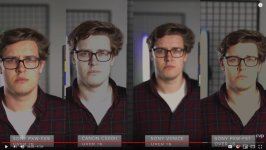
FS7: New Sony PXW-FX9 with venice features and 6k full frame

I've seen some absolutely amazing footage from the Ursa Mini Pros. They seem like a great value but the horror stories about build quality, reliability and service issues have kept me away.
Also many of my clients have probably never heard of the brand so it would be a tough sell on many jobs.

If you're looking for a direct comparison between the Sony FS cameras and the URSA Mini Pro, I've worked with both on a daily basis for multiple years. I first worked with the Sony FS7, and then at another occupation with the UMP.
I can say that, since i'm not a real colorist, the URSA is much easier to work with in post than the FS7. I typically shot in one of the Hyper Gammas on the FS7 because SLOG was too much of a pain to correct and I needed fast turn around for projects. Shooting UMP "film" mode, its very easy to correct with minimal fuss.

The URSA internal codecs are better in my opinion, ProRes just runs better on mac and windows vs the XAVC on the Sony.
The URSA menus are so simple and easy to use, and there's no lag. Unlike the Sony FS7 which lags horribly and I had to purchase Doug's training course just to understand how to work the camera, and even then I still hated the menus.

However, the URSA isn't all strawberries. You are essentially stuck at 800 ISO, going to 1600 (the cameras max) brings in bad noise and blue into the shadows. So the camera cannot shoot in low light situations at all. It's a camera that loves light, and I find that shooting in bright sunlight is it's favorite environment. Even at 800 the shadows are pretty blue.

We have also had a number of build quality issues with our 2 URSAs. The fold out screen has failed, the plastic covers on some of the dials have fallen off, and the record button on the hand grip doesn't work half the time, necessitating pushing it 2 or 3 times to start recording at times. We've sent it back to BM, they fix it, and back it comes, but it shouldn't have failed in the first place.

It's also extremely heavy and only runs on gold mount or v mount batteries, so it's not a portable camera in any way.

I have gripes about both. For narrative and daylight work where sound isn't an issue, I think I'd choose the URSA. For documentary or anything else I'd go with the FS7.
 
You're right, so I took a quick look at the manual for the Ursa. Please correct me if I have gotten anything wrong, which is entirely possible.
Some random thoughts.

stuff

Just my opinion.

Partly I dont want to derail the thread.. but one can also get 3 of these for FX9 cash so it may be releavant.

An interesting responce. Mainly correct. Personally I find 90% of that stuff offered by sony just over clutters my brain and Id love to see it go.
Some notes.
Editors love prores (logical or not)
The VF is very cheap and good.
It also cant handle dumb PSF thrown out by sony or I would have bought one for my FS7
The wysywig 'video look' is great and doeant really need painting.
3 wb on a switch seem enough unless you are in a green factory.
Angle.. is the king because it keeps the motion right through changes of frame rate. Shutter speed is for photographers (!)
I dont know about the FX9 but the multiple audio tracks are useless to me on the 7 because I dont use the specific sony receivers (I use older sony receivers)
The audio pots are there.. on top.. perfectly placed to be blocked by your handle and catch some rain.
To some extent the menues et al are just right and you dont need assigned buttons or user menu
Most of the reported problems are just underexposed raw footage.
Basically its a cameras designed for log->resolve workflow.

--
Personally I would not buy a BM as an A cam because..
-Too heavy (!)
-Poor codec/cards data heavy cost ratio (editors like prores me not!)
-only good for 800iso (have not tired the latest iterations)
- not sure about highlight rolloff - but then Ive not tested them in raw. (raw uses less data than prores but editors are scared of it)
No AF in 2019

And I have great respect that Sony built my EX1 and it still just works.
 
Last edited:
Yes, all shoots are different... but I certainly wouldn't characterize corporate work as not needing playback. I haven't been asked for playback since... well I guess it was last week. And after doing two takes the CEO (and PR person) wanted to see not the last take but the first one - since they didn't like the second one and wanted to make sure the first was ok. (and like many CEO's, they were ready to be finished before they walked in the room...)

But seriously... when a client says "can we look at an answer from the middle of this morning's interview?" do you really want to be the one rolling their eyes and saying it's a major pain and it's going to take forever to cue up? or do you want to be the one who can get to it quickly and efficiently? I know that I may not need to do playback on every shoot, but providing it quickly on demand is just good client service. (it's also one of the reasons I make sure there's excellent audio coming into the camera even if the sound person is recording the 'master audio' on his mixer/recorder - since listening to camera mic scratch tracks is not an acceptable option -- and that my client monitor has decent speakers.) Sure it's only needed on 10% - 20% of my shoots -- but I'd never downplay the need for convenient playback.

Sure Im not saying a camera shouldn't have it.. but it pretty low on my list of ..do I want to buy this camera .. and yes I would roll my eyes if someone wanted to check the answer to question 3 of 20 from this mornings interview :) .. that is a pain.. but obviously we shoot differently .. I never monitor the sound when the audio person is recording to Sound Devices and my camera is scratch track radio mic with TC sync.. thats their job and I work with the same people.. but really I very seldom get asked for playback .. which Im very happy about ..but agreed there is always some time you will have to playback.. just I definitely would object to alot of play back ,maybe that would lose me a client .. but the feeling would be mutual . ..How is the Sony play back any harder than other camera,s.. but as I say its very low on my list of camera features when considering buy said camera ..
 
Last edited:
People having problems with getting great looking images from FS7 Is not the cameras fault. It`s so easy shooting in Cine EI mode and just drop a LUT and in an instant get it right.
 
Rather surprised how the Sony FX9 kind of left the Canon C500 MkII sort of in the dust when it came to the Sony XAVC vs Canon's XFAVC in over and under exposure. What does he say? "The worst performer here was the C500 Mk II. Actually I was extremely shocked by this." I was surprised to hear him say that and even more surprised when viewing the results. A very noticeable difference if you are working with and require already encoded 709 footage straight out of the camera. You would want the over and under exposed parts of your scenes to look as good as possible. Got me kind of swinging back to the FX9 for out of the camera footage. In my workflows I don't really have time for RAW

Chris Young
 
Last edited:
Rather surprised how the Sony FX9 kind of left the Canon C500 MkII sort of in the dust when it came to the Sony XAVC vs Canon's XFAVC in over and under exposure. What does he say? "The worst performer here was the C500 Mk II. Actually I was extremely shocked by this." I was surprised to hear him say that and even more surprised when viewing the results. A very noticeable difference if you are working with and require already encoded 709 footage straight out of the camera. You would want the over and under exposed parts of your scenes to look as good as possible. Got me kind of swinging back to the FX9 for out of the camera footage. In my workflows I don't really have time for RAW

And the AF.. on that test shot anyway .. the fx9 was way ahead .. as they sell both ,I presume a very neutral test ..?
 
Yep I thought the AF was good. And it was worth a watch.

Usual lack of describing the post process - should always be a wipe from the 'negative'

--

As for over exposure - one should remember that losing saturation towards highlights (and shadows) is 'filmic'

then trying to recover some colour from that is somewhat futile/illogical

I d still prefer good colour throught the range and desat my highlights in post
 
Great video review! It's interesting to see how difference the X-AVC implementation is between the cameras.

I was a little shocked that the C500ii seamed to trounce the FX9 for low-light performance (not by much, but by 12,800 ISO the Canon was definitely cleaner) and it looked possibly a touch cleaner than the Venice too. I assumed the dual-ISO modes on the Sonys would have the advantage there.

The over/under exposure tests were pretty fascinating too. The Sonys whalloped the Canon for colour retention, but that seems to be a result of some of the compressed-codec processing that the C500ii is doing, it looked (in that test) like the Canon was specifically desaturating it's highest hightlights and lowest shadow tones (which could probably explain why there was so little colour left in the most stretched parts of the image. The Raw tests they shot exhibited none of that, so I wonder if it's a Matrix/gamut issue with the specific settings they used?

Ultimately, over/under tests are really only useful (for me at least) for knowing at what point skin tones will break, and at what point all of your shadow detail is gone. They help you learn how to expose for a particular camera.

With cameras this sensitive, having to underexpose an image by more than a stop (or two at the most), is simply not an issue anymore.

I'm a little suspect about this test, at least as to how it's referencing of the Canon camera. Not enough information being presented clearly as to how the Canon image is being rendered or how it was shot, and the on-camera comments seem slanted or at a minimum, incorrect. The Canon does seem cleaner at 12,800 than all the others, yet it is rated 3rd on the ISO test by the reviewer. In the Under/Over tests, I think we are looking at a LUT issue (as in the wrong LUT)...it clearly looks horrible, but honestly 6 stop +/- tests aren't really designed to show what happens when you under and overexpose but that amount, but rather what's happening at the extremes. (this could reflect, as you mentioned, that canon is tuning it's color in the highlights and shadows to avoid color noise and tint problems, but who knows.) I'll give the Venice some cred for holding that much color at the margins of its DR, but frankly the FX9 isn't really capable of maintaining the exposure at -6 (note the mid grey chip is 1-2 stops dark in that exposure) and has so much noise plus tint issues, that I'm not sure it's fairing better (just different) than the Canon.

Also in the canon underexposure test, the lighter chart patches and highlights are raised e a bit more than all the Sony clips...this would indicate that it is simply being processed differently than the Sony's (or maybe in the same way, ie that's not correct for the canon footage), and would explain the color differences in that test. Not sure about the over test, but I'm still guessing there's a LUT, matrix or gamma issue causing the canon footage to look so different. I've never known canon XF-AVC to have issues like what they are presenting, and I really doubt that canon would have suddenly f-ed up their compressed encoding on this camera.

That said, I think for Sony users, the FX9 is certainly being presented as a huge step up from the FX7, maybe more of a jump than the C500II is from its ancestors.
 
Rather surprised how the Sony FX9 kind of left the Canon C500 MkII sort of in the dust when it came to the Sony XAVC vs Canon's XFAVC in over and under exposure. What does he say? "The worst performer here was the C500 Mk II. Actually I was extremely shocked by this." I was surprised to hear him say that and even more surprised when viewing the results. A very noticeable difference if you are working with and require already encoded 709 footage straight out of the camera. You would want the over and under exposed parts of your scenes to look as good as possible. Got me kind of swinging back to the FX9 for out of the camera footage. In my workflows I don't really have time for RAW

Chris Young

I have no idea how CVP managed to get the results they did; I've tested the C500 MKII's XAVC against my FS7's XFAVC, shooting log on both. The C500 looked far superior. I also compared them to RAW Light on the Canon and that was light years ahead. I now need to sell RAW into my clients...
 
I think we are looking at a LUT issue (as in the wrong LUT)...it clearly looks horrible, but honestly 6 stop +/- tests aren't really designed to show what happens when you under and overexpose but that amount, but rather what's happening at the extremes.

The extremes being the extreme darks and highlights on any given scene which to me are very important parts of the scene. Re-watch the video. Where he is talking about compressed codecs, i.e. XAVC and XFAVC. There are no LUTs involved at all. The Sony was using its stock XAVC-I encoded 709 output and the Canon was using its stock encoded 709 XFAVC-I codec. No LUTs, no RAW and no LOG. All explained from 35.23 mins in where he goes on to explain that in Canon XFAVC over exposing it has similar results as to the under exposure tests and that it causes major color issues. Going on to say that in compressed codecs the FX9 has both the FS7 and the C500 II "beat" as he puts it. As one would hope over the FS7 but to see the FX9 that much more capable than the C500 II was a surprise. Just compare the images. The C500 II in 6 stop over areas looks much closer to the now aging FS7 than it's main contemporary competitor the FX9. Shaking my head still. As regards any bias CVP if they have had any in the past it has been more favorable to Canon than Sony. Just watch a dozen of their YouTube reviews. For CVP to make the comments they have in the video in discussion indicates to me they were very surprised by the results they obtained. The only real way of finding out is to grab both cameras and test them yourself side by side under the same conditions at the same time to clarify ones expectations and to go intro that test without any preconceived ideas as to which will be better for your needs. Especially if you are not after a RAW shooting camera.

Chris Young

Cameras 6 stops over.jpg
 
Last edited:
The extremes being the extreme darks and highlights on any given scene which to me are very important parts of the scene. Re-watch the video. Where he is talking about compressed codecs, i.e. XAVC and XFAVC. There are no LUTs involved at all. The Sony was using its stock XAVC-I encoded 709 output and the Canon was using its stock encoded 709 XFAVC-I codec. No LUTs, no RAW and no LOG. All explained from 35.23 mins in where he goes on to explain that in Canon XFAVC over exposing it has similar results as to the under exposure tests and that it causes major color issues. Going on to say that in compressed codecs the FX9 has both the FS7 and the C500 II "beat" as he puts it. As one would hope over the FS7 but to see the FX9 that much more capable than the C500 II was a surprise. Just compare the images. The C500 II in 6 stop over areas looks much closer to the now aging FS7 than it's main contemporary competitor the FX9. Shaking my head still.

Chris Young

I don't remember any mention of them using the stock 709 outputs. Surely none of the cameras would be able to retain anything at 5-6 stops over if they were using Rec709 modes? And even then, how much they'd each hold would depend on the specific Rec709 curve each was using (as each camera has multiple Rec709 profiles) I'd have thought they'd have to be using log recording to hold as much DR as they are?

The highlights in the top end of the C500ii stuff are so horribly desaturated that it's hard to actually tell where it's clipping out and what the rolloff looks like.

They also don't mention if the Venice was recording XAVC or one of its raw modes (other tests I've seen show the Venice clipping hard on caucasian skintones at +6 stops)

With tests like this it's so hard to know what's actually going on without knowing the exact method of exposure. The questions I have include:

- Were they trusting the manufacturer's rated sensitivity and using a lightmeter?
- Were they basing exposure off middle grey exposed to the manufacturer's stated IRE% for the specific gamma curve used?
- Which specific gamma curve and recording format was each camera using?

Since Canon and Sony both have a history of basically lying about the "native" ISOs of some of their cameras, that's particularly important information in understanding how much latitude each of them is offering.

I suppose I'm going to have to make my peace with the fact that I won't properly know how any of these cameras compare until I can run a test myself.
 
Seems to come down to the Fx9 XAVC looks "better" at the extremes ,than the Canon XFAVC... in REC709 mode.. but the Canon raw is unsurprisingly better than XFAVC .. implying that the C500II would be best used in raw mode .. which is fine if your clients are fine with that.. if you need a REC709 out of the box , then the fx9 would be a better camera .. not withholding all the other differences that a buyer might favor between the two.. but for rental companies the fx9 would seem the better bet.. dont know the politics of CVP.. but it would seem a very honest test, maybe too so !, as they sell Canon too... or a very strong Sony bias for some reason.. to fix up this test and the AF test..
 
I'm with Grug . there is no such thing as a stock 709 mode. certainly not on the FX9 which has many gamma choices all of which affect overexposure enormously . I don't know the Canon but assume it must be similar. I wouldn't base anything off a test without knowing those parameters. Likewise he is correct in wondering how they determined the "normal exposure".
I have not watched the video though so if they did supply that information I stand corrected.
 
Exposure head room is always a good thing but to push to +/-5 stops is not something one does. More realistic one might end up with 2 stops over or under and then all of them hold well. I remember once where I just had to rush a shot with my F3 and I thought the shot was ruined but even with that old Slog I recovered it easily and I was maybe 2-3 stops over which to me was as much as I ever done.
 
I don't remember any mention of them using the stock 709 outputs.

Sorry I should have been more specific. This is how I am looking at it. S-Cinetone is a setting under Custom mode not Cine EI. As has already been pointed out S-Cinetone can be almost perfectly matched with the Venice s709 LUT which can be downloaded from Sony. At 31:24 into the video he says we shot in S-LOG3 and "custom defaults." The prime Custom default on the FX9 is S-Cinetone. As Alister Chapman pointed out elsewhere in one of his write ups:

"Within the video there are examples of both S-Cinetone and S-Log3 plus the s709 LUT. So you know which is which I have indicated this is the video. I needed to do this as the two cut together really well. There is no grading as such. The S-Cinetone content is exactly as it came from the camera."

and

"A Venice with s709 is regarded as the default Venice look, and it’s a look that a lot of people really, really like. It’s what comes out of the SDI ports, is what’s seen in the viewfinder and can be recorded to the SxS cards unless you select the legacy 709(800) LUT. s709 is the LUT applied by default to X-OCN from Venice by default."

and

And the PXW-FX9 and s-Cinetone?

"The FX9 has new colour filters, a new sensor, new processing. But it is not a Venice. In Custom mode it has what Sony are now calling “S-Cinetone” which is set to become their new default look for their film style cameras. This once again is based on the Venice look and shares many similarities to the Venice colour science, but it will never be the full Venice colour science because it can’t be, it’s different hardware. But it sure as hell looks pretty damn close to a Venice at it’s default settings with the default s709 LUT applied. S-Cinetone gives the same colours as Venice and similar gamma, but with slightly increased contrast suitable for direct-to-air applications where the material won’t be graded (s709 in comparison is a touch flatter)."

It's this collection of above information that has led me to believe that what CPV were shooting in when they refer to "default" is S-Cinetone. This is exactly what Alister has been describing when writing about the camera, the default on the FX9 now being S-Cinetone which has the same characteristics basically of the Venice s709 LUT. I take it that S-Cinetone being almost identical to the Venice s709 one could call it a 709 look out of the FX9. If you think I'm way off on that judgement call I'll take that on board to re-evaluate but I don't think I am that far off the mark.

Agreeing with Lenny as I mentioned in a previous post until I can get the two cameras side by side on the same scenes on the same day under the same lighting, various lighting setups of course there is no way I could pass judgement on either camera. With regards to Liam's comment about the C500 II being streets ahead of his FS7 well I would hope that would be the case. Totally different generation cameras with quite widely differing sensor and processing technologies that in the case of the C500 II should put it streets in front of an FS7. If it didn't I wouldn't give the Canon a second look. Having not done side by side tests of my own yet CVP's video is the closest thing I have come across putting the two cameras side by side for the sake of a comparison. I'm just saying I'm surprised at what I have seen so far. I have not passed judgement and I never will until I can put the two side by side and shoots tests that are applicable to my workflow requirements. Which currently do not include RAW. Trying to "sell" the idea of a RAW workflow to my client base of broadcasters, corporates and doco producers would be making a rod for my own back. From an idealistic artistic POV a RAW workflow has certain attractions to me. In the hard pragmatic commercial light of day though using my business head and not my artistic heart when it comes to competitive quoting and quick turn around of material RAW doesn't even enter my calculations. Never will in my field. Everyone's workflow and requirements are different. RAW works for some, just not here. I just love having the choices of what look to be two very interesting cameras to evaluate.

Chris Young
 
Last edited:
Thanks Chris, That does seem like a reasonable guess as to how they were exposing the FX9 especially as it does look similar to but a little more contrasty than the Venice. However is it as clear what gamma they would be using on the Canon?

BTW - I'm in the same boat as you re RAW. Just not where my client base lives.
 
Back
Top