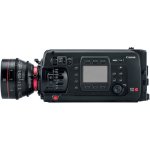
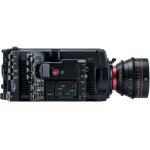
C300: New R5 firmware out - Cinema Raw Light, Clog3 and more recording options

aygie

Active member
Apologies if this is in the wrong section but wasn't sure where else to put it....

Nice write up here by CineD: https://www.cined.com/canon-eos-r5-...NYaL3IiecvXlXN9_L9JNhDIecyF4NVjXdONT0ckMDSUfc

So far some of the CRL recording modes aren't supported in FCP, Premiere or Resolve and they'll need updates but certainly nice to see a plethora of new options. Resolve does see the new files as Clog2.

So far I'm pretty stoked, quick test this morning with my C300 MKiii (Raw, Cinema Gamut, CLog3) and the R5 (4K HEVC, ALL-I, Cinema Gamut, Clog3) matched with the built-in LUT in FCP. This makes my life so much easier off the bat and I'm sure I'll dig into the other modes and figure out what's matching well and what's not but this looks promising for simple matching.

Breakdown of new modes from CineD:

"The following resolutions, frame rates, and bitrates are now available with the Canon EOS R5 after the firmware update v1.3.0 – first in RAW: ( [13] stands for the the latest updates)

8k RAW (29.97p/25.00p/24.00p/23.98p): Approx. 2600 Mbps
8k RAW (Light) (29.97p/25.00p): Approx. 1700 Mbps [13]
8k RAW (Light) (24.00p/23.98p): Approx. 1350 Mbps [13]
In MOV: MP4 H.264 Canon Log off:

8K (29.97p/25.00p/24.00p*/23.98p) ALL-I: Approx. 1300 Mbps
8K (29.97p/25.00p/24.00p*/23.98p) IPB: Approx. 470 Mbps
8K (29.97p/25.00p/24.00p*/23.98p) IPB (Light): Approx. 230 Mbps
4K (119.9p / 100p) ALL-I: Approx. 1880 Mbps
4K (59.94p/50.00p) ALL-I: Approx. 940 Mbps
4K (59.94p/50.00p) IPB: Approx. 230 Mbps
4K (59.94p/50.00p) IPB (Light): Approx. 120 Mbps
4K (29.97p/25.00p/24.00p/23.98p) ALL-I: Approx. 470 Mbps
4K (29.97p/25.00p/24.00p/23.98p) IPB: Approx. 120 Mbps
4K (29.97p/25.00p/24.00p/23.98p) IPB (Light): Approx. 60 Mbps
Full HD (119.9p/100p) ALL-I: Approx. 360 Mbps [13]
Full HD (59.94p/50.00p) ALL-I: Approx. 180 Mbps
Full HD ( 59.94p/50.00p) IPB : Approx. 60 Mbps
Full HD ( 59.94p/50.00p) IPB (Light): Approx.35 Mbps
Full HD (29.97p/25.00p/24.00p/23.98p) ALL-I: Approx. 90 Mbps
Full HD (29.97p/25.00p/24.00p/23.98p) IPB: Approx. 30 Mbps
Full HD (29.97p/25.00p) IPB (Light) : Approx. 12 Mbps
8K Time Lapse (29.97p/25.00p) ALL-I: Approx. 1300 Mbps
4K Time Lapse (29.97p/25.00p)ALL-I : Approx. 470 Mbps
Full HD Time Lapse (29.97p/25.00p) ALL-I: Approx. 90 Mbps
In MOV: MP4 H.265 Canon Log on:

8K (29.97p/25.00p/24.00p*/23.98p) ALL-I: Approx. 1300 Mbps
8K (29.97p/25.00p/24.00p*/23.98p) IPB: Approx. 680 Mbps
8K (29.97p/25.00p/24.00p*/23.98p) IPB (Light): Approx. 340 Mbps

4K (119.9p / 100p) ALL-I : Approx. 1880 Mbps
4K (59.94p/50.00p) ALL-I : Approx. 1000 Mbps
4K (59.94p/50.00p) IPB: Approx. 340 Mbps
4K (59.94p/50.00p) IPB (Light): Approx. 170 Mbps
4K (29.97p/25.00p/24.00p/23.98p) ALL-I: Approx. 470 Mbps
4K (29.97p/25.00p/24.00p/23.98p) IPB: Approx. 170 Mbps
4K (29.97p/25.00p/24.00p/23.98p) IPB (Light): Approx. 85 Mbps

Full HD (119.9p/100p) ALL-I: Approx. 470 Mbps [13]
Full HD (59.94p/50.00p) ALL-I: Approx. 230 Mbps
Full HD (59.94p/50.00p) IPB: Approx. 90 Mbps
Full HD (59.94p/50.00p) IPB (Light): Approx. 50 Mbps
Full HD (29.97p/25.00p/24.00p/23.98p) ALL-I: Approx. 135 Mbps
Full HD (29.97p/25.00p/24.00p/23.98p) IPB: Approx. 45 Mbps
Full HD (29.97p/25.00p) IPB (Light): Approx. 28 Mbps

8K Time Lapse (29.97p/25.00p) ALL-I: Approx. 1300 Mbps
4K Time Lapse (29.97p/25.00p) ALL-I : Approx. 470 Mbps

Full HD Time Lapse (29.97p/25.00p) ALL-I: Approx. 135 Mbps"
 
Previous firmware already helped (I’m sure they’re looking at improving further).

I’m yet to even see the overheating warning and I’ve had it for nearly three months.
 
I have filmed 10-hr days in 4K HQ mode and never seen an overheating warning. It was shorter clips, e.g. 40 seconds to ~2 min., but still shot ~190 per day.

I'm sure an interview scenario would be different but for clip based work, e.g. gimbal and/or b-roll, I've had no issues at all.
 
My biggest concern as a C500 Mark II owner would be them abandoning the camera.

IMO, it was clearly one of their last EF projects which was probably supposed to be out much sooner than they released it (for various reasons), especially after releasing the C300 Mark III 6-7 months later.

The C700/FF's last FW update was in mid-2020 and the one before that was late-2018.
 
If the 8K camera rumors are correct, including the bandied about larger and fan-cooled R5, then C500 MKII and C300 MKIII are getting to their sell-by date. Especially, if the 8K pricing is going to be closer to R5's $4,000 than to $16,000.

With stills hitting 100 MPX and video 8K/33MPX, there's not much remaining to squeeze out of the designs. They're to and, on occasions, beyond the human eye ability to discern further subtleties. The upside for the Japanese cartel is that this is a barely explored and a yet to be conquered side of the consumer market. The negative for Red and ARRI is that, in the right hands, a $4,000 camera is as good as their top of the line models.
 
That sounds like business as usual for Canon. It certainly was for the C200.

Exactly! Which is part of the reason this move on Canon’s part is so puzzling…to spend the time/resources on a hybrid camera and not their “cinema” line?

With stills hitting 100 MPX and video 8K/33MPX, there's not much remaining to squeeze out of the designs.

Not sure I agree with this seeing as these new designs are so modular and wildly touted by everyone who has spent any time with these designs. Not to mention the size differential…there’s a lot more you can do in these latest “cinema” line bodies than a DSLR body…like cooling as one example.


With stills hitting 100 MPX and video 8K/33MPX, there's not much remaining to squeeze out of the designs. They're to and, on occasions, beyond the human eye ability to discern further subtleties. The upside for the Japanese cartel is that this is a barely explored and a yet to be conquered side of the consumer market. The negative for Red and ARRI is that, in the right hands, a $4,000 camera is as good as their top of the line models.

The pixel race is a another discussion all together and people are on various sides of that discussion but I think you hit the nail on the head when you said it’s “beyond the ability to discern” the difference at this point.

The upside for the Japanese cartel is that this is a barely explored and a yet to be conquered side of the consumer market. The negative for Red and ARRI is that, in the right hands, a $4,000 camera is as good as their top of the line models.

But a lot of us, not all, but a lot are not concerned with the “consumer side” and we bought into their “cinema” line specifically because we need / want features beyond consumer.

The negative for Red and ARRI is that, in the right hands, a $4,000 camera is as good as their top of the line models.

That’s arguably true to some extent that in the EXACT right hands and the right circumstances / location it can be difficult to tell the difference but I don’t think ARRI is overly concerned with what features are added to a sub-$4k DSLR and I would imagine that’s equally as true for the ARRI owners.

I know a lot of people wish this was a fact but there is reason why those cameras (ARRI, Red) are selected by operators and productions. Image quality, of course, is key but there are also operating, functional, I/O, etc. reasons that go into those choices that these hybrid cameras just don’t offer.

Not to mention, usually the people talking the loudest about how a “sub-whatever thousand dollar camera is just as good” are the first ones to jump ship to an ARRI or Red when the opportunity / production allows for it.

As many recent threads have discussed, I am not saying that you need these high-end cameras and even recording formats; that boils down to your projects, needs, workflow and deliverables / destinations. But let’s not kid ourselves when it comes to comparing a hybrid to an ARRI-whatever.
 
The update was nothing too special. Camera companies do this all of the time, just not Canon which is why it might be surprising.

The R5 and the R6 are two of the highest-selling cameras in company history so it makes sense to focus on them more right now than anything else (even if the higher-paying customers should be the priority).

And IMO, there's a good chance Canon is finished with the current EOS body. The C70-like design makes a lot of sense moving forward with the higher-end RF cinema cameras. Just might need to make it a little bigger/slightly different with an EVF option, full XLRs, etc.
 
...And IMO, there's a good chance Canon is finished with the current EOS body. The C70-like design makes a lot of sense moving forward with the higher-end RF cinema cameras. Just might need to make it a little bigger/slightly different with an EVF option, full XLRs, etc.

Well, with a C300 MKIII derived C70 having been on store shelves for a few months, C50 and C90 are rumored next. A simpletone'ish prediction would be that C50 shall be C200 II and C90 C500 MKIII. Or something in that ballpark.

As to what Jeremey wrote - of course, lot of pros bought bought higher end cameras because that's what paid the rent. ARRI products made one appear substantial in a way that Pocket 2K couldn't but the differences are melting away. Not between BMD and ARRI but between $10,000 cameras and the $80,000 cameras. Recently, there was a debate if Sony Venice was everything it's cracked up to be. And the answer is that most people wouldn't be able to tell it apart from FX-9. Nor would they care either.
 
Well, with a C300 MKIII derived C70 having been on store shelves for a few months, C50 and C90 are rumored next. A simpletone'ish prediction would be that C50 shall be C200 II and C90 C500 MKIII. Or something in that ballpark.

If this comes to pass, I hope that the C50 and 90 don't share that same awkward, funky form factor. The C70 is a great camera hampered by a really bad form factor for many types of shooting.
Having your pro camera resemble a bloated, weird mirrorless body shape isn't very appealing to most pro shooters.

I know it's one of those posts just to complain for fun, but I don't know how that could possibly be your observation when you have to stick a side grip, top handle, monitor bracket, and a monitor on the C300 to make it function as designed.

There are the measurements (body-only).

C70: 160 x 130 x 116 mm
C300 Mark III: 153 x 148 x 168 mm

"Bloated" most likely refers to its width, but the C70 is only 7mm wider (and has less height and depth before the C300 even has any of its accessories).

The entire concept of building up the body to resemble some sort of exotic safari bird is absurd.
 
If this comes to pass, I hope that the C50 and 90 don't share that same awkward, funky form factor. The C70 is a great camera hampered by a really bad form factor for many types of shooting.
Having your pro camera resemble a bloated, weird mirrorless body shape isn't very appealing to most pro shooters.

This was exactly my point. The new, modular bodies on the C500 MkII / C300 MkIII have really hit the sweet spot in terms of being able to strip it down or build it up based on needs / preferences AND keep the necessary I/O even stripped.

…I don't know how that could possibly be your observation when you have to stick a side grip, top handle, monitor bracket, and a monitor on the C300 to make it function as designed…

…The entire concept of building up the body to resemble some sort of exotic safari bird is absurd.

I seems like you did a complete 180 within that one, singular post because there is nothing more ridiculous than the rigging that happens with DSLRs. There are actually memes of these franken-rigs and how prevalent they are and one of the reasons I prefer a more professional body to avoid the necessity of owning any rare, avian breeds :)

But hey, everyone has their preferences and we are just lucky there are so many options right now. It’s actually pretty crazy compared to just 5 or so years back and light years away from when I started over two decades ago.
 
I seems like you did a complete 180 within that one, singular post because there is nothing more ridiculous than the rigging that happens with DSLRs. There are actually memes of these franken-rigs and how prevalent they are and one of the reasons I prefer a more professional body to avoid the necessity of owning any rare, avian breeds :)

I mean...you own a $16,000 C500 Mark II so I would very much defend it as well, lol...but the design is an absolute mess for these cameras.

Photography cameras that shoot video aren't designed to be used in the same manner so it's irrelevant. 99% of them are made by the photography department; not the cinema/video one.

And if you started two decades ago then you should know better that the old school shoulder cameras have always made the most sense. And not small boxes with 10+ things hanging off of them.
 
I mean...you own a $16,000 C500 Mark II so I would very much defend it as well, lol...but the design is an absolute mess for these cameras.

Haha! You’re a hoot! I actually own two of them and I purchased them because I DO like the modularity of the design - obviously more so than some of the other features of the camera but the form and function (FOR ME) has been great. That said, it would be stupid to buy to something I don’t want / like to use.

Perhaps because you own / use DSLRs then you need to justify using the cheap(er) cameras? Assumptions are a two-way street.

Photography cameras that shoot video aren't designed to be used in the same manner so it's irrelevant. 99% of them are made by the photography department; not the cinema/video one.

It’s only relevant because you are attempting to make it so. Your argument is a DSLR form-factor is better than what is essentially a cube-based modular form-factor. I’m saying I disagree and think you are wrong.

If you say that YOU prefer that form-factor…great. No debate to be had but when you make statements that one is better then I will point out that I think you are wrong. I also think there are a lot of Mini and Red owners who would also disagree with that line of thought and prefer modular / cube-designs. I’ve never used Red so I can’t speak to those but one of the best things about ARRI, in my opinion, is actually using them. The Amira actually being my favorite.

And if you started two decades ago then you should know better that the old school shoulder cameras have always made the most sense. And not small boxes with 10+ things hanging off of them.

Finally, we definitely agree on something. This is why I prefer the modular design because I can build it up ENG-style and have the extension backs and shoulder pads / VCT plates for both of my cameras. It’s why I owned an Amira and Mini with broadcast plate; both of which went right on the shoulder and onto those same VCT plates. Before that I ran Panasonic HPX500s and before that Panasonic AJ-D410s and whatever ARRI comes out with next, if isn’t an Amira-style body (which I don’t think it will be), then I’ll slap a shoulder plate on that one too.

I just dig that ENG style system; it feels comfortable and natural to me at this point and the (IN MY OPINION) awful rigs that you have to attempt to build with a DSLR to achieve the same form…UGH and the function never quite gets there because of things like multiple outputs, proper audio inputs (in many cases with the C70 being an exception), etc. But I also like being able to strip the camera down so I don’t kill myself trying to run it on a Ronin 2…which wasn’t a thing back when I had the 410s - so the modular systems seem to be the sweet spot for me because they be built up to be essentially one, big singular unit - like an ENG camera and not a bunch of stuff offset on rails and whatnot while still lacking the I/O that *I* need.
 
Last edited:
I’m saying I disagree and think you are wrong.

I think that's the first time in my life I've ever heard that. lol

___

Too long of a post, bro...it doesn't matter, there's no narrative here so stop creating one, and ranting.

I never had an argument - I never said I own anything - use anything - or prefer anything.

I said I think the designs are absurd, a mess - which doesn't mean I prefer using a photography camera for video (even though I do). Mainly questioning pure's observation about the C70 being "bloated" because I think it's less bloated than a C300 Mark III built up.
 
If this comes to pass, I hope that the C50 and 90 don't share that same awkward, funky form factor. The C70 is a great camera hampered by a really bad form factor for many types of shooting.

Having your pro camera resemble a bloated, weird mirrorless body shape isn't very appealing to most pro shooters.

The camera form has been a popular discussion here for a long time. One would think that companies do significant research and testing prior to the design and so, whatever the release is, it has both pros and cons and the pro side of the debate is winning. Or, maybe, the C-70 shape is geared toward more of a run&gun, reality TV, gimbal shooting. But then one looks at ARRI Mini's, Red, Z Cam and thinks they were designed by Paul Johnson. And the DSLR style cameras - since we're in the R5 aisle - are flying off the shelves.

PS. I thought for a long time that Canon's "banana" was a perfect shape for a camcorder but the camcorder shooting in general is an obsolete art. And then you get to the smartphones and the vertical shot framing. And users like it. And that's the footage people watch.
 
Back
Top