Is GH1 or GH2 really the right camera for the people who own one?

Id like to jump n and say...some of us GH13 owners use their camera's for family films and experiments (aka practicing).
I use two for weddings. what attraced me with a dslr is that unlike a camcorder you get a real replication of that film look.
Its almost like the old cine cameras. I dont see anything wrong with using a GH1/2 or Canon camera for family videos.

I do agree there is too many comparison/test videos...sometime they are helpful when deciding on a new purchase.

I would like to make a film with story,script,actors,narrative at somepoint...when time allows!
 
Well, actually the GH2 with the 14-42 lens costs only $300 more not considering the fact it already comes with the lens, if you subtract the $199 of the lens, it only costs $100 more than a T2i.

Nope, GH2 is 1400$ (only sells with 14-42mm), if I would subtracte 300$ it's still 400$ more than T2i, which is 700$. And Nikkors won't translate as well.
 
Nope, GH2 is 1400$ (only sells with 14-42mm), if I would subtracte 300$ it's still 400$ more than T2i, which is 700$. And Nikkors won't translate as well.

What Barry said, your prices are way out of wack. Also Nikkors work perfectly fine on m4/3rds, in fact better than on Canon because there are aperture control adaptors available for DX and G lenses which AFAIK are not available for canon.
 
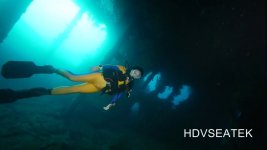
The GH13 (and maybe the GH2) has been an absolute God-send to me for underwater documentary production. Even in a housing with a couple of HID lights it's small, easily transportable (as hand luggage!) and the image quality/available lenses are superb. As far as complaints about it's lack of this-or-that...no camera system is perfect for every possible application. Be grateful for what the GH13/GH2 provides and use your skills to work around the limitations. (GH13 @ "C" settings framegrab; 2x HID50's; WW2 shipwreck Indonesia).
10c.jpg
 
Last edited:
I ask this because it seems to me, having owned this GH1 for 2 weeks now, and researching Vimeo and DVXUser, Phillip Bloom etc etc. that an awful lot of people want to use these cameras for making narrative cinematic films, and in a way the cameras seem ideally suited to that. They are full HD, have roughly 35mm movie sized sensors, are progressive scan capable, produce stunning images etc.

The problem is this...why are so many people who seem to have those aspirations doing significant numbers of "camera test" style videos and Phillip Bloom style cinematography films, set to music, and so few people, it seems to me, making real narrative shorts and features with these cameras?

The answer seems to be, at least to me, that getting it together to shoot double system sound, with a slate operator and a dedicated sound recordist requires a level of organisation that is really hard for most people in spite of their directorial ambitions, and requires people with a real specialism (in the case of a clapper loader, or boom op for example) that is almost but not quite possible to get your sister to do. Of course, assistant camera and boom op. are not rocket science by any means, but also a nightmare if done badly, and can be film-ruining if even done even averagely. You need good people for these roles, and it's also so unglamorous that it's really hard to find people unless you can pay them properly, in my experience.

I am a film production graduate and an experienced producer, and it's still hard for me sometimes to organise a crew of 6 trained people to do my little shoots, because I can't pay much if anything.

So, whereas the DVX100 led to all these awesome spontaneous films, where are all the spontaneous GH1 narrative films?

Also, how do we support and encourage our community to make the narrative films they bought the cameras for in the first place?

Welcome to the wonderful world of film making!

Yes, what you posted is absolutely correct. It is very difficult to make an actual true movie rather than shoot a bunch of trees and dogs and edit it to music. The people on these boards who are shooting movies are shooting movies and you will know it. I myself make a living currently more from production, including mainly the use of three hacked GH1s, and a full sound and lightning kit with a very tight small crew. I have been in it for the long haul and always wanted to act /write/direct and was MUCH more on the talent than tech side but became fascinated about 'making my own films' since I was a little sperm... as long as I can remember.

The plain fact of the matter is you just learn by doing. This is a tech forum, so you're going to here and see a lot of tech and spec talk and arguments over insane things that seem a bit wacky, but such is the nature of this place. I tend to post in big spurts and be very active, and then disappear for long periods. Those long periods are usually because I am shooting.

So to answer you question and further reinforce what others have said - yes, it IS hard to make a movie and it does take a talented team of people but at the same time, a truly dedicated and talented individual CAN pull off some miracles without have had 'been in the trenches' forever.

What I see over and over here in NYC is everyone and their mother has their own audio or video 'production' company now or is a supposed 'producer; or 'director' because they bought a few thousands dollar camera, computer, and a $400 audio card. Welp. That's nice and all but just because you own a Lamborghini doesn't mean you know how to drive it.

I do full packages now, and also work on other crews occasional, but when I was working another projects I would say about 80% of them just weren't very good. 10% had some promise but technical glitches and flaws like bad audio / continuity / editing that ruined otherwise talented writing / acting / and presentation. And five percent are pretty decent and 5% really impress me.

That's just me though.

Only one thing will tell where you are in the spectrum. Stop talking and go out and start shooting. If you have to get your sister to do the clap stick at first so be it. If you REALLY love film... eventually you won't need that anymore, but if that's how you start so be it, just follow what you love to do and do it and keep learning and keep going as best as you can with your passion and your dreams and your joy. That goes for ANYTHING you want to do in life, not just movies.

- Blackout
 
The GH13 (and maybe the GH2) has been an absolute God-send to me for underwater documentary production. Even in a housing with a couple of HID lights it's small, easily transportable (as hand luggage!) and the image quality/available lenses are superb. As far as complaints about it's lack of this-or-that...no camera system is perfect for every possible application. Be grateful for what the GH13/GH2 provides and use your skills to work around the limitations. (GH13 @ "C" settings framegrab; 2x HID50's; WW2 shipwreck Indonesia).
View attachment 27098

Hi, i have used my GH13 also for underwater videography.
http://exposureroom.com/members/amosrafaeli/3f6ed8aaf61b4b17a98a65b4488a11f5/
but used a very basic EwaMarine housing.
Which housing do you use?
 
Of course it's perfect for that, as the sound issue simply isn't an issue at all in this context, and you can take advantage of all of the camera's qualities.
 
Of course it's perfect for that, as the sound issue simply isn't an issue at all in this context, and you can take advantage of all of the camera's qualities.

Yes, sound is much less of an issue underwater...but I do use a hydrophone mounted through the housing to record sync sound (there's a lot of different noises going on down there!).

I do shoot a lot topside using Rode and Sony mics...I'm reasonably happy with the results obtainable with a Juicedlink/Beachtek unit (phantom powering/level control/AGC suppression) and good quality mics.
 
I ask this because it seems to me, having owned this GH1 for 2 weeks now, and researching Vimeo and DVXUser, Phillip Bloom etc etc. that an awful lot of people want to use these cameras for making narrative cinematic films, and in a way the cameras seem ideally suited to that. They are full HD, have roughly 35mm movie sized sensors, are progressive scan capable, produce stunning images etc.

The problem is this...why are so many people who seem to have those aspirations doing significant numbers of "camera test" style videos and Phillip Bloom style cinematography films, set to music, and so few people, it seems to me, making real narrative shorts and features with these cameras?

The answer seems to be, at least to me, that getting it together to shoot double system sound, with a slate operator and a dedicated sound recordist requires a level of organisation that is really hard for most people in spite of their directorial ambitions, and requires people with a real specialism (in the case of a clapper loader, or boom op for example) that is almost but not quite possible to get your sister to do. Of course, assistant camera and boom op. are not rocket science by any means, but also a nightmare if done badly, and can be film-ruining if even done even averagely. You need good people for these roles, and it's also so unglamorous that it's really hard to find people unless you can pay them properly, in my experience.

I am a film production graduate and an experienced producer, and it's still hard for me sometimes to organise a crew of 6 trained people to do my little shoots, because I can't pay much if anything.

So, whereas the DVX100 led to all these awesome spontaneous films, where are all the spontaneous GH1 narrative films?

Also, how do we support and encourage our community to make the narrative films they bought the cameras for in the first place?

I think the responders here have given you some good real world advice.

I used to rail against folks like Phillip Bloom because in my mind they were merely shooting pretty pictures, which were pointless, instead of telling stories. Finally it dawned on me that I was being closed minded and prejudiced.

The image itself can be the whole point of the film. Sometimes a new technology will define a new form of story telling and I think the DSLR's have actually done that in a very Zen way.

"I possess the true Dharma eye, the marvelous mind of Nirvāṇa, the true form of the formless, the subtle Dharma gate that does not rest on words or letters but is a special transmission outside of the scriptures."

Most of the people who can afford a $1500 camera simply don't have the time, budget or the substantial logistics train needed to produce a movie in the classic sense but many have the desire and the talent to express themselves visually. The DSLR gives these folks an astonishing tool which delivers a beautiful professional quality image. These type of shooters need go no farther to satisfy and be satisfied.

Suffice to say, I've seen some absolutely stunning visual poetry which may have been shot by a guy or gal who saved up enough from their grocery clerk job to buy one of these little miracles. I encourage this immensely. Some kid in their mom's basement is shooting video, evolving and gaining experience while producing some soul satisfying images. One day this kid will make his generation's "Citizen Kane".

As for myself, I will continue to make small narrative movies for fun and profit but I will also enjoy the beautiful video poetry which others may produce.
 
If someone would like to lend me their Gh1 I will shoot something unique looking and interesting with zero instances of shallow DOF or racking focus.

Seriously though, that's what I find sickening about this whole DSLR craze. EVERYBODY has them, even 15 and 16 year old kids who are totally stunned and amazed by the image quality.

I see it as a tool. Maybe one suited for me eventually. My shooting style is usually very flat and I always use a tripod. I use a lot of slow pans and tilts. I don't use shallow DOF all that much.
 
I think the responders here have given you some good real world advice.

I used to rail against folks like Phillip Bloom because in my mind they were merely shooting pretty pictures, which were pointless, instead of telling stories. Finally it dawned on me that I was being closed minded and prejudiced.

The image itself can be the whole point of the film. Sometimes a new technology will define a new form of story telling and I think the DSLR's have actually done that in a very Zen way.

"I possess the true Dharma eye, the marvelous mind of Nirvāṇa, the true form of the formless, the subtle Dharma gate that does not rest on words or letters but is a special transmission outside of the scriptures."

Most of the people who can afford a $1500 camera simply don't have the time, budget or the substantial logistics train needed to produce a movie in the classic sense but many have the desire and the talent to express themselves visually. The DSLR gives these folks an astonishing tool which delivers a beautiful professional quality image. These type of shooters need go no farther to satisfy and be satisfied.

Suffice to say, I've seen some absolutely stunning visual poetry which may have been shot by a guy or gal who saved up enough from their grocery clerk job to buy one of these little miracles. I encourage this immensely. Some kid in their mom's basement is shooting video, evolving and gaining experience while producing some soul satisfying images. One day this kid will make his generation's "Citizen Kane".

As for myself, I will continue to make small narrative movies for fun and profit but I will also enjoy the beautiful video poetry which others may produce.

Did I ask for advice?

I'm not railing against the likes of Phillip Bloom. He's one of the better test shooters - more in the "visual poetry" bracket, as you say. He's also an experienced cameraman, DP and all round nice fella, it seems.

I think I may not have adequately explained the main point of my original comment, which was more about the many people, it seems, who buy this camera with the intention of making narrative films, but whereas many actually succeed, other, perhaps younger, less experienced film-makers then realise that it's a huge collaborative process that requires a lot of organisational savvy, and that this camera is not actually the simplest to operate and lends itself to a more complex type of film-making than was the case with the DVX100, for example. Like the DVX, a GH1 rig can be as simple as the camera itself, sure, but if you want to make anything good, it needs at bare minimum a sound recorder, and then a slate possibly, and then with such short dof you light need a follow focus, a much faster computer with Premiere Pro CS5 or Final Cut Pro etc etc etc. which all makes for a less spontaneous camera, perhaps.

I'm posing this scenario as a question as much as stating a fact I guess...
 
...a GH1 rig can be as simple as the camera itself, sure, but if you want to make anything good, it needs at bare minimum a sound recorder, and then a slate possibly, and then with such short dof you light need a follow focus, a much faster computer with Premiere Pro CS5 or Final Cut Pro etc etc etc.
Actually, this is the fun part. It's the endless retakes and primitive audio/video file management that kills it for me.
 
Seriously though, that's what I find sickening about this whole DSLR craze. EVERYBODY has them, even 15 and 16 year old kids who are totally stunned and amazed by the image quality.

I am a 16 year old kid and I actually made a narrative film with the GH1.

 
Very nice work Mateo.

Yes! Mateo, that was terrific. I loved the editing in the scene where the man tries to sell the bike. The three passers-by come up in a set of three wide shots, then we see all three close-ups in a row; little unexpected touches like that made it fun to watch.
 
Back
Top