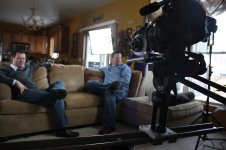
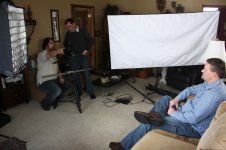
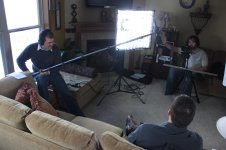
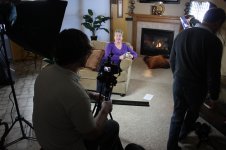
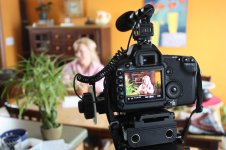
So i have been using the 5D mkII for about three months now. Here are my essential findings about this camera.
1: Pre Production, essential equipment.
When using a 5D, there are several BIG obstacles to over come. Mainly, monitoring, Exposure, Audio, focus, compression. Basically every aspect of the camera is a work around. ugh. Now i say ugh, because, despite the amazing imagery, just working with the camera requires quite a bit of pre production.
A. monitoring:
Getting an HDMI capable small monitor is essential. You can use a good monitor like a panasonic BT LH900a like i have, and use a HDMI -> SDI converter. Though the image isnt neccesarily accurate because you have no idea whats gained or lost in the conversion, but its good enough for framing and focus. Or you can use a Marshall monitor with HDMI in. They have decent peaking, and its workable.
B Expousre:
Expose using a meter. Believe it or not, the Digital cameras can be metered like film. They are built to do this and its pretty accurate. This hasn't failed me yet. Standard light meters can be used to expose for the stills, and they do essentially work for the video function as well. I recommend shooting everything in a USER file that has minimum contrast, and a lower (like -1) color saturation. Also, make sure youre white balance is set properly. you can use the built in WB adjustments, or a Color Temprature meter, and then dial it in by hand using the kelvin setting.
C Audio:
MAGIC LANTERN. The only way to do it really. When i shoot interviews, its just easier to record internal sound, as dual system sound can be expensive, and productions small enough to warrant a 5D usually dont have the budget. The 5D records great audio, and its completely useable. I use sennheiser wireless lavs, and the XLR wireless transmitter pod, for shotgun mic work. BUY the actual 1' sennheiser brand 1/8th mini to 1/8th mini cable. it gives you both channels of recording in the camera. this way you can stagger the levels for a bit of extra protection. Magic lantern also gives you a few exposure tools as well as a Rec time left feature. GREAT. (more on magic lantern in a bit)
D Focus:
Follow focus is a must, and youre AC ( yes you kinda need one now, as 1080P and 3" DOF is unforgiving) must use distance marks. The monitor is good enough for rough focus, but you need to have it really nailed down. Try using Maual lenses with stops. I use the Bower adapter and FD lenses. They perform well at F4 and below, giving you crisp focus, shaprness and contrast. The bower actually performs quite well.
E: Compression
You want to expose properly, to give the DSP a nice fat signal to work with. Shooting flat and color correcting in post seems to be the name of the game at this point. I usually try to shoot for look in camera, but the 5D can lose alot when the contrast is up too high. For quick turn around interviews, i shoot for look, but anything narrative, or Music Video, i shoot flat and let the CC pass in post regain the contrast. Low contrast seems to be kinder to the algorithm as well so long as your are well exposed with good range of contrast in the scene. Flat subjects demand a more aggressive contrast in camera. The macro blocking will kick in if the subject is flat, and you shoot with low contrast in camera. So its sort of a balancing act. tuning the camera for the subject.
MAGIC Lantern:
While a great program, it can lock up the camera, and require a lengthy process of removing the battery, restarting, and reinitializing the firmware. This means you can miss essential shots. This has happened. I lost a shot of Madonna at a red carpet event because of this. Producer was not happy and didn't want to hear about firmware, or boot time. This is why i strongly suggest you use the appropriate camera for the job. The 5D is great for NON critical. MAgic lantern has also failed in that, the camera indicated recording, but it was not. I lost a section of an important interview, and didnt know until the cards were offloaded to the edit bay. No Es Bueno. However when it works, it works great. The audio control is invaluable.
EDITING:
Often the 30P H.264 1080p, must be conformed to 29.97, and trans coded to another format for editing and Color correction. This takes time, a lot of time. So be mindful when you need speed on an edit. The Native h246 is very taxing on a computer system, and can multiple layer s can grind the system to a halt.
I am telling you this so you can opt to go with the Proper camera for the job. The 5D IS NOT THE RIGHT CAMERA FOR EVERY JOB. It looks great, but, its not perfect.
my 2Cents.
-Timur