rob norton
Veteran
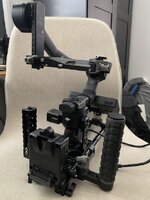
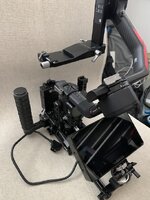
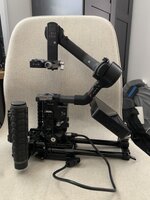
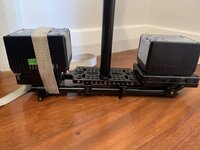
I recently bought a DJI ronin 4s pro. I put together a custom rig that allows me to go from dana dolly to compact jib via dovetail on tripod head. This set up has been great - previously operating a tripod head while sliding was not an option and operating while the camera changed height on a jib was absolutely not an option. I know it can be done but not with any of the fluid heads I ever have access to.
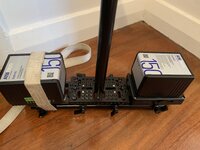
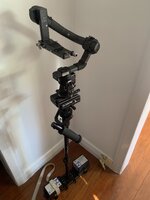
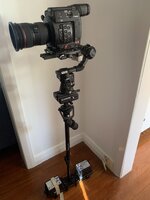
This post however, is about a handheld gimbal set up. The same rig described above (will share photos soon) lets me hold everything in my hands easily enough. I also have the tilta advanced ring, which works as intended. These are both fine for short takes but still somewhat limiting in terms of range of motion. For gimbal rigs, I am really not a fan of ready rig or easyrig. They definitely have their place for eliminating or decreasing fatigue, but it's such a shame that with so much equipment involved, you're still so limited with camera placement. Readyrig can be put in a range of positions in between shots, rather than making large changes in height during a shot. Same with panning, where you're either front on, or you adjust the rig to side on, with no real option to transition between the two during the shot. The easyrig allows for pretty free flowing pans, but you quickly hit height restrictions.
All this to say I'm sold on the steadicam/arri trinity/tilta float set up for handheld gimbal operating and this is where I need help.
I'm looking to put something together somewhere in between the tilta float ($1,300) and arri trinity ($70k). I'm thinking off the shelf steadicam parts but also DIY. I'll share the design here as things unfold.
I think after sorting out a vest/arm, the rest won't be too difficult to figure out. We can review this statement in a few months.
Initial questions:
- For steadicam payloads, I believe this is in reference to the camera package, not the sled or counterweights/monitor you add to the cross bar, is this right?
- I'm guessing you also need to check total weight is within the vest/arm limit? Except I assume the counterweight required for a camera package at the payload capacity can only be so much (anymore and rig won't be balanced), so if you balance a camera within the stated payload, it's probably within the total payload limit for the arm/vest?
- Can I buy pieces off the shelf like Steadicam arm/vest/gimbal/gimbal handle, then add a metal pipe inside the gimbal? Either with the ability to telescope/change length or fixed. I won't be operating for other people, so in theory could balance for a single set up, find out where to attach the (steadicam) gimbal, then commit to that position.
DJI Ronin 4s pro weighs 1.2kg with a 4.5kg capacity - 5.7kg/12.5lbs. The custom build probably takes everything to the 8kg/17.6lb range. I haven't weighed all the bits and pieces, this is just a guess. But if we say 17.6lbs, does this make the A-30 arm with A-30/Zephyr vest the most appropriate to look for?
Basically since I hope to mount the monitor to the (steadicam) gimbal handle, I'm wondering if it's possible to save $$ buying hardware that doesn't include power/SDI connections, possibly excludes length adjustments, as well as other pieces that a steadicam rig would require but wouldn't be needed for this project. But these pieces may not exist.
Thanks for reading, let's keep it fun and safe. I'm bracing for a reality check from Charles but am not ready to give up on the dream just yet!
This post however, is about a handheld gimbal set up. The same rig described above (will share photos soon) lets me hold everything in my hands easily enough. I also have the tilta advanced ring, which works as intended. These are both fine for short takes but still somewhat limiting in terms of range of motion. For gimbal rigs, I am really not a fan of ready rig or easyrig. They definitely have their place for eliminating or decreasing fatigue, but it's such a shame that with so much equipment involved, you're still so limited with camera placement. Readyrig can be put in a range of positions in between shots, rather than making large changes in height during a shot. Same with panning, where you're either front on, or you adjust the rig to side on, with no real option to transition between the two during the shot. The easyrig allows for pretty free flowing pans, but you quickly hit height restrictions.
All this to say I'm sold on the steadicam/arri trinity/tilta float set up for handheld gimbal operating and this is where I need help.
I'm looking to put something together somewhere in between the tilta float ($1,300) and arri trinity ($70k). I'm thinking off the shelf steadicam parts but also DIY. I'll share the design here as things unfold.
I think after sorting out a vest/arm, the rest won't be too difficult to figure out. We can review this statement in a few months.
Initial questions:
- For steadicam payloads, I believe this is in reference to the camera package, not the sled or counterweights/monitor you add to the cross bar, is this right?
- I'm guessing you also need to check total weight is within the vest/arm limit? Except I assume the counterweight required for a camera package at the payload capacity can only be so much (anymore and rig won't be balanced), so if you balance a camera within the stated payload, it's probably within the total payload limit for the arm/vest?
- Can I buy pieces off the shelf like Steadicam arm/vest/gimbal/gimbal handle, then add a metal pipe inside the gimbal? Either with the ability to telescope/change length or fixed. I won't be operating for other people, so in theory could balance for a single set up, find out where to attach the (steadicam) gimbal, then commit to that position.
DJI Ronin 4s pro weighs 1.2kg with a 4.5kg capacity - 5.7kg/12.5lbs. The custom build probably takes everything to the 8kg/17.6lb range. I haven't weighed all the bits and pieces, this is just a guess. But if we say 17.6lbs, does this make the A-30 arm with A-30/Zephyr vest the most appropriate to look for?
Basically since I hope to mount the monitor to the (steadicam) gimbal handle, I'm wondering if it's possible to save $$ buying hardware that doesn't include power/SDI connections, possibly excludes length adjustments, as well as other pieces that a steadicam rig would require but wouldn't be needed for this project. But these pieces may not exist.
Thanks for reading, let's keep it fun and safe. I'm bracing for a reality check from Charles but am not ready to give up on the dream just yet!
Last edited: