GH2-to-APSC Crop factor

janusz

Well-known member
Sorry if this is already out there!

What is the direct crop factor? I read somewhere it's about 1.4x... ???

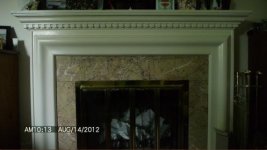
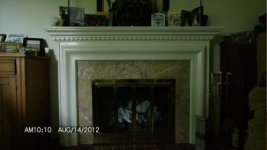
I tested my Panasonic 14-140 at 14mm versus the Canon EFS 10-22 (APSC lens) at 10mm and the attached images are what I got...

The 10:13AM is the Panny at 14mm and the 10:10AM is the Canon at 10mm.

If the GH2-to-APSC crop factor is approx. 1.4x then would these two fields of view be almost the same?
 

Attachments

  • Screen shot 2012-08-14 at 10.16.08 AM.jpg
    Screen shot 2012-08-14 at 10.16.08 AM.jpg
    18.1 KB · Views: 0
  • Screen shot 2012-08-14 at 10.16.29 AM.jpg
    Screen shot 2012-08-14 at 10.16.29 AM.jpg
    17.4 KB · Views: 0
Sorry if this is already out there!

What is the direct crop factor? I read somewhere it's about 1.4x... ???

I tested my Panasonic 14-140 at 14mm versus the Canon EFS 10-22 (APSC lens) at 10mm and the attached images are what I got...

The 10:13AM is the Panny at 14mm and the 10:10AM is the Canon at 10mm.

If the GH2-to-APSC crop factor is approx. 1.4x then would these two fields of view be almost the same?

Barry has already given you the technical answer, but I'm confused as to what you were testing here. Did you put the EFS lens on an adapter, and take both pictures on the GH2? Because at 10mm, of course your FOV will be wider than 14. The focal distance (measured in mm) is consistent, regardless of what size sensor you are using.
For example, 14mm on your GH2 will give approximately the same FOV as a 28mm on full-frame, or about 45mm on an APS-C. But it is not 28mm or 45mm, it is still 14mm- only the visible area on the lens is changing.

If you dig up an old vintage 50mm lens from yesteryear's 35mm full-sized film cameras, throwing it on an APS-C sensor will yield about 80mm, and nearly 100mm on the GH2. But at the end of the day, the lens is still only 50mm. The same is true here- they don't measure the mm in "35mm equivalent FOV" (although sometimes they list what the equivalents would be for reference), rather they tell you exactly what mm size the focal length of the lens is. The resulting FOV is your responsibility to interpret.
 
The crop is on the body/sensor, not the lens. So Panasonic 14mm on GH2 = 28mm, Canon 10mm on GH2 = 20mm. Therefore Canon at 14mm would match Panasonic at 14mm.
 
If you put a 14 on the Canon and also on the Panasonic, they will not match the field of view. The mathematical difference is 1.18. So you would need a 1.18x longer lens on the Canon to match the FOV of the Panasonic. A 10mm on the Panasonic would equate (in terms of field of view) to a 12mm on the Canon.
 
This is why I bought the pCam app for the iPhone, it has a lens matching calculator, and all one needs to do is select the camera models involved, and the focal length of one to calculate the match...

In a short film I was director for, the photographer had a 5DMKIII, which seems to be just about nearly 'full frame 35mm still', which struck me as a bit strange... but in any case it saved on brain crampage...

And no... I didn't measure the actual FoV on the 5D... nor as a matter of fact have I done that for my GH-1... but I am shortly along with comparing calculated DoF...
 
The point is, I think the OP was confused as to how FOV and lens focal distances work. Any lens at a particular focal distance as measured in mm, not matter what camera it was designed for, should render identical FOV.

The whole "35mm equivalent" thing is just there for folks who have a background in still photography and are having trouble understanding what is considered wide/medium/telephoto on these newer crop sensors. If you come from the world of cinematography, where APS-C is about the same FOV as s35 film, this whole translation into equivalents is nonsense. Just stick to what mm size you need on your particular sensor size and forget about what the equivalent size on a full frame is (unless you are also shooting with a full frame camera or something).

As far as translating APS-C to Micro 4/3, I get that- m43 is slightly less than APS-C, so even coming from cinematography worlds there is a bit of crop going on. But its not much, and it seems backwards to what the op was trying to do. You need to go a few mm wider on the GH2 to match the FOV of your APS-C cam. But that's assuming your APS-C lens is mounted on an APS-C sized sensor, otherwise you are just changing FOV.
 
Last edited:
As far as translating APS-C to Micro 4/3, I get that- m43 is slightly less than APS-C, so even coming from cinematography worlds there is a bit of crop going on. But its not much, and it seems backwards to what the op was trying to do. You need to go a few mm wider on the GH2 to match the FOV of your APS-C cam. But that's assuming your APS-C lens is mounted on an APS-C sized sensor, otherwise you are just changing FOV.

The two widget apps I have both have FoV calculators for given cameras and lens focal lengths and subject distance combinations. The only time I've needed to 'compare' is when there's the potential, or actuality, of using two cameras which are not identical, to match up.

I bought the pCam app, mainly for it's 'match' function, since over the last few months, the 'groups' I've been to get some sort of film projects going, have had members with a variety of cameras, and it was too 'burdensome' to hand calculate comparable focal lengths 'on the fly'... for some reason everyone in these groups... except me... was dead set on using 'their' camera... so... ok... go with the flow for group cohesiveness...but still I like to have known alternatives should someone not show up to these 'all volunteer' deals...
 
I'm not sure if this is what is being asked, but here's two screengrabs I just took to illustrate focal length / fov on my GH2 with 2 different lenses. I locked my tripod down and just switched lenses. (I might have wiggled it a little). The top one is my Lumix 14-42 set at 28mm. The bottom one is my Vivitar FD 28mm with an adapter. It was fairly low light, the Lumix was at f4.6 or so and 6400 iso, the Vivitar was at 2.8 and 640 iso.


The point is no matter what type of lens you have, the FOV will end up being the same on your GH2. For example, a 50mm Canon, Nikon or Pansonic lens will all give the same FOV on a GH2 (give or take a couple millimeters, notice the corner of the coffee table).


Lumix 14-42 at 28mm
1z4jsj4.jpg


Vivitar FD 28mm prime
2lshcg2.jpg
 
The two widget apps I have both have FoV calculators for given cameras and lens focal lengths and subject distance combinations. The only time I've needed to 'compare' is when there's the potential, or actuality, of using two cameras which are not identical, to match up.

I bought the pCam app, mainly for it's 'match' function, since over the last few months, the 'groups' I've been to get some sort of film projects going, have had members with a variety of cameras, and it was too 'burdensome' to hand calculate comparable focal lengths 'on the fly'... for some reason everyone in these groups... except me... was dead set on using 'their' camera... so... ok... go with the flow for group cohesiveness...but still I like to have known alternatives should someone not show up to these 'all volunteer' deals...

Sounds useful, but I personally wouldn't buy an app for something I can throw together in an excel sheet in about 5 min.
Yes, I have excel on my non-iphone. :)

But this isn't really the topic...
 
Sorry for the confusion. Both images were recorded on the same GH2 body, locked-off; 14mm on the Panny zoom, 10mm on the Canon. That sentence would have negated the need for everyone to re-explain how FOV works.

Still though, I got the answer to the only question I asked, and the is 1.18x. Thanks everyone :)
 
Sorry, Gilden. I wasn't confused as to how FOV and focal distances work. I confused you all by unfortunately failing to state that both lens were on my GH2.

The point is, I think the OP was confused as to how FOV and lens focal distances work. Any lens at a particular focal distance as measured in mm, not matter what camera it was designed for, should render identical FOV.

The whole "35mm equivalent" thing is just there for folks who have a background in still photography and are having trouble understanding what is considered wide/medium/telephoto on these newer crop sensors. If you come from the world of cinematography, where APS-C is about the same FOV as s35 film, this whole translation into equivalents is nonsense. Just stick to what mm size you need on your particular sensor size and forget about what the equivalent size on a full frame is (unless you are also shooting with a full frame camera or something).

As far as translating APS-C to Micro 4/3, I get that- m43 is slightly less than APS-C, so even coming from cinematography worlds there is a bit of crop going on. But its not much, and it seems backwards to what the op was trying to do. You need to go a few mm wider on the GH2 to match the FOV of your APS-C cam. But that's assuming your APS-C lens is mounted on an APS-C sized sensor, otherwise you are just changing FOV.
 
Still though, I got the answer to the only question I asked, and the is 1.18x. Thanks everyone :)

No problem. Its why we're here!

Sorry for the confusion. Both images were recorded on the same GH2 body, locked-off; 14mm on the Panny zoom, 10mm on the Canon. That sentence would have negated the need for everyone to re-explain how FOV works.

Actually, on the contrary- it just reaffirms my theory that you've got the whole FOV thing mixed up!

Your original post implied that you were under the impression that a lens from an APS-C camera would somehow have a difference FOV than one made for m4/3. If you had tested it on an APS-C body, that would be different (but still backwards, I would think the 14mm on the APS-C and 10mm on the m43 would have a better chance of matching). But adding that sentence just reinforces our need to explain FOV!:)

Bottom line: 10mm will always be wider than 14mm, regardless of lens mount! If you are using two different camera bodies, that would be a different story. Hope that helps clear things up!
 
If I put an APSC 10mm on my GH2 body and a M43 10mm on my GH2 body I would get two images with different FOVs, wouldn't I? Because that 10mm APSC lens is directly based on the diagonal dimension of the APSC sensor which of course is a wider FOV than a M43 senor. So in order for my GH2 to see as wide as the 10mm APSC lens on an APSC body, the GH2 needs a M43 lens that is 1.18x wider. 10mm in APSC sees approx. what a 8.47mm sees in M43.
 
And so, I think, that what that 10mm APSC lens is showing me on my GH2 body is the equivalent of a 11.8mm M43 lens on my GH2 body.
 
And so, I think, that what that 10mm APSC lens is showing me on my GH2 body is the equivalent of a 11.8mm M43 lens on my GH2 body.

That definitely is 'confused'... there is no 10 mm APSC 'lens'(*)... there is just a 10mm lens... how the 10mm lens affects the Field of View, is related to how large the sensor is. I don't have experience with the APS-C sensor... but I do know it is not the same size as the GH-1 micro-4/3's size.

Hence these sensors will have different Fields of View for the SAME LENS FOCAL LENGTH.

*It may happen that the 10 mm lens is a Canon lens and usually mounted on a Canon APS-C sensored camera... but that does not 'tie' it to the APS-C sensor size, at least in terms of focal length... mounting hardware is what makes it a Canon lens...

The Nikon lenses I have were all designed for a full frame 35mm still negative, but when I put the 28mm Nikon lens on the GH-1... it has an Angle of View of about 37 degrees, that is contrast to the SAME LENS on a 35mm still Nikon, which has a Angle of View of about 65 degrees. As a note, a 25mm lens has an Angle of View about 40 degrees on a GH-1, so 25mm is considered 'normal'...

A 50mm lens on a 'full frame still' has an Angle of View about 40 degrees... but on my GH-1... it's about 20 degrees... giving a 'telephoto' look.

A lens is a lens... it is the sensor size that sets these parameters.
 
Last edited:
Back
Top