GH1 does not have ALC

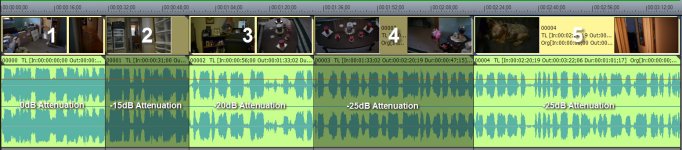
I still stand by the screen grab I did of my timeline which clearly shows that when there was no one speaking in the external mic, the background noise remained at a constant level. By simply adding an XLR adjustable attenuator, I was able to reduce the background noise (in proportion) many more dB's lower than the peak dB levels of the person talking but the overall background noise still remained at a constant level. Any unevenness in the background noise I recorded was from me walking around at the same time as holding the mic in one hand and the GH1 in the other because I was also testing mic handling noise levels.

I could care less what the built-in mic does and it may well act more like an AGC/ALC than using the external mic input on the GH1.

Randy
 

Attachments

  • GH1_AGC_Test.jpg
    GH1_AGC_Test.jpg
    107.6 KB · Views: 0
Let's see, it takes 1 XLR 3-Step adjustable attenuator (4" barrel plug), a 1' XLR to 3.5mm cable and a 3.5 to 2.5mm adapter to get great audio quality with the GH1. So 3 pieces which act as a 1.5' audio cable when connected together.

I'd like to try out the setup you mention. What is the XLR 3-Step adjustable attenuator (4" barrel plug) you mention? Is this generally available?

Much thanks in advance.

[Edit: Strike that. I have a Rode VideoMic, which doesn't have XLR output... So, what would you recommend for a 1/8" attenuator? :-) ]
../c
 
Last edited:
I don't have any 1/8" attenuators and I'm not sure I would trust the audio quality on those anyways. I only use pro audio XLR 3-step attenuators made by Shure (15,20,25dB) and Hosa (20,30,40dB) since I'm using XLR mics or audio mixers with XLR outputs. I also have a 10dB attenuator made by Whirlwind but haven't tested that out yet.

I have a Rode Stereo VideoMic and use the -10 attenuation switch on it and that works better than not using it but haven't done any real in-depth testing with it. Certainly much better than the built-in mic to record scratch audio or for some types of run/gun situations where you need stereo/wide angle pickup.

Each mic has a different output level so you need to test each mic for the proper attenuation level. For example, the Sennheiser ME64 needs about twice the attenuation as an Electro-Voice RE50. With an audio mixer you only need to test the output level of that device once since you would only be adjusting the input levels and not the master output level, at least that is the way I use my audio mixer so that the output level from the mixer is always at the same level.

Don't use a 50db "Line to Mic" level attenuator as that will knock the audio down way too low.

Again this is all done so the audio levels going into the GH1 don't hit the Limiter so hard. In fact you really want to bring the audio level down so it doesn't activate the Limiter at all since it colors/alters the sound quality. Without attenuation the audio will sound overdriven but not distorted.

Randy
 
Last edited:
What you really need to look at in the screen grab I provided above was the difference between Test #1 and Test #2. I added 15dB of attenuation in Test #2 and the Peak Level didn't drop at all, which was pretty shocking if you understand how much a 15dB drop in audio level is.

Now look at the waveforms in Test's 1 and 2 and compare the Background Level. Do you see the big drop in Background Level in Test #2 when compared to Test #1? So that's no drop in Peak Level but a big drop in Background Level when attenuating the GH1 input by 15dB. That means the GH1 has a Peak Limiter and the input is way too sensitive for normal mic levels.

Now when I attenuated the level by 20dB in Test #3, I finally saw the Peak Level dropping a little and the Background Level also dropped some more. I still didn't think the audio sounded natural at that attenuation level and when I added the 25dB attenuation, the audio finally sounded like it should or at least comparable to the audio when recorded to a Zoom recorder.

Randy
 
Last edited:
Thanks Caveman - the waveforms are very useful. I guess there's no better way to find out how the Rode performs than to experiment.
 
This thread got me thinking about this camera and the Canon Vixias. On one hand, it totally sounds like a limiter, however it behaves strangely when sections are really quiet. Just a little hit or miss to be a straight limiter.

Post processing can be really anal for broadcast and film, of which Dolby is king. I suspect that the situation has to do with this:

Dolby AC-3 DialNorm levels. The setting for this cam seems to be "Film Standard" when recording in 24p AVCHD.

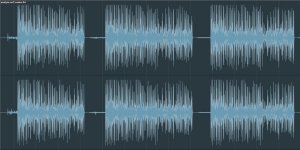
Hard to defeat, but somewhat workable if you know the parameters. It acts like a 20:1 limiter sometimes, a 2:1 compressor other times and a 2:1 expander other times, oh yeah and sometimes it will do nothing to your audio. I could be wrong, but nothing else seems to be making any sense.

You can't just calibrate to VU meters, or straight PPM meters. It needs Leq(A) meter, calibrated somewhere around -31dBFS. Add in the usual +4dBu, (not Leq(A)), output on traditional balanced mixers and that does put you in the -25 to -30 calibration for VU meters. I think.

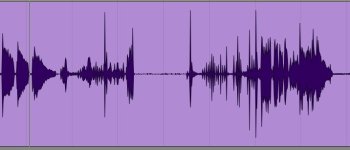
I tried a bunch of settings last night. My Sennheiser G2 worked ok with the -30 AF out, xlr plug attached then converted down to 2.5mm.

In another test I used the insert send on my mixer, 0dBu, played drum tracks into the board from pro tools at -18dBFS. Heard some compression in the 2:1 ratio. It seems to be kicking in around -26dB Leq(A), which correlates with the Dolby DialNorm Film Standard spec.

If someone can really dig into all the AC-3 MetaData, it will be easier to tell exactly what settings they have applied.

So, Ozpeter is probably right about the ALC, Dolby calls it DRC - dynamic range control, because it reacts with different dynamics based on where it falls in the scale. Ben B is right about it not being a limiter. I just doesn't behave like one, only in the top 20dB of the scale.

The most frustrating part will be the 2:1 expander/boost, which will do nothing at -45 or -50, but will boost as much as 12db, looks more like 6, seems to settle around -43ish. The noise will be determined by noisy cables, preamps, crappy mics, bad gain structure.

If you can get it to drop below -50dB, it seems to stay there. Leq(A) scale. That seems pretty quiet and usable to me.

Don't just buy adapters, get impedance matching transformers etc.. Go balanced cabling as far as you can to keep the noise floor low. It will make your life much easier.

The sweet spot is -30 to -20dB LEQ(A), with a noise floor at least -50dB or lower. This is when 16bit audio really sucks. Although, they could be oversampling or something to get more dynamic range.

Anyways, just a theory. Somebody else take a look and see if it works.
 

Attachments

  • ac3 drums.jpg
    ac3 drums.jpg
    75.5 KB · Views: 0
  • ac3sennheiserg2atneg30.JPG
    ac3sennheiserg2atneg30.JPG
    31.6 KB · Views: 0
I want to suggest that a limiter, when heavily limiting and severely narrowing the dynamic range, will sound similar to AGC. The loudest source will push back the background, and the background will be louder when louder source is absent.

But this thread would be a lot more helpful with some audio files of what the proposed attenuation can accomplish. How about Caveman dude (or others) record an interview with input attenuated setup.
I think plenty of people would like a working method for in cam sync sound. If nothing else but for reducing the chance of missed rolling of external recorders.
A picture's worth a thousand words..but that's not enough to illustrate audio.

Sounds (no pun intended) like a perfect test for you to do for us. Looking forward to hearing the results.

Randy
 
I ran across this thread earlier in the week. Much appreciation to Ozpeter for starting it and Randy for the testing. I was looking for some info on any possibility of getting usable sound in-camera on the outside chance that I might do an interview or voiceover in the field with the GH1. It's not my sole intent, but just in case the situation came up.

I did a couple tests similar to Randy's, using a Sony 44B lav and Shure variable line pad. (I'll try to post some audio files soon as I get a chance) I got the same results as in his test. Using the line pad, I feel like I can get quite usable audio (from a lav, so far) in certain situations. Without the line pad, the noise floor gains up as you stop talking - totally unusable. With the pad at -20db, the audio comes in below the AGC, limiter, or whatever it is and it's pretty darn quiet. In a studio environment, of course I would go with a mixer and recorder. But for some situations in the field, I can work with this quality level.
Thanks guys for pointing this out.

Barry

Oh, I wanted to explain my audio chain.
Sony 44b lav with battery to 6' XLR cable to Shure XLR variable line pad to one side of a dual female XLR-stereo 3.5mm cable to a 3.5-2.5mm right angle plug at the camera.
 
Last edited:
Hi,
I also read this thread a couple of weeks ago - now I've been shooting since a week or something with the MKE-400, connected over 2 M-Audio In-Line 10dB pads (resulting in -20dB attenuation), more or less directly (with a 3,5 mm > 2,5 mm jack adapter) into the mini-jack socket on the GH1 - sounds like a lot of connectors, but the result is good enough for me. So many thanks for the information, this kind of thing is important, when doing low budget productions ;-)

I finally got my M-Audio 3.5mm 10dB attenuator in and did a test with the Rode Stereo VideoMic. Using that along with the Rode's built-in -10dB switch lowered the audio level below the GH1's limiter allowing for much more natural sounding audio and a lower overall background noise level when compared to using just the Rode's -10dB switch.

When I say it lowers the overall background noise level I mean in relation to the person speaking (or other audio source) into the mic. I measured a 2.5dB background noise level drop in relation to the person speaking. The person was speaking directly into the mic from about 1 foot away in a room with computers on, AC on and a fan blowing.

Randy
 
Now that I think of it: this entry here in fact urgently needs to be changed, doesn't it??

Q). Are you able to disable the AGC?
A). No, not yet, maybe soon. Still testing.

Because this is posted in perhaps the most important Sticky in the Firmware-hack forum, which is being read by loads of people, and it sounds like nonsense to me ;-)
Should I post this in the other thread as well, or is some moderator reading this, who can change that? Don't want to produce unnecessary posts, it's already too much, to be able to read it anyway...
 
I wouldn't worry about it.

What needs to be fixed in the GH1 is the mic input sensitivity level and maybe that can be changed in the firmware. If it can, it would be great to lower it by at least 10dB and make it adjustable in -5dB increments down to -40dB so that it can handle various mics and mixers that output a mic level signal. This is basically what I'm doing now with external attenuators.

Randy
 
Randy, that sounds doable, given what Tester has done otherwise. The thing we REALLY need is an onscreen level meter of some kind. But from what I remember reading in another thread, that is less doable due to lack of graphic elements built into the camera. I could be wrong....

Barry
 
Randy, that sounds doable, given what Tester has done otherwise. The thing we REALLY need is an onscreen level meter of some kind. But from what I remember reading in another thread, that is less doable due to lack of graphic elements built into the camera. I could be wrong....

Barry
According to Vitaliy there is a screen with volume controls that can be reused for controlling the mic levels.
 
Well that'd be cool - but for the time being, it's still still much cheaper to buy attenuators, than this Zoom H4n, everybody always seems to want to buy - I think many thousands of users bought that, although apparently the preamps aren't top of the bill & there's better alternatives on the market (in case you really need a field recorder)...

The story about "which field recorder is best" might be off-topic here: but it's a bit of a shame, if people are leaving these AGC-stories on important pages on the forum, although they know, it's probably nonsense. I think at that point we're making it too easy for the Zoom marketing department. I have little time right now, to upload test shots etc.; but there's some clear indications in the above thread, so why not correct things?
 
All I know is that when I have plugged in my Senheiser wireless lavs to the GH1, as long as the person is talking it's fine, but if they stop it most definitely brings the background noise up. Now maybe this is actually bringing everything down when they are talking and bringing it back up when they're not, so I will try again to turn the sensitivity of the lav down and do some tests.
 
Back
Top