future proof

rob norton

Veteran
By and large, when speaking about cameras, resolution has gone hand in hand with the term more than anything else. "A camera that has 4K is future proofing your footage."

Of course I understand the need for planning when investing but I think the "future proofing" argument has gotten out of hand, is flawed and I do not subscribe to it. 4K video from a camera today will still look dated because we'll continue to see increases in dynamic range, low light ability, less noise in shadows, the end of the medium?, the list goes on.

Also the concept is strange to begin with. A video cannot be future proof by virtue of its content. Unless we're talking about wildlife or certain other formats it's pretty tough for a video to be indistinguishable time-wise. Videos date themselves by fashion, featured technology, or trends in language, cinematography style, logos/graphics and background music (among plenty of other things).

On top of this, nobody knows what the future holds. If there's a sudden shift to 16K for example, and the main factor that makes something future proof (at that time) is 4K resolution, then future proof it is not.

When I see the pillar box bars on 'The Simpsons' I know the chances are increased of it being a classic episode rather than any new garbage which is in widescreen. My point is being able to recognize when a video/film came from is not a bad thing.

What does anyone else think?
 
Last edited:
nothing is future proof when it comes to electronics, but i would say it's best to invest in good audio first. because audio equipment doesn't change as rapidly, it stays relevant longer. if you bought a good microphone seven years ago you're probably still using it. but if you bought a good camera back then, you've likely moved on to something better.
 
I think the idea is that eventually everything will be 4K viewing, etc. etc., and if someone wants to show the content you shot at that point, that even if newer 4K is better than old school 4K, even old school 4K will look better than upscaled HD. So while your stuff may look dated, it will look less so.
 
2K is future proof, for most applications. This is because the resolution of the human eye is fixed, and there is an upper limit to comfortable angle of view.
 
Lots of discussions about this and various ideas.
Depending on where you are, many will be producing HD for some time to come. Some still are doing SD.
I am slowly getting into 4k by mean's of only one main camera, 1 Photo/Video camera and a quadcopter.
All my other cameras are only HD and all my work thus far is HD and expected to be so for some time to come.

4K has some advantages. Like you said trying to future proof footage is a losing pursuit. Depending on what you shoot, even if the resolution is there, the scenery, fashion, vehicles, graphics etc...will date footage.

In 2009 I produced a high speed car chase with a local police department. Even though I had the option of using 1 HD camera I didn't, instead choosing to use 6 SD cameras and 4 SD bullet cameras. Since 1 of the SD cameras and all 4 bullet cameras couldn't shoot 16X9 I chose to set all cameras to 4X3 to better match. By doing this I severely handicapped future use of some otherwise fantastic footage since everytime I intercut it I have to not only deal with SD resolution but also the 4X3 aspect ratio.
Oh how I wish I had recorded some of those stunts with the 1 HD camera!

Since then I am trying harder to better "future proof" the special footage whose future content value is great. Thus the move into 4K even though I don't yet need it.
Even if/when 8K comes into use I think 4K will hold up quite well since apparantly the human eye can't resolve 8K on normal size screens at normal viewing distances. And even when 4K cameras get better DR and such, older 4K footage will still look pretty good and hold up.
 
I think chasing after "future proof" is an inherently flawed concept, as nothing (related to technology) will ever truly be future proof.

But there is such a thing as giving your productions longer lifespan. 4K is a way to extend the "shelf life" of your footage. At NAB I talked to a number of folks about stuff like this, and one (a stock footage shooter) made the point that he's got some excellent, once-in-a-lifetime shots that he can't even give away anymore, because they were shot on standard def. And nobody's buying standard def.

Had his footage been shot in HD in the first place (if it were possible), it'd still be selling today, and to some point in the future.

With 4K, will we get there? Will there be projects that you'll look back on and say "man, I wish I woulda shot that on 4K in the first place?" Maybe. The thing I see about it is, though -- what's the downside? If 4K is a reasonable, cost-effective option, why on earth wouldn't you choose it? It can't hurt (unless, of course, it's terrible 4K, like HDV was terrible HD); so as long as it looks good, and you can make a high-quality 1080p master from it today, and you've got 4K to go back on, then -- no, you'll never be "future proof", but you can extend your product's lifespan.

If it's a choice of shooting 4K on a GH4 or HD on an Alexa, well, yeah, there's obviously some substantial benefits to shooting on the Alexa. But if it's Alexa HD vs. VariCam 4K, for about the same price and the same workflow... seems like a fairly obvious choice. Or if it's GH2 HD vs. GH4 4K, surely most any reasonable person would go with the GH4 4K in that case...
 
I agree with uga and barry. On uga's front, audio recording devices are really one of the only future proof things around in addition to lighting kits and lenses. Some might say even compare investing in an expensive shock mount is like investing in a solid follow focus. Truthfully, cameras will never inherently be future proof but i can see the argument their footage will easily last longer than the cameras themselves. 4k is a solid medium and for the time being is more useful for those filming and editing than those viewing. As with all things, even the term 4k is being bastardized when something like an iphone films in 4k. This 4k is like the class 10 badge on an sd card which could skew people's opinions on the needs for proper gear when they're on the low end of productions. All 4k is not equal, and this is a well accepted fact for industry professionals and some consumers alike. The same way a Class 10 is considered 'good' is the same way 8 bit 4k video is good. People know stepping up to U1 to 3 on SD cards is awesome, the same way 10 bit and 12 bit raw is awesome.

As far as 4k goes it'll definitely have a good 10 years of usefulness, and as far as the 21st century film industry goes thats pretty good future proofing in my book.
 
There are articles here and there about how technology is accelerating. I watched a video that said that some day technology will be changing so fast that the stuff you learn as a freshman will be obsolete by the time you're a senior. Another article a coworker excitedly emailed me had a graph of technology curving up until it was almost straight up and down.

1-change-over-time.png

For a while I believed it. But at the same time I saw that certain things changed slowly or didn't change at all or even seemed to be getting worse.

Houses. David Mamet in his book On Directing Film mentions that his house is a hundred years old, put together without nails. He says this with some pride. If you said you were using a camera that was just 10 years old I suppose you would hang your head in shame, but it's quite the opposite when you talk about houses. Indeed the shape of houses hasn't changed much in centuries.

647-Myrtle-Cottage.jpg

18th-century English cottage.


Wheels. Going from one wheel to two was certainly an improvement, and then again from two to three, and three to four. I have read that they had four wheels in ancient China and prehistoric Europe. Vehicles with more than four wheels remain niche items.

Okay, okay, what about something more technological?

Aircraft. Many of the aircraft still used by the richest military in the world (the United States) were designed in built in the 1960s. The 1970s A-10 Thunderbolt has made headlines lately because the Air Force can't seem to make something better, despite much effort and billions in spending.

a16362c502f6a6206a7ef7bff0796d90.jpg

Okay, what about something closer to our industry?

Lenses. Again, while there has been some advancement, the basic mechanics of lenses hasn't changed much. In fact, some of the older lenses are prized for their smooth color handling, bokeh and other focal characteristics, mechanics, and many them are plenty sharp even though they are 30 or more years old.

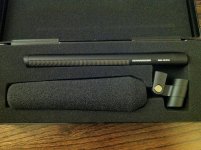
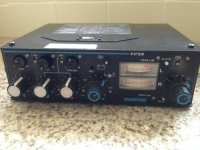
Audio equipment. As has already been said in this thread, audio has plateued. Sennheiser wanted to discontinue the MKH 416 (1970s) but customers clamored for it to stay. Likewise the Schoeps Colette microphone system came out in 1973 and is still regarded as one of the best. The Shure FP33 mixer has been an industry workhorse for decades, although Sound Devices' 302 has supplanted it. And on that note, audio recorders are not still getting higher and higher sampling rates. They've leveled off at 24-bit 192 kHz as the most ridiculous setting you'll ever need.

6435752005_97323552ac.jpg a327e802d2d02706eb62456bcb3ae051.jpg 309649-500x375.jpg

Yes, but you may point out, things are still improving. Houses are becoming smart (for better or worse). Tesla is making electric cars (though electric cars go back to the 1920s). Lenses are getting better autofocus and image stabilization. Sound Devices' 302 supplanted the Shure FP33. I can't argue with any of that.

But looking again I found that although the rate of change is accelerating, the scale of the change is shrinking.

2-size-of-change-over-time.png

The move from grass huts to brick houses was a big change. So was the change from foot to four-wheeled carriage (although bikes are still around). The gasoline car engine has stayed with us for a century. While it looks like the electric motor is finally starting to replace it, the outside of the car looks the same. In fact I think some cars from the 1960s look more futuristic than today's. If a house becomes smart, it's going to be little things here and there. The triangle roof, square doors on hinges, and straight up-and-down walls remain classics.

Likewise with cameras, the things that are changing are having a smaller and smaller effect on the overall image. No one in 1990 thought VHS looked great. When DVD came out it was so much better, so much that even today people are willing to buy them if they're cheap enough. Many people have a hard time telling DVD from Blu-ray on their TV that's 10 feet away. Very few will see a difference between HD and 4K, and for that I think they would be straining their eyes. As far as dynamic range goes, the difference between a white tee shirt in direct sun and black tee shirt in the shade is about 11 f-stops. Look up Canon 5D Magic Lantern RAW videos on Vimeo (11.7 stops?), and they look 90% as good as cameras with 13 or more stops. Low light performance: it's hard to imagine needing much more than what the A7S brings. It would be fun, but for 90% of what you shoot you probably wouldn't use it. The same with frame rates. I would love a camera that shoots 1,000 frames per second, but I have to admit that it's a niche use. 99% of narrative and documentary production will stick to 24, 30, or 60, or else it would just be annoying, everything in slow motion all the time.

So the conclusion that I have come to is that while the rate of change is speeding up, the scale of that change is shrinking down. You might call it polishing. So the net effect is, for each field of technology, a tapering off of noticeable benefits.

3-tech-over-time.png

Some people get along fine by going back in time 20 years. Christopher Nolan doesn't use email. Neither does Donald Knuth, a famous computer scientist. Leica just introduced a digital camera with no LCD screen. Many people still use all-manual lenses from the 1980s or earlier.

Sure, there will always be more offered --- nay, pushed --- by manufacturers. Today's DSLR looks a lot better than my VHS camera in the 90s. But I doubt that there will be just as wide a difference between today's DSLR and a camera 20 years from now. If the Blackmagic 4.6 or Sony FS7 stop working for you before you die, I think it will be mechanical failure, not because the image is no longer good enough for most things.
 
Last edited:
Welcome to the world where marketing slogans rule and us, no longer really thinking creatures, pick up those marketing slogans and run with it believing in all sort of nonsense. The fact that marketing (or propaganda for that matter) works isn't new, what is new is our ability to learn about the machinations and yet, surprise (!), no willingness to do so. No sane person would claim that you can future proof anything - even philosophical concepts of classic philosophy going back thousand of years at some point get challenged. And yet the marketers keep on coming up with ideas how to push onto us more stuff and, again surprise (!), we buy it. I sometimes fantasize what if there was an entity which was in business of pushing abstract ideas so that instead of technocrats that we are becoming, we would turn into philosophers seeking new ways to express new thoughts rather than more resolution of the sensor.
 
Well, everyone is understandably talking about IQ wrt. "future proof". But that's not the only thing technological evolution is all about, now is it? After all, it is possible to reach some kind of plateau in IQ from the point of view of resolution, dynamic range, color etc., - the capacity of the human eye and post production needs are going to be a natural resting point beyond which you are talking about speciality cameras for specialized needs (astronomy etc.). But even if you reach that point (as some have argued we reached in audio), this hardly means the technology stops, because there is more to camera capability than IQ - there is also the workflow aspect. Cameras will continue to be easier to use and more versatile, continue to shrink and harden, expand environmental versatility, and pack in more intelligence and ease of use and expand capabilities wrt. data transfer and fidelity, reliability and even price points. There is a long, long, long way to go on a journey the end of which is not easy to see. We'll keep picking new cameras over old ones for their superior capabilities long after those capabilities are no longer confined to just the IQ. Think of the Black Magic cameras that people fell in love with when it came to IQ - even if you wanted nothing more from IQ than that delivered by the Pocket, tell me that you wouldn't buy one where you didn't have to worry about battery life, where you didn't have to load that camera with a plethora of gear hanging off of it, just to make it functional, external monitors and external data banks and filters and and and and - you will continue to buy as the cameras continue to pack in more workflow improvements, even if the IQ didn't move one inch in quality. And that process is pretty much forever.
 
Absolutely. While image quality has matured, cameras are still in an awkward, adolescent period for ease of use. Many still have heavy or awkward body styles (at least when fully fitted out), long start-up times, slow or cluttered menu systems, short battery life, overheating problems, handicapped recording times (DSLRs), bargain-basement audio pre-amps, a lack of ND filters, expensive and proprietary media, short-lived codecs, flaky electronics, fragile lens mounts and other things, and so on. I believe these are solved problems, but it takes a certain discipline, courage, and focus to bring a camera to market without these shortcomings.
 
.Audio equipment. As has already been said in this thread, audio has plateued.
...
The Shure FP33 mixer has been an industry workhorse for decades, although Sound Devices' 302 has supplanted it. And on that note, audio recorders are not still getting higher and higher sampling rates. They've leveled off at 24-bit 192 kHz as the most ridiculous setting you'll ever need.

I disagree with some of this. Audio, as an equipment investment, does tend to last longer. The problem is that changes happen en masse. And the changes often are the results of shifts in cameras or shifts in production expectations, not just new sound technology. We're in the midst of one of those shifts now, perhaps on the downslope but nonetheless.

The FP-33 was great in its day, but that day is long-gone. I owned one because the 33 was pretty much the widespread standard (and before it, the FP-32 and FP-32a), but back then we were plugging straight into BetaSP. The noise floor of the mixer was basically on par with that of the BetaCam. Enter DigiBeta and suddenly there were flaws in the FP-33. Sound Devices took a huge chunk of the market because their mixers (particularly the pre-amps) were so quiet.

The SD-302 may have overtaken the FP-33 pound-for-pound, but again that was a day when 3 field channels (boom and 2 wireless) were enough, when most people outside of major motion picture wouldn't dream of dual-system, and when a 2-channel feed to camera was standard operating procedure. You may still find pockets of ENG where that will pass, but it's now more the exception than the rule.

Things have progressed, and in audio terms it has been quite rapid over the last 10 years. Now, 3 channels generally won't do even for ENG/EFP. 4 channels minimum, 6 is better. Plus, dual-system recording with ISO tracks is becoming more and more expected. Further, we've gone from mixers with ISO outs and separate recorders, now to integrated mixer/recorders, in only a couple of years.

Necessity may be the mother of invention, but I think in cases like this the invention may create necessity... or at least expectation. These shifts don't happen as often, but when they do they get really expensive.

On the other hand, and as you've pointed out, good-quality microphones are a much safer bet for longterm investment stability.
 
I don't like the term "future proof" and I also think it throws people off on a tangent from the core point.

The reality is, 1920x1080p is not that high of a resolution image. Around 3mp. It looks fine on today's equipment and to our eye (generally), so in that sense, I would prefer better dynamic range, low light, smooth motion, etc. in terms of acquisition and creating pleasing footage. Also, a great deal of what makes an image stand the test of time is the quality of the image itself in terms of skill in acquisition: composition, framing, movement, etc.

All this considered, I think 4K is the sweet spot. I do think the industry is pushing fast and hard there for a reason (more than just a new way to profit - 4K is a really robust resolution, close to native of traditional film), and I do think things will settle there for much longer than any prior formats. I don't know about the use case scenarios you mentioned, but I can tell you if I was having my wedding filmed I would certainly want it filmed and delivered in 4K. If I was filming footage of my kids, I would want to capture it in 4K when possible.

In 10 years time, 1080p is going to be below native resolution on almost all computer monitors and TV screens. Probably even phones. It's already below native on most all tablets.

While the human eye IS limited in resolution, it's not *that* limited. The threshold is higher. 4K is a much better sweet spot than 1080p.

An 8mp image is far preferable to a 3mp image (even at 24fps), whereas a 16mp image isn't neccesarily that much better than an 8mp image for most everyday scenarios.

While screens may increase even farther in resolution in the future, 4K gives significantly more pixels to work with in up-scaling

While 8K acquisition may become standard someday, I think 8K delivery will be far less standard, far less necessary, and take far longer for adoption


When I think of "4k" and "future proofing" I don't give a rip about broadcast standards, what clients are happy with, etc. I think from a purely technical point of view and what I see day in and day out image wise. I'd be content to not have my content in 6k, 8k, 12k, whatever. But 4K is a far superior format to 1080p and resolves a great deal more detail, and I think 4K will be the defacto standard for MANY years to come. And when it's supersceded, I believe it's going to hold up a LOT better than 1080p.

1080p is fine. 4K is the sweet spot. My 2 cents.

So yes, I would prefer to shoot all in 4K ASAP, and I do think 1080p is going to be "dated" in 10 years time - in the same way SD content is now (perhaps slightly less extreme).

4K on the other hand? Even if 8K is all the rage someday, I think 4K will stand the test of time really, really well. It's far closer to the eyes threshold and far more robust.

People often don't realize the change until they've lived with it for years. When I first got the retina display iphones/macs, I didn't think it was that big of a deal. I can barely stand looking at the older screens now. When BluRay first launched, many people weren't sure on the difference. Now even the least critical of friends and families think DVD looks "grainy" (their words). 1080p is a great format. 4K has got long legs though, and enough pixels to really look excellent on very large high res displays for a very long time to come. Not to mention high quality enough to grab decent stills from.
 
Concept of future proofing is a carrot that camera manufacturers use whenever they feel they can get away with it!
So is Megapixel battles and such.


People who use cameras as a tool, unless they are smart and have estetics as a priority, entagle themselves more and more into the pithole of deterioration of their expertise and their titles and ultimately their ever decreasing income.


Futureproofing in invented in sony/panasonic/etc Marketing departments...


No Director, not even a content inclined producer, and especialy not the audience demands it because they can't live/work without it!


They just want the experience of story telling/consuming in a efective and convincing way.


But marketing propaganda guruus need FUTUREPROOFING because that way they have a system where as soon as you, as a competitive pro, equip yourself with 4K (like spending a house downpayment on 2K system only 5 years ago was not good enough) marketing departments will start convincing you that you realy need to get 8K and eventualy manage to sell it to you for a heafty price. Th only benefit is their bonuses and everybody else is losing.


Its a rigged game where user/consumer will never win!
 
The future was shown at this recently concluded NAB when Ang Lee presented his "Long half-time walk" movie clip, using two laser-powered 4K Christie projectors and the F65 derived 4K 120p footage.

Taking a peek toward the end of the decade, it's likely we'll see 8K 120p images, currently described as "hyper realism", as a norm in a number of news, sports, docs and most narrative productions. Even home viewing may take a jump toward 8K due to the emergence of the new broadband technologies. In fact, just today, an Israeli company Sckipio announced their new GFast chips that purport to deliver 1.5 Gbps over traditional copper phone lines. Comcast is already offering its gigabit internet in some places as well. And an HDR 8K 120p signal may require only slightly more than 200 Mbps.

Sony's/Panasonic's new optical drives are capable of storing 3.3 TB of data (DVD is 4.7 GB, 4K Blu-Ray is around 100 GB) and are USB compatible.

In other words, you ain't seen nothing yet.
 
In fact, just today, an Israeli company Sckipio announced their new GFast chips that purport to deliver 1.5 Gbps over traditional copper phone lines. Comcast is already offering its gigabit internet in some places as well.

I'm getting about 12Mbs out of my what use to be 'analog' twisted pair... that's 'future proofing'...

As it is I'm pretty Ok with my BlackMagic Pocket and having seen my images on a big screen, I have no sense of embarrassment about my camera relative to say $4-5K Canons... while not 'future proofed' for 4K... at least my investment in the present gives me satisfactory results...
 
I'm getting about 12Mbs out of my what use to be 'analog' twisted pair... that's 'future proofing'...
Well, if the big boys have anything to do with that, soon you might be getting a lot faster net over the same twisted pair.

In any case, if you look back on audio - it went from the live recording on vinyl of the 20's and 30's to the tape recorders of the 40's and 50's to the multi-track recordings of the 60's and 70's to the early digital of the 80's and 90's and then ... and then you sort of run into a dead end. And the question isn't as much whether you should stay with a first generation Ampex from the late 1940's but whether the recordings that you can make with it are good enough for today or tomorrow. In this regard, anything from the mid-70's Studer/Revox class studio reels is probably good enough but anything before isn't. And then the follow-up question is if today is 1970's or 1960's when you look back at it a decade from now.

PS. I mentioned this before. In the 80's TV syndication biz, old classic TV shows like "I love Lucy", "The Andy Griffith Show" and "Leave it to Beaver" had a much lower value because they were B&W and people just refused to watch a B&W TV show en masse. Now, obviously, color film was long available by the time the 1950's rolled in but the show producers chose to stay on the budget and, as the result, suffered from it years down the road. Of course, recently "I love Lucy" has been offered in a colorized version that has been made to look very 50'ish and a bunch of old records have been remastered as well.
 
Last edited:
Even if 4K, 8K etc... is obviously better, I have a really hard time imagining a future where *good* 1080p from today ever looks bad to people, the way a lot of SD stuff does now.

Not saying HD is the pinnacle, or good enough... but I do thing it at least crosses a threshold where it'll age gracefully.
 
I've never considered myself a luddite, but hate the thought that VR and 360 content is about to be a really big thing soon. This will most definitely crossover into video job requests for music videos, weddings and narratives.

My concerns are this will be more requested, at least for the novelty alone, than traditional flat screen video. Then will have to edit those videos while wearing a headset and deal with nausea when viewing (at least for me). I also don't understand how things like lights and other equipment will be coordinated if you see every angle, plus having to stay out of the shot and clean up any mess not related to what you're shooting.

I'm not claiming it will soon entirely replace traditional video, I'm guessing they will co-exist for some time.

Safe to say, 10 years from now, the game will be completely different. Surely the norm will involve some element of VR, augmented or 360 video instead of continuing on the flat screen path that has been in place for a long time (sans 3D video).

I don't know if everyone agrees with my assessments, but industry predictions are VR is going to be ubiquitous by 2020.
 
I don't know if everyone agrees with my assessments, but industry predictions are VR is going to be ubiquitous by 2020.

It's hard to take industry predictions that seriously sometimes. 4K was supposed to be 'just around the corner' since 2007. In 2016, finally the majority of cameras can finally shoot it, but how many people are actually delivering 4K masters? And how far off is it from broadcast / majority of cinema distribution?

Though I suppose 2020 is still 4 years away.
 
Back
Top