FS100 - highlights/profiles

One thing, I try to wrap my mind around is this.

Just got my hands on some Alexa (prores) material shot with LOG.

Looks milky of course.
When you watch it in a waveform/RGB parade, there is no signal over 80 IRE and no signal below 20 IRE.

I can produce a similar waveform with the FS100, by cranking the black gamma way up and push my highlights down with exposure, plus an aggressive knee setting.
What drives me nuts is, the Alexa prores grades wonderful, without any banding or posterisazion, when I would do the same in the FS100 (also recording in prores), it probably would be a nightmare in post.

Right?

Your thoughts please gentlemen.
 
My thinking is say for example you lit a scene so flat that it was at +30 to + 70 and you then graded it back to 0-100 it would band as you stretched it

Same theory shooting with nothing between 0and5, its not less DR, its less file depth..

Youve shot a 7bit file :)

S

Exactly or even 6 bit!

You can get away with it in certain circumstances.

Shooting a +15 BL with CineTone2 in bright sunshine is fine as the darks are lifted up into the mids and you weren't interested in the darks anyway. Just don't go mad pulling the blacks down again! I shot some yachts like this and it was fine because part of the light I was interested in capturing and holding onto was the highlights and mids. Not too many Blacks to worry about out on the water in the sun on a white boat. Not wishing to drive the point home too much! :)
 

I go with 105/5 settings when I can't save a highlight. I shot a friend's rental apartment as a favour on one of the few sunny days and had bright sun streaming in through the windows onto white bed linen. Not a chance to save anything worthwhile so no point trying. The audience expects to see bright whites anyway even on film.


Exactly 'my look'

White balance is an issue, being absolutely scrupulous is important. Mixed lighting is a nightmare where your subject may be in daylight temp and you've got an incandescent in the background. Maybe worth carrying some daylight temp bulbs with you to swap out as necessary. Avoid mixed lighting as much as possible, I know, easier said than done but you do as much as you can to avoid these situations. That's what I was taught many years ago. Not lighting a subject with 3200K with a bright window in the rear is a given and so is the opposite.


Mainly i set my cam at 5300 - which I think of as 5500 with the reds killed a little!

I like the 'nat geo' look where practical yellow bulbs are yellow, so I dont mind mixed lighting for the lamp in the background, same I might use a dedo with no blue to create a gold hair light on a daylight lit subject

but when the overheads are muddled with a daylight fixture introduced by the operator thats a different story

mainly I switch off all overheads if at all possible

my introduced lighting, corrected dedo, corrected redheads and a flo are all by default corrected

If I were shooting a ballroom at night I might move to 3200 on the camera and defilter my lights


I struggle with that statement because that's not the case and only the case if the camera operator has decided it be so. If you have a "hot" background then you have to equalise the foreground to reduce the DR to fit with the camera (all cameras). I bet you have used flash to illuminate a backlit subject in stills photography at one time or other. The FS100 is digital is it not? Yes you do want a knee slope but you want it in the right place for the scene.

Im happy with the blown bedsheet look, keen just doesnt appeal I can see the shifts, stills is a different game because I have a £1k, 5kw (?) HMI in my pocket which changes the game (its called a QFLash) it can fill anything any time also my stills camera is 14bit raw 4k, so the file is, flexible, and the post is also easy - I would have no qualms of mixing colour temp and sorting it in post

I have been on the roller coaster with the FS100 being delighted and then shooting a load of crud and perhaps thinking the naysayers are right but after hours and hours of mind numbing fiddling with the settings I'm very pleased now. I shot hours of an up turned white china cereal bowl with an orange on top to get a good idea of the knee settings. I have hours of the stuff and I'm thinking of releasing a DVD of the best bits.[/QUOTE]

Tottally

S
 
One thing, I try to wrap my mind around is this.

Just got my hands on some Alexa (prores) material shot with LOG.

Looks milky of course.
When you watch it in a waveform/RGB parade, there is no signal over 80 IRE and no signal below 20 IRE.

I can produce a similar waveform with the FS100, by cranking the black gamma way up and push my highlights down with exposure, plus an aggressive knee setting.
What drives me nuts is, the Alexa prores grades wonderful, without any banding or posterisazion, when I would do the same in the FS100 (also recording in prores), it probably would be a nightmare in post.

Right?

Your thoughts please gentlemen.

Log in a 10 bit (422?) file vs an 8 bit 420 file?

That's all I can offer.

Oh and I don't know how the DSLR boys get away with shooting flat either. Answers on a postcard! :)
 
What drives me nuts is, the Alexa prores grades wonderful, without any banding or posterisazion, when I would do the same in the FS100 (also recording in prores), it probably would be a nightmare in post.

Right?

Your thoughts please gentlemen.

Simple one that - its due to colour bit depth - alexa has miles more 'steps'

If you recorded 8bit log on the Alexa (or C300 :) ) it would fall apart just as badly..

Ill send you a 16bit raw file from my hasselblad sometime

S
 
The reality of grading is that it is both colour depth and compression so you bet an F35 file looks great, whatever the bit depth

Take an 8bit tiff from a stills cam, downress it to 1080 and then grade it wont fall apart like a 23mbs movie file..

Probably half of my 'problem' with the FS is that I come from stills and have been shooting 4kRaw for 7+ years so Im kind of spoilt

Stills people did have the compressed era from 1999 to 2005 however where we learned the thin file.. and bought a lot of flash, now sitting unused in a box

S
 
Last edited:
If you recorded 8bit log on the Alexa (or C300 :) ) it would fall apart just as badly..

Morgan;

i graded two things shot on C300 recently, and they were both wonderful... Hard sun and sweet skin tones - fall part it did not...

I want real Slog for the FS100 ;-)
 
I doubt you can have the roll-off of the Cinegamma and the boost in the darks, that you are looking for.
Since all my footy goes trough grading, I avoid the Cinegamas - IMHO they are made for burned in looks, straight of the camera, that get no grading and give you less room to play with. I had some nasty posterizing going on when I tried to push Cinegamma material around in post.

Can I just confirm here that you mean CineTone, not CineGamma? CineTones are, in marketing terms. to provide an in-camera film look. CineGammas are for subtle highlight control and the main reason many are moving to the FS700.

And +1 for G-Log 2.1. Love it.

But to @Sam's point - Rec709, in my testing, is the 'low contrast rescue' base for a Picture Profile. Its limited dynamic range can add a little drama under really flat lighting (cloudy day, office) but rapidly runs out of range in the blacks if you're bent on preserving the highlights. Hence the G-Log.

Finally (! - sorry)...

I guess we're all happily pulling down our 109% whites to 100% on the Waveform Monitor? I ran into a little debate at a workshop last week, seems some shooters 'assume' 109 whites will make it to output, or jump though hoops of fire with 5dtoRGB to 'fix' them. Even today, had a call from a C300 shooter who'd not really embraced the 'responsibilities' of shooting superwhites.
 
I'm really not getting this super white thang....

why - where - how does the information get clipped?

It really does not in my system, i get 0 -1023 (or 0-254 in 8 bit terms) on injest.

Why would there be a problem? Is it a specfic software?

I recently had a sub-optimal experience with 5D-RGB, threw away the ProRez it made and went back to the camera orignals, found the missing data, and graded from there... I have no idea how the media was mangled before it got to me, but kneecapped and haircut it was

Could it be that software causes clipping issues?

Anyway.. for me, shoot the full range of data, bring me in the full range of data, i'll make sure it's broadcast legal on your master, and retain the highlight detail while i'm at it

d
 
@Dermot - it's the software. Certainly in FCPX and Premiere. FCP7 was always a bit 'odd' when it came to measurement and colour management.

We seem to have converging threads - in 'Flat or Not To Flat', the same SuperWhite question has cropped up there, and I feel a little guilty about the following as it may sound a bit like self-promotion but... (BUT) - some notes and examples about Superwhites: http://mattdavis.wordpress.com/2012/07/12/dealing-with-109-whites-the-footage-that-goes-to-11/
 
Oh boy, just found out, that histogram in Speedgrade looks totally different, than the one in Premiere.

Ahhhrgh! WTF?
 
The way all the software deals with source files is a nightmare, i've been caught a few times by this (ironically when actually testing DR).

FCPX works wonderfully internally but doesn't play well externally.

CS6 seems pretty good, but you have to be careful how you injest (in AE anyway). There are separate options for bringing in 16-235 and 0-255. If you bring in via 16-235 those values get remapped to 0 to 255 but you gain negative blacks and >255 whites so nothing is lost. Freaked me out in float with >1 whites until it dawned on me.

Frank, those alexa files are 10 bit so even between 20 and 80 there are more steps than our 8 bit files. The distribution of the light values is more in line with capturing the real world too. Also, as you know, 'cinematic' movies place skin tones much lower than how you'd probably capture them, with an enormous amount of headroom.

There is an 8 bit slog for the F3 now isn't there? It will be interesting to see how that compares to the full range log and also the 8bit C300 'fake log'.

I say again, if we could convince sony to let us create a LUT instead of PP we'd all have new cameras. The sensor is great, the PP with the 8 bit container are our issues. In reality the camera should examine the scene, create a LUT specifically for it (based on our guidelines of range vs skin tones) then embed that LUT as metadata in the stream so our NLE can reverse that and we have perfect footage. In my dreams, i know...

cheers
paul
 
@Dermot - it's the software. Certainly in FCPX and Premiere. FCP7 was always a bit 'odd' when it came to measurement and colour management.

Hey Matt

I'm Avid centric, so no experience with PP or FCP... but yes i can confirm that Avid Media Composer, Symphony, MetaFuze & Avid|DS all bring in the full range 0 -1023 if 10bit is selected, 0-254 if 8 bit is selected.. no clipping, no crushing anywhere

Lightworks on the other hand scales the complete range to video legal.. sub optimal, but better than the haircut & kneecap job of 5D-RGB by a long shot, and if you did cut of the top 9% of the image then peak white comes in @ about 93 units... so you just made your highlights grey... it expects you to use the entire range.. easly corrected, but Avid's approach is far better

I'm thinking that your blog covers it brilliantly...

In all cases i re-wrapped the AVCHD into H264 first with ClipWrap, but that only changes clip wrapper not the file inside
 
Wauw... I just learned that Photoshop now can handle video files as well... Basically one can grade them just like I would with a fashion shot or similar with layers etc.
 
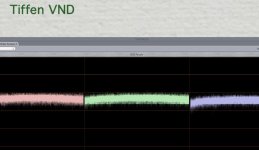
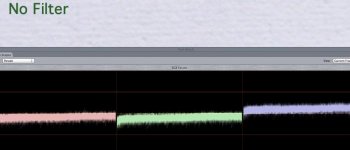
The Tiffen VND.
With the camera WB at 5500 with no filter I had a blue shift, when adding the Tiffen VND this goes away, not actually a good thing if I had got the camera setting right in the first place, the VND is killing a lot of blue and less green, suggesting a profile is needed to match it :( or at least one should AWB after the application of the filter (not always easy)
filter1.jpg
filter2.jpg
 
Good to see I'm not the only person shooting this type of stuff!

Sam, have you checked your VND over its whole range? My Genus is a Variable White Balance Shifter and hilarity ensues when used on a lens with a rotating filter.
 
Back
Top