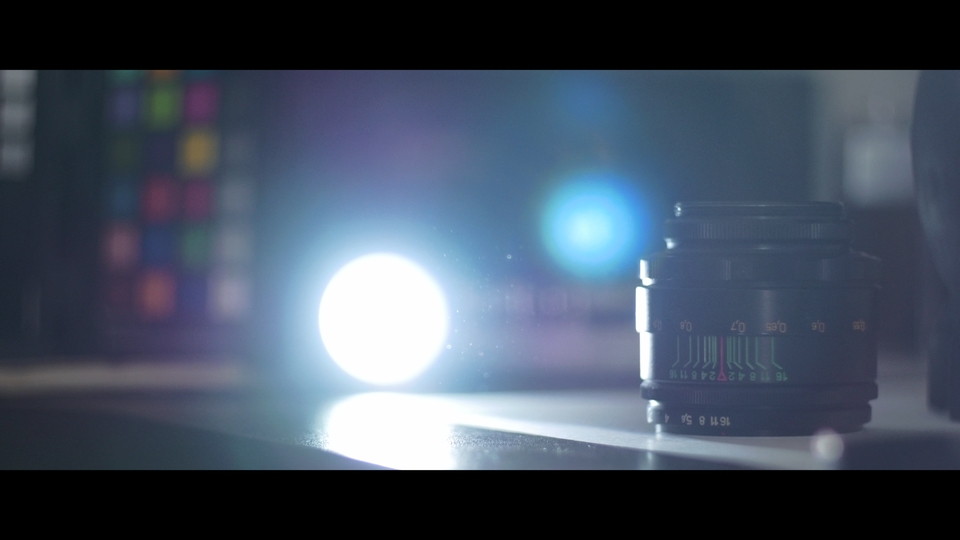
GH4 Essential Settings & Essential Post for GH4 Film Look

Right! 70-75% for skin tone, correct? What's the best way to quickly and efficiently monitor that IN CAMERA (internal screen) with GH4? Set zebras to 80%, make skin tone have zebras, stop down once? Is there a quicker way to swap between Zebra1/Zebra2 with a function button?

As for ETTR, I don't know if I phrased my question correctly but it's hugely important to me to understand the rationale here. No skin tones, no humans, just a nature or urban shot. In the histogram, I can fit the ENTIRE shot with room to both the right and left on histogram. Sorted! Right? But no, ETTR says push it as far to the right as possible, bring down in post. I assume to save shadow noise and give the dark areas more light thus more data and flexibility, right?

SO - Let's say I have a snowy roof and sky in the top right back corner. It's not really important for the shot. I can already fit everything on the histogram, but then comes the ETTR question - if I can afford to lose those highlights, should I clip them out to get another stop in the shadows and midtones in the main part of the image, even if not really neccessary? Will that extra stop give me a cleaner image for the 85% of the shot I care more about? Or is this a point of no return trade, where in reality I already have plenty of light in the shadows/mids and I can still ETTR and fit everything in, every pixel happy, full image. Or does "every stop count" in those shadows and mids, even after they are well away from the left?

Basically I understand the ETTR principle to give light to the dark areas, but I am wondering how far we take that if everything is already fitting well into the camera's DR/histogram. At what point does an extra stop of light cease to help the darker tones?
 
Right! 70-75% for skin tone, correct? What's the best way to quickly and efficiently monitor that IN CAMERA (internal screen) with GH4? Set zebras to 80%, make skin tone have zebras, stop down once? Is there a quicker way to swap between Zebra1/Zebra2 with a function button?
Yes, set one of the zebras to your skin tone target and one to your highlight target (I use 70% & 100%.) Assign zebras to the function button of your choice.

As for ETTR, I don't know if I phrased my question correctly but it's hugely important to me to understand the rationale here. No skin tones, no humans, just a nature or urban shot. In the histogram, I can fit the ENTIRE shot with room to both the right and left on histogram. Sorted! Right? But no, ETTR says push it as far to the right as possible, bring down in post. I assume to save shadow noise and give the dark areas more light thus more data and flexibility, right?
That is correct, in both practice and theory.

SO - Let's say I have a snowy roof and sky in the top right back corner. It's not really important for the shot. I can already fit everything on the histogram, but then comes the ETTR question - if I can afford to lose those highlights, should I clip them out to get another stop in the shadows and midtones in the main part of the image, even if not really neccessary? Will that extra stop give me a cleaner image for the 85% of the shot I care more about? Or is this a point of no return trade, where in reality I already have plenty of light in the shadows/mids and I can still ETTR and fit everything in, every pixel happy, full image. Or does "every stop count" in those shadows and mids, even after they are well away from the left?

Basically I understand the ETTR principle to give light to the dark areas, but I am wondering how far we take that if everything is already fitting well into the camera's DR/histogram. At what point does an extra stop of light cease to help the darker tones?
I think you do need to consider that the way that the GH4, and most other digital cameras (other than Arri,) blow highlights does not look pleasing, as it is a hard digital "peak" and not the analog "roll-off" of film. So even if these blow-outs occur in non-critical areas, they can be distracting. Specular highlights aren't a problem, we expect them to look blown, but cloudy skies and snowy fields, etc. can scream "DIGITAL VIDEO" if not protected. It's a trick to balance, but in those cases you generally need to find a way to bring up the light on the subject since you can't realistically bring down the light on the sky.
 
Speaking of film look: GLASS.

This was shot on GH4 and it actually captures some of the look that even good grading can't seem to capture. This was shot on Zeiss Milvus glass.

https://vimeo.com/142131600

Yes it was graded and shot well, but there is a distinct non-GH4ish look to it. For me it raises the question, how much of this is due to the glass?

Thoughts on Zeiss Milvus glass with an EF Speedbooster on the GH series VS going native with Voigtlander Nokton M43 set?

For sure, lenses make a big difference. Can't go wrong with the Voigtlander's. I'll also put in a good word for the Rokinon Cine lenses, as they're more affordable. I own two and they never disappoint. Anything I shoot with the 85mm t1.5 Rokinon just looks like a movie. A few shots taken with it--
rage13.jpg

rage11.jpg

rage3.jpg
 
Speaking of film look: GLASS.

This was shot on GH4 and it actually captures some of the look that even good grading can't seem to capture. This was shot on Zeiss Milvus glass.

https://vimeo.com/142131600

Yes it was graded and shot well, but there is a distinct non-GH4ish look to it. For me it raises the question, how much of this is due to the glass?

Thoughts on Zeiss Milvus glass with an EF Speedbooster on the GH series VS going native with Voigtlander Nokton M43 set?

Hi, my name is Paul, and I have an addiction.... :D

My main lens set is the Zeiss ZE's. I love them and the look they create definitely lifts the camera to a whole new level with the Speed Booster.

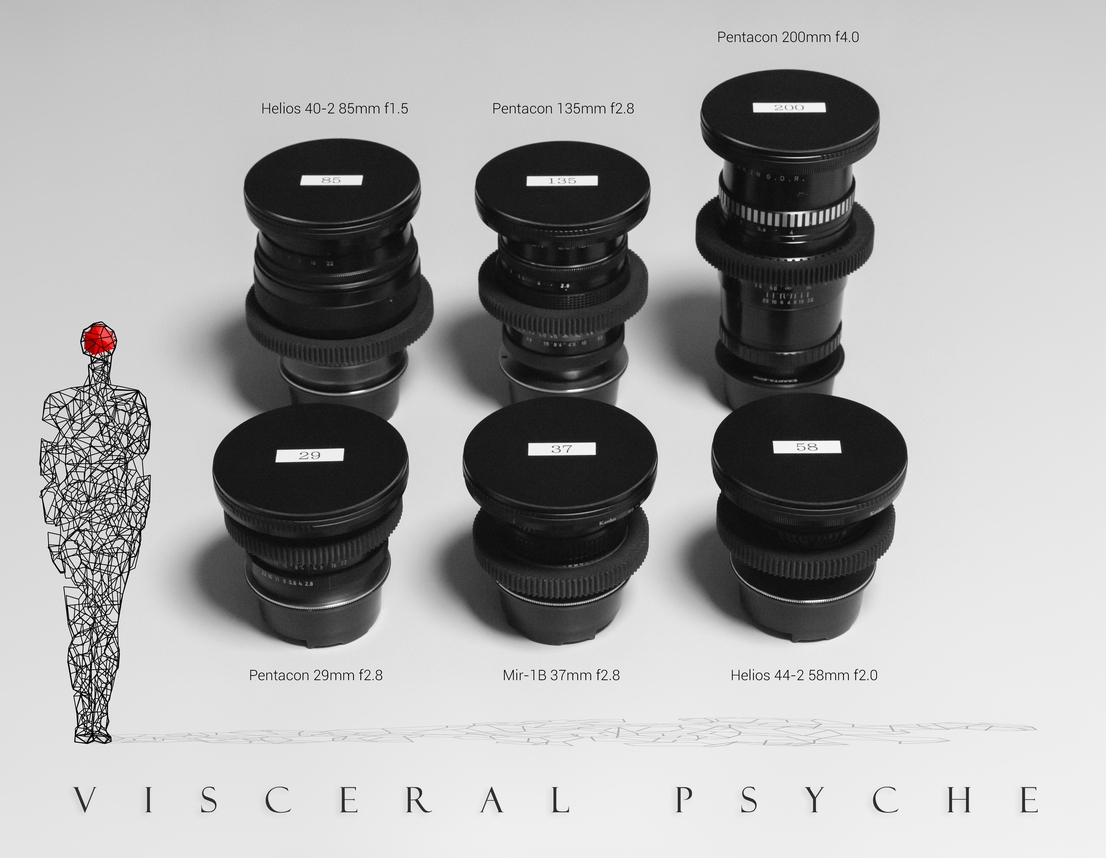
I just completed a second lens set for the vintage, weird, flare-prone look, made up of ex-Soviet lenses, for less than US$1000 all-in, including EOS mounts, gears, lens caps etc:

IMG_9009b_s.jpg


GH4%20Testing.00_20_02_16.Still046.jpg


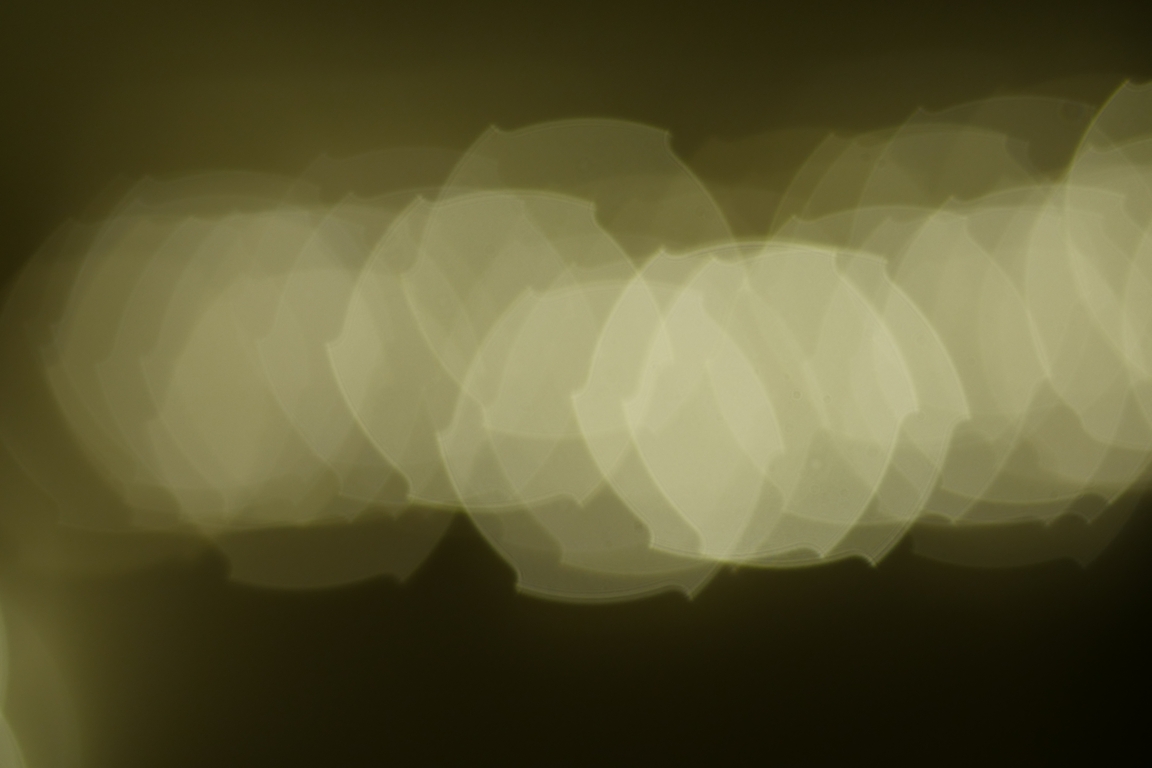
Now I'm hankering after the older Contax Zeiss lenses, having already bought the famous 28/2 "Hollywood" lens recently. I'll probably end up selling my modern ZE lenses and replace them with the older Contax variants, mostly because I like the sawtooth bokeh they produce at certain stops:

P1030828s.jpg


Did I mention I'm addicted to lenses? :D

I also have a confession to make - I've never, ever had a native M43 lens on my GH4. I actually bought my Speed Booster BEFORE the camera, so it's lived on there since day one.

There's a whole world of lenses out there for the cinematographer who is looking for a certain 'feel' for a film. They all have their strengths and weaknesses, but if you want to set your work apart, it's here where you should begin.

Cheers!

Paul :)
 
Thanks guys! I've also realized how important the lens is. I noticed it immediately when I swapped from a native M43 lens to Voigtlander. Massive difference in the look and feel.

However, it seems that trend continues and the Zeiss Milvus lineup paired with M43 would elevate the look and feel to a much higher level than even the ultra fast, quality Voigtlanders??

If this is the case, perhaps it is worth investing in a XL .64x speed booster and 3x Zeiss Milvus lenses... 18, 35, and 50 (for a net result of 23, 45, 64 focal lengths?

If I want to take the GH series to the next level, is this advistable, even over the Noktons?

Lastly, how quickly and easily is it to remove a speedbooster? Say if I want to work with a mix of Speedboosted glass + native m43 glass and swap multiple times a day in a shoot? (IE a Lumix 12-35 for gimbal work, then pop on the Zeiss lenses, then perhaps swap to the ultra long native Olympus 75 f/1.8?

And, any reason to NOT go .64x XL speedbooster if not working with APS-C glass?
 
Thanks guys! I've also realized how important the lens is. I noticed it immediately when I swapped from a native M43 lens to Voigtlander. Massive difference in the look and feel.

However, it seems that trend continues and the Zeiss Milvus lineup paired with M43 would elevate the look and feel to a much higher level than even the ultra fast, quality Voigtlanders??

If this is the case, perhaps it is worth investing in a XL .64x speed booster and 3x Zeiss Milvus lenses... 18, 35, and 50 (for a net result of 23, 45, 64 focal lengths?

If I want to take the GH series to the next level, is this advistable, even over the Noktons?

Lastly, how quickly and easily is it to remove a speedbooster? Say if I want to work with a mix of Speedboosted glass + native m43 glass and swap multiple times a day in a shoot? (IE a Lumix 12-35 for gimbal work, then pop on the Zeiss lenses, then perhaps swap to the ultra long native Olympus 75 f/1.8?

And, any reason to NOT go .64x XL speedbooster if not working with APS-C glass?
Speed Booster comes off just like any lens. It's about one second.

Beware that with the GH5's larger sensor area for video, you might get some vignetting with some APS-C lenses using the XL Speed Booster. We also don't yet know how the IBIS may have altered the front filter glass or shutter curtain, so if I were a cautious man, I'd perhaps buy the Ultra Speed Booster now, unless you are willing to hold off until someone has tested the XL with the GH5 and confirmed its abilities and potential pitfalls (if any).

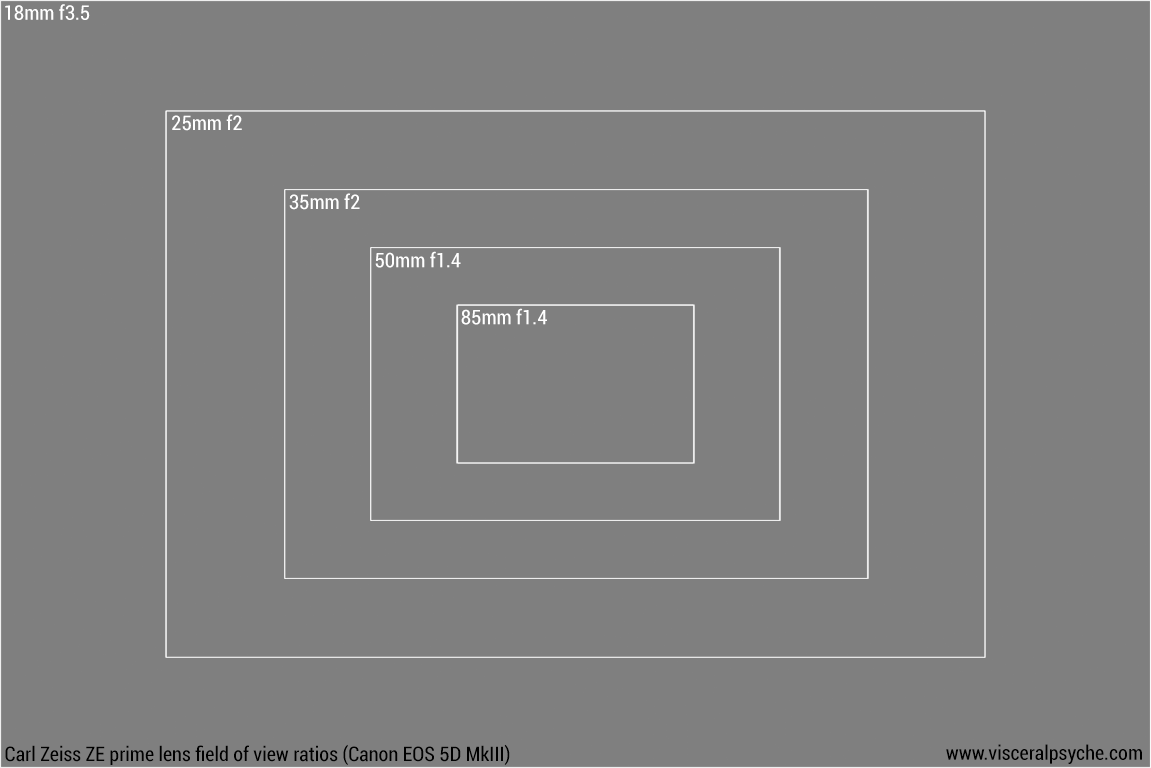
Also, regarding focal lengths of Milvus lenses, this chart will show you EXACT field of view relationship of each Zeiss ZE lens (my own measured tests with actual lenses), so pick the ones you think give you a good spread. Note that although the tests are done on the 5DIII, the relationship remains the same on other cameras, in terms of lens to lens field of view:

ZeissZEprimes_Canon5D_MkIII_FoV.png


HTH!

Paul :)
 
Thank you!

Wow, decisions decisions. Working with native M43 has some serious benefits in terms of size and weight, portability, integrated electronics, and simplicity. Investing in FF glass that can later be used with a sensor of choice via Zeiss Milvus on Speedbooster nets some really great quality and future proofing.

I know there's trade-offs to both, but what would you do, what would you advise, and what would you say to help me weight pros and cons of these two routes?


* $5050 6x M43 Lenses [Already own Nokton 25mm]
* $2800 Voigtlander M43 lenses (10.5, 17.5, 42.5)
* $750 Oly 75mm
* $500 Oly 60mm Macro
* $1000 Lumix G 12-35 (gimbal, Dual IS, AF)


* $5450 3x Adapted Zeiss Milvus lenses
* $650 Metabones EF to M43 SpeedBooster XL .64x Adaptor
* $1100 35mm (45mm w/XL)
* $2300 18mm (23mm w/XL)
* $1200 50mm (64mm w/XL)

On one hand I spend the same on "lifelong" lenses that can be used on ANY camera system when needed. I love manual focus anyway (hence the Voigtlanders). Same price.

On the other hand, my size and weight for lenses effectively doubles, I am working with an extra adapter and need to swap the adaptor in and out when working with native M43 glass on the fly. I get half the lenses, including losing some creative options with Macro and longer lens. I lose use of native 12-35 for AF, Dual IS, Gimbal. I am also when GH5 comes out working in a two body environment, and have less lens options available for both, and also add a layer of complexity which could hinder quick work.

On the other hand, I should be able to recover 50% of the value of M43 lenses if I decide to resale and move on someday and that may net me a better workflow for now...

I just lose the flexibility to much more easily transition to a Sony A7S III if it catches me eye next year, or a Sony FS5 mk II, etc. and already have some fantastic workable lenses.

What to do, what to do.
 
I tend to be about options, so for me having a set (or two!) of full frame lenses that can, with adapters, be used on ALL types of cameras, is better value than having specialised lenses.

But then again, I'm a narrative filmmaker mostly (at least shooting in the narrative style), so for me the look dictates the types of lenses I use, more so than their weight or convenience factor.

I can't speak to the M43 lenses you've mentioned, as I've never used the system, but for the Zeiss lenses:

Instead of the 18mm Zeiss, go for the Sigma 18-35mm f1.8. MUCH brighter, more flexible, and great close focus as well. Plus it's less than half the cost of the 18mm f3.5 prime. I've owned the 18mm f3.5, and I sold it when I got the Sigma.... Also, the Sigma is EF mount so it will fit on full frame cameras too (vignettes a bit until around 21-22mm if I recall, but that still gives you ultra wide field of view on full frame if you need it). I tested it on the Sony A7SII when I was building a LUT for that camera - looked great!

For the 35mm and 50mm Zeiss primes, I haven't tested the newer Milvus design but the 35mm f2 ZE prime is gorgeous - the 3D effect of its rendering it just lovely and it's my favourite film lens on my GH4 :)

The ZE 50mm f1.4 is also very nice in its bokeh and rendering.

I mention these because it might be cheaper to get the ZE series of lenses to save a bit of money, such that with the Sigma 18-35mm f1.8, 35mm f2 Zeiss (you could skip this one but I like its look better than the Sigma at 35mm) and 50mm f1.4 Zeiss, you could also buy the 85mm f1.4 ZE Zeiss, to really fill out your set (this is coincidentally my exact set, with the addition of the ZE Zeiss 25mm f2 as well, since it also has a unique look I prize).

And hey, if you really want a bargain, I'll sell you my 25mm, 35mm, 50mm and 85mm Zeiss ZE lenses, along with Redrock Micro lens gears already attached, for US$4,000 shipped to Oregon for you! :D Gives you enough money to buy the Metabones plus some left over for a nice follow focus and rods to really make it all sing!

Then I can buy the Contax Zeiss lenses.... :D :D :D (I am not addicted!)

Cheers,

Paul :)
 
I can only speak of my own personal view but I really want to get a set of Rokinon lenses. I have the 12mm Rokinon t2.2 lens and love it. I also love my native m43 lenses and mainly keep them for shooting stills. I'm not in a position to sell my native lenses and buy a set of Rokinons because I shoot stills. In a perfect world I would have two sets. One cine set and one native set. That way all situations are covered. No set is going to be the end all perfect set but really it depends on each persons use case.

I want a versatile set where I can shoot video and stills and use the features of the camera to its full potential.

If you really do plan on 100% only shooting films or narrative work then I say go for the Rokinon set. If you plan on using the GH4 as a hybrid camera then you may want to consider a native set. Or if you have the budget really get both. Then all your bases are covered.

The lens does make a visual difference but they are more like using different film stocks. At the end of the day any film stock is still film and any lens is still a good lens. One person can shoot fine art with a $10,000 lens and the next person will shoot absolute garbage with that same lens. When you see impressive looking videos online a lot of what makes it look amazing has more to do with the talent behind and in front of the camera as opposed to just that p[articular piece of glass.

I will say that there is a certain visual difference between native lenses and adapted lenses and that comes down to the in body correction the m43 cameras do. Any adapted lens will not be corrected and to some that makes a more natural organic looking image. This is true of any adapted lens be it Canon, Nikon, Rokinon or some other old school set.
 
I will have to consider all of this!!

Related, and sort of looping back to that film look / larger sensor look on M43. Here's a video that's not the best thing, just someone with some know how doing a quick camera test in the snow. It's on FS700 + Zeiss 21mm.

https://www.youtube.com/watch?v=T6odrJa75m0

All of this, but particularly at clip 0:45, there is a distinct sort of layering, pop, and smoothness to the image that I don't think could be replicated on a M43 camera. I am not just referring to the exact focal length either, as this is indicative on other focal lengths and deeper depths of field as well. But can you see what I mean?

What is it that is responsible on this clip primarily for what seems to be largely unachievable on M43 (IMO). Is it just the lens and color grading? I feel like there's more, but I can't articulate it. For a direct comparison, here is some great snow footage shot on GH4 by the very talented Martin Walgren:

https://vimeo.com/152059365

The way the image renders is just... different. It feels smaller, more cropped in (not referring to framing), sharper, not as smooth. Not as much pop or 3D. Just... smaller.

And while it's not as comparble content wise, here is a 2 minute GH4 piece shot entirely on the Nokton 10.5 at wide apertures by the very talented Hiro Kemigawa:

https://vimeo.com/137833645

Great looking - but again, despite the same focal length and similar DOF (I know the content is different), the image renders completely differently to my eye.


.... So, is it primarily the Zeiss responsible for that look that renders the image different, or the way light falls and projects through a larger format image size, even when all else is equal?

I do wonder if the "Great Sensor Size Debate" has some similarities to lenses: On paper, and scientifically in test shots, depending on what you measure, a Zeiss may not be much different than an Olympus M43 lens. Both sharp, equivalent fields of view, etc. etc. Are we looking at sensor sizes too mathematically, or do they render images differently in a way of "character' that is hard to quantify, and in a way that goes behind LOG, bitrates, grading, framing, composition, etc.?

Or maybe it's all just the character of the glass, when all else is equal...?

No its talent and grading. No camera out of the box will create a cinematic look you are after. You are now obsessing over gear as opposed to the art of creating a look. Many cameras can create the specific look you are after. Don't hunt for a camera to do that look for you. Look for a camera where you can achieve your own look. This is why some of us started off this thread as to the aesthetics of a cinematic look vs what gear combination will do the work for you. Because at the end of the day what you are now looking at is style and creative choices and not as much about the metal/plastic/glass that created it. Its the flesh and bone that created that look.

Don't get distracted by gear. At the end of the day it is really the least important factor in film making. People have created some amazing art with a Canon T3i and argue to this day that if they obsessed about buying new gear all the time they would never have time to create the work they have.

You absolutely cannot watch a video online and just think oh yeah the camera does what you want. It is about so much more than that. Gear is a curse. It allows us to achieve new things from a technical perspective we never imagined but it does not create the art. They are all just a different set of paint brushes in the hands of an artist. We have a tendency to become obsessed with new gear and always chase that white rabbit down the hole of film making. We buy a camera one day and think it will be a game changer and a year later talk about how it is garbage. I'm sure the camera didn't deform over the course of a year. It is more of how obsessed we are of chasing a pot at the end of a rainbow.
 
I don't agree - the look of that footage is not the same, at a camera or lens level. It's not just grading or talent. In fact, I would say the guy filming it didn't even do that great of a job, TBH, and looking at his channel is competent but not all that amazing.

In fact, talent wise, I would straight up say looking at the body of work from Hiro & Martin on the GH4, they have more talent and sense in composition, framing, etc. But the camera image just doesn't render the same no matter how you slice it, though I find both of them to be more talented DPs.

Not talking about the grade or colors, or the framing, or the DOF. It's the texture and rendering of the image. I've never seen images render like that on any M43 clips, not my own, not anyone's here (not to say people haven't produced fantastic results on the M43 system, or that most clients would ever notice the difference).

I shot most of this content 3-4 years ago on the AF100: https://fpdl.vimeocdn.com/vimeo-pro...4a_0x0eb420278ba4937b44650fbd2124140bacd1db69

At the time, I just left everything at default. Literally, that's the AF100 standard scene setting and I didn't touch a thing, I just shot. It's good, I'm better now, but to my eye S35/FF sensors seem to look distinctly different, even in less capable hands, and I'm still unable to peg it.

I'm not seeing things, but maybe most people just can't see it. Or maybe it's just the Zeiss. Or maybe it's maybeline.
 
Last edited:
filmguy:

Take what Thomas Smet is saying as "gospel". In that first clip you linked to, the effect at 0:45 is an overlay related to the stupid "film burn" many use (we used to cuss a blue streak when we got that because it meant some idiot opened the film magazine and let some film get light struck). Thomas is 100% right when he says the final "look" is due to the talent applied.

I've worked with gear, film, optics for most of a lifetime (78 now) and I learned early on there is no "magic" gear that will do "it" for you. What will get you what you want is mastery of the craft of photography (both still and motion picture) and the application of that "mastery" along with visual sense and imagination.

Yes, lenses can and do have "character" that properly applied can be used to help you get what you want but YOU have to control what the lens "sees".
 
To clarify: not talking about the cheesy film burn or the desaturated, cool, likely magic bullet stock look dropped on. And definitely not looking for a camera or piece of gear to do it for me.

Also not trying to be argumentative at all either, I'm just shocked that no one here can seem to discern the difference much, even though most people who own larger sensor cameras seem to consistently express the same sentiment...

The sony clip is sloppy in so many ways. You REALLY can't see the difference in the way the image renders between that clip and the GH4 clips?
 
Looking through M43 Blackmagic Cinema Camera footage makes me think it has less to do with the sensor size, and more to do with
1.) size of photosites
but perhaps even more so
2.) the way of processing the image that Panasonic employs

BMCC looks much smoother and less digital. Very organic. Everything rolls of in a creamier, more buttery texture. In addition the extra DR from smaller photosites seems to help, not just in contrast between extremes, but in midtone gradation.

I'm sure ProRes 4:2:2 has something to do with it as well, so here's hoping with vlog and high bitrates and low sharpening that the GH5 can achieve a better look, and something more like the BMCC if desired.

So far, the Neumann Films Footage (Off the Grid + 180 fps Bored) both look good, but no matter how many ways I see people grade that footage differently, none of it seems to capture the aesthetic of the BMCC. Perhaps in camera settings will change this more... but why is this, and is there hope?

That is one thing about the Sony sensors (which may have less to do with the larger size, but the entire chain of processing) - they share much of that softer smoothness and subtler tone gradation.

It's not all equal and there's more to it, but the BMCC footage I've seen is consistently more compelling.

But that camera is so limiting in every other way. Regardless, it gives me a lot more comfort in investing in the native M43 mount. I hope BM releases a killer M43 follow up, and I hope image setting options in the GH5 can help tune the look better.
 
@ Thomas Smet & Bruce Forman: well said. Indeed, even a smartphone in capable hands will produce better (and more 'cinematic') results than the best camera and lens out there in the hands of less capable shooter.
Also, the expertise in post has great impact.

However, to my view, on top of what both of you said, the gear (camera and lens) do have an impact on the looks of the final video.

@ filmguy123: You do have a point about the impact of larger sensors on the video image quality.
You are also correct in what you wrote about BMCC.
So, it isn't only the sensor size: the in-camera processing (the color science), and/or the ability to shoot RAW, and the bit depth (10bit vs, 8bit), and the color matrix (4:4:4 vs, 4:2:2 vs, 4:2:0), and the CODEC used (the degree of compression), and the dynamic range, and the way highlights are being clipped - all these have considerable impact on the looks of the final video.

Concerning the Panasonic video cameras, including the 'Gx' series – the video image quality they produce is way below 'filmic look', compared to some other cameras, including some DSLRs.
Possibly, some people look at the camera's features, like 4K, more than on the 'filmic look' of cameras. When the in-camera color science is wanting and the highlights are being clipped ugly, neither 4K nor 10bit 4:2:2 from the HDMI output will overcome it. Though marvelous things can be done in post, a better, more 'filmic look' out of the camera improves even the marvels done in post.
 
I'm going to repeat things that have been said on this site for YEARS...

1. The name of this site is DVXUSER. Years ago talented people were creating cinematic and "film look" images on the DVX100 and XL2. Pretty sure those had 1/3" CCDs. Obviously, time marches on and the state of the art moves forward. But I agree with those saying it's more the talent in the shooter than it is the camera.

2. Buy the best gear you can afford, measured against your key requirements. This is the best way to avoid future GAS. There are trade-offs and feature sets that Camera A has that Camera B does not have. Some benefits of M43 system are value for money and smaller physical size. If those aren't as important to you, or if you can't get an image that you like, then maybe another camera is a better choice for you. We live in a great time with many options.

3. As for comparing specific clips...it's hard. Different scenes, different DPs, different post. We could be biased by knowing what camera/lenses were used before watching. Everyone's eyes are different. We all experience video/film differently.

Maybe this is ancient history that's now outdated, but I still refer back to the 2012 Zacuto shootout. Hacked GH2 does extremely well. Was it the camera? Or the DP? Or lighting? Or all three?
 
Last edited:
Looking through M43 Blackmagic Cinema Camera footage makes me think it has less to do with the sensor size, and more to do with
1.) size of photosites
but perhaps even more so
2.) the way of processing the image that Panasonic employs

BMCC looks much smoother and less digital. Very organic. Everything rolls of in a creamier, more buttery texture. In addition the extra DR from smaller photosites seems to help, not just in contrast between extremes, but in midtone gradation.

I'm sure ProRes 4:2:2 has something to do with it as well, so here's hoping with vlog and high bitrates and low sharpening that the GH5 can achieve a better look, and something more like the BMCC if desired.

So far, the Neumann Films Footage (Off the Grid + 180 fps Bored) both look good, but no matter how many ways I see people grade that footage differently, none of it seems to capture the aesthetic of the BMCC. Perhaps in camera settings will change this more... but why is this, and is there hope?

That is one thing about the Sony sensors (which may have less to do with the larger size, but the entire chain of processing) - they share much of that softer smoothness and subtler tone gradation.

It's not all equal and there's more to it, but the BMCC footage I've seen is consistently more compelling.

But that camera is so limiting in every other way. Regardless, it gives me a lot more comfort in investing in the native M43 mount. I hope BM releases a killer M43 follow up, and I hope image setting options in the GH5 can help tune the look better.

Yes every camera will have a different look to it. Some more organic than others. That is more like different film stocks and you are splitting hairs now. Besides I think that Sony snow video looked horrible. What texture? The pants of the closeups of the legs looked over sharpened to me. I also thought the color was dull and lifeless and the person couldn't focus to save their life and way overused DOF. I'm not saying the clip was spectacular because it was not. In fact it is some of the ugliest stuff I have seen come from a modern camera. My point is that you are now obsessing over what a camera can do from watching samples from other people. You are judging the way they used the camera vs the camera itself.

Are you trying to convince us or yourself which is a better camera here? Again it really comes down to the talent using the camera and the subtle differences you are now talking about are a minor look in the overall story telling process. If you obsess over a specific camera to give you a look you are setting yourself up to always be disappointed. You will always be chasing new cameras once somebody puts out footage you find impressive.

Is the GH4 perfect? Heck no but no camera is. Every single camera out there has faults. Is this now turning into a discussion about how the GH4 isn't good enough?
 
Back
Top