DSLR vs Redrock

New_Zealand

Veteran
When shooting with the HVX200 and Redrock there was always issues with keeping anything moving in focusing and of course lack of light with all that gear attached. When shooting without the Redrock it was much easier to film. So the question: Is there any major issues with shooting on a DSLR with focus just like using the Redrock?
 
Depending on where you have the aperture set it's at least as bad and probably worse on a DSLR. With a long lens mounted (say a 135mm) and the aperture cranked open (say 2.8) the DOF on a Canon 5D might be 1 inch or less. Literally their eyes in focus and the tip of their nose soft. As lenses get wider and aperture gets more closed down it gets better (a 28mm at f16 will have a DOF of many feet). This is one of the reasons most people feel (including me) than an external monitor and a follow focus are required gear to shoot on a DSLR. If there is much movement in the scene you're going to be pulling focus pretty much constantly.

Lack of light is much improved over an HVX with a Redrock (the rig I shot my first two films on). A 5D can literally almost see in the dark. You can get a "good exposure" in ridiculously low light situations, BUT it does have the issue of really bad dynamic range. You need less total light with a DSLR, but the distance between over exposed and under exposed is very narrow so very careful lighting is required.
 
You can alleviate problems by not shooting on a 5D. The T2i/T3i/60D/7D have an APS-C sized sensor which doesn't go overboard on the shallow DOF like the 5D's full frame (stills) sensor can.

You also don't have to worry about knocking out the focus from the built-in lens like you do on the HVX-200 (though I usually set that focus and then switched the ring to control the iris, that way if accidentally nudged it doesn't through the focus off from the spinning ground glass).
 
The APS-C sensor cameras aren't AS shallow as the 5D (though you give up some low light sensitivity and that gorgeous 5D look for that) but they are still pretty shallow with a long lens and/or wide open aperture. With a 50mm or above, and an aperture of less than 5.6, if somebody is moving all over the scene you're going to have to ride the follow focus the whole time. I generally use a 1st AC/focus puller on my shoots.
 
I virtually never shoot wide open, but depending on the lens, even at f4 or f5.6 you're going to have to pull focus as the talent moves around the scene. If you aren't going to use selective focus as one of the tools in your story telling tool bag, why even shoot on a DSLR or use a Redrock, just buy a video camera with deep focus and have at it. Don't get me wrong, shallow DOF gets WAY overused, there are times you want deep focus, but if you think you're going to make films on a DSLR and not spend a fair amount of time pulling focus you're just wrong.
 
As an example, when I first got my 550D I wandered around the London Wetlands Centre with a few lenses, really to get the feel of things. I remember pulling focus across a Cow-parsley flower head, about 4" across 8 feet away with my 135 at f/2. After which I thought "Right, OK now I know what I've let myself in for" :Drogar-BigGrin(DBG)

Dave
 
I work for two wedding videography companies that shoot on DSLRs exclusively, and I find myself shooting wide open all the time on my 7D. Generally we're not using lenses longer than 85mm but I find that focusing isn't that difficult. It just takes a good amount of practice and anticipation of movement.
 
Agreed with Finnegan. It's definitely not as hard as some people make it out to be. I also shoot a lot of fully open stuff. Even with 85mm at f1.4 it's not impossible. Don't even need a follow focus, though a good monitor does help.
 
As said, the problems of focus are also greatly exaggerated. The 5D has very shallow depth of field, but the situations Gonzo described are more akin at apertures like 1.4. But keep in mind a 7D (or anything with APS-C really) will get you the size of Super 35mm film (the 5D is only full-frame for stills). Most films are shot around 2.8-5.6 (depending on budget and the amount of light) as these gives the best results. I'm working a bit as a focus puller and at those apertures it's not that hard. While you still need to follow with the focus, it's a lot easier. Last but not least is training. While a larger screen really is needed, after a quick while you can spot focus very quickly. I actually find it easier to pull focus on longer lenses, as then you really have a separation between "sharp" and "soft", while on a wider lens you can get so close between them that it's almost impossible to spot the difference.
 
As said, the problems of focus are also greatly exaggerated. The 5D has very shallow depth of field, but the situations Gonzo described are more akin at apertures like 1.4. But keep in mind a 7D (or anything with APS-C really) will get you the size of Super 35mm film (the 5D is only full-frame for stills). Most films are shot around 2.8-5.6 (depending on budget and the amount of light) as these gives the best results. I'm working a bit as a focus puller and at those apertures it's not that hard. While you still need to follow with the focus, it's a lot easier. Last but not least is training. While a larger screen really is needed, after a quick while you can spot focus very quickly. I actually find it easier to pull focus on longer lenses, as then you really have a separation between "sharp" and "soft", while on a wider lens you can get so close between them that it's almost impossible to spot the difference.

You have misunderstood that mate. 'Full frame' relates to different size sensors in the film and stills worlds, with a still camera full frame being a lot larger than a video full frame.

The canon 5D has a stills full frame sensor in both video and photo modes. So the sensor in video mode is larger than a film full frame size sensor.

The APS-C sensor is about the same as a film full frame size and smaller than a photo full frame size.
 
I've been doing some shoulder mounted work with my Canon lately; with a decent loupe I've had no trouble grabbing focus on the fly. When doing things like music videos, rehearsing for focus pulls and presetting focus stops on the wheel make it pretty painless.

I generally shoot around F4 unless I really want a dramatic focus pull or very soft BG. You can bring a big open faced light and click it on for presetting focus, though that's only needed in a really dark set. Loupes are getting super-cheap now, and even a plastic lens loupe with barrel distortion should allow you to focus really well. A decent sized HDMI monitor is pricier but works great - get a pair of those cheap "reader" glasses from the drugstore if you're using a small screen, you won't believe how sharp the LCD gets with those.

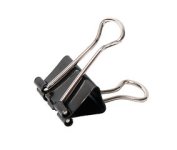
With a standard wheel-type FF (even the affordable D|Focus) I use spring-steel paperclips as focus stops. With nobody pulling focus, they're dynamite. Clip them to the marking disk so the pointer stops them. You can "squeeze" them open while pushed against the marking rod, dial in your focus, and release them - repeat for the other side of your pull. I keep them clipped all over my rig case.

clip.jpg
 
I just started practicing with my t2i.. I am using a nikon 50mm 1.8. getting used to pulling the focus is a task at first. but with practice i believe that I can handle this. I generally view all of my shots though a 23' monitor... but I made a DIY shoulder rig for the camera that allows me to use it one handed.I have a 7' lcd monitor attached to the rig for my close viewing.. and the one handle is placed where it balances everything out pretty descent. now have alot of practicing to do.. I dont want shallow DOF in eevry shot so I have to learn to understand my tools before I can REALLY use them...
 
I've been doing some shoulder mounted work with my Canon lately; with a decent loupe I've had no trouble grabbing focus on the fly. When doing things like music videos, rehearsing for focus pulls and presetting focus stops on the wheel make it pretty painless.

I generally shoot around F4 unless I really want a dramatic focus pull or very soft BG. You can bring a big open faced light and click it on for presetting focus, though that's only needed in a really dark set. Loupes are getting super-cheap now, and even a plastic lens loupe with barrel distortion should allow you to focus really well. A decent sized HDMI monitor is pricier but works great - get a pair of those cheap "reader" glasses from the drugstore if you're using a small screen, you won't believe how sharp the LCD gets with those.

With a standard wheel-type FF (even the affordable D|Focus) I use spring-steel paperclips as focus stops. With nobody pulling focus, they're dynamite. Clip them to the marking disk so the pointer stops them. You can "squeeze" them open while pushed against the marking rod, dial in your focus, and release them - repeat for the other side of your pull. I keep them clipped all over my rig case.

View attachment 45439

Damn it!
I tried this last night and the slope of the marker wheel on my Red Rock V2 wouldn't hold even a fairly large clip. Might try one size larger but doesn't look good. Back to a strip of gaff tape.
 
With a standard wheel-type FF (even the affordable D|Focus) I use spring-steel paperclips as focus stops. With nobody pulling focus, they're dynamite. Clip them to the marking disk so the pointer stops them. You can "squeeze" them open while pushed against the marking rod, dial in your focus, and release them - repeat for the other side of your pull. I keep them clipped all over my rig case.
I've got to try that...
 
Back
Top