
Navigation
Install the app
How to install the app on iOS
Follow along with the video below to see how to install our site as a web app on your home screen.
Note: This feature may not be available in some browsers.
More options
You are using an out of date browser. It may not display this or other websites correctly.
You should upgrade or use an alternative browser.
You should upgrade or use an alternative browser.
That's a good point regarding the graphs that makes it more clear, however my comments on that graph were based on this conclusion from the same paper:
Conclusion
It is clear that current, high performance displays having higher brightness, higher dynamic
range, wider color gamut, and lower noise levels are beginning to show the weaknesses of
traditional display response functions, and that a new type of EOTF is required to allow these
displays to reach their full potential. It is also clear that this new EOTF must satisfy the criterion
of minimum visibility of steps using 10 or 12 bits, over a wide brightness range (wider than
available in current display devices in order to allow for future developments in display
technology). The conventional gamma based curve, which came from the no longer employed
Cathode Ray Tube (CRT), does not meet the requirements; experiments show that stepping is
visible at even 12-bits. An EOTF based on perception can easily meet the requirements. Even
over an extreme brightness range (up to 10,000 cd/m2), visible stepping is not apparent on test
patterns at 11 bits, or on images tested down to 9 or 10 bits.

Cary Knoop
Veteran
They are talking about a PQ curve, the curve that is modeled after the Barten ramp, not a log curve.That's a good point regarding the graphs that makes it more clear, however, my comments on that graph were based on this conclusion from the same paper:
Cameras currently do not encode using PQ, but of course, they could.
Personally, I do not think that would be the best solution, if I were the 'benevolent dictator' on video camera designs I would encode linear in 32-bit floating point, similar to EXR.

12-bit/Dolby Vision TV's have been out for about a year, though mostly on the higher end OLED models from LG and Sony.
Looks like the current max is 4,000 nits. When 10,000 nits is available, then 12-bits makes sense: https://www.pocket-lint.com/tv/news...vision-dolby-s-very-own-hdr-tv-tech-explained
Brightness is another key factor in HDR content. The Ultra HD Premium specification says HDR TVs must attain a minimum of 1,000 nits of peak brightness, which many of the current crop of HDR TVs can do. Nits is the measurement of brightness used for displays.
Dolby Vision content can be mastered for 10,000 nits peak brightness but at the moment, since no display can support this, content is actually mastered to around 4,000 nits. However, it's ready for when the displays support it.
When referencing the Dolby paper, they're saying 9-10 bits is enough for real world images (vs. needing 11 bits for test patterns). So until there's 10,000 nit displays available (along with content mastered above 4000 nits), 12-bit displays won't be popular and delivering in 10-bit will be fine. After 12-bit 10K nits displays are common, sure, shooting 12-bits will be useful. That said, remember Samsung's AI upscaling for resolution? Guess what else AI can do with color depth and banding? 8-10 bit content can be upscaled for depth too (adding gradations/texture detail), once 12-bit 10,000 nit displays become available.
They are talking about a PQ curve, the curve that is modeled after the Barten ramp, not a log curve.
Cameras currently do not encode using PQ, but of course, they could.
Personally, I do not think that would be the best solution, if I were the 'benevolent dictator' on video camera designs I would encode linear in 32-bit floating point, similar to EXR.
Understood re: PQ- we're talking about monitors displaying 10-bit data. The original discussion was capturing 10-bit log. We'll grade and encode for whatever HDR target is intended for the display. For example, YouTube currently supports PQ and HLG: https://support.google.com/youtube/answer/7126552?hl=en
When the 12-bit 10K nit panels are available, I'll compare them to the 10-bit panels (Dolby Vision vs. HDR10(+) etc.). If there's a real visual difference in quality even if minor (but must be visible!), will happily pay extra for 12-bit (and acquire 12-bit cameras again). In the living room I'm still using an ancient (2007) Sony XBR5 LCD (10-bit processing): https://www.amazon.com/Sony-Bravia-KDL-52XBR5-52-Inch-1080p/dp/B000WDW6G6 (I paid around $5K, not from Amazon). Still looks amazing- image quality and physically- the metal glass bezel is still sexy even though it's not thin like current TVs. I check out the latest top of the line displays every now & then at BestBuy/Magnolia and nothing so far good enough to upgrade to 4K/HDR (also very limited 4K/HDR content). I prefer to purchase high-end/high quality devices and keep them for a long time. Really waiting for true quantum dot displays- they'll perhaps be the first 10K nit 12-bit panels. Until then, per this debate, IMO 10-bit log is sufficient (and for AI upscaling displays, probably good enough there too). Fun debate- curious to see the image quality of 10K nit HDR & something useful to do with 12-bit material! (wasn't aware those were coming in the near future before this discussion; note the Dolby paper said 9-10 bits with sufficient for images (vs. test patterns) at 10K nits- I'd like to see for myself in the store)
Last edited:
Cary Knoop
Veteran
So was black and white NTSC in the early '60s but we can thank those who decided to put things in color on film because now we have the technology to view it.Until then, per this debate, IMO 10-bit log is sufficient .....
So was black and white NTSC in the early '60s but we can thank those who decided to put things in color on film because now we have the technology to view it.
Remember the debate was 10-bit log in cameras. You also commented there's no way to view 12-bit material (there is, though not readily available, so agree in practice). Until there's a way to use the extra bits, what's the point of shooting with more unless needing keying/VFX? Remember also the Dolby paper stating 9-10 bits is enough even at 10K nits, where 12-bit can potentially be more valuable (ideally beyond test patterns else not worth it IMO). Not clear why their graphs don't match their conclusion. Regardless of papers and theories, I'm curious to compare 10- to 12-bit 10K nit displays once available. For now I'll keep shooting 8-bit on the 1DX II with a custom picture style for 8-bit streaming delivery (heading back to the tech space for a while- less time will be spent on video related projects).
G
Guest
Guest
Marumi ND filters
Cary Knoop
Veteran
Yes, but 10-bit Log is not the same as 10-bit PQ.Remember the debate was 10-bit log in cameras.
PQ is just about the optimum curve that uses integer values. Log is far better in that respect than linear but not as good as PQ. You simply cannot conclude that if it looks good with 10 or 11 bit in PQ then it is the same for Log. But 11-bit Log would get you pretty close.
Marumi ND filters
Jesus James, could you please stay on topic?
Cary Knoop
Veteran
Bull's eye!Jesus James, could you please stay on topic?
OK, no more Barten ramps in this topic, I promise!
Yes, but 10-bit Log is not the same as 10-bit PQ.
PQ is just about the optimum curve that uses integer values. Log is far better in that respect than linear but not as good as PQ. You simply cannot conclude that if it looks good with 10 or 11 bit in PQ then it is the same for Log. But 11-bit Log would get you pretty close.
PQ is fairly similar to Canon Log 2 (which is similar to ARRI LogC):
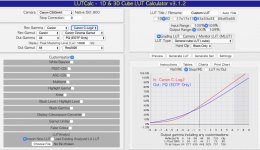
Would need to do some tests with a Rec2020 + PQ display, however since the Log curves are very close to PQ, I would not expect any major issues shooting 10-bit log and exporting to Rec2020 + PQ (only issue being figuring out the right SDR display LUT (e.g. w/ ACES) so that when viewed on the 2020+PQ e.g. 4K HDTV it looks good. Less of an issue if using a 2020 + PQ monitor: just convert Log => 2020+PQ and edit + deliver).
Cary Knoop
Veteran
No, you are wrong, those curves are different not similar.PQ is fairly similar to Canon Log 2 (which is similar to ARRI LogC):
But, I am giving up, I am done with this discussion.
Sorry

CharlesPapert
Director of Photography
I wish I understood a fraction of this disussion about curves, but back to the topic: I had a great time at Cinegear today. First time I can remember in years that it was cool weather, and I caught up with countless old friends and colleagues, attendees and vendors alike. Nearly 25 years of going to this show!
Last edited:
G
Guest
Guest
I wish i ran into you!
G
Guest
Guest
Jesus James, could you please stay on topic?
FLITE
Ultra light weight gimbal and camera accesories. Insanely lightweight pieces. Really cool stuff.
http://rebelbrown.com/neuroscience-and-the-mismatcher/ *
The LUT to transform CLog2/LogC into PQ won't result in a significant issues/losses due to the similarity of the curves. Peak delta is at -5 stops where shadows will be lifted slightly (can fixed with grading/NR if e.g. noise), after -1 stops code values are pulled down- no possible issues. If this wasn't true, supporting HDR would be impossible.
Converting 10-bit log to 2020 + PQ is straightforward using a LUT, and required for YouTube HDR, https://support.google.com/youtube/answer/7126552?hl=en :
In summary: 10-bit log is sufficient for HDR + conversion to 2020 + PQ is straightforward. As of September 2018, dealing with HDR with regards to NLEs (in this case FCP X) and cards+monitors that will work, is a bit complex: https://larryjordan.com/articles/working-with-hdr-media-in-apple-final-cut-pro-x/
* lol I did it wrong
James- I googled "FLITE light weight gimbals"- sounds pretty cool, are they STEALTH too? (new company with no web presence yet)
We all interact with mismatchers. Neuroscience can help us make those interactions more productive and positive.
Mismatchers are the folks who always take the opposite side of the discussion and will argue with anyone about anything. These are the folks who dis others, make snide comments, or belittle the work or beliefs of others. We see the behavior everywhere on social media, from the supposed gooroo whose cool angle is to diss everything he comes into contact with. Or the cantankerous negative commenter who is out to prove everyone else is wrong and they are oh so right.
The LUT to transform CLog2/LogC into PQ won't result in a significant issues/losses due to the similarity of the curves. Peak delta is at -5 stops where shadows will be lifted slightly (can fixed with grading/NR if e.g. noise), after -1 stops code values are pulled down- no possible issues. If this wasn't true, supporting HDR would be impossible.
Converting 10-bit log to 2020 + PQ is straightforward using a LUT, and required for YouTube HDR, https://support.google.com/youtube/answer/7126552?hl=en :
If you are grading your video, take care to grade in Rec. 2020 with PQ or HLG. Using a different configuration, including DCI P3, will produce incorrect results.
In summary: 10-bit log is sufficient for HDR + conversion to 2020 + PQ is straightforward. As of September 2018, dealing with HDR with regards to NLEs (in this case FCP X) and cards+monitors that will work, is a bit complex: https://larryjordan.com/articles/working-with-hdr-media-in-apple-final-cut-pro-x/
* lol I did it wrong
The next time some mismatcher tells you how wrong, bad, out of touch or stupid you are- agree with them. Then sit back and listen for their next mismatch, and agree again. It won’t take long for the mismatching to stop and you’ll be able to move forward again.
James- I googled "FLITE light weight gimbals"- sounds pretty cool, are they STEALTH too? (new company with no web presence yet)

puredrifting
Major Contributor
In my past role as an intructional designer/facilitator, I worked with NY Times author Liz Wiseman, who wrote an interesting book called "Multipliers" that explores the two different management/leadership styles, one being in the style described as a "Mismatcher", except in Ms. Wiseman's book, they are referred to as "Diminishers", whereas the more positive, optimistic management/personal style is referred to as a "Multiplier" as in this person multiplies the potential, good feelings and positivity of those around them.
I will say that in school, I enjoyed debate team, and I confess to enjoying a good argument as long as the argument stays civil and is based upon two intelligent, informed points of view. To me, a primary sign of high emotional intelligence is someone who can debate/argue with me while staying friendly and engaged. Whem it descends into ad hominem attacks or unequivocally stating that this person's POV is the only right POV, then I know I am dealing with someone who devolves into the standard straw man arguments and that they are not open-minded and open to learning and being enlightened. I have strong convictions and beliefs but I am always open to considering, evaluating and accepting/partially ceding or rejecting other's belief systems, my mind can be changed if the other persons argument or position is superior or more informed than mine.
I learn something from almost every person I meet, even if what I learn is to not do what the other person is doing. The problem with the Internet and social media is there is no tonal barometer and people often devolve into uncivilized behavior and exhibitions of their own often debilitating neuroses and socially unacceptable or warped views of their fellow man and the world. The anonymity of these platforms is akin to giving a 5 year old a loaded gun and then telling them, "Don't shoot yourself or anyone else." Chances are an uninteded shooting will follow. For me, I'm a mature, rational, intelligent adult but I die a thousand deaths when I see young kids and teens trying to navigate the treacherous waters of the Internet and social media when they are uninformed, impressionable, vulnerable to peer pressure and bullying, it's a poisonous combination and I fear that upcoming generations will have to deal with the psychological fallout of a few generations that have grown up with no faith, common sense and an absence of morality, their value systems primarily shaped by the dark depths of social media. As the snooty French maître d in "Ferris Bueller's Day Off" said, "I weep for the future."
... The anonymity of these platforms is akin to giving a 5 year old a loaded gun and then telling them, "Don't shoot yourself or anyone else." Chances are an uninteded shooting will follow. For me, I'm a mature, rational, intelligent adult but I die a thousand deaths when I see young kids and teens trying to navigate the treacherous waters of the Internet and social media when they are uninformed, impressionable, vulnerable to peer pressure and bullying, it's a poisonous combination and I fear that upcoming generations will have to deal with the psychological fallout of a few generations that have grown up with no faith, common sense and an absence of morality, their value systems primarily shaped by the dark depths of social media. As the snooty French maître d in "Ferris Bueller's Day Off" said, "I weep for the future."
I make my children watch all the Gordon Ramsey shows like Hell's Kitchen and tell them to strive to be like him.
But seriously, the pattern is that the elders fear for the youth. It happens every generation. Look at what a bunch of idiots baby boomers were when they were young (and I suppose, still are from the Millennial view). But youth are made up of the usual mix from generation to generation. The dopes will be dopes and the smart ones will be smart no matter what is going on around them.
filmguy123
Veteran
I fear that upcoming generations will have to deal with the psychological fallout of a few generations that have grown up with no faith, common sense and an absence of morality, their value systems primarily shaped by the dark depths of social media. As the snooty French maître d in "Ferris Bueller's Day Off" said, "I weep for the future."
This... I really think we are under estimating the impact today's culture is having on future generations.
But seriously, the pattern is that the elders fear for the youth. It happens every generation.
One big difference this go around is intense isolation, veiled impersonal social relationships, lack of strong family units, and a very simultaneously entitled + naive culture.
I realize this is getting OT from CineGear but this caught my interest at the end - new generations have always had struggles the elders worry for, but if we believe the exponential changes in technology we've lived over the last 25 years in one of the most breakneck periods of change and a lot of those changes aren't things like washing machines and cars, they are technologies that fundamentally change and influence social and relational norms in a way we haven't experienced.
Kids grow up on some pretty raunchy TV and games, interact primarily through digital screens not just with the world but each other, and the family unit has largely evaporated.
Well all this way to say... yeah, even on a forum with intelligent, adult, professional filmmakers we breakdown. That's a hard thing to grow up with as the norm as a teenager. Social media and the internet is brutal.
Last edited: