chromatic aberration?

John M

Active member
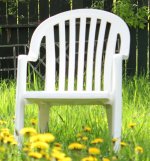
Hey Guys, included in this post is a quick photograph that I took earlier with the 18-55 Kit lens on the T2I. Obviously the sample isn't the whole photo but if you look closely at the chair's right arm you'll see a blue fringe on top and an orange/red fringe on the bottom.

Now, my own research would tell me that this is Chromatic Aberration, but I don't see why a new lens would have it. Any thoughts would be appreciated it.

Also, a google search yields that chromatic aberration is caused by a focus issue, but I can't really find any answers regarding the finer points of chromatic aberration like what causes it, when it's exacerbated and if it occurs on all lenses new and old.

Any thoughts would be appreciated.
 

Attachments

  • Test.jpg
    Test.jpg
    162.7 KB · Views: 0
CA isn't dependent on how new or old a lens is. it depends on the design of the lens.

i think all lenses have some CA, but some control it better than others (more $$ usually means less to unnoticeable CA)

Photoshop can (to a degree) control CA out of RAW still images. not sure about video though


edit: the focus in that picture seems to be on the fence in the background, not the chair.

wiki
 
In addition: CA is your friend when video is concerned.

And I'm serious when I say learn how to use it to your benefit. So odd, but it helps with the DSLR footage.
 
hey Kholi... could you elaborate?

To a certain extent, Aberrations (of all types) and diffraction, especially, are a sort of incidental band-aid to the shortcomings of DSLR video. What I'm noticing, as I'm forced to use very cheap glass, is that at a certain focal distance, aberrations actually enhance the appearance of the image by either softening or reducing the clarity of edges.

Diffraction the same, simply because the detail's being contaminated at the front element to begin with, by the time it hits the sensor you're recording less detail which means less chances for aliasing to occur.

I saw this when using my crappy 100-300/5 Nikon Zoom and Barry_Green backed it up later with his own discovery and testing.

In some instances, yes, using super cheap glass to the best of its ability... which entails knowing at what focal distance the lens diffracts, what color the diffraction is at said focal distances, how it behaves at different apertures and especially controlling flare, which most of them do very quickly, will yield incredible results. Lens flare, which is generally frowned upon, also takes a place in the technical tool belt, simply because it will reduce contrast all on its own, further than the camera's menus allow.

Fine-tuning in post brings out an image that you definitely would not expect.


This was shot with a Sigma 30/1.4 and Vivitar 70-210/4.5 -- Any time you see a Zoom or a telephoto shot, it's the Vivitar, a thirty-dollar lens that would otherwise be the most horrid choice for shooting.

On the contrary, exteriors I'm using this sucker as if it were the kit lens, for all of the reasons outlined above.
 
Last edited:
thanks for the explanation, Kholi (and the video).

i'm looking to get some cheap, old primes, too.

i also read that some ND filters (used correctly) will limit the aliasing issues, as well.
 
thanks for the explanation, Kholi (and the video).

i'm looking to get some cheap, old primes, too.

i also read that some ND filters (used correctly) will limit the aliasing issues, as well.


I use NDs and a Polarizer whenever I can. Pretty much all of this was shot with a stack of two NDs and one Polarizer.

Hoya HMCs for all.

If I can shoot interiors with NDs and Polas I do.
 
haha at last someone voices it !
i'm having the exact same findings here from using the least recommended route stacking cokin filters over FD lenses...
go figure but the added diffusion/softness from the adapter cheap corrective optics and all those bashed items provides very pleasing outdoor results on faces : so much more organic and appealing when compared to what the better L glass can provide in video mode : too crisp and contrasty.
older lenses and cheaper items flaws for photography seem to counteract some of our specific video concerns. low contrast, flare and CA actually enhance the filmic impression and you don't need to correct the footage so much with picture styles and post when using the right glass to bring that look while shooting.
 
I definitely agree, rhervag. It's something I discovered a while back but now that I have to use these other lenses, I'm really exploring it more. This is one reason why the Contax Zeiss lenses shine the brightest to me on DSLRs. Although I do like new Zeiss ZFs/ZEs as well, I find everything that's new to be WAY too contrasty for my tastes. And, that's contrast that's hard to remove with camera settings.

Versus a low contrast image from the get go.


I always stack filters, though. The Vari-NDs' dont' cut it for me.
 
CA isn't dependent on how new or old a lens is. it depends on the design of the lens.

i think all lenses have some CA, but some control it better than others (more $$ usually means less to unnoticeable CA)

Photoshop can (to a degree) control CA out of RAW still images. not sure about video though


edit: the focus in that picture seems to be on the fence in the background, not the chair.

wiki

Indeed the focus is on the back fence and not the chair. Might that have something to do with it? Also thanks for the thoughts guys. I appreciate it. So am I to understand that what I have in my photo is a little bit of chromatic aberration but it's not a huge deal because every lens has it and under certain conditions (high contrast for example) it appears? I mean, I understand that might be a dumb question, but in this case I'm really going to need it spelled out for me because I don't know much on the topic.
 
Rarely will you discover a lens with absolutely NO CA or fringing present at every aperture.

It's most apparent at the widest aperture, as well.

So, what you are seeing is normal.
 
Indeed the focus is on the back fence and not the chair. Might that have something to do with it? Also thanks for the thoughts guys. I appreciate it. So am I to understand that what I have in my photo is a little bit of chromatic aberration but it's not a huge deal because every lens has it and under certain conditions (high contrast for example) it appears? I mean, I understand that might be a dumb question, but in this case I'm really going to need it spelled out for me because I don't know much on the topic.

that's how i understand it.

read this for more info: http://en.wikipedia.org/wiki/Chromatic_aberration#Photography
 
Back
Top