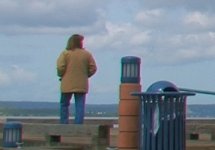
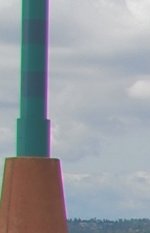
Chroma aberrations... no one else sees this?

liebkid

Member
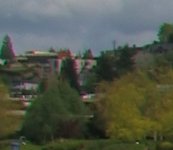
I am a Canon fan. I love Canon products and like their philosophy on them taking their time before launching a new product but then, usually coming up with something that is top notch. OK, so fast-forward to the XL-H1. I have been taking a close look at dozens of great footage samples from the H1. Am I the only person that is sensitive to this or is there anyone else for whom the color aberrations of this camera are also simply unacceptable? How come this seems to be an issue that doesn't seem to be noticed to most?

And where is this coming from? Poor Optics? Misconvergence of the CCDs? Prism diffractions?

Just about every shot I see coming from this camera is basically unbearable to watch and I cannot understand on a 9 grand piece of equipment, how this can be a tolerable issue, that no one seriously complaints to Canon about this. This is not a "mild" problem. This a "on-your-face" slap that I cannot positively comprehend to be accepted by users of this product and the market in general. Sub $1500 consumer cameras (even Canon's new HV10) don't show a fraction of this problem. Being in the market for the new HX-A1, which has the same CCDs and basically then same lens, I am seriously having second thoughts about the integrity of this design that is flawed far, far beyond the limits of acceptability.
 

Attachments
  • Image1.jpg
    Image1.jpg
    49.9 KB · Views: 0
  • Image2.jpg
    Image2.jpg
    40.7 KB · Views: 0
  • Image3.jpg
    Image3.jpg
    64.5 KB · Views: 0
  • Image4.jpg
    Image4.jpg
    67 KB · Views: 0
Last edited:
I'm 99% certain it's from the optics. And yeah, it really bugs me too and really struck me when footage started showing up. Part of this is due to the huge focal range that the canon lens covers. It goes from moderately wide (not very) to extreme telephoto. Doing that well and at a reasonable price while eleminating breathing is, well, difficult. If I remember correctly, this shows up most at the telephoto end of the lens.
 
Actually, I find it at the wide end fairly consistently too. It's certainly one of the weakest points of the design, and sometimes the CA is fairly heavy. It's somewhat addressable in post, and although I would prefer that it weren't there at all, it is and I work within the limitations imposed. One thing I certainly appreciate about the lens is how tack sharp it is from edge to edge with virtually no breathing. So I work with the image controls in-camera and filter out CA in post where I can.

If you're really sensitive to this and don't want to deal with CA at all, well, none of the cheap HD's have eliminated it. The JVC's is sometimes horrific, and I've certainly seen it fairly pronounced on telephoto shots from the HVX. The Sony probably has the least amount, but it also has the least range and is my last choice of all the products.

I have a feeling it will be somewhat improved with the new XH cameras and of course, the new wide angle lens, which I am seriously jonesin' for.
 
To be honest, you're gonna get that in all the 1/3 HD cameras; like noise and less resolved detail than promised, it's another compromise of such a small chip. I remember someone made a post exactly like this one on the HVX200 board and even used some of my own footage in their examples. All I can say is that it doesn't happen a lot in my stuff and I assume that the Canon isn't performing much worse than any of its competitors. If it was really big issue like the split screen thing with the HD100, I'm sure more would have made a big deal out of it.
 
You will find this kind of CA problem in nearly all cameras in this realm. The HVX also displays the same issue. Just look at most of what's posted on these boards to see what I mean.

A really good lens is going to cost the equivalent of 4 or 5 times the cost of the entire camera package, if not more.

Basically, for anything under $10,000, you need to figure out what compromises you are willing to make. Breathing, CA, lower resolution, inconvenience of footage acquisition, bulkiness, unbalanced equipment, the list goes on.

There is a sweet spot on every lens, including the Canon stock lens, where CA is almost erradicated and I have noticed that with more experience with the Canon, I'm finding the CA to be less of an issue.

The examples you have posted are based on one of my first days out and there are many high contrast shots that will show CA much more.

To suggest that it is unwatchable is something I cannot agree with but you are entitled to your opinion. I would be interested to get your thoughts on the watchability of my most recent Yellowstone footage posted in this forum.
 
ShannonRawls said:
I've seen worse on cameras that cost $90,000.

Even Mr. Lucas CAn't escape it! AHHHHHH!!! The horror. :P

Look at Jimmy Smits on the left side of the frame:
ROTS-CA.jpg
 
Elton said:
Actually, I find it at the wide end fairly consistently too. It's certainly one of the weakest points of the design, and sometimes the CA is fairly heavy. It's somewhat addressable in post, and although I would prefer that it weren't there at all, it is and I work within the limitations imposed. One thing I certainly appreciate about the lens is how tack sharp it is from edge to edge with virtually no breathing. So I work with the image controls in-camera and filter out CA in post where I can.

If you're really sensitive to this and don't want to deal with CA at all, well, none of the cheap HD's have eliminated it. The JVC's is sometimes horrific, and I've certainly seen it fairly pronounced on telephoto shots from the HVX. The Sony probably has the least amount, but it also has the least range and is my last choice of all the products.

I have a feeling it will be somewhat improved with the new XH cameras and of course, the new wide angle lens, which I am seriously jonesin' for.
Elton, you mentioned on post one can get CA somewhat under control. Could you develop more on it? On still digital photography using my Canon EOS-1Ds Mk-II (and the best lenses I can get my hands on to start with :) ), it is possible to control CA very well when manipulating RAW files under Photoshop CS2. Of course a single frame (photography) is a much simpler deal than multiple frames (video). So how does, RAW files CA correction translate into the same in digital video editing? Any NLE does it natively or should I be on the lookout for a plug-in for either Premier or FCP that can tackle the tweaking?

Also, thanks for everyone's input! True that all cameras show CA to a certain point (I have a HVX200 and it also shows it though somehow a bit more under control as the camera's native lack of fine detail resolution tends to make the CA less on-your-face, IMO).

The amazing thing is, for my causal shooting, my new Canon HV-10 (single-chip (CMOS) does a STELLAR job in keeping CA under control for the most part, as long as nothing get overexposed and I use manual exposure on the lookout for heavy contrast/ backlit objects. Aside from low light situations (where the camera's performance is below mediocre) it is amazing how a $1200 single chip camera gets most shots right and virtually free of CA when compared to its 9 grand sibling... and... I really DO LOVE the XL-H1.

And, I agree with most opinions that the small size of the CCDs and limited quality of the optics play a major role in the CA problem. I do however believe that in general single-chip cameras tend to be better at keeping CA under control when compared to most 3-Chip cameras (at various price points). Between internal diffractions, optical characteristics of the split-prism and possibly less-than-ideal manufacturing tolerances of each individual CCD alignment, I think 3-Chip pick-up designs are generally more susceptible to CA. Done right (eliminating some vertical banding, improving low-light performance, etc.) I think high-res single chip designs is the way to go in the future. The HV-10 shows clearly what (just above) a grand can do for a clean-cut pro-results HD video acquisition.

I am either way, extremelly hopeful CA issues will be largely improved on the new XHs cameras...
 
liebkid said:
...
I do however believe that in general single-chip cameras tend to be better at keeping CA under control when compared to most 3-Chip cameras (at various price points). Between internal diffractions, optical characteristics of the split-prism and possibly less-than-ideal manufacturing tolerances of each individual CCD alignment
...

I agree that once CA gets visible, it deteriorates on the split-prism, but I don't think CCD alignment imperfections play any significant role with filtering applied by image processors. Single-plate sensors use color pattern and physically "see" primary colors in different spots, but still display less CA problems. I think CA problems are strictly related to optical path imperfections and all cameras in this price range suffer from that similarly.
 
Elton said:
Even Mr. Lucas CAn't escape it! AHHHHHH!!! The horror. :P

Look at Jimmy Smits on the left side of the frame:

But Yoda looks perfect ;-)

Elton - thanks for posting this beautiful shot.
 
DavidBeier said:
Where did you get a hold of full frame grabs from EP3 Elton?

Dish Network HD DVR, HBO HD, FCP and my Kona LH card. :)

I capture HD broadcasts every now and then just to analyze the imagery. Yeah, I know, big time geekery. ;)
 
^
So would a picture like that be on par with the 1080p origional from the camera or is it signifiganly compressed for broadcast?
 
It's pretty signifigant compression, but it gives you a decent idea of the original quality. Broadcast HD is pretty heavy compression, and usually softens the picture a bit. EP3 looks better than most HD broadcasts I've seen.
 
I think CA problems are strictly related to optical path imperfections and all cameras in this price range suffer from that similarly.

I've certainly seen some annoying CA in Z1 footage, though never as bad as the stills in this thread... I always thought Canon had done a better job of eliminating it than Sony.
 
Back
Top