
Navigation
Install the app
How to install the app on iOS
Follow along with the video below to see how to install our site as a web app on your home screen.
Note: This feature may not be available in some browsers.
More options
You are using an out of date browser. It may not display this or other websites correctly.
You should upgrade or use an alternative browser.
You should upgrade or use an alternative browser.
Chinese Ball + LED ?
- Thread starter yoclay
- Start date
Wow -- already answered the hell out of this one. LEDs won't do a damn thing in sunlight. Try a silver board, mirror or something huge. You may get better results with a butterfly overhead, keeping your peoples in the shade, so that the rim light stands out better. Try some tests before you shoot this.
PS
I think you're thinking of the China ball thing backwards. You can use the sun itself as the rim light, and the China ball behind the camera as a fill or key light. But easier would be some bounce and a good PA. Just my opinion.
PS
I think you're thinking of the China ball thing backwards. You can use the sun itself as the rim light, and the China ball behind the camera as a fill or key light. But easier would be some bounce and a good PA. Just my opinion.
Last edited:

CharlesPapert
Director of Photography
You want to see the light moving? This is DEFINITELY stylized! I'm very curious to see how this will turn out--please remember down the road to link footage to this thread.
Regarding the silver butterfly--even if it was a mirror, it would never reflect any harder than the ball itself, and it would need to be that to have any effect to speak of (a soft source into a textured reflector will do very little). If you really wanted a harder aspect to the light, forego the china ball and mount the ribbon onto card that can hang off the pole. Literibbon direct tends to look more like a soft source anyway, depending on how you lay it out.
One thing to consider is how you are connecting it to the pole. You are presumably not going to want the unit to rotate freely if you are creating a orientation to the unit via blacking the back or how you stack the ribbon etc., so you will need a mechanical method to prevent this. If the person operating the boom never needs to change his orientation significantly from the actors (i.e. pivot around obstacles), you shouldn't really need a sphere on that pole. Understood you need some leeway more than a truly direction unit, but I would think no more than 45 degrees? if this is the case, and knowing you want a slightly harder look, I'd suggest foregoing the china ball completely and just fabricating a foamcore or coropolast platter and covering it with the Literibbon directly. You'll maximize your output without the added diffusion and it you can regulate the hardness simply by how you arrange the Literibbon. If you want to save some work you can buy the X6 cards and arrange them as you see fit. Honestly if I had to go about this I'd probably spec no less than 8 of them, all facing forward. You can choose between the 60 and 120 spacing to regulate the size of the source. This should deliver a consistent stop within at least a 30 degree arc, but you could always bend the backing into a V to increase this.
The folks at Literibbon are extremely helpful and will be happy to consult with you on how to go about this, by the way (something you won't be getting from the inexpensive knockoff manufacturers).
I remain extremely curious about this one!

David W. Jones
Veteran
This is what I have been using in a China Ball…. http://www.amazon.com/ALZO-watt-Pho...r=1-2-catcorr&keywords=alzo+45+watt+cfl+5500k
I just ordered this to play with. If it's not all that then I'm only out a few bucks.
http://www.amazon.com/HitLights-Den...f=sr_1_21?s=hi&ie=UTF8&qid=1389037251&sr=1-21
I just ordered this to play with. If it's not all that then I'm only out a few bucks.
http://www.amazon.com/HitLights-Den...f=sr_1_21?s=hi&ie=UTF8&qid=1389037251&sr=1-21
Last edited:
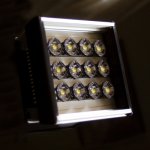
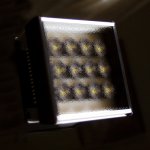
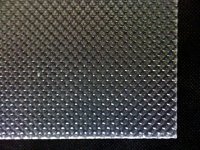
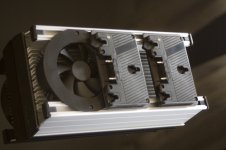
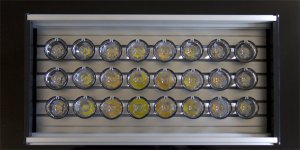
"LEDs won't do a damn thing in sunlight" How about one of these. A 64,000 lumen one is on the drawing board, slightly larger though.
View attachment 80673View attachment 80674
Jesus. Serious. But heavy I would imagine.
This is what I have been using in a China Ball…. http://www.amazon.com/ALZO-watt-Pho...r=1-2-catcorr&keywords=alzo+45+watt+cfl+5500k
Yes, Peter Mullett recommends those too. Surprisingly powerful, but not sure how easy it would be to run those off of DC.
I just ordered this to play with. If it's not all that then I'm only out a few bucks.
http://www.amazon.com/HitLights-Den...f=sr_1_21?s=hi&ie=UTF8&qid=1389037251&sr=1-21
Those are actually the wisest economical decision. The real truth is that most of what we pay for is to be on the cutting edge of light intensity.
Those are half as powerful as lite ribbon, but at $25 a pop, I'll take four. The other nice part is that I have a long hallway shot that I can use them on the ceiling as well. I am not so concerned with color temperature as I usually gel these kind of things and I almost always do the grading in post.
You want to see the light moving? This is DEFINITELY stylized! I'm very curious to see how this will turn out--please remember down the road to link footage to this thread.
Will do.
Regarding the silver butterfly--even if it was a mirror, it would never reflect any harder than the ball itself, and it would need to be that to have any effect to speak of (a soft source into a textured reflector will do very little). If you really wanted a harder aspect to the light, forego the china ball and mount the ribbon onto card that can hang off the pole. Literibbon direct tends to look more like a soft source anyway, depending on how you lay it out.
It wouldn't be into a textured source, it would be shiny silver. A card could be good, but it won't have the same roll off effect as a globe being turned on an axis.
One thing to consider is how you are connecting it to the pole. You are presumably not going to want the unit to rotate freely if you are creating a orientation to the unit via blacking the back or how you stack the ribbon etc., so you will need a mechanical method to prevent this. If the person operating the boom never needs to change his orientation significantly from the actors (i.e. pivot around obstacles), you shouldn't really need a sphere on that pole. Understood you need some leeway more than a truly direction unit, but I would think no more than 45 degrees? if this is the case, and knowing you want a slightly harder look, I'd suggest foregoing the china ball completely and just fabricating a foamcore or coropolast platter and covering it with the Literibbon directly. You'll maximize your output without the added diffusion and it you can regulate the hardness simply by how you arrange the Literibbon. If you want to save some work you can buy the X6 cards and arrange them as you see fit. Honestly if I had to go about this I'd probably spec no less than 8 of them, all facing forward. You can choose between the 60 and 120 spacing to regulate the size of the source. This should deliver a consistent stop within at least a 30 degree arc, but you could always bend the backing into a V to increase this.
All good points and it would be interesting to test. Got to play with it to know. Must be careful not to turn your boards into kites though, because they actually would be much harder to manipulate than china balls.
The folks at Literibbon are extremely helpful and will be happy to consult with you on how to go about this, by the way (something you won't be getting from the inexpensive knockoff manufacturers).
There are no inexpensive knockoff manufacturers in the end. They are all selling the same product at the same price point. The idea that Lite Ribbon developed these for the video crowd is marketing. It was developed for industrial and architectural applications first.

Norman99
Well-known member
Actually the 6 inch version measures only 6X6X3 inches and weighing in at 3.5 lbs. Each of those leds you see shell out 1000 lumens at full power.
The battery can be placed at the other end of the boom pole as a counterweight OR the battery can be at the belt. Common ENG 14.4V battery.
The 12 inch version is 6.5 lbs.
For the most powerful version I will be using leds that output 1800 lumens each. Not done with that one yet.
The battery can be placed at the other end of the boom pole as a counterweight OR the battery can be at the belt. Common ENG 14.4V battery.
The 12 inch version is 6.5 lbs.
For the most powerful version I will be using leds that output 1800 lumens each. Not done with that one yet.
...
I just ordered this to play with. If it's not all that then I'm only out a few bucks.
http://www.amazon.com/HitLights-Den...f=sr_1_21?s=hi&ie=UTF8&qid=1389037251&sr=1-21
Let us know what you think after playing with them.
David W. Jones
Veteran
Will do.
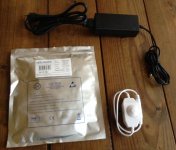
I also ordered a dimmer, power supply and extension cord.
I'll try to power it with an IDX battery via D-tap as a portable solution. These might end up being a great low cost light.
I also ordered a dimmer, power supply and extension cord.
I'll try to power it with an IDX battery via D-tap as a portable solution. These might end up being a great low cost light.
David,
I'm very interested in your progress. I have used the HitLights under my theater seat riser platform. And I have a couple of new china balls sitting around. But I can't quite figure out how you would wrap the ribbon around to maximize the output.
Also, are going to be using the existing harp or some other support like a Lanternlock or DIY solution?
David W. Jones
Veteran
I will likely fashion a cylinder which I will wrap the strip lights around and insert into a 24" lantern. Maybe mount a baby plate to the top to facilitate mounting. Haven't put a bunch of thought into it yet. Also thought about constructing a few light weight panels which could be coupled together to make a larger light when needed.
CharlesPapert
Director of Photography
There are no inexpensive knockoff manufacturers in the end. They are all selling the same product at the same price point. The idea that Lite Ribbon developed these for the video crowd is marketing. It was developed for industrial and architectural applications first.
LED ribbon was, yes, but Litegear has been working to spec versions of these that have color purity that far exceeds the needs of architectural light sources. Plus their dimmers are specifically designed to address motion picture needs. They have a demo in their showroom that reveals the difference between an inexpensive dimmer and their proprietary one in terms of flicker, smooth dimming etc. The guys there come from the trenches, working set electricians and they are actively involved in developing this stuff.
David W. Jones
Veteran
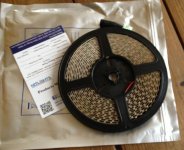
This shipped quickly. No time to do any real tests tonight, but A, it's much smaller than I imagined, and B, it's much brighter than I figured it would be. No observed flicker to the eye using the dimmer. I'll do some real testing when the freezing rain stops coming down.
Dave
Dave
David W. Jones
Veteran
David W. Jones
Veteran
Yes double density 600's. I haven't had a chance to gauge their color temp yet. We have a prep day today for a Saturday shoot, so it will likely be next week before I do anything with them. The 12v extension cable showed up yesterday, and if have a couple of fresh 24" nylon Chinese lanterns on the way from the paperlanternstore. If all goes well I will likely order more of these. There are just so many uses for these LED strip lights, and my brain has been overloaded with the ideas. Including things like mounting inside equipment cases, inside my Sprinter van, pimp out my equipment carts  . But seriously, keeping a couple of rolls in the light kit now seems like a no brainer.
CharlesPapert
Director of Photography
David, have you tested these on camera yet? You may want to before building fixtures. No discernable flicker to eye doesn't mean they will be flicker-free to camera, especially wth 24p (and high frame rates). I've had that issue come up with inexpensive LED on set before.