Canon Sales Continue to Plummet

the previous decade of camera sales never seemed sustainable. People were upgrading at a crazy rate.

People who never thought about photography, film, or video were jumping in.

So, now things are settling down, and the cellphone cameras are taking a big slice of the p+s? Not sure how any of this directly or indirectly changes the way professional media people go about their day.

Canikony should be looking for ways to make better products. Not saying anything about their consumer side of cameras, just the pro stuff. And i see that they are, i am just saying, that how it should be.

The Fs7, Fx9, C500mkII, and S1H all seem like cameras that reflect the new reality. Plenty of passable cameras out there, and semi-good image quality isn’t enough anymore. They milked that train already.

We’ll see if they start taking more conservative approach to builds, with longer life cycles, or if technology just moves too fast and passes them by.


It is unclear to me how much modernizing and keeping up is a viable business model for the pro camera industry. And we’ll see what the companies did with their profit, whether they put that into refining, creating a more dynamic and modular future, or were just plain blind sided by cellphones. I doubt that, but looking at camera design, i am also not going to write that idea off either. They seem stuck.

Well, here’s to another decade of crippling and milking and not making anything classic, because... there’s always better next year.
 
Just saying In a round a bout way that “Canon sales continue to plummet” is not a surprise, and not a bad thing, but a correction.
 
It's the typical arc of any business. Some shorter than others. The pet rock had nowhere to go. Cars have had a century of arc. There was no reason to buy a new car every few years. They all had doors, an engine and wheels, but car dealers got people to continuously upgrade, mostly out of vanity I'm guessing. Sure in many regions they turn into rust buckets and need renewal. But in dry climates people upgrade regardless of that.
The same can be done with cameras, but to a lesser extent. The move to full frame seems largely unjustified, except for the need to keep up. It is a successful gambit by the camera makers. The roomy full frame sensor gives them some running room to make a few more iterations that will get people to buy a few more times. Then something else will come along that we all have to have.

Look at mixers - just where could they go with those? .. and surprise, they come up with 32 bit floating. That opens up a whole new iteration of products. So the same may hold true for cameras. No, it won't be the wild days of yore, but if they can keep us buying new cars year after year, they can do the same with cameras.
 
A product cycle is (almost) inevitable. Cars depend on the infrastructure but also have the law of diminishing returns. At the ongoing LA Auto Show Hyundai previewed a Veloster based sports car expected to be released in about two years. 390 HP and 0-60 expected to be in mid-3's. Accidentally (or not so, since I occasionally do watch car reviews on YouTube), I just followed a portion of the new 911 Carrera S4 review, a car with 443 hp and a similar low-3's 0-60. Veloster might appear as a cheapo imitation of 911 but it will be priced about a $100,000 lower.

In the photo-video world, the situation is similar. Xiaomi Mi10 has a 108 MPX sensor (one of five cameras on the body). The reviews naturally claim that the files are huge, the main lens is mediocre and the low light sucks, forgetting to mention that Mi10 has other cameras for low light. But the main point is that it will sell for ~ $450 in the US. Meanwhile, its "competitors" want you to buy a 20-24 MPX APS-C for three times the price. Additionally, one should expect higher quality smartphones with the same sensor but a higher grade lens (+ a more modern CPU, OS, periscope zoom, etc.) for slightly more to be coming out this next winter. And that pretty much leaves no reason for anyone beside the pros to venture into the full frame and medium format. Which, much like 911 vs. the Veloster, will always offer superior quality but to far few buyers to matter.

PS. The combined 911 unit sales in the US are almost the same as Veloster's (~ 10,000 vs. 12,000), despite Veloster winning several awards in a budget sports car category.
 
^ Top gear has tested 25 Porsche models. The Tesla Model 3 is slower than the top four models, but faster than the other 21 (link). I don't think many people are buying a Porsche for the performance.

And yes I'm talking about photography too.
 
Who are all these camera professionals that need car metaphors to understand camera principles?

I know a lot more about cameras than cars.
 
Who are all these camera professionals that need car metaphors to understand camera principles?

I know a lot more about cameras than cars.

And why do we feel that it's somehow necessary to write a 12 page dissertation justifying why? I'm a professional, I know what I want. I shouldn't be having to convince everyone else like I'm trying to talk 'mommy & daddy' into buying me something for my birthday.
 
I'm definitely not trying to convince anybody to buy anything. We're discussing the future of camera makers, I think that's relevant.
 
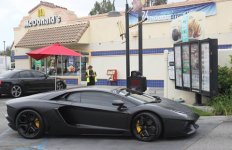
"You can drive a Lamborghini to your favourite burger joint in record time but it can't go over a speed bump and is a pain to park. When I finally order the burger, I'd rather have the choice to pay for each individual flavour of sauce, not be forced to buy 6 sauces at once."

By the way, Lamborghini = Arri and sauce = recording formats. Burger still = burger.

This is brilliant.
 
Who are all these camera professionals that need car metaphors to understand camera principles?

I know a lot more about cameras than cars.
In terms of the product cycles, I was thinking of the AM/FM radio, whose time in the limelight is near a close. AM's time in music delivery was done about 30 years ago. The news/talk radio took over but even that is now geared toward the podcasts and live streaming. And music is now satellite radio and Spotify, Pandora, YouTube, iTunes.

And the stand-alone camera business is nearing extinction as well. Falling sales, falling profits, falling R&D budgets. High end pro tech remains the faint hope.
 
"I shot this work of art 10 years ago on a JVC GY-HD100U. A broadcast style camera (more so than say a DVX100, Canon XL2, or Sony EX-1) with interchangeable servo lenses for a fraction of the cost of typical broadcast cameras. Used a Firestore recorder to record digitally instead of with tape."


I loved that camera. I shot my 4th full length feature on it, VAMPIRELAND. It's at a million and half views on youtube and God knows how many on Amazon, etc.

While plenty of people hate it (plenty like it too), not a single comment ever said it didn't look good. I think that video cameras have come so far so fast that yeah, there's going to be diminishing results for these manufacturers.

But Canon is a particular example of bad decision making. Canon's cripple hammering really hurt them over the past 6-7 years. They could have absolutely owned the indie film/indie producer market thanks to the Rebel t2i and Mark II, but then completely turned their back on it. Panasonic & Sony then filled the void.

Flash forward today, and you see the same thought process going on. Whoever thought it wise to remove 24p from cameras costing thousands of dollars ought to fired... except I'm guessing it's most of Canon. Just a wildly stupid move on their part. I long ago gave up on Canon for this reason, and I know I'm not along (as those B&H stats show). What might have been for Canon....

https://youtu.be/v-XQSYzR-rU
 
Yes, I love to bash on Canon and their hybrid video choices. But, there is still time to right the ship. Come out with a 5D mirrorless camera with the CRAW light the 1DX III has and everybody will forgive them! :) Adding an XLR audio unit would go a long way as well. How many C-Series cameras are they going to sell in the future? Does there need to be a C200 MKII? Seems like they can give some love to the hybrids at this point in time.
 
Yes, I love to bash on Canon and their hybrid video choices. But, there is still time to right the ship. Come out with a 5D mirrorless camera with the CRAW light the 1DX III has and everybody will forgive them! :) Adding an XLR audio unit would go a long way as well. How many C-Series cameras are they going to sell in the future? Does there need to be a C200 MKII? Seems like they can give some love to the hybrids at this point in time.
Every time I see this argument, I am stuck wondering how big the hybrid market actually is. What is the growth potential for selling a photo camera that video producers want to use over keeping their product lines separated?
 
I don't know the answer but I would guess the positives would be: the hybrid market is a lot larger than the C-series market and they have the potential for more lens sales. I see it as an artificial separation which free markets tend to sort out on their own. Back when the divide between pro level, prosumer and consumer image quality was large, you could see the hierarchy. It is all pretty blurred now and a customer is a customer. I own some EF lenses and if Canon wants me to buy some EF-R lenses, they are going to have to give me more than they did to get the EF purchase. If they do not want my purchase that is their choice, but I thought they were in the imaging products business.

No need to give things away but the cat is out of the bag already. You have $1,300 RAW video cameras on the market. If anyone was going to buy a C-anything they would have done it by now. Withholding image quality or codecs etc... just seems out of step.
 
2010: man, they better put raw 2K in their cameras

2020: i mean, if they put 10bit in now, they can still right the ship.
 
Every time I see this argument, I am stuck wondering how big the hybrid market actually is. What is the growth potential for selling a photo camera that video producers want to use over keeping their product lines separated?

It seems like the hybrid of "stills+video" is really "stills-and-maybe-video" for up to $5K or so, with the exception of the GH-5 and now S1H ... but it's all collapsing downward now.

Side note - RED Komodo may or may not become a hit but its shape is the shape of things to come.
 
Every time I see this argument, I am stuck wondering how big the hybrid market actually is. What is the growth potential for selling a photo camera that video producers want to use over keeping their product lines separated?

As someone who owns the C200 and a hybrid Fujifim XT-3, I don't see the two products converging for me in the foreseeable future. Until they make a hybrid with built-in NDs, RAW, real TC i/o and integrated mini XLRs, my hybrid will always be my B-camera. The XT-3 makes great looking images but it is a PITA to shoot
handheld or even on tripod compared to my C200. Even if hybrids do eventually integrate all of these features, the ergonomics are still a lot more of a compromise for many kinds of shooting scenarios. I have no problem owning and using a real video camera and a hybrid camera, it's nice to have different tools for different
shoots.
 
Back
Top