Greg Smith
Veteran
What did I say about a head-mount?
https://www.facebook.com/photo.php?fbid=10152883142416027&set=o.157756937606832&type=1

Guaranteed to make all the girls swoon over you at the next party!

- Greg

Follow along with the video below to see how to install our site as a web app on your home screen.
Note: This feature may not be available in some browsers.
What did I say about a head-mount?
https://www.facebook.com/photo.php?fbid=10152883142416027&set=o.157756937606832&type=1
Especially if I ask them to pose for my backup camera ... which just happens to be modular!Guaranteed to make all the girls swoon over you at the next party!
- Greg
Especially if I ask them to pose for my backup camera ... which just happens to be modular!
This is pretty.
https://www.phaseone.com/en/Products/Camera-Systems/XF-Camera-System.aspx
SANTA CLARA, Calif., June 3, 2015 /PRNewswire/ -- OmniVision Technologies, Inc. (NASDAQ: OVTI), a leading developer of advanced digital imaging solutions, today announced the OV9734, the company's smallest 720p high-definition (HD) sensor for consumer applications. Built on OmniVision's PureCel™ technology, the OV9734 CameraChip™ delivers premium quality images and video, while consuming significantly less power than previous generation image sensors, making it an attractive camera solution for slim notebooks, tablets, handsets and other mobile devices that require thin bezels....
The 1/9-inch OV9734 CameraChip™ sensor can capture 720p HD video at 30 frames per second (FPS) or VGA resolution at 45 FPS, meeting the premium video quality specifications for popular video conferencing platforms...
My crystal ball has been recharged and so I'll chime in --
I mostly agree but ... there might/could be a modular setup, that turns a cell phone into a DSLR (we see it with Joe's photos) and a DSLR into a handheld a la GH4/A7s + Q7/Shogun but in a more of a piggyback/ergonomic design...
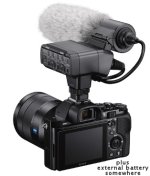
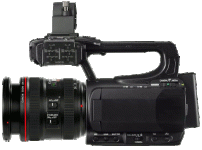
I concur but, as a small vendor, they are not capable of making a "digital back" type of an addition. DSLR's innate shape and features stand in the way of the third body making a suitable one. It'd have to come from a manufacturer or via a third party working with a manufacturer.Closer, but still too big...
'Star Wars: Rogue One' to Be Filmed With Arri's 6K Large-Format Camera
Mobile camera aficionadas will no doubt appreciate the 23.7-megapixel camera of the Gionee Elife E8. It’s able to launch in just 0.8 seconds and includes snappy phase detection auto-focus, optical image stabilization and the ability to record 4K video ... Elife E8 will command $645 once it ships on July 15....
:grin: Most of the "free to air" tv in Australia is still Digital SD. :grin:Oh and to the camera industry in the 21st Century. Here's some high end news.
http://www.hollywoodreporter.com/behind-screen/star-wars-rogue-one-be-801322
The US is still using an MPEG2 standard for the Over The Air broadcast. Usually, what was originally supposed to be a 1080p signal is split into 1080i/720p and two-to-four 480p sub-channels. The upgrade to HEVC would theoretically quadruple the number of the available Full HD channels (or their equivalent) from 10 to about 40. Should QHD (2560x1440) rather than 4K become an OTA standard, that number would be around 25.:grin: Most of the "free to air" tv in Australia is still Digital SD. :grin:
I don't know about "pay tv", i don't bother.
God only knows how far away that is.30 Mbps download

The US is still using an MPEG2 standard for the Over The Air broadcast. Usually, what was originally supposed to be a 1080p signal is split into 1080i/720p and two-to-four 480p sub-channels. The upgrade to HEVC would theoretically quadruple the number of the available Full HD channels (or their equivalent) from 10 to about 40. Should QHD (2560x1440) rather than 4K become an OTA standard, that number would be around 25.
The game these days, obviously, centers around the internet with most broadband providers making ~ 30 Mbps download - and thus 4K streaming - fairly affordable. Here and there, you might even see 1 Gbps trials.
Sony referred to UHD as QFHD in their A7R MKII presentation. It made me look twice.I've never even heard of QHD. I had to look it up. It's basically quad 720p for those that don't want to look it up...
I think the Congress wants more frequencies for the wireless and will move on this by early next decade.If I understand correctly that you guys are talking about over the air broadcast TV digital signals updating their encoding from MPEG2 to HEVC for real, I would say to not expect any changes to happen for at least another 20-30 years at a minimum.
My hunch is that the Congress will wait a few more years before conducting hearings with all the big manufacturers and "consumer unions" involved. One reason is HEVC vs. whatever else might pop up. The other is 8K.... I don't see how they're going to ask tens of millions of people to upgrade their TVs or receivers again anytime soon, but let's see what happens! Perhaps it will be a deal where only UHD signals will use the new encoding tech, so only UHD TVs will be equipped with it and consequently existing HDTVs and receivers would be unaffected? Then when UHD penetration reaches some tipping point they can maybe start talking about doing away with old SDTV and HDTV signals?
