C500: C500 Mark II: Observations from a C200 point of view

I came very close to putting down a deposit, but rental rates here have already dropped from about $2000/day to $1100/day for the MILF. That's a 1% rental rate, or 100 rental days to pay one back. Doesn't make sense to own with rental returns like that, it'd take too long to turn a profit from it.

That's ridiculous. I know people throw packages in for free (insert LA sharegrid example), it's just a shame that it's happening at the highest level.

It seems like a better investment as a 1st AC where they (probably) have more days on set than a DP and can pay the camera off faster.

This comes into the equation too as a potential fx9/c500 ii owner operator. As in, if mini LF hires are that cheap, owners of these mid-tier cameras may need to get aggressive in their pricing to get their camera package on the shoot.

Last week I hired some tungsten lights to a low budget music video @$200/day. Maybe the tech is old enough and tungsten is cool again?
 
Last edited:
I package myself with my rentals. That way if a client is like, “Well we can get an Amira w/tripod, SmallHd, media, and batteries for less than $1500 elsewhere, then I’d just be like, “But the elsewhere won’t have me available as a rental option.”

The full time rental shops are established and can get good rates. Skilled DPs with gear can get good rates. It’s the owner/ops who dry hire out their gear that are willing to take bottom barrel rates.
 
Video #3 - Image Stabilization Tests

Here's my latest C500MKII video, comparing all of the different options for image stabilization.
 
Video #3 - Image Stabilization Tests

Here's my latest C500MKII video, comparing all of the different options for image stabilization.

Hey Chris --

When I saw this a few weeks ago, I thought, this doesn't square at all with what I'm seeing with my camera, (and also a number of other tests I'd seen) specifically the results regarding "EIS (IBIS) only" mode. I decided to keep my mouth shut as I really hadn't tested it as succinctly as you had.

Yesterday, I was reading through the newest version of the C500 Mark II Manual, and I noticed something I hadn't seen before:

If the IS function is turned off on an EF lens, the Camera's image stabilization function is deactivated..."

.... which explains why your IBIS only shots didn't seem to be any different than "no stabilization". I don't own any FF stabilized lenses and I've seen a pretty noticeable improvement with "IBIS" only, with non IS lenses. Anyway, I think this little tidbit helps explain the different experiences we had with the feature.
 
Last edited:
If that can't be changed, some people are going to wonder why the C500's IS doesn't work too well. On the other hand, that could be a convenient way to quickly turn on/off IS if you're using a lens like that rather than checking the menu/programmable button (if possible).
 
... On the other hand, that could be a convenient way to quickly turn on/off IS if you're using a lens like that rather than checking the menu/programmable button (if possible).

My guess is that's Canon's thinking on this, but as always, more control is always better on a camera of this level. I'm just glad I saw it, because I was beginning to wonder if I was just imagining that it worked better over here. I've got sketchy knees, so I don't do a lot of the walk and follow handheld work that people seem to use to test IBIS, but I though Matt Porwoll's demonstration of it made a strong case for its usefulness.

An interesting corollary to canon's note I pasted above is that B4 lenses don't trigger the same response -- the EIS remains active if the IS is turned off on those lenses.
 
Hey Chris --

When I saw this a few weeks ago, I thought, this doesn't square at all with what I'm seeing with my camera, (and also a number of other tests I'd seen) specifically the results regarding "EIS (IBIS) only" mode. I decided to keep my mouth shut as I really hadn't tested it as succinctly as you had.

Yesterday, I was reading through the newest version of the C500 Mark II Manual, and I noticed something I hadn't seen before:

If the IS function is turned off on an EF lens, the Camera's image stabilization function is deactivated..."

.... which explains why your IBIS only shots didn't seem to be any different than "no stabilization". I don't own any FF stabilized lenses and I've seen a pretty noticeable improvement with "IBIS" only, with non IS lenses. Anyway, I think this little tidbit helps explain the different experiences we had with the feature.

Thanks for catching this Barry - wish I had seen this before I ran my tests. I updated my YouTube video's description with this note (I wish YouTube allowed you to replace source files like Vimeo....). I'll likely make a quick video later this week to try to get this information out there so people are accurately informed. I wish I still had the camera so I could update the test, but hopefully someone else can make one.

This is an odd choice by Canon (or limitation), especially considering it still works with the B4 lenses that you mentioned. I don't have a large set of lenses, but my go-to's for doc work all have IS built in, so that's a bit of an interesting quagmire to be in - 100% all in on IS with lens and camera or no IS at all.

I re-read that page on the manual and am glad that it did confirm what I was seeing when IS in-camera was turned on: "Depending on the subject and shooting conditions, subject blur may be more prominent due to the use of image stabilization." This is the part that is also kind of confusing me because when I was analyzing my side by side tests I wasn't noticing any difference in stabilization between no stabilization and only in-camera stabilization (which is explained now), but I could almost swear on my life that I was definitely seeing this occasional blurriness which is what was leading me to believe that the in-camera image stabilization was still functioning. On all of my tests the no IS clips were always sharper than my clips with lens IS or in-body IS even though they were shakier. I would go frame by frame through the clips and to my memory there were always more blurry frames with only in-camera IS turned on than there were with no IS at all. Also, if memory serves correct the camera was still cropping in about 10% when only the in-camera IS was turned on (even though it apparently wasn't working....)
 
Last edited:
Yuck. Why do all of these new cameras come out with so many little gremlins in the system? :/

It feels like you have to a wait a minimum of 12-24 months before they settle down with enough firmware updates to get rid of the worst software snafus.
 
Absolutely gorgeous looking footage in this...

https://www.youtube.com/watch?v=OGNLTfipWds&t=384s

my biggest takeaway from that video was the quality of the proxies...the 2k proxy displayed in 4k was pretty impressive. I haven't shot any proxies yet, but I'm now interested. (also I wish I was capable of shooting in bright sun like that, and capable of presenting footage "millennial style" ---flat, and cool, baby, cool . :-)
 
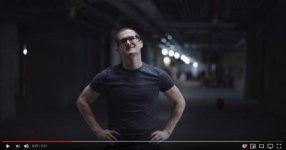
Really pretty stuff in this one as well. We're starting to see some stellar footage emerge from this camera! I love the colors in this one, too. Some of those shots just pop right off the screen! And the dynamic range looks great.

 
Last edited:
To me this is where full frame really shines - shallow close to subject wides where you can still feel the background but there's that extra layer of separation that makes you feel closer to the subject, just beautiful:
Screen Shot 2020-03-06 at 2.04.10 PM.jpg

Here's where I start to lose interest in FF. Unnecessarily super shallow dof that distracts from the subject because only part of the face is in focus:
Screen Shot 2020-03-06 at 2.04.26 PM.jpg

And this is where I really hate FF. Where the subject looks like they're on their own layer or green screened:
Screen Shot 2020-03-06 at 2.04.39 PM.jpg


Good looking stuff in this video, but for me personally FF might as well be a specialty wide angle lens that's like an F/1.0. Something I would only want to use for very specific shots and is a detriment for the majority of other shots.
 
To me this is where full frame really shines - shallow close to subject wides where you can still feel the background but there's that extra layer of separation that makes you feel closer to the subject, just beautiful:
View attachment 138582

Here's where I start to lose interest in FF. Unnecessarily super shallow dof that distracts from the subject because only part of the face is in focus:
View attachment 138583

And this is where I really hate FF. Where the subject looks like they're on their own layer or green screened:
View attachment 138584


Good looking stuff in this video, but for me personally FF might as well be a specialty wide angle lens that's like an F/1.0. Something I would only want to use for very specific shots.

I agree, but I found the FF useful when using slower lenses like the FE PZ 28-135mm f/4.0 G OSS Sony gave me with the FX9. FF at an f/4.0-f/4.5 on interiors is right where most fast lenses look better anyway.
I am so over super shallow DOF, that was the other thing that bugged me about the shot of the lady above with the glasses, both of her eyes aren't even in focus, looks like amateur/DSLR/YouTube hour to me.
And the guy below, he does look pasted in. Aren't cinematographers moving past the adolescent ultra shallow DOF/Bokeh obsession yet? That seems more like a still shooter obession to me these days?

I think having FF in the menu is a handy thing, mainly for it's light gathering ability and lower noise pattern but I am still of the mind that FF is the thing that few asked for but now everything thinks that they have to have.
It's not bad, I enjoyed it here and there, but it definitely wouldn't factor into a new camera decision for me. If a C300 MKIII comes out with a S35 sensor, I would still want it. But if it has a FF, okay, fine, that's what the
market has bought into.
 
Eh, I think the guy at the bottom is who shot the lady in black rimmed glasses.

And I'd guess he was in the auto-focus mode that was thrown off by the reflections from the eye glasses themselves.
 
I don't like anything faster than 4.0 on FF.
I remember seeing stuff off my 5d II 10 years ago at 1.8 that I couldn't stand because you reach a point where you have to hunt through the frame to find the point of focus.
It's a distracting scenario.
Maybe ok with a still, not Ok with video.
 
Luckily for those people who can only shoot wide open, some of the most useful Canon zooms are f/4.0.

Which also makes me think that Canon probably has some t/4.4 full frame cine zooms in the works. I would immediately buy a 24-105 compact servo zoom even if I had to sell the rest of my lenses to afford it.

I’d be curious to know if Canon has had good sales success with the existing S35 CN E compact servos. If they have, I agree, they’ll probably do a FF version of a few.
 
To me this is where full frame really shines...

I don't think there is anything more valuable than actually knowing what you like, or don't like—especially in today's world of opinions. Be it cinematography or wine tasting.

For the record, we might want to underline that there is nothing inherent to Full Frame per se. You could create this looks with S35 too. But it might be that FF makes things a bit more effortless, depending on what you're looking for and real world constraints.
 
Back
Top