C300: C300MKII + ProRes Raw... Has anyone tried it?


Looks like decent highlight recovery- the main point of raw (along with shadow recovery and a bit better detail from higher quality deBayer in post). Might also provide less NR which could be good or bad depending on situation.
 
The C300 II RAW is 10bit, so you don't gain much in the way of bit depth over the internal. You do get noticeably more detail, but it is at the expense of some pixel level color fringing from the debayering process and the lack of noise reduction. The ProRes RAW works much better for pulling a key or selective color manipulation.
 
I'm interested if this got adopted by anyone? (2 replies so far indicates it didn't)

I ask because it appears to still be only available on Atomos Shogun Inferno / Ninja V + FCPX.

I suspect most C300 MKII owners will not be too fussed about it (I have only used a Shogun recorder occasionally, and the one I have access to is too old for ProRes RAW).

So it seems a bit "meh" until there's much broader support, or you are in the 1% of people who have the exact right combination of camera / recorder / FCPX (by purchasing design or luck).

Maybe there will be some announcements / internal camera support at NAB.
 

Looks like decent highlight recovery- the main point of raw (along with shadow recovery and a bit better detail from higher quality deBayer in post). Might also provide less NR which could be good or bad depending on situation.

That is exactly how I used to shoot with Blackmagic cameras. I did enjoy the freedom but I wouldn't do it again today. Too much of a hassle.

I'm sure some existing C300 Mark II owners who will not part with the camera - especially if they bought one for $16K-ish - may try it (and it's nice to have the option), but who really needs it when internal recording can look this good (slightly off topic but saw this little clip when searching for ProRes RAW samples)...looks nice:

https://www.youtube.com/watch?v=9LO2tdc1mBE
 
That is exactly how I used to shoot with Blackmagic cameras. I did enjoy the freedom but I wouldn't do it again today. Too much of a hassle.

I'm sure some existing C300 Mark II owners who will not part with the camera - especially if they bought one for $16K-ish - may try it (and it's nice to have the option), but who really needs it when internal recording can look this good (slightly off topic but saw this little clip when searching for ProRes RAW samples)...looks nice:

https://www.youtube.com/watch?v=9LO2tdc1mBE

I paid full price at launch- got $7500 when I sold it, really not bad for electronics and especially a camera after that many years (compared to $250K cameras going for peanuts now)). Had zero desire to deal with raw, though if shooting for something higher budget (for others), I'd do it to provide max quality and flexibility if it made sense. Otherwise, if you don't blow highlights, the internal footage is plenty flexible in post (RGB 444 12-bit was my favorite- upscaled+sharpened really nice to 4K and only 225Mbps (vs. 410Mbps for 4K YUV 10-bit)).

Notice in that footage (IMO) skin tones are pretty low in detail. I found this would happen even with NR set to -1 (the new "off" when 0 wasn't off enough lol). This is one area where raw could help retain skin detail and NR could be applied as desired in post (paid Resolve or Neat Video etc.). DR is nice for that footage, though an 'old' A7S II could easily hang for those shots (8-bit 420). They stated CLog3 was used (then later WideDR- perhaps a LUT in post?); CLog3 was my favorite for log. While the smaller/lower cost cameras are as good or better in IQ now, the C300 II still has much lower RS- helpful for motion shots which need stabilizing in post (also just looks better without the wobble). For stable/locked shots (like this example), no advantage.

Stopped by the Leica store today on Beverly & Robertson- the Leica SL is really well made. Looking forward to them getting phase detect AF & IBIS and with less RS (FF). Leica lenses are great and when they update their bodies (already great build quality), wow they will make fantastic dual-use cameras.
 
For what it’s worth, I recently shot a couple of web ads and opted to use the c300 mk ii’s 4K RAW output into my odyssey 7Q. I wish premiere handled Canon RAW the same way as RAW lite (I’m sure that’ll be their approach to incorporating prores RAW), but it doesn’t so I converted to prores4444 clog2 for edit. I used to exclusively shoot internal 10 bit 4K and the footage seemed light years ahead of what I was used to in terms of color fidelity.

If prores raw indeed yields the same results I could see myself shooting it whenever possible.
 
Regarding the benefit of ProRes RAW vs ProRes, if you are using FCPX then I don't know why you wouldn't use ProRes RAW instead of ProRes. The RAW is more efficient and I find FCPX can play it back without a problem. It also works better for keying. The actual image looks exactly the same when you import it, though. It automatically conforms to CLOG 2.
 
Regarding the benefit of ProRes RAW vs ProRes, if you are using FCPX then I don't know why you wouldn't use ProRes RAW instead of ProRes. The RAW is more efficient and I find FCPX can play it back without a problem. It also works better for keying. The actual image looks exactly the same when you import it, though. It automatically conforms to CLOG 2.

It sounds as if it works the same way CRL works in FCP X. But it's a heck of lot smaller and easier to manage.
 
I'm very interrested in first hand experiences with RAW in the C300 II. I bought into the C300 mk II kind of late (@12.000$) and I have almost a year to go on the financial lease, so I will be using the camera for at least another year.

Highlight recovery is nice, but what I'am mostly interested in is image detail and color fidelity compared to the internal codec. I found this short clip https://www.youtube.com/watch?v=B8eiQrG-cYo that actually almost convinced me that RAW is worth the ekstra hassle of adding an ekstra device to the camera. That is shot with an Odyssey, can the same quality be expected with an Atomos and ProRes RAW?

What do you other C300 II owners/users think, is the Atomos a worthy "investment" to keep the image from the 4 year old camera looking fresh and relevant?
 
For the price of a ProRes raw recorder I’d...

...buy DaVinci Resolve Studio and learn to be a master at it.

Hardly anyone will notice the codec difference once it's delivered, and your awesome colouring skills can make it look like anything, or within a few % anyway.

If you want to stay in the C300 family, then pay it off and keep it until the C300 MKIV price reduction in ~5 years. You'll have saved a tonne of $$. Save US$2K per year and in 5 years you'll have the cash (US$10K) and pick yourself up an awesome HD/4K/8K camera with no stretch. Even in the next 5 years most people who are in the C300 space (broadcast / documentary / corporate shoots) won't need more than the internal 4K.
 
...buy DaVinci Resolve Studio and learn to be a master at it.

Hardly anyone will notice the codec difference once it's delivered, and your awesome colouring skills can make it look like anything, or within a few % anyway.

If you want to stay in the C300 family, then pay it off and keep it until the C300 MKIV price reduction in ~5 years. You'll have saved a tonne of $$. Save US$2K per year and in 5 years you'll have the cash (US$10K) and pick yourself up an awesome HD/4K/8K camera with no stretch. Even in the next 5 years most people who are in the C300 space (broadcast / documentary / corporate shoots) won't need more than the internal 4K.

I paid cash for the C300 II at launch (CC then paid off immediately). Financing (and any/all forms of debt) IMO best avoided at all costs (pun intended). At the time of purchase, it was the best option for "4K", DPAF, and "Pro" audio. The only advantage now (to me- now sold in case you missed that) is low rolling shutter (and perhaps raw with DPAF, though the C200 is probably a better deal). The $1400 X-T3 and $2000 A7 III both provide True 4K (6K => 4K downsampling (meeting the .67 or 1.5x oversampling requirement for Bayer sensor cameras (Nyquist + real world requirements)) and good or better low light and real/actual/usable DR. I'm getting better skin tones and detail from the 1DX II and better green screen keys even with 8-bit 422 (C300 II also has annoying aliasing- this is one aspect of that camera that made me feel like it was kind of a rip off (along with fake 4K) for $16K compared to e.g. A7S II 1DX II (other cameras I owned at the same time), and now even at $10K to me it's not worth it (unless used for a broadcast gig or work requirement (shooting for others)) vs. the $1400 X-T3, $2K A7 III etc.).

It's all good and the normal progression of technology and especially cameras. Not many (any?) individuals/small companies likely paid $250K for this camera when new (mostly rentals?): https://www.eoshd.com/2013/01/sony-f35-reaches-12000-on-ebay-from-250000-in-2008/ . They sure depreciate faster than Ferraris haha (old ones e.g. 1962 Ferrari 250 GTO kinda go up with time).

NorBro made this comment back in 2016 when I did a C300 II, A7S II, 1DX II camera-match http://www.dvxuser.com/V6/showthread.php?346890-1DX-II-A7S-II-C300-II-Compared-Side-by-Side:
The quality is so good from so many inexpensive cameras these days...who can justify any high prices anymore unless the work is super high-end. Even then...rent the gear.
No one could tell the difference! I look at that clip now and it doesn't look that great haha.

Now that everyone's getting DPAF or hybrid phase/contrast AF (and advanced AI AF) with True 4K, 10-bit, 4K 60 etc. and even decent color for skin tones, I have to agree with NorBro (and others) regarding these high end cameras, unless one has a work requirement, I now agree it's best to rent anything over the X-T3 => A7S III priced cameras (whatever that will be priced: $2.5 - 3K?). Wow for many kinds of shoots, even the $900 A6400 will be amazing (another True 4K camera): https://www.youtube.com/watch?v=6ItVPf9BifI

All that said, if someone already owns a C300 II and is happy with it, along with a collection of Canon lenses, ProRes raw could potentially give the C300 II a bit more value by providing better 4K (from post-quality deBayer) and much better skin tone detail (from no in-camera NR), and most importantly, far-better highlight recovery. Highlight recovery can be very helpful for the doc/verite/live with the C300 II since it doesn't provide auto ISO (like just about every other camera!), though it does have an auto-iris.

Mastering Resolve Studio is good advice for everyone- if I didn't use Photoshop, Audition, AE, Illustrator, and Acrobat, I'd drop PP CC and use Resolve. As it is, I dabble in Resolve and am impressed with every new release (still not quite as polished as the clunky PP CC or even FCP X (neither is a great human-factors design either)).

The truth about many things is coming to light and accelerating...
 
If convergent design brought out an updated version of the nano flash that would record 4k pro res raw to Cf 2.0 Cards and could be just slapped on the camera some place I’d buy that as an interim step. I have an Odyssey 7Q which i love as a monitor/recorder but the form factor basically locks one in to using the camera on a tripod . A newer version of a nano flash could be small - without the monitor screen and would allow hand held use of the camera with raw recording , hopefully pro res raw.
 
If convergent design brought out an updated version of the nano flash that would record 4k pro res raw to Cf 2.0 Cards and could be just slapped on the camera some place I’d buy that as an interim step. I have an Odyssey 7Q which i love as a monitor/recorder but the form factor basically locks one in to using the camera on a tripod . A newer version of a nano flash could be small - without the monitor screen and would allow hand held use of the camera with raw recording , hopefully pro res raw.

That's a good idea- I had a NanoFlash for the FS700. An iPhone-sized device (even a small iPod touch size) with a CF card can work with today's tech, only issue seems to be making things really small/sexy/cool is it's very expensive industrial design and manufacturing, and thus only Apple, Samsung, Sony etc. make really small & powerful electronic devices. Since Atomos already supports ProRes raw, perhaps they'd be a more likely manufacturer? The other issue is market size and functionality/versatility for a record-only device vs. monitor + record (currently no record-only devices on the market?).

We're not quite there, however with 3D printing and availability of modular components and highly customizable SOC (system on chip) it will someday be possible for smaller profitable production runs of products like this that may not be viable for big electronics manufacturers. With funding via crowdsourcing...
 
I'm getting the feeling the C200 may be my last pro digital cinema camera purchase. I can use an X-T3 type camera for small scale, low stakes, documentary, personal projects and rent whatever the flavor of the month is for clients with budget and I'll have C200 Cinema RAW LIGHT for the foreseeable future for the few clients who want in between.
I'm not conceiving or thinking of any killer, "must have" technology that Canon will or could build into the C300 MKIII or Sony could build into the FS7 MKIII that could make me want to spend $10k-$16k dollars on a digital cinema camera again. 8K? Please. Better DPAF? Meh. R Mount? What and have to go buy yet another set of lenses?

This is very freeing, I don't think I will ever have to buy an expensive, fast de-valuing, outdated as soon as it ships digital cinema camera ever again. My 401K just breathed a sigh of relief. ;-) I seriously think I am done.

For under $1,500.00, there are some interesting and good enough options to shoot almost anything, other than if I am lucky to land some more feature documentaries for a particular director I've been shooting with the past few years. If it's higher end, he doesn't mind renting. At $1,500.00 or under, I don't mind buying flavor of the month every couple of years
and within it's operating limitations, I think I can shoot quite a good amount of projects I've done in the past year on the X-T3 and or C200. I don't see that changing anytime in the next few years. I'm getting that feeling I had back in the Betacam days. I have two cameras, both are paid off and both are capable of 80% of what I shoot and I'll rent or will make the client
rent any Arris, REDs, etc. needed here and there. I think I am stepping off of the camera treadmill/replacement cycle.
 
I'm getting the feeling the C200 may be my last pro digital cinema camera purchase. I can use an X-T3 type camera for small scale, low stakes, documentary, personal projects and rent whatever the flavor of the month is for clients with budget and I'll have C200 Cinema RAW LIGHT for the foreseeable future for the few clients who want in between.
I'm not conceiving or thinking of any killer, "must have" technology that Canon will or could build into the C300 MKIII or Sony could build into the FS7 MKIII that could make me want to spend $10k-$16k dollars on a digital cinema camera again. 8K? Please. Better DPAF? Meh. R Mount? What and have to go buy yet another set of lenses?

This is very freeing, I don't think I will ever have to buy an expensive, fast de-valuing, outdated as soon as it ships digital cinema camera ever again. My 401K just breathed a sigh of relief. ;-) I seriously think I am done.

For under $1,500.00, there are some interesting and good enough options to shoot almost anything, other than if I am lucky to land some more feature documentaries for a particular director I've been shooting with the past few years. If it's higher end, he doesn't mind renting. At $1,500.00 or under, I don't mind buying flavor of the month every couple of years
and within it's operating limitations, I think I can shoot quite a good amount of projects I've done in the past year on the X-T3 and or C200. I don't see that changing anytime in the next few years. I'm getting that feeling I had back in the Betacam days. I have two cameras, both are paid off and both are capable of 80% of what I shoot and I'll rent or will make the client
rent any Arris, REDs, etc. needed here and there. I think I am stepping off of the camera treadmill/replacement cycle.

Welcome aboard, brother! Though I think you and NorBro (and others) have been kinda saying this for a while now- I was perhaps a bit slow stepping off the train and getting on the (truth &) freedom boat! Just wrapped a high-end still photoshoot in a hi-rise in Century City and the giant 1DX II and lenses evoked a positive comment from the client. That's been one of the issues with big+expensive cameras- clients think giant cameras are better, as indeed they used to be.

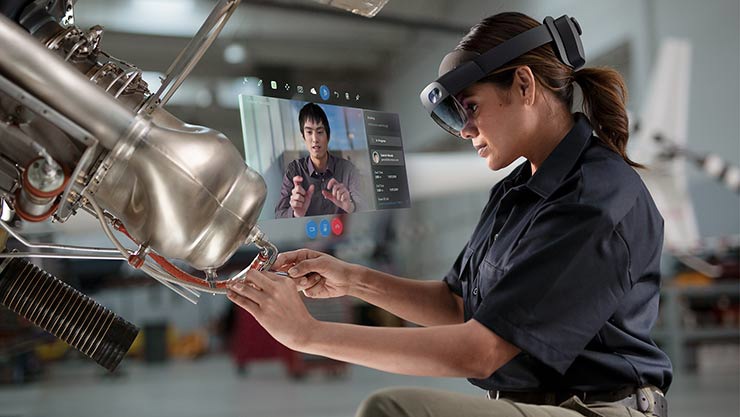
I do think there's room in the camera market for a massive improvement in the industrial design of camera systems. Ugly boxes aren't sexy and different forms can also be more human-friendly. Rounding the corners doesn't help either if the end result is still ugly. Form follows function is real- camera makers still haven't read the memo. Microsoft recently launched their HoloLens 2:
RWt2gN

I know Apple is working on their design and they are probably laughing right now at Microsoft's. So much money and so many people and they come up with that design- haha wow!

EDIT: their brainwashing ray won't work on us anymore haha! It should actually say: Anti-Ergonomic Design
HL.jpg
Even this ancient technology (which I helped develop in 1995 (on the software side)) http://graphics.stanford.edu/infrastructure/gamma-corrected/iglasses.html has a superior industrial design. That 2019 design will cause headaches/eyestrain and leave an embarrassing red mark on the forehead (and cause skin problems, mess with makeup, etc.). What's a better design? Stapling the optics to a baseball cap would be better! (in both style and comfort), I did this in 1990 to fix the same terrible 'head-clamp' design of 3D glasses:
https://ultimatehistoryvideogames.jimdo.com/event-horizont-simulator/
event-horizon-simulator.jpg


So it's not just camera companies doing terrible product designs (see also most American automobile designs).

I think if ARRI teamed up with Leica and Ferrari's Pininfarina design group they could build a functionally beautiful combined still/video camera that I'd be motivated to buy (even if "expensive"). Especially in LA/Hollywood/NYC/ATL/MIA, a camera that performs well and is physically beautiful, would sell like hotcakes :) (a BIG reason the F65 didn't sell well was because it's super ugly: https://www.fdtimes.com/2014/07/24/luc-bessons-lucy-described-by-thierry-arbogast-afc/
I think also in the beginning people were afraid of 4K and maybe now it’s more accepted in France?

I don’t think so. The RED was already in 4K, you know? The RED was very popular. So I don’t think that’s the reason. I think the reason that the camera was not popular is it’s a little ugly. It looks a little cheap. And it’s a little too big. So people stayed away from a big camera. It’s a big camera. Much bigger than the others.

The film business is almost like the fashion business. If the camera’s not stylish, they’re not going to use it. It’s like fashion.

Yes, exactly. Not fashionable. Sony has to think about that. The Genesis was very ugly too.

Actually the Genesis, the Panaflex, and the F65 all kind of look the same?

The Alexa and the RED have the best designs at the moment for sure. The ARRI D-21 was not very pretty.
 
Last edited:
I have tried it

I have tried it

I haven't been following this much but I just noticed a old press release by Atomos where they announced ProRes raw support for the C300 MKII:

https://www.atomos.com/press-releases/canon-c300-mkii-prores-raw-atomos-kit

I'm wondering if anyone has had a chance to use it? Is there any benefit vis-a-vis standard 4k Raw --> 4k ProRes?

Sean

I have the Shogun Inferno recording raw from my C300 Mark II. I purchased the Shogun as soon as it came out. I produce still photography as well as video and the prospect of having a raw video format appealed greatly to me. It works well, without all of the headaches of other raw formats. Highlights can easily be recovered, colors adjusted, and noise reduced all in Final Cut X. Not to mention the Shogun is a great monitor. I use it at every opportunity I can. Sometimes I need a light weight camera build and the Shogun can get heavy even with a battery belt hand holding, but I am mostly a tripod/slider guy anyway. It biggest adjustment I had to make was learning out to expose properly to minimize noise since raw isn't de-noised out of the camera, but now Final Cut comes with a fast and easy to use de-noiser built in. I have to admit that the C300 II has some really good internal codecs, but sometimes when outdoors in bright sunshine or with bright windows light the Pro Res Raw real comes in handy. More than one client has commented how good it looks in otherwise terrible lighting. I do wish KYNO worked with Pro Res Raw however.
 
Back
Top