Barry_Green
Moderator
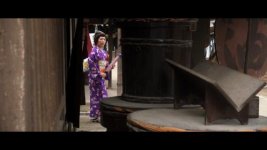
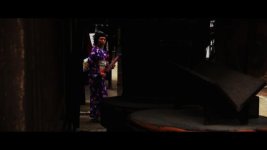
I don't know whether that footage is or isn't from a DVX200. Some aspects look like it could be; the shallow DOF and slow-mo for example. If it is a DVX200, I (obviously) have no idea what generation of camera it was from; it could have been from the earliest engineering sample.AGAIN, THIS IS NOT THE DVX-200! This is a shameful posting and it REALLY bothers me. The way it handles the blacks with noise throughout various scenes shows it is a toss up and that individual is just trying to get views. Look at 01:18 on the tilt down from the building. There's no WAY in hell that Leica 4K lens has chromatic aberration, and with the noise smearing throughout that reflected picture.
But -- I mean, it's helpful to read the guy's own video description. He says "Honestly, I haven`t laid my hands a camera for some time, so it was nice to remember my beginnings. I did my apprenticeship on a FX1." So we have a rusty cameraman using a camera of unknown levels of "finished-ness" that he can't possibly know the ins and outs of yet; again, I can't see how anyone would expect the best quality footage in such a scenario.
There's no WAY in hell that Leica 4K lens has chromatic aberration
On the finished camera, no, there shouldn't be much if any chromatic aberration. On an early engineering prototype, sure there could be issues. Noel Evans said that the lens on the unit he was using had soft spots on the left side of the frame. That's part and parcel of using a preproduction early engineering sample. Which is, once again, why I say that footage like this simply shouldn't be relied on as being reflective of what the final quality of the product will be, and footage shouldn't be released from any of the cameras until it's a production-line camera that is directly representative of what the end consumer will be able to buy.
and with the noise smearing throughout that reflected picture.
Again, there's no way to know what the guy did. If he was shooting on DRS (Dynamic Range Stretch) with level 3, then that adds around 18dB of gain to the shadows. You can bet that there will be some noise in such a situation. We do know that he put Magic Bullet Looks on the footage, since it says so in the video description. If the Magic Bullet Looks stretched up the shadows, where 18dB of gain had already been added, then yes, you can expect to see noise all over that.
I tested the v0.29 camera, in 1080 mode, and found it to be very quiet on my monitor, with no chroma noise, and only a small level of luma noise in the lowest levels. The more you gain up the camera, the more noise there is, but I thought that from a normal viewing distance it looks perfectly acceptable up to at least 2000 ISO. Now, that's not to say there's no noise whatsoever in the image; of course there's noise in it, but in 500 ISO you really have to be dedicated to go find it, and pixel-peep for it. By the time you're up to 2000 ISO you can see that there's some noise, but the question is whether it bothers you or not. I found it completely unobtrusive, and even found 4000 ISO acceptable. By 8000 it's definitely noisy, and 16000 and 32000 would be what I would consider unusable for production-caliber footage; they might be usable in a "surveillance video" context, but you wouldn't normally be using them in normal productions.
In 4K, you can expect an increase in visible noise; 1080 averages the noise together and produces a quieter picture, 4K doesn't.
In VLOG-L, you can definitely expect to see more noise, because as near as I can tell (and am waiting to talk to the engineers to verify this), I think VLOG mode is a really rather raw image. It's possible that they bypass the in-camera noise reduction entirely when you put the camera in VLOG-L mode. If so, then yes, you'll see noise -- and you'll expect that you'll have to do noise reduction in post, just like you're going to have to do gamma correction, color correction, and sharpening. All of those steps will be necessary to make good-looking VLOG-L footage, because VLOG-L skips nearly all in-camera processing. There is no color correction, sharpening, gamma correction, knee, or anything else done in-camera when shooting VLOG-L, and I think it's possible that there's reduced or even eliminated noise reduction in VLOG-L.
So could this be DVX200 footage? Sure, it could be -- but we don't know what version of the camera was used, how it was shot, and the post process seems to have involved Magic Bullet Looks, so ... we can say that it may not be representative of what a skilled user could create with a DVX200.
Last edited: