Af 105a announced in japan

I don't understand this obsession with absolute resolution.

At the end of the day everyone is trying to emulate film with these large sensor cameras, but then want a super sharp noise-free image - go figure.
Aren't they trying to emulate THE BEST OF film, but without it's undesirable features? So dynamic range, "smooth" feel, yes. But grain, weave, scratches, no?

As far as resolution goes, then the more real resolution you have, the less detail enhancement that is needed without the image looking soft. And since perhaps more than anything else it's detail enhancement that screams "video look", isn't that a good thing?

And bear in mind that in many cameras you can now dial in negative detail - as long as the fundamental resolution is there in the first place.
 
In the real world, this theory matches what people have found in practice. That the AF100 holds it’s weight reasonably well as a near-720p camera – but is lacking when up against a true 1080 camera. If anybody with an AF100 doubts it, try a simple test. Frame a shot with plenty of fine detail, then record it in 720p mode. Now switch to 1080 mode and record the same thing.

View the results on a 1080 monitor and tell me how much real difference you can see between the 720 and 1080 recordings. I’d be prepared to make a decent bet that it will not be very much. Do the same thing with a true 1080 camera like an EX1 or an HPX250 and the difference is night and day.
These last two paragraphs really bring your verbose handwaving into focus. What's clear that you haven't actually tried the 720p versus 1080p comparison that you suggested on the AF100. I've done exactly that, and the significantly finer resolution in the 1080p footage was immediately apparent, even though 720p should theoretically have an advantage over 1080p at the same 24Mbps bitrate.

Your dogged insistance that the AF100 is a "near-720p camera" is demolished by this real-life comparison with the GH2:

http://www.dvxuser.com/V6/showthrea...-japan&p=1986231108&viewfull=1#post1986231108
 
Aren't they trying to emulate THE BEST OF film, but without it's undesirable features? So dynamic range, "smooth" feel, yes. But grain, weave, scratches, no?

As far as resolution goes, then the more real resolution you have, the less detail enhancement that is needed without the image looking soft. And since perhaps more than anything else it's detail enhancement that screams "video look", isn't that a good thing?

That's all very true, but consider that by the time a feature film was screened in the days when things were shot and processed on film, the original neg would be locked in a safe after an dupe neg was made. From that there are at least an interneg and then a print made for projection.
Which then might actually be duped for distribution I guess in certain circumstances, and you certainly don't have 1080 or 680 or whatever resolution at that point.
But that's what people see, and love and refer to when they talk about the 'film look'.

Weave and scratches no.

But I love grain. It's one of the biggest pleasures of the image when compositing scanned film stock instead of digital.
 
Last edited:
And bear in mind that in many cameras you can now dial in negative detail - as long as the fundamental resolution is there in the first place.

Isn't this also processing the detail enhancement too, to take away detail? That's just another convolve filter in there somewhere.
The lovely thing about the 'softness' of the AF100 image is that it has the organic look from the start, with a sprinkle of noise.
If you don't clip the highlights.

Jan, has the highlight rolloff been softened in the AF100A?
 
harddrive, thank you for your careful well-reasoned postings and for maintaining your equilibrium in the face of inflammatory language and ad-homins.

Your proposed experiment only holds if the 720p mode on the AF100 produces a measured 720p. Some cameras produce less than 720p in 720p mode, and the AF100 could as well. For those of us with a GH1 or GH2, compare a frame grab at 1080p with a full resolution still down-scaled to 1280x720 and 1920x1080. I'm not sure how good the stills are on the AF100 so I don't know if that would work for the AF100.

Anyway, your claim that the 1080p footage from the AF100 only measures 720p is supported by others who have shot resolution charts with their AF100s. Here are three. For anyone who disagrees with the results of those experiments, the next step is to post your own resolution chart :)

Alan Roberts, http://thebrownings.name/WHP034/pdf/WHP034-ADD66_rev_2_Panasonic_AF101.pdf
Barry Green, http://www.dvxuser.com/V6/showthread.php?260461-FS100-and-AF100-compared
Adam Wilt, http://provideocoalition.com/index.php/awilt/story/ag-af100_and_pmw-f3_on_the_charts/P1/

In the real world, this theory matches what people have found in practice. That the AF100 holds it’s weight reasonably well as a near-720p camera – but is lacking when up against a true 1080 camera. If anybody with an AF100 doubts it, try a simple test. Frame a shot with plenty of fine detail, then record it in 720p mode. Now switch to 1080 mode and record the same thing.

View the results on a 1080 monitor and tell me how much real difference you can see between the 720 and 1080 recordings. I’d be prepared to make a decent bet that it will not be very much. Do the same thing with a true 1080 camera like an EX1 or an HPX250 and the difference is night and day.
 
Jan, Thank you for participating in this forum and enduring all the loving criticism of the AF100/AF100A.

I have been reflecting on your comment below and I think you have identified the key issue in this debate. Yes, we want an Alexa for $5000. And yes, our request is reasonable. The first computers were as big as buildings and powered by hydro-electric dams. Today the computer in your smart phone is incomprehensibly faster, cheaper, more efficient, and more useful than those early computers. So the relentless exponential improvement in price/performance is the essence of any advanced technology industry, including the digital camera industry. The first company to produce an Alexa for $5000 will win the next round of the competition. And the first company to produce an Alexa for $500 will win the round after that. Companies that don't think those are reasonable goals will end up in bankruptcy.

Based on this year's product announcements, I think that GoPro, Sony, and Red have the most chance of succeeding. They each have produced products at price points that disrupt existing businesses, including their own. Black Magic deserves an honorable mention, partly for their BMCC and partly for their Resolve price reductions. Panasonic is most definitely not on that list. Any technology company that wants to survive should be asking themselves - what businesses are they currently disrupting?

No that attitude is not attitude, but rather a factual set f statements. Just because you want an Alexa for $5000 doesn't mean you can have one. With much restraint here, I restate that the features and benefits of the AF100 remain in a lead in its price point. It is a proud place to be from where I sit, as we designed a camera that does deliver the goods. You might want it to be more that what it is but what we delivered is a fine camera and it continues to be. I am fairly proud of it and thankful to the group of DPs, Cinematographers and Film School faculty as well as some ASC members that helped design it. Are there concessions? Yes there are some things we could not do and meet the price point. So while that might sound like a price argument, compare feature for feature on the cameras against the other cameras at the same price point and you will see what I mean.

Best,

Jan
 
Anyway, your claim that the 1080p footage from the AF100 only measures 720p is supported by others who have shot resolution charts with their AF100s. Here are three.
Contrary to your implication, none of those reviews claimed that the AF100's maximum resolution "only measures 720p". What they actually wrote was this:

Alan Roberts: Clean resolution is limited to about 1210x680 by the presence of high-amplitude spatial aliasing.
Barry Green: The AF100 delivers observed alias-free resolution of 700h x 680v; the FS100 delivers alias-free resolution of 670h x 720v, with the net effect being equivalent overall sharpness.
Adam Wilt: I see the GH1 cleanly resolving maybe 630 TVl/ph... [compared to] the AF100's 8% boost in clean resolution over that of the GH1.

Take careful note of the qualifying adjectives used in all three reviews: not maximum resolution, but "clean", "alias-free" resolution. What they're referring to is the perceptual point on the test chart where aliasing first starts to appear in the image. They are not claiming that the camera records no perceptible details beyond 680p, only that the details it records beyond that point are not entirely "clean" - i.e. they contain aliasing artifacts in addition to genuine image details. While I agree with that assessment, it is solely a technical measurement rather than an esthetic evaluation of perceptual sharpness or image quality.

I think we all recognize that the AF100 has perceptible aliasing artifacts, as do all competing cameras in its price range. Given that necessary technical compromise, what's significant are not the numerical test measurements, but the subjective esthetics of each camera. Many Canon fans love the 5DMkII's look in spite of its discolored moire. For me, it's the absence of discolored moire that makes the AF100's alias artifacts look far more natural. Of course, I'd prefer the camera have no perceptible aliases at all, but since that's currently impractical, I've accepted that it's ultimately a subjective aspect of image quality that I must evaluate with respect to my own esthetic tastes.
 
Last edited:
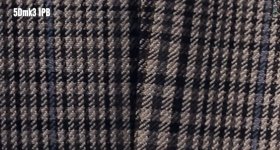
No matter how many lines the AF100 really resolves it visually looks about the same as the 5D3:
 

Attachments

  • AF101.jpg
    AF101.jpg
    86.8 KB · Views: 0
  • 5Dmk3.jpg
    5Dmk3.jpg
    91.3 KB · Views: 0
Interesting that sharps is what every one is focusing on. For me the one area I would like improvement on the af100 is the handling of highlights. If that was a bit cleaner it would make my life a wee bit easier.

Also, Jan, I haven't said I want an Alexa for 5 grand nor have I put words in your mouth. There are things that some find deficient in the af100. It's cheaper than some, but that doesn't mitigate those issues. Where as a variable nd fixes one of the major complaints of the fs100 or dslr for example. In that example the element of price is surly more relevant due to the need for an additional purchase. This is not the case for the af100.
 
I hope Panasonic looks hard at this long thread, & understand there is a market for a camera above the AF100 series.

Sony's, & Canon's, offering all miss out of specs, leaving a glaring hole for Panasonic to fill. Even if they just replaced the chip, & codec, many would jump on the new offering, but highlight handling, & banding must be addressed.

Panasonic has a history of introducing new cameras the same year they roll-out an update to the previous model, so there's still a glimmer of hope.
 
What has been bothering me the most is the insistence on the "under $5,000" price point as a reference..

Does anyone at Panasonic realize how much it costs the average schmoe to equip one of these. In my case I've spent well over $7-8,000 on EVFs, lenses (not counting Leica-R lenses I already had), adapters, matte box base (I also already had the matte box) Panasonic batteries, Bauer Gold Plate, Bauer batteries - the list goes on. I've also spent countless hours designing and building EVF brackets and grip mounts for my AF.

Sure some of this will work on The BMDCC (less on the Sony or Canon) if I switch - but what I want is the camera I have acclimated to, only better.
 
Interesting that sharps is what every one is focusing on. For me the one area I would like improvement on the af100 is the handling of highlights. If that was a bit cleaner it would make my life a wee bit easier.

Also, Jan, I haven't said I want an Alexa for 5 grand nor have I put words in your mouth. There are things that some find deficient in the af100. It's cheaper than some, but that doesn't mitigate those issues. Where as a variable nd fixes one of the major complaints of the fs100 or dslr for example. In that example the element of price is surly more relevant due to the need for an additional purchase. This is not the case for the af100.

Handling the highlights is not a problem with the AF100, it is with the codec. I believe it is 25-28mbps. I have had great looking footage with an external recorder (I use he Nanoflash) and have been able to recover highlights, within reason, with no issue. I generally record at 140/180 mbps.
Fortunately, I think the sensor is very clean. Try an external recorder.

As far as a more expensive AF100/M43 camera, I know I wouldn't purchase one and I have thousands invested in M4/3 glass.
I am going the S35 route. I think Panasonic would be better off producing a mid-high end S35 sensor...I love the Panny look.
 
What has been bothering me the most is the insistence on the "under $5,000" price point as a reference..

Does anyone at Panasonic realize how much it costs the average schmoe to equip one of these. In my case I've spent well over $7-8,000 on EVFs, lenses (not counting Leica-R lenses I already had), adapters, matte box base (I also already had the matte box) Panasonic batteries, Bauer Gold Plate, Bauer batteries - the list goes on. I've also spent countless hours designing and building EVF brackets and grip mounts for my AF.

Sure some of this will work on The BMDCC (less on the Sony or Canon) if I switch - but what I want is the camera I have acclimated to, only better.

I don't understand your point.

This is the same for any camera. Buy the BMCC and you'll still be buying a FF, MB, ND's, EVF, LCD, cage, etc. Just saying, every camera from AF100- Arri Alexa has accessories you must buy and it always adds up, some more than others. Especially lenses. If you work in the film industry, cinema lenses are now more expensive than cameras most of the time.

The camera body is under 5k pricepoint. They are only selling you the camera. They have no idea how you'll use it, and that's really not up to them.
 
Ryan: I graduated from UCLA film school with an MFA in 1969 - I have been making my living as an independent professional documentary filmmaker since then, and own two homes on the Monterey Peninsula as a result - I've had films screened in nearly 100 festivals and have had 7 on national television in prime-time, I still own a super16 Aaton that I paid over $30,000 for in 1884 - so thank you very much for your helpful tips on how to be a professional...

My point is - The $5,000 price point is bandied about as if all of these other things are irrelevant within a less than 2 year time-frame... And, as I pointed out, in my admittedly very specialized case, I customize my cameras, spending hours designing, building, evaluating and re-building until I get it perfect, that's all out the window when I move to another form factor. I wouldn't mind at all paying more than $5,000 for an improved AF - but I don't want to spend over $25,000 (a guess) on an F5, as I did for the HPX500, if it will also be obsolete in less than two years... And for my work, I like the MFT size.. I simply want Panasonic to offer a better AF and damn the price point.

And by-the-way - there is a "build it and they will come" philosophy often stated here - that the camera doesn't matter, it's the content. While it's true that I myself tell students that when I speak at college film classes, the fact is that television programmers have desks overflowing with DVDs, and many of these people couldn't tell a good story from a shopping list.. So they use arbitrary criteria to weed through submissions, and the bad rap that the current AF100, and AVCHD, have gotten in these forums does come into play in their decision making. I like Panasonic's look, and I like the AF100, and while I realize the times they are'a changin'... that there is little standardization in professional equipment because of rapid technological advances... I find it unacceptable that these tools are deemed obsolete before you can get the batteries charged.
 
compare feature for feature on the cameras against the other cameras at the same price point and you will see what I mean.

That would be (within UK£500 +/-):

Canon XF300
Panasonic HPX250
Sony Z5
Sony FS100
Sony NX5
Panasonic AC160

The FS100 is the only large-sensor, interchangeable lens competiton that I'm aware of. Of course, for a lot less money, you could get a GH2 or 5DMk3 - if DSLR/EVIL shortcomings are acceptable to you. Soon the GH3 and BMD Cinema Camera may be available, with better image quality in many respects, but these are not direct competition for the AF100/AF100A, again because of DSLR/peculiar form factor - none of the right buttons in none of the right places.
 
For me, lack of a waveform monitor is a deal breaker. That takes the FS100 off the table. The built-in ND filters are a big deal, too.

NO ONE has yet named another large chip camera -- at even TWICE the price -- that can beat the AF100's combination of features and image quality.

As to the abundance of angry advice to Panasonic:

We have a lot of business majors who have run multi-billion-dollar corporations on here, do we?

I'm guessing the people here who are insisting that if one of the largest corporations in Japan doesn't make exactly the camera they stipulate, that corporation is doomed to obscurity, also sit in front of their big screen on Sunday afternoons and yell at Peyton Manning that if he'd only listen to them he could score more points.

I own a variety of cameras from a range of manufacturers. Each is good at what it does and it's up to me to decide what tool works best for a given job. If the AF100 isn't the best choice -- and in a number of cases, it's not -- move on. Get the tool that best fits the job and quit whining.

It's one thing to voice what you'd like, it's another to insist that if a multi-billion-dollar corporation doesn't immediately meet your demands, they're doomed. That's just silly.

The financial problems that Sony and Panasonic are currently experiencing have more to do with their consumer products than they do our sector, as sales of television sets is bottoming out.

As to what I'd like to see in the 100A?: The announced features plus an improved sensor with greater dynamic range. That would put them even further ahead of the competition they don't have at their features/price point.
 
Last edited:
See ABR post above.....Exactly the decision making process I went through before decided on the AF101, my biggest disappointment the Canon XF300.
 
Last edited:
As to the abundance of angry advice to Panasonic:

We have a lot of business majors who have run multi-billion-dollar corporations on here, do we?

No, what we have here are potential customers who are voicing what they want in their next camera purchase and how much they are willing to spend on the feature set!
 
the people here who are insisting that if one of the largest corporations in Japan doesn't make exactly the camera they stipulate, that corporation is doomed to obscurity

...I think many of us are saying that we are going to switch to one of Panasonic's competitors because Panasonic isn't producing a product that is viable for us.

For myself, I am planning on buying a Canon C100 next year, because it seems to be the best compromise in overall functionality and image quality, and I don't mind spending the extra $2,000 for these features.

Right now Panasonic doesn't produce a large sensor camera with the feature set many of us are looking for, and Panasonic seems to be very slow to respond to the competition.
 
Back
Top