C300: Zacuto First Look at the Canon 18-80 Zoom Lens

Looks like at 2:38 they tease a custom Zacuto grip that merges the servo functions with other camera functions? Essentially what the C300II can do when paired with this lens, but now you'll be able to use it on a C100, for example, or FS7, instead of their stock grip handles. I think that's what that is?

Now, if the Zacuto custom grip could also control the servo on the 18-135 Nano, that would be very interesting.
 
Last edited:
Wow, that lens support is genius, very clever engineering and the control cable and arm look like a must have too. Very exciting, this will be a hot lens for reality TV and docs. Imagine this setup paired with the C300 MKII, very desirable. I miss having a servo lens. Just wish that lens was one stop faster for perhaps $2k more.
 
Looks great! Now I want to know when I will actually be able to purchase the lens. Seems like it's taking forever to get released.

 
I haven't watched the video yet, but don't hold your breath on the Zacuto grip if it's the one I'm thinking of. They've been teasing it for at least two years and taking preorders for a year. The idea is nice, but not very elegant with all of the cables and having to use a battery.
 
Canon Compact-Servo ETA

Canon Compact-Servo ETA

Canon will likely release the Compact-Servo lens by the end of the month.

Canon did say that the Compact-Servo would ship "later in 2016" in the original press release.

At our Canon C700 event last week, the Compact-Servo lens that was sent to us was a production model that arrived in a retail Canon box.

Looks great! Now I want to know when I will actually be able to purchase the lens. Seems like it's taking forever to get released.

Canon Compact-Servo 18-80mm $5699.05

canon-apply-first.png
 
Wow, that lens support is genius, very clever engineering and the control cable and arm look like a must have too. Very exciting, this will be a hot lens for reality TV and docs. Imagine this setup paired with the C300 MKII, very desirable. I miss having a servo lens. Just wish that lens was one stop faster for perhaps $2k more.
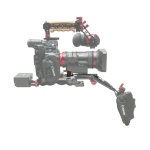
Does that lens support have to line up perfectly to function? What if you're camera makes you shift your rods a mm to the left or right, will it still work?
 
Wow. All this work and cost just to have the same kind of servo zoom I used on every shoot for 20 years before DSLR came out and forced us to use still lenses. Eeeesh....Look how excited everyone is for something so old!

Here's what Dan Chung said about it today:

http://www.newsshooter.com/2016/12/...il-solution-for-the-canon-18-80mm-servo-zoom/

It ALL comes back around... It's like I keep saying, there's a reason ENG camera bodies/layouts and lenses have remained virtually unchanged for all of these years...
 
Wow. All this work and cost just to have the same kind of servo zoom I used on every shoot for 20 years before DSLR came out and forced us to use still lenses. Eeeesh....Look how excited everyone is for something so old!

Here's what Dan Chung said about it today:

http://www.newsshooter.com/2016/12/...il-solution-for-the-canon-18-80mm-servo-zoom/
Weren't broadcast zoom lenses around $10,000-$30,000, with a $20,000-$80,000 broadcast camera? I'm not terribly familiar with prices of professional camera setups from 20 years ago, but those seem to be numbers I've heard. This stuff is cheap by comparison.

Even at T/4.4 I believe you can get a shallower depth of field (if you want it) than with a 2/3" camera, low light is better even at T/4.4 on a C300 Mark II, the image is sharper, the colors are likely better, the dynamic range is WAY better, you get 4K, higher frame rates; overall, the image quality is a lot better on most large sensor cameras than when comparing to broadcast cameras. So it's exciting to get a relatively affordable, small, and light servo zoom with the image quality that large sensor cameras provide, and this is the first lens to offer that (assuming you don't count Sony's servo zooms which people don't seem to like much).
 
I don't think the point is the cost of the gear or its technical capabilities. It's that they make this incredibly capable and advanced gear now that is hampered by its design/ergonomics. Then you must go and buy aftermarket items to rig it up in an attempt to regain the usability of our gear from decades ago, BUT you can never get there, because it wasn't designed to 'be there' in the first place. And none of this would be necessary IF they had looked at what has worked for decades and gone off of that. Canon(and others) didn't have to follow Panasonic and Sony Broadcast cameras to a T, but they could have gotten it in the ballpark. I've never shot with one, but I have seen plenty of the JVC cameras, which look like half size broadcast ENG cams, and they look totally useable. They are smaller and lighter, but still in the correct form factor without having to "Errector Set" the camera.
 
Hey Eric,

Well, affordable is all relative since it would be buying a business asset which you can not up charge for. One can make the argument to oneself that perhaps the higher image quality will bring in more work, thus make more profit? Otherwise, it's "nice to have" to make one's life easier by not having to change lenses in a fast moving situation, thus missing the shot.

As to the past, I recall the camera bodies were $35-$50K and the lenses were about $10K, but once you bought a (16x9, HD) capable servo zoom lens with 2X you could keep it as you changed bodies over the years, including when HD came around.

But the DP economics were different (and better) in those days, you'd get a zero interest loan for 2-3 years from the manufacturer, as I recall I paid Sony or Panny $800 a month for years. However, there were so few DPs in those days I was always working 4-6 days a week, for a MUCH higher day rate than in 2016, for many years, maybe 15, there were never "slow periods" because you'd hop on a TV show for a season. We had to turn down gigs to spend time with the family. The first 1.5 days of work would make the monthly payment. So paying for the servo zoom lens was easy because of all the money rolling in back then. I think I only bought b-stock. Plus, if it was a wide angle zoom with a telephoto doubler, you could shoot all week without changing lenses except for something exceptional like needing the reach of sports or wildlife, but those gigs were usually outsourced to specialists.

So here's a lens for what, $6500 not including the Zacuto stocking stuffer? Yet one can't charge any extra because the clients don't understand that. There is a tremendous advantage if one does doc style to not have to swap lenses and miss a shot, so I think the DPs will just have to "absorb" this cost. But unlike the old days, when money rolled in, from a purely business POV, it's hard to justify.

As a side note, a couple of weeks ago I shot a new crime show and they spec'd two Panasonic HDX900 ENG (tape) cameras, which the prod co provided, because it was doc and they needed the two of us shooters to never change a lens. It was a "door knock of a murderer", so there could be no delays, had to be either very wide or very tight in an instant. The last thing they want is a shallow DoF, all they want is the expressions on the perp's face and the correspondent too. So present day TV, the masses aren't pixel peepers.

Oh well...that's my perspective as an old timer. Lately, I produced a doc on pediatric rehab. In the hospital's hallway my grip was babysitting (theft from the public) my Canon C100, Panasonic HPX300 and Osmo. Naturally, I tried to start out stylistically and use the C100, but with kids quickly crawling all over, and then need to work into the shot the adult therapist assisting with them, I was changing lenses every two minutes, I threw in the towel and opened the door and told him to pass me the ENG HPX300 with the servo lens. Once I knew I had that covered I then went to the Osmo (which drew less stares). So in sum, since my style is doc, I have always hated changing still lenses and if I stay in the biz (thinking about retiring), I'd buy this Canon servo, but unlike the old days where the cost could just be absorbed, this purchase would not make me money, which is what the point of being in business for yourself is all about, right?

Although...the delay in delivery is an indication that they are having production problems, so the last thing I would do is pre-order! I'd wait for v2 and then buy b-stock.

My .02$

P.S. And because I figure they are having production issues, I would buy a very extended warranty! There are many moving parts that can go wrong. When I was going to shoot in the Arctic Circle for two weeks a travel show on Finland, I had to have my servo zoom re-lubricated with a different grease for the cold, and then re-done upon return. You have to often check it's tracking with a chart. Etc. This lens will require babying and the folks who grew up on DSLRs may not realize that. This kind of lens is needed for documentary, but servo zoom lenses need to be built very tough for the rigors of documentaries. So wait for v2.
 
Last edited:
Very wise Ned...very wise indeed. 20 years ago I was not in the business but knew people who were. And yes equipment was pricey but got used a lot (like you said). Back then you couldn't just buy a camera and produce corporate videos/docs. Now, everything is relatively cheap to the point that almost anybody can make videos. The dp/cameraman/small producer community is too crowdy at the moment. So although equipment is cheap, every purchase has to be well planned because we can't always justify increases rates because we bought a new piece of equipment.
 
Hey Doug,

The above post was written with my morning coffee and lots of memories of past servo lenses are now floating by. I remember I would start a shoot day by lining up on a cross beam on the telephoto end, on a telephone pole, at least 100' away and put my cross hair on that and then zoom out. Then I would do the opposite: Line up the cross hair on the wide end, then zoom in, and see how far off it is. This gives you an indication over time if there's a problem brewing. We've all seen the cutaways of lenses at the trade shows. Imagine if it had to track smoothly via a motor, as compared to a 70-200 still lens. This complexity may be the reason for the delay of roll out.

I suggest to everyone buying v1 to do that the first day you take it out of the box. If it is off you can demand a new one but as time goes on, and you try to get it re-calibrated, which is a very big deal, the manufacturers often say, "It's within specs". That's why I suggest a mega warranty policy, possibly with the benefit of a loaner. I think for $200 a year you can join the Canon Gold Pro Club. I was in it for awhile, but they did pull the, "It's within specs" BS. Also, train your assistants to never stand it up, especially at the edge of a table. My background started as a film AC and that was grounds for a flogging because a tall lens likes to fall off a table, but a servo zoom has so many intricate parts, it often won't track as well once bumped or dropped.

I used to have tight relationships with the guys in the local rental houses back in the day, leave a case of beer a Xmas with my name on it, staying friends. That's because I often needed someone on the inside to "bench" my servo zoom lens, takes 15-30 minutes, but they would have a collimator to see all was tracking sweet, minimum vignette, no dust bunnies inside, etc. Any schmutz is magnified when aiming towards the sun or a light, over time it can look like a snow globe.

Also, as a Chicagoan, and perhaps if you live in a sweat box like Florida, you have to become more concerned with going in and out of AC/Heating because the condensation that can build ON THE INSIDE, IF Canon doesn't seal this thing extremely well. And speaking of schmutz getting inside, I shot twice in the Mideast where the sand is of the consistency of what we'd call dust in the Midwest, so even with my $10K Fujinon I'd take electrical tape and seal up any part of the barrel that didn't need to rotate at that shot. So beware of that when you take possession, that you have to maintain your seals. With this lens I would read the manual and study the maintenance schedule.

I did once see a skin tight rubber raincover for the 70-200, was thinking of getting it, but then decided that if a client wants me to film in the rain, blowing snow or sand, I'll just say No. But if you're in the end of the biz where you can't say No, like sports, news, wildlife, then it would be great if there was an after market condom for this new lens, where the barrels will rotate but the elements stay out. Maybe the Trojan prophylactics Ultra Large? Comes in colors...

BTW, yesterday I did a pitch to produce industrial marketing videos at the NA distributor for Japan's highest end food inspection equipment company and the potential client was kvetching that there were delays in receiving shipment because, "The Japanese won't let anything out until it is tested to be absolutely 100% perfect." So hopefully this new Canon zoom you all are lusting after is truly made in Japan and not outsourced.

Back to work ugh.

Ned
 

Attachments

  • winter-video.jpg
    winter-video.jpg
    12.6 KB · Views: 0
Last edited:
Hey Ned!
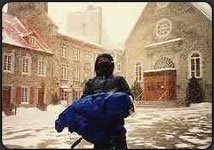
The picture, it's in Quebec city?
It looks like the place that was use for the movie Catch me if you can.
 
Yes!!! Very good eyes. I did a two week, all across Canada, travel video for Reader's Digest when they had a channel. Under the blue poncho is my Porta-Brace Polar cover which had heaters in it's inside pockets. BTW, I have one on sale on Ebay at the moment. So I have, or had, all the gear to work in sub zero, even during blizzards. If it's too cold, and you force a servo zoom to change focals length, that causes damage. So if the zoom motor doesn't want to move the elements, don't crank with your hand as if it was a still lens.

But my memories of Quebec City aren't fond. We were followed by professional thieves during the Ice Festival and the rental van was broken into during our lunch break. The police refused to speak English, and we knew they were bilingual. And I was in a hotel fire on the 10th floor of the Holiday Inn there*. So...glad to have left!

Ned

* That taught me to never sleep naked in a hotel! I wrapped a towel around my waist that was too small, had a case of tapes in one hand and the camera in the other, and every few steps the towel would fall off.
 
Ohhh...that's not a good experience.
I lived in Quebec city for 5 years. Now I live in a very small (but beautiful) town of 10 000 people, still in the province of Quebec.
 
Quotes from today's News Shooter post listed below:

"I can’t tell you how many times I have seen a DP do a gig for $500 US a day with a full blown RED Dragon package, lensing and support. Basically they are including either themselves or the camera for free."

"Glass isn’t an investment like it used to be."

Here's the article, it confirms what I have seen happening in the biz the last 10 years:

http://www.newsshooter.com/2016/12/12/the-camera-trap-think-twice-before-financing-that-dream-setup/

So...in today's market, from what I can see of how CHEAP clients are now, anyone buying this servo zoom will be throwing it in for free, right? Please correct me if I'm wrong. Are you upping your day rate after buying it? I doubt it.

My business strategy is to satisfy clients with what I presently own, which is now paid for free and clear. $6500 for a lens is not a bad price. Cheaper than a Cabrio. The problem is, you won't recoup your costs like the old days. You will just have to "absorb" it, right?

That's my thinking. To me this is a business, not a hobby. I'd love to be able to zoom, but I'd feel like a chump throwing it in for free...As far as I can tell, my rates are as high as I can go now. No way I can bump the client up for a servo zoom lens. After all, they now say about my rate, "Does that include a drone?" "Does that include the editing?" Eeeeesh....
 
Back
Top